2027 CAHIIM-Accredited HIM Programs Teaching EHR Analytics and Clinical Data Governance

Co-Founder and Chief Data Scientist
Choosing a health information management program is no longer only about medical coding or records storage: employers increasingly need professionals who can protect, govern, and analyze electronic health record data. The U.S. Bureau of Labor Statistics projects 23% growth for medical and health services managers from 2024 to 2034. This guide helps prospective HIM students evaluate CAHIIM accreditation, analytics-focused coursework, program formats, costs, and career outcomes so they can select a degree aligned with their role goals.
Key Things You Should Know
- Choose a CAHIIM-accredited program if you want the clearest path to AHIMA credential eligibility, including the RHIA for qualifying baccalaureate-level HIM graduates.
- Look beyond the program title: EHR analytics and clinical data governance should appear in coursework, projects, practicum experiences, or faculty-supported use of health data tools.
- Medical and health services managers had a $117,960 median annual wage in May 2024, but pay varies substantially by job title, experience, employer, location, and management responsibility.
What are CAHIIM-accredited HIM programs?
CAHIIM-accredited health information management programs are college programs reviewed by the Commission on Accreditation for Health Informatics and Information Management Education. Accreditation evaluates whether a program meets educational quality standards for HIM curriculum, faculty, student support, assessment, and professional preparation.
HIM combines healthcare operations, clinical documentation, information systems, privacy, compliance, coding, reimbursement, analytics, and data quality. It is different from a purely technical health IT degree because HIM programs emphasize how health data are created, used, protected, interpreted, and governed across the patient-care lifecycle.
For many students, accreditation matters most because it can affect eligibility for professional credentials. Graduates of qualifying CAHIIM-accredited associate programs may be eligible to pursue the Registered Health Information Technician credential, while graduates of qualifying baccalaureate or master's HIM programs may be eligible to pursue the Registered Health Information Administrator credential.
Credential rules can change, so applicants should confirm current eligibility directly with AHIMA before enrolling. The distinction below shows why the degree level should match your intended career path.
| Program level | Typical focus | Common next step | Best fit |
| Associate degree | Foundational coding, records, revenue cycle, privacy, and data management | Entry-level HIM work and potential RHIT pathway | Students seeking a lower-cost entry route or later degree completion |
| Bachelor's degree | Management, informatics, analytics, governance, compliance, and leadership | Potential RHIA pathway and broader administrative roles | Students targeting analyst, supervisor, compliance, or management-track positions |
| Master's degree | Advanced informatics, strategy, leadership, research, and enterprise data management | Specialized or leadership advancement | Professionals who already hold a bachelor's degree and have defined advancement goals |
Accreditation is not a guarantee of a particular job, salary, or course sequence. It is a quality and eligibility signal. You should still compare each school's curriculum, completion policies, career support, practicum structure, and total cost.
Which HIM programs teach EHR analytics and data governance?
The strongest match is usually a CAHIIM-accredited bachelor's or master's HIM program that explicitly includes health informatics, database concepts, data analytics, healthcare quality, privacy, compliance, and information governance. An accredited program may cover these capabilities under different course names, so do not reject a school simply because it does not use the exact phrase "EHR analytics."
EHR analytics means using data from electronic health records to identify patterns, measure quality, support operations, report outcomes, or inform clinical and business decisions. Clinical data governance is the set of policies, roles, standards, controls, and accountability practices that keep health data accurate, secure, appropriately accessible, and fit for use.
When comparing curricula, prioritize evidence that students do more than memorize regulations. The following signals indicate a more applied analytics and governance emphasis.
- Courses in health data analytics, statistics, informatics, data visualization, database management, or decision support
- Assignments involving data-quality review, dashboard interpretation, clinical documentation improvement, or quality reporting
- Privacy, security, interoperability, information governance, or healthcare compliance coursework
- Practicum placements or capstone projects with hospitals, health systems, insurers, public health organizations, vendors, or consulting firms
- Faculty experience in HIM leadership, informatics, data governance, revenue cycle, or clinical operations
A program can be appropriate for traditional HIM roles without being deeply technical. Students who specifically want SQL, Python, advanced predictive modeling, or data engineering should examine syllabi carefully and may need electives, a certificate, or a graduate informatics program in addition to their HIM degree.
A practical way to verify fit is to request the current curriculum map and ask an admissions representative or program director how students work with de-identified health data, reporting tools, data standards, and governance scenarios. Ask whether projects are individual exercises, simulated cases, or employer-based experiences.
How do you choose an accredited HIM program?
Start with your intended job rather than the school's marketing language. A student seeking coding, records, or revenue-cycle work may benefit from an associate degree, while someone aiming for health data analyst, compliance, privacy, clinical documentation, or supervisory work will often benefit from a bachelor's degree with analytics and governance coursework.
Use the CAHIIM directory to confirm the program's current accreditation status and degree level. Accreditation can be granted, continued, or subject to review, so verify it near the time you apply rather than relying on an old web page, a social-media post, or a general institutional accreditation claim.
Before applying, compare schools using the same questions. These checks can prevent a costly mismatch between the curriculum and the job you want.
- Confirm that the exact degree program - not merely the college - is CAHIIM-accredited.
- Match required courses and electives to your target role, especially analytics, governance, privacy, and management coursework.
- Ask whether a practicum is required, how placements work, and whether students must arrange their own site.
- Request the full cost of attendance, including technology, books, proctoring, clinical placement, graduation, and certification-related fees.
- Review transfer-credit rules, course sequencing, part-time availability, and the maximum time allowed to complete the degree.
- Ask for career-outcomes information, but treat it as context rather than a promise of employment or salary.
Common mistakes include choosing a low advertised tuition without calculating required fees, assuming any healthcare degree qualifies a graduate for HIM certification, and enrolling before confirming that online practicum requirements can be met locally. Another red flag is a school that cannot clearly explain where analytics, governance, and privacy competencies appear in the curriculum.
Are online HIM programs as credible as campus programs?
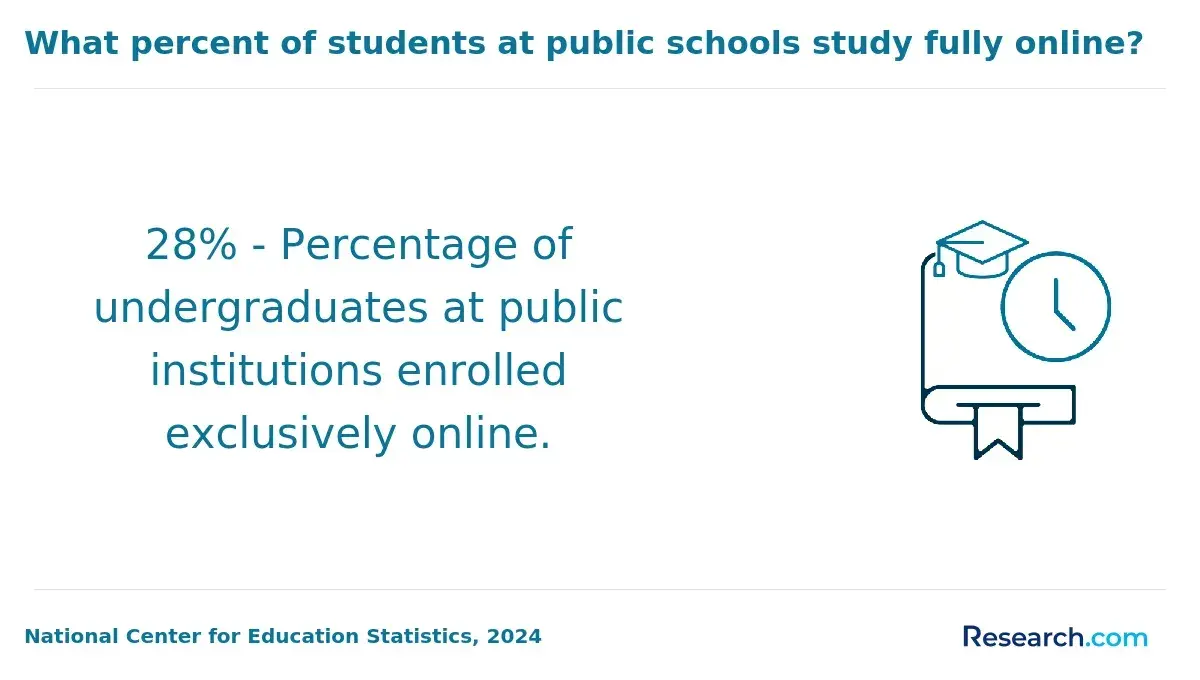
An online HIM degree can be as credible as a campus-based degree when the specific program is CAHIIM-accredited, provides appropriate faculty and student support, and meets the same competency requirements as its campus counterpart. Employers are generally more likely to care about the degree, accreditation, relevant credentials, practical experience, and demonstrated skills than about whether lectures were delivered online.
Online learning is especially practical for working adults, career changers, and students who need to remain employed while completing prerequisites or upper-level HIM courses. Readers considering an online degree should remember that flexible scheduling does not necessarily mean reduced academic rigor or a fully self-paced format.
The format comparison below helps identify which learning environment is more likely to support your circumstances.
| Factor | Online HIM program | Campus HIM program |
| Schedule | Often offers asynchronous coursework, though deadlines still apply | Usually follows fixed class times and campus schedules |
| Networking | Requires intentional participation in virtual events, faculty office hours, and professional associations | May offer easier in-person access to peers, faculty, and nearby employers |
| Practicum | May require a local site or virtual arrangement approved by the program | May have local partner sites but placement is not always guaranteed |
| Best fit | Independent students with strong time-management skills and reliable technology | Students who prefer structured contact and regular in-person support |
Before selecting an online option, ask whether live attendance is required, whether exams use remote proctoring, how technical support works, and what happens if you cannot secure a practicum site. A fully online academic curriculum can still include location-dependent experiential requirements.
What courses cover EHR analytics and clinical data governance?
Course titles vary, but a well-rounded HIM curriculum should connect data management with clinical workflows, legal requirements, quality measurement, and organizational decision-making. Analytics without governance can produce unreliable or improperly used results; governance without analytics can limit an organization's ability to learn from its data.
These course areas are particularly relevant for students seeking EHR analytics and clinical data governance responsibilities.
| Course area | What students commonly learn | Why it matters in practice |
| Health informatics | How clinical systems, workflows, standards, and users interact | Helps professionals assess whether EHR data represent real care processes |
| Health data analytics | Data interpretation, reporting, measures, visualization, and decision support | Supports quality, operational, utilization, and performance reporting |
| Database and data management | Data structure, terminology, data integrity, and retrieval concepts | Builds the foundation for accurate reporting and system stewardship |
| Privacy, security, and law | HIPAA-related responsibilities, confidentiality, release of information, and risk management | Supports lawful access and protection of sensitive health information |
| Information governance | Policies, ownership, retention, quality controls, and accountability | Helps organizations manage data consistently across systems and departments |
| Quality and clinical documentation | Documentation completeness, coding relationships, quality measures, and audit concepts | Connects clinical data quality to patient care, compliance, and reimbursement |
Students should also seek practice with communication and change management. Data governance often involves resolving disagreements among clinicians, compliance staff, IT teams, finance leaders, and operational managers. The ability to explain a data-quality issue in plain language can be as valuable as technical knowledge.
If a program offers limited analytics, consider adding a statistics, spreadsheet, database, visualization, or healthcare quality elective. Ask whether these credits will fit within the degree plan without delaying graduation.
What admission requirements do HIM programs usually have?
Admission requirements differ by degree level, institution, and whether applicants enter directly into the professional HIM sequence or first complete general education courses. Most associate and bachelor's programs require a high school diploma or equivalent, an application, transcripts, and placement or prerequisite review. Transfer applicants generally must submit official college transcripts.
Bachelor's completion programs often require an associate degree or a substantial number of transferable credits. Master's programs generally require a bachelor's degree and may expect a minimum GPA, professional résumé, statement of purpose, and prerequisite coursework. Some programs require background checks, immunizations, or confidentiality training before a practicum, particularly when students access healthcare sites or systems.
Applicants should review these items early because they can affect both admission timing and time to completion.
- Required prerequisite courses, commonly including English composition, mathematics, anatomy and physiology, computer applications, or introductory healthcare coursework
- Minimum grade requirements for prerequisite courses and whether repeated courses are accepted
- Transfer-credit evaluation policies, residency-credit requirements, and deadlines for submitting transcripts
- Technology expectations for online students, including computer specifications, webcam access, secure testing, and internet reliability
- Practicum eligibility requirements, which may include health, privacy, background, or drug-screen documentation
Do not assume that general college admission equals admission to the HIM major. Many schools use a second review before students begin advanced professional courses. Ask whether the program has capacity limits, competitive selection, or a separate application deadline.
How long does an HIM degree take to finish?
A full-time associate degree in HIM commonly takes about two years, while a traditional bachelor's degree commonly takes about four years. A bachelor's-completion program may take less time for students who already have qualifying transfer credits or an associate degree. Completion time depends on transferred coursework, prerequisite gaps, course availability, part-time enrollment, and practicum scheduling.
Accelerated formats can help students finish sooner, but they are not automatically the better choice. Shorter terms often require students to manage the same learning outcomes at a faster pace, which can be difficult when balancing work, caregiving, and technical coursework.
For parents and caregivers, predictable course scheduling may be more valuable than the shortest advertised timeline. Programs designed around flexible pacing can complement the priorities discussed in guides to degrees for stay at home moms, but applicants should still confirm whether required practicum hours are flexible.
The most accurate timeline comes from a written degree plan based on your evaluated transfer credits. Ask the school which courses are offered only once per year, whether prerequisites create bottlenecks, and whether a missed course would delay graduation by a full term.
How much do CAHIIM-accredited HIM programs cost?
The cost of a CAHIIM-accredited HIM program varies widely by institution, residency status, degree level, transfer credits, and delivery format. Tuition is only one part of the investment. Students should compare the school's full cost of attendance and estimate how many terms they will need after transfer-credit evaluation.
Use the categories below to compare financial commitments consistently across programs.
| Cost category | What it may include | Why it matters |
| Tuition and mandatory fees | Per-credit or per-term charges, student services, distance-learning, and technology fees | A lower tuition rate may not mean a lower total bill |
| Course materials | Texts, access codes, coding references, simulation platforms, and software | Some professional courses carry recurring digital-access costs |
| Practicum expenses | Background checks, immunizations, transportation, parking, and site-required documentation | These costs can be easy to overlook, especially for online students |
| Living and opportunity costs | Housing, childcare, reduced work hours, internet, and equipment | They influence affordability even when they are not charged by the college |
| Credentialing costs | Exam preparation, application, examination, and renewal expenses | Helpful for planning, but should be separated from degree tuition |
To reduce cost, submit the FAFSA if eligible, ask about institutional scholarships, verify employer tuition assistance, and maximize transferable credits that apply to the HIM degree. Compare net price after grants rather than relying only on published tuition. Federal aid eligibility, grant amounts, and loan terms depend on individual circumstances and can change.
A common mistake is choosing the cheapest program without checking graduation requirements, accreditation, or support for practicum placement. The best value is the program that credibly prepares you for your intended role while minimizing unnecessary credits, fees, and delays.
What jobs can you get with an HIM degree?
An HIM degree can lead to roles that manage the quality, privacy, availability, coding, reporting, and operational use of health information. Job titles vary among hospitals, physician groups, insurers, government agencies, consulting firms, health technology companies, and other healthcare organizations.
Associate-level graduates often begin in technical or operational positions, while bachelor's-level graduates may be more competitive for analyst, compliance, supervisory, and management-track roles. Experience, credentials, software familiarity, and local employer needs remain important.
The roles below illustrate how HIM preparation can connect to EHR analytics and governance work.
| Role | Typical responsibilities | Common preparation |
| Health information technician | Maintains records, supports documentation processes, audits data, and follows privacy procedures | Associate HIM degree, technical training, and possible RHIT pathway |
| Medical coder or coding specialist | Assigns and reviews codes used for reimbursement, reporting, and documentation accuracy | HIM coursework plus employer-preferred coding credential |
| Clinical data analyst | Builds reports, reviews trends, validates data, and supports quality or operational decisions | Bachelor's HIM degree plus analytics, spreadsheet, database, or visualization skills |
| Privacy or compliance specialist | Supports policy implementation, audits, training, incident review, and regulatory compliance | Bachelor's HIM degree and knowledge of privacy, law, and governance |
| Clinical documentation integrity specialist | Reviews documentation quality and collaborates with clinical and coding teams | HIM background; employers may seek additional experience or credentials |
| HIM manager | Oversees records operations, teams, compliance, data quality, and departmental performance | Bachelor's degree, experience, and often an RHIA or related credential |
HIM can appeal to people who prefer structured, detail-oriented work involving systems, records, rules, and problem-solving rather than direct bedside care. It is not automatically a solitary field: governance and analytics roles require regular collaboration. Readers exploring compatible work styles can also review careers for introverts while considering how much communication each HIM role requires.
What salary and job outlook do HIM graduates have?
Salary outcomes depend more on the specific role, employer, region, experience, credentials, and supervisory responsibility than on the HIM degree alone. For a broad management benchmark, the U.S. Bureau of Labor Statistics reports that medical and health services managers had a median annual wage of $117,960 in May 2024. That figure reflects a management occupation, not an entry-level HIM salary, so prospective students should not use it as an expected starting wage.
The same occupation is projected to grow 23% from 2024 to 2034, according to the Bureau of Labor Statistics. This outlook suggests continuing demand for people who can support healthcare operations, but it does not guarantee openings in a specific city, employer, or specialty.
HIM graduates can improve their career positioning by building a targeted combination of education, practical experience, and credentials. For analytics-oriented roles, employers may value demonstrated proficiency with spreadsheets, reporting tools, databases, data validation, quality measures, and clear communication. For coding or documentation positions, specialized coding knowledge and credentials can be more important than general analytics coursework.
Advanced education can be useful for leadership, teaching, research, or specialized informatics goals, but it is not required for every HIM career. Professionals considering doctoral study should evaluate whether the role actually requires it before pursuing 1 year PhD programs online no dissertation options or any other accelerated doctoral pathway.
For a realistic return-on-investment assessment, compare local job postings with your program's total cost and likely timeline. Look for recurring requirements in postings - such as RHIA or RHIT eligibility, coding credentials, EHR experience, privacy knowledge, SQL, reporting, or supervisory experience - then choose coursework and internships that address those requirements.
Other Things You Should Know About Health Information Management
No. Some HIM-related employers hire candidates without graduating from a CAHIIM-accredited program. However, accreditation is especially important if you want a credential pathway that requires graduation from a qualifying accredited program or if you want assurance that the curriculum meets established HIM education standards.
Yes, particularly a bachelor's degree with coursework in analytics, informatics, databases, quality reporting, and data governance. Because analyst roles vary, students should also build practical skills with spreadsheets, reporting tools, data visualization, and data-quality review.
HIM has a broad focus on managing health information, including coding, compliance, privacy, records, revenue cycle, governance, and operations. Health informatics focuses more directly on using information systems and data to improve healthcare processes and decisions. Many modern HIM programs include informatics coursework.
Choose an associate degree if you want a faster entry route into foundational HIM work or plan to continue later. Choose a bachelor's degree if you are targeting broader analytics, compliance, leadership, or management opportunities and want to pursue the RHIA pathway, subject to current credential requirements.
References
- Undergraduate Certificate Health Information Management & Data Analytics https://asia.umgc.edu/online-degrees/undergraduate-certificates/health-information-management-data-analytics
- Home - CAHIIM https://www.cahiim.org/
- Health Information Technology https://www.cccc.edu/all-programs/health-information-technology
- Associate Degree in Health Information Management (2026) https://healthinformationmanagementprograms.com/programs/associate-degree-in-him/