2027 CACREP Programs for College Counseling, Rehabilitation, or Clinical Mental Health Careers

Co-Founder and Chief Data Scientist
Choosing a counseling master's program can determine whether you qualify for licensure, internships, and the settings where you can work. CACREP accreditation is a major decision point for aspiring clinical mental health, rehabilitation, and college counselors. The U.S. Bureau of Labor Statistics projects 19% employment growth for substance abuse, behavioral disorder, and mental health counselors from 2023 to 2033. This guide explains CACREP pathways, clinical requirements, costs, online formats, career outcomes, and the questions to ask before enrolling.
Key Things You Should Know
- CACREP-accredited clinical mental health counseling programs generally include at least 60 graduate credits, a 100-hour practicum, and a 600-hour internship - training that aligns closely with many state LPC or LMHC licensure pathways.
- Clinical mental health counseling is the most direct CACREP option for prospective licensed therapists; rehabilitation counseling and college counseling lead to related but meaningfully different roles, settings, and credential requirements.
- The median annual wage for substance abuse, behavioral disorder, and mental health counselors was $53,710 in 2023, while the occupation is projected to grow 19% through 2033; earnings and licensure rules vary substantially by state and employer.
What are CACREP-accredited counseling programs and why do they matter for mental health careers?
CACREP, the Council for Accreditation of Counseling and Related Educational Programs, accredits counseling programs that meet established educational, faculty, student-support, and supervised-clinical-training standards. Accreditation applies to a specific program, not automatically to every degree offered by a university.
For students pursuing clinical work, CACREP matters because state licensing boards, employers, internship sites, and doctoral programs may review whether a degree included specified counseling content and supervised field experience. A CACREP degree does not itself grant a license, but it can make it easier to document that your education meets common licensing expectations.
The practical value depends on your goal. The comparison below shows why selecting the correct counseling specialization matters before applying.
| Program pathway | Primary focus | Common post-graduation direction | Important limitation |
| Clinical mental health counseling | Assessment, diagnosis, psychotherapy, crisis response, treatment planning | Licensed professional counselor or licensed mental health counselor pathway | Requires post-degree supervised experience and a state-approved exam for independent practice |
| Rehabilitation counseling | Disability, vocational goals, independent living, community access | Rehabilitation counselor, vocational counselor, clinical rehabilitation role | Licensure and Certified Rehabilitation Counselor eligibility vary by curriculum and state |
| College counseling-related preparation | Student development, advising, career support, campus mental health | Academic advisor, career counselor, student affairs professional, college counselor | Many college counseling jobs do not require a clinical license, but therapy roles usually do |
Choose CACREP clinical mental health counseling if your central goal is psychotherapy and eventual independent clinical licensure. Choose rehabilitation counseling if you want to work primarily with disability, employment, adjustment, and access needs. Students focused on higher education advising or student affairs should compare counseling degrees with higher education administration programs, because the latter may fit nonclinical campus roles better.
A common mistake is assuming that an institution's overall accreditation or reputation replaces programmatic accreditation. Before paying an application fee, confirm the exact specialization's accreditation status and ask whether the curriculum meets the educational requirements for the state where you expect to seek licensure.
How do CACREP programs prepare students for clinical mental health counseling licensure?
CACREP clinical mental health counseling programs are designed to build the academic and supervised-practice foundation commonly needed for licensed counselor pathways. Graduates usually pursue an initial associate, provisional, intern, or limited license after completing the degree, then accumulate supervised post-master's clinical experience before applying for independent licensure.
Most state pathways involve three separate stages: an appropriate graduate degree, a qualifying counseling examination, and supervised experience after graduation. The title and exact requirements differ by state; examples include Licensed Professional Counselor, Licensed Mental Health Counselor, and Licensed Clinical Professional Counselor.
The licensure sequence below helps distinguish what a master's program provides from what you must complete after graduation.
- Enroll in a program whose curriculum and fieldwork meet the educational rules of your intended licensing board.
- Complete coursework, practicum, and internship requirements, including direct client-contact hours required by the program.
- Apply for the state's entry-level or associate credential when required and work under an approved supervisor.
- Complete the required post-degree supervised experience, pass the required examination, and apply for independent licensure.
CACREP alignment is especially useful for students who may relocate, but it is not a universal portability guarantee. States can differ on required courses, clinical hours, examinations, background checks, supervisor qualifications, telehealth rules, and whether a degree earned primarily online is acceptable. Verify requirements directly with the licensing board before enrolling, not only after graduation.
Students who are still completing undergraduate education can compare 2 year accelerated bachelor degrees if finishing a bachelor's degree sooner would help them reach a counseling master's program earlier. Acceleration only makes sense when it preserves strong academic preparation, especially in writing, psychology, statistics, and interpersonal communication.
What degree pathways lead to college, rehabilitation, or clinical mental health counseling?
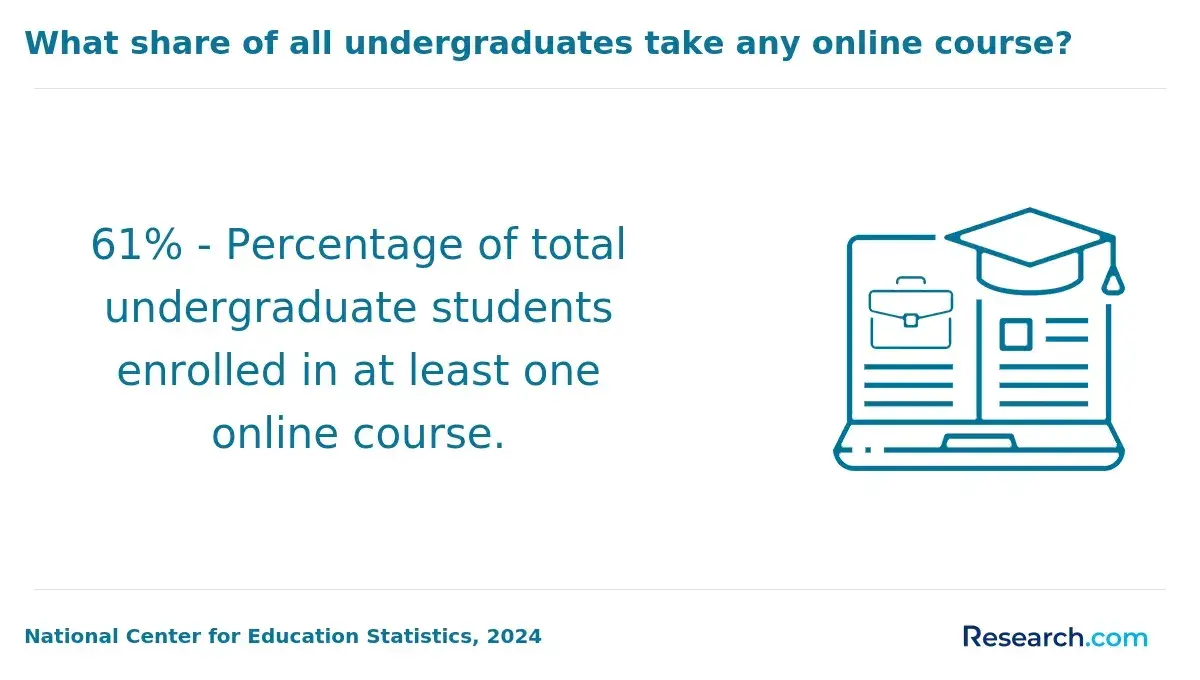
A bachelor's degree is normally the entry point to a counseling master's program. Psychology is common, but many CACREP programs admit students with majors such as sociology, education, human services, social work, communication, or health sciences. The best undergraduate route is one that helps you meet prerequisites and confirm that sustained client-facing work is a good fit.
For applicants without a four-year degree, 2 year online degrees can be a practical first step toward a bachelor's degree. An associate degree alone generally does not qualify someone for professional counselor licensure, but it may support transfer into a related undergraduate program.
These pathways serve different career goals and should not be treated as interchangeable.
| Goal | Typical degree route | Best fit for | Consider an alternative when |
| Provide psychotherapy and diagnose within state scope of practice | Bachelor's degree followed by CACREP clinical mental health counseling master's | Future LPC, LMHC, or similar licensed counselor candidates | You prefer psychological testing, medical training, or a research-intensive doctoral path |
| Support clients with disabilities, employment, adjustment, and independent living | Bachelor's degree followed by rehabilitation counseling master's | Vocational rehabilitation, disability services, community agencies, and some clinical roles | Your goal is primarily general outpatient psychotherapy |
| Work in college advising, career services, or student support | Master's in counseling, student affairs, higher education, or a related field | Academic advising, career development, residence life, and student success roles | You need eligibility for independent therapy practice |
| Provide psychiatric diagnosis and medication management | Medical, nursing, or advanced-practice nursing route | Students seeking prescribing authority | You primarily want talk therapy and counseling interventions |
College counseling deserves special attention. A campus counseling center may hire independently licensed clinicians, while career centers and advising offices may hire professionals with counseling, higher education, or student affairs degrees. Read job descriptions from the types of colleges where you hope to work; they reveal whether the employer expects clinical licensure, career-development preparation, or administrative student-services experience.
How do online CACREP counseling programs compare to campus-based options in quality and outcomes?
Online CACREP counseling programs can be a strong option for working adults, caregivers, and students who live far from a university. Quality depends less on whether lectures are online and more on whether the program provides structured skills practice, qualified faculty, responsive clinical-placement support, and field experiences that meet your state's requirements.
Online study does not mean fully remote clinical preparation. Counseling students generally complete in-person or live supervised skills work and arrange practicum and internship placements in approved local settings. Some programs help identify sites, while others expect students to secure a site themselves; this difference can affect both convenience and time to graduation.
Use this comparison to decide which delivery model fits your learning needs and local placement options.
| Factor | Online or hybrid program | Campus-based program | What to verify |
| Scheduling | Often offers asynchronous coursework with scheduled live sessions | Usually follows set class meeting times | Residency dates, synchronous attendance, and internship-hour availability |
| Skills training | May use secure video, live observation, and periodic intensives | Often uses on-campus labs and direct observation | How counseling skills are evaluated and recorded |
| Clinical placement | Typically completed near the student's community | May draw on established local agency relationships | Who approves, finds, and monitors sites |
| Networking | Can be geographically broad but requires intentional participation | Often stronger local faculty and employer connections | Alumni access, employer partnerships, and local professional networks |
| Cost | May reduce relocation and commuting costs | May offer resident tuition or campus resources | Total tuition, fees, travel, residency, and lost-work costs |
Choose online or hybrid study when you have reliable technology, can protect regular time for live practice, and can access suitable practicum sites locally. A campus program may be better when you need closer in-person mentoring, want a university's established local placement network, or learn counseling microskills most effectively face to face.
Do not assume an online program is accepted in every state. Ask the school whether it has determined that its curriculum meets requirements in your state, whether it enrolls students there, and whether your anticipated practicum site can be approved before you commit.
What admission requirements and prerequisites do CACREP counseling master's programs typically have?
Admission standards vary, but CACREP counseling master's programs commonly require a completed bachelor's degree from an institution with recognized institutional accreditation, official transcripts, a statement of purpose, recommendation letters, and a résumé. Many programs use holistic review, evaluating academic readiness alongside communication ability, helping experience, cultural awareness, and fit with professional counseling.
Applicants may encounter the following requirements. Treat them as a planning checklist rather than a guarantee, because each school sets its own policies.
- A bachelor's degree before the first graduate term, often in any major.
- A minimum undergraduate GPA or a conditional-admission review process.
- Prerequisite coursework in psychology, human development, statistics, or research methods at some institutions.
- A personal statement explaining professional goals, ethical awareness, and reasons for pursuing counseling.
- Professional or academic references that can address communication, maturity, and readiness for graduate study.
- An interview, writing sample, group exercise, background review, or technical-readiness assessment.
Relevant experience can strengthen an application, particularly work in behavioral health, schools, disability services, crisis support, case management, residential care, or community organizations. However, volunteer or entry-level experience does not substitute for the supervised clinical training required for licensure.
If you need a faster entry-level credential while deciding whether graduate counseling is right for you, review 6-month certificate programs that pay well. A short certificate may help with immediate employment, but it is not a substitute for a CACREP master's degree or professional counseling license.
A frequent mistake is writing a generic personal statement for every program. Instead, explain why the program's specialization, delivery format, clinical model, and population focus match your goals. Also disclose academic challenges thoughtfully when requested and show what has changed in your preparation since then.
What core courses and clinical training are included in CACREP mental health counseling curricula?
CACREP curricula combine counseling theory with practical clinical preparation. Students learn how to build therapeutic relationships, assess client needs, use evidence-informed interventions, document care, respond ethically, and work with clients across cultures and life stages. Programs also teach professional boundaries, consultation, advocacy, and crisis-related decision-making.
Core content commonly includes counseling orientation and ethics, social and cultural diversity, human growth and development, career development, counseling relationships, group counseling, assessment, research and program evaluation, and clinical mental health counseling. Rehabilitation counseling programs add deeper preparation in disability, vocational development, medical and psychosocial aspects of disability, and rehabilitation services.
Clinical training is where students apply classroom learning under supervision. CACREP standards for entry-level counseling programs require a practicum of at least 100 hours with at least 40 hours of direct service, followed by an internship of at least 600 hours with at least 240 direct-service hours. These are program minimums; state licensure requirements after graduation are separate and often much larger.
Before choosing a school, ask how students receive supervision, whether sessions are observed or reviewed, how the program prepares students for telehealth, and what support is available if a placement site closes or cannot provide enough client contact. Technology is increasingly part of counseling practice, but it should support - not replace - ethical judgment, confidentiality, and human clinical supervision.
How long do CACREP counseling programs take, and what do they cost to complete?
A 60-credit CACREP counseling master's program commonly takes about two to three years of full-time study, including practicum and internship. Part-time students often need longer because field placements require substantial weekly availability and may be difficult to complete while maintaining a full-time job.
Total cost is more informative than advertised tuition per credit. Your actual investment can include tuition, mandatory fees, books, technology, background checks, liability insurance, clinical-placement travel, residency travel, and reduced work hours during internship. Federal financial aid may be available to eligible graduate students, but borrowing limits and loan terms should be reviewed before enrollment.
The table identifies the main trade-offs affecting both completion time and budget.
| Enrollment choice | Potential advantage | Potential trade-off | Best for |
| Full-time | Shorter route to graduation and licensure eligibility | Less capacity for full-time employment during clinical training | Students with flexible work or financial support |
| Part-time | Can spread coursework and tuition payments over more terms | Longer completion timeline and delayed entry into post-degree supervision | Working adults who can sustain a longer schedule |
| Public institution | May offer lower tuition for qualifying residents | Resident eligibility and program availability vary | Students able to attend in-state or through an approved online option |
| Private institution | May provide distinctive schedules, support, or scholarships | Published tuition can be higher, though aid may change net cost | Students comparing net price and clinical-placement support rather than sticker price alone |
Build a written program budget before applying. Request the estimated total cost through graduation, expected fees, average field-placement workload, scholarship deadlines, and whether tuition changes after enrollment. Compare net cost after grants and scholarships, not tuition alone.
Students seeking work options before graduate school can explore 2 year online degrees that pay well. This can be useful for improving financial stability, but it should be viewed as a separate career step rather than a shortcut to clinical counseling licensure.
What counseling roles, settings, and career advancement options follow CACREP program completion?
CACREP program completion can lead to supervised early-career counseling roles while graduates work toward independent licensure. The setting you choose affects your client population, documentation demands, schedule, supervision, and compensation structure. Clinical mental health graduates often work in community agencies, hospitals, outpatient practices, residential programs, schools, telehealth organizations, and employee assistance programs.
Rehabilitation counseling graduates may work in state vocational rehabilitation agencies, disability service organizations, veterans' programs, workforce-development settings, behavioral health agencies, and independent living programs. College-focused professionals may work in counseling centers, career centers, academic advising, accessibility services, student success offices, and student affairs departments.
These examples show how responsibilities can change as training and licensure progress.
| Career stage | Typical role | Typical responsibilities | Advancement option |
| Graduate trainee | Practicum or internship counselor | Provide supervised counseling, complete case notes, participate in supervision | Complete degree and qualify for an associate or provisional credential |
| Post-master's supervised professional | Associate counselor or counselor intern | Deliver client services under required supervision | Earn independent clinical license |
| Independently licensed clinician | Outpatient therapist, agency counselor, college clinician | Assess, treat, document, coordinate care, and maintain continuing education | Specialize, supervise, manage programs, or develop a private practice where permitted |
| Advanced leadership path | Clinical supervisor, director, educator, consultant | Lead teams, oversee services, train staff, evaluate programs | Pursue doctoral study, administration, teaching, or specialized credentials |
Career advancement depends on licensure, supervised experience, professional reputation, and the needs of an employer or community. A master's degree is a strong foundation, but it does not guarantee a private practice, a faculty position, or a particular specialty. Seek placements that expose you to the population and setting you may want after licensure.
What salary ranges and job outlook can graduates of CACREP counseling programs expect?
Salary depends on role, state, metropolitan area, license level, employer type, caseload, and experience. A CACREP degree can support access to counseling roles, but reported occupation-wide wage data should not be interpreted as a starting salary or a promise for any individual graduate.
The U.S. Bureau of Labor Statistics reported a median annual wage of $53,710 for substance abuse, behavioral disorder, and mental health counselors in 2023. The same occupation is projected to grow 19% from 2023 to 2033, much faster than the average for all occupations. That outlook reflects demand for behavioral health services, but job availability and pay remain local and can differ across community agencies, hospitals, schools, and private practices.
The following national occupation figures provide useful context for comparing broad counseling directions.
| Occupation group | 2023 median annual wage | Projected employment growth, 2023-2033 | How to use the figure |
| Substance abuse, behavioral disorder, and mental health counselors | $53,710 | 19% | Relevant benchmark for many clinical mental health counseling positions |
| Rehabilitation counselors | $44,860 | 2% | Broad benchmark; specialized clinical, government, or disability-service roles may differ |
| School and career counselors and advisors | $61,710 | 4% | Includes school and career roles and does not represent all college counseling-center clinicians |
For a realistic return-on-investment estimate, compare local job postings with your program's total cost, expected debt, time spent in lower-paid supervised roles, and the compensation associated with independent licensure in your area. Ask programs for transparent completion, internship, licensure-exam, and employment information when available, while recognizing that outcomes are influenced by student circumstances and local labor markets.
How can students evaluate and choose a reputable CACREP-accredited counseling program?
The smartest choice is the program that matches your intended license, state, budget, schedule, and client population - not simply the school with the lowest tuition or most recognizable name. Start with the state where you expect to complete practicum, internship, and early supervised employment, because those decisions can shape your licensure timeline.
Use these steps before accepting an offer. They help prevent expensive mismatches between a program's design and your career objective.
- Confirm that the exact specialization is CACREP-accredited and check the accreditation status directly with the accreditor and the institution.
- Compare the curriculum against the educational requirements of your intended state licensing board, including required clinical mental health coursework.
- Ask whether the program can enroll students in your state and whether it has made a licensure determination for that location.
- Request clear information about practicum and internship placement: site approval, placement support, direct-service hours, supervision, and what happens if a site falls through.
- Calculate total cost through graduation, including fees, travel, technology, insurance, and likely reductions in work hours during internship.
- Evaluate schedule realism by mapping live classes, residency obligations, fieldwork, study time, employment, and caregiving responsibilities.
- Speak with admissions staff, current students, and alumni about faculty access, clinical preparation, completion support, and local employer connections.
Watch for red flags: vague answers about state licensure, unclear placement responsibility, pressure to enroll before you understand the total cost, claims that online study is accepted everywhere, or promises of income and licensure outcomes. Reputable programs explain both their strengths and the requirements students must satisfy after graduation.
If two programs appear similar, prioritize the one that gives the clearest written answers about local licensure alignment, clinical placement support, total cost, and the schedule required during internship. Those details are more likely to affect your completion experience than marketing language alone.
Other Things You Should Know About Clinical Mental Health Counseling
Not in every state. Some licensing boards accept non-CACREP degrees if they meet specific coursework and supervised-training requirements. However, CACREP accreditation can simplify educational review and may be preferred by some employers or required for certain opportunities. Check the licensing board in your intended state.
Possibly, but it depends on the program curriculum and state rules. Some rehabilitation counseling programs support clinical licensure pathways, while others focus more heavily on vocational and disability services. Confirm in writing whether the degree meets your state's educational requirements for the license you want.
Many students work during coursework, particularly in part-time or online programs. Practicum and internship can be harder to combine with full-time employment because they require scheduled client-contact hours, supervision, documentation, and site availability. Build your employment plan around the fieldwork terms.
Both are common state titles for independently licensed professional counselors. The title, application process, examination, required supervision, and scope of practice are set by each state. The underlying career goal - independent clinical counseling practice - is often similar, but you should follow the rules of the state where you plan to practice.
References
- Best Counseling Programs by State 2026 | CACREP-Accredited LPC, LMHC, LPCC Schools https://psychprograms.com/programs/counseling-programs-by-state/
- CACREP 2026 Changes: Clinical Mental Health Counseling https://www.counselingpsychology.org/articles/cacrep-accreditation-clinical-mental-health-counseling-2026-08-12/
- CACREP-Accredited Online Counseling Programs https://onlinecounselingprograms.com/online-counseling-degrees/cacrep-accredited/
- For Students - CACREP https://www.cacrep.org/for-students/
- 15 Top CACREP Accredited Programs California Offers for Clinical Mental Health Counseling - Psychology California https://psychologyca.org/masters-programs/cacrep-accredited-clinical-mental-health-counseling/