2027 Which Accreditation Matters for Communication, Journalism, and Writing Degrees?

Co-Founder and Chief Data Scientist
Choosing a communication, journalism, or writing degree without checking accreditation can create problems with financial aid, transfer credits, and graduate admission later. Institutional accreditation is the essential credential for most students, while specialized journalism accreditation can be a useful quality signal rather than a universal career requirement.
With public relations specialists earning a median $69,780 in May 2024, according to the U.S. Bureau of Labor Statistics (BLS), it is worth comparing programs carefully. This guide explains what to verify, when specialized accreditation matters, and how to choose a program that fits your goals.
Key Things You Should Know
- Choose a school with recognized institutional accreditation first: it is the accreditation most likely to affect federal financial aid, credit transfer, employer confidence, and graduate-school eligibility.
- ACEJMC accreditation is a valuable program-level signal for journalism and mass communication, but it is not required for most writing, public relations, content, marketing, or media careers.
- BLS reported a $69,780 median annual wage for public relations specialists in May 2024; strong portfolios, internships, digital skills, and a recognized degree can matter as much as specialized program accreditation in this field.
Which types of accreditation matter most for communication, journalism, and writing degrees?
For communication, journalism, and writing students, institutional accreditation matters most. It means the college or university as a whole has been reviewed by an accrediting agency recognized by the U.S. Department of Education and/or the Council for Higher Education Accreditation (CHEA). This status is the baseline to check before comparing curriculum, tuition, delivery format, or reputation.
Programmatic accreditation can add useful evidence of quality, especially for journalism and mass communication. The Accrediting Council on Education in Journalism and Mass Communications (ACEJMC) evaluates eligible professional programs using standards related to curriculum, diversity, student learning, faculty, facilities, and professional practice. However, ACEJMC status is not a legal requirement to work as a journalist, writer, editor, social media manager, or public relations specialist.
The following comparison shows how each type should affect a prospective student's decision.
| Accreditation type | What it reviews | Why it matters | Best use in your decision |
| Institutional accreditation | The college or university overall | Federal aid access, transfer-credit review, degree legitimacy, and many graduate admissions decisions | Make this a nonnegotiable first screen |
| Programmatic accreditation | A specific department or professional program | Evidence that a journalism or mass communication program meets field-specific standards | Use it to compare similar programs, not as the only quality measure |
| State authorization | Whether an institution may enroll students in a state | Especially relevant for online learners and complaint processes | Confirm your state is authorized before enrolling online |
| Professional affiliations | Connections to industry groups or student chapters | Networking, speakers, competitions, and career exposure | Treat as a helpful supplement, not accreditation |
Writing programs often do not have a widely used specialized accreditor equivalent to ACEJMC. For creative writing, professional writing, technical writing, and rhetoric programs, evaluate institutional accreditation alongside faculty qualifications, workshop opportunities, internship access, publication outlets, portfolio requirements, and graduate outcomes.
How can I verify if a communication or journalism program is properly accredited?
Do not rely solely on a school's marketing language. Terms such as "licensed," "approved," "registered," or "recognized" do not necessarily mean an institution holds recognized accreditation. Verify the school and, when relevant, the department separately.
Use this process before applying, accepting admission, or paying a deposit.
- Find the school in the U.S. Department of Education's Database of Accredited Postsecondary Institutions and Programs and confirm that its institutional accreditor is recognized.
- Check CHEA's directory as an additional verification source, particularly if the school names an accrediting agency you do not recognize.
- Read the accreditor's listing to confirm the institution's current status, location, and any conditions or notices.
- If the program claims ACEJMC accreditation, verify the specific campus and program on ACEJMC's current accredited-program list.
- Ask admissions whether your exact online or on-campus program leads to the same degree and appears on the same institutional accreditation record.
- Request the written transfer-credit, financial-aid, and graduation requirements before enrolling.
A school may be institutionally accredited even when a particular communication concentration is not ACEJMC-accredited. That is not automatically a red flag. The more serious concern is an institution that cannot identify a recognized accreditor, uses vague language instead of naming one, or pressures applicants to enroll before they can review policies.
Also check timing. Accreditation can be reaffirmed, placed under warning, withdrawn, or held in candidacy status. Candidacy is not the same as full accreditation, and its effect on aid, transfer, or graduate admissions can vary. Get confirmation in writing if your enrollment decision depends on that distinction.
What is the difference between regional, national, and programmatic accreditation?
The labels regional and national are still common in college-search conversations, but they are less precise than they once were. Historically, regional accreditors primarily reviewed nonprofit and public institutions in assigned geographic areas, while national accreditors often reviewed career-focused, technical, or distance-learning institutions. Changes to federal recognition rules mean several former regional accreditors now operate nationally.
For today's applicants, the practical question is not whether an accreditor is labeled regional or national. Ask whether the accreditor is recognized by the U.S. Department of Education and whether the institutions you may transfer to, employers you value, and graduate schools you may attend accept coursework from that school.
This distinction helps explain how the categories function in practice.
| Term | Current meaning | What students should check |
| Institutional accreditation | External review of the entire institution by a recognized accrediting agency | Recognition status, current standing, financial-aid eligibility, and transfer policies |
| "Regional" accreditation | A legacy term for accreditors historically tied to geographic regions; many now accredit nationally | The actual accreditor and how receiving schools evaluate credits |
| "National" accreditation | A legacy term often associated with career, faith-based, technical, or distance institutions | Recognition status and whether intended transfer or graduate schools accept the credits |
| Programmatic accreditation | Review of a specific discipline, department, or professional program | Whether it applies to your exact major and supports your intended career path |
Transfer outcomes remain institution-specific. Even when both schools are accredited, the receiving institution decides which credits meet its degree requirements. Students planning to begin at a lower-cost institution and transfer should obtain a preliminary transfer evaluation whenever possible.
uth
Are online communication and journalism degrees viewed differently by employers and accreditors?
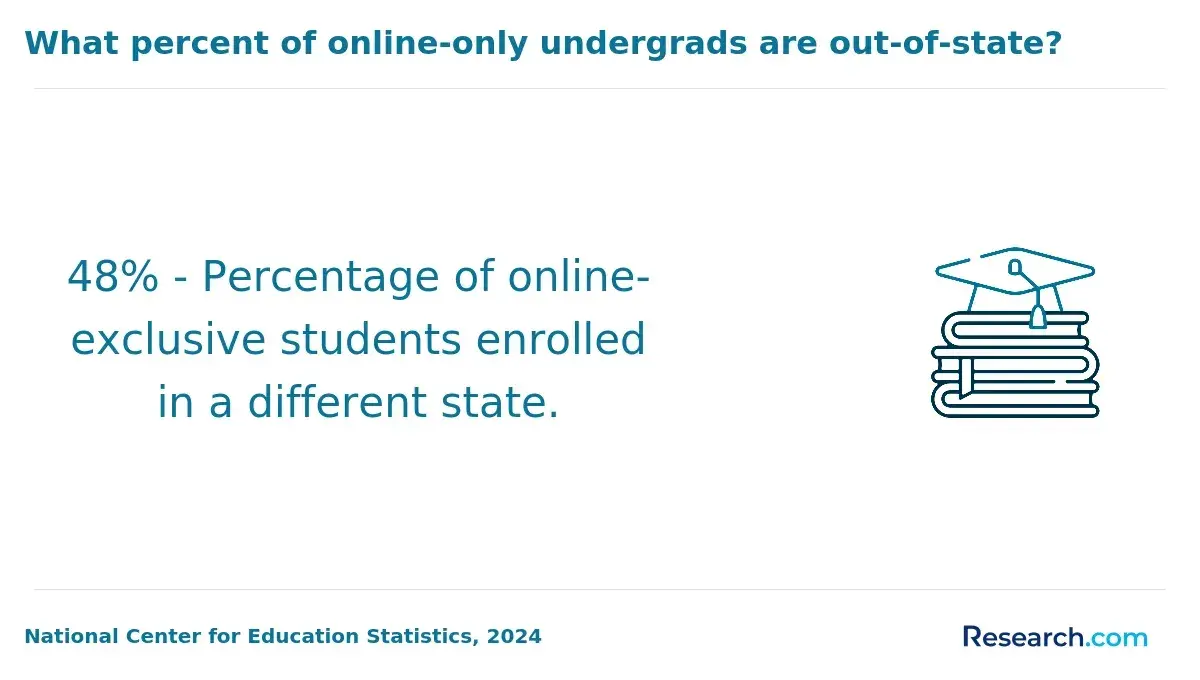
Accreditors generally evaluate whether an online program delivers appropriate academic quality, student support, assessment, faculty oversight, and learning resources. A properly accredited online program can be a sound choice when the institution is recognized and the online curriculum is substantively comparable to its campus offering.
Most employers focus more on the degree-granting institution, relevant experience, work samples, and job-ready capabilities than on whether courses were taken online. This is particularly true in fields where applicants can demonstrate reporting, editing, design, audience analytics, campaign work, video production, or published writing. Still, employers may ask different questions when a résumé does not clearly show evidence of applied learning.
Compare delivery methods based on the type of learning and support you need, not on assumptions about format.
| Factor | Online program may fit best when | Campus program may fit best when |
| Schedule | You work, care for family, or need asynchronous access | You can attend fixed class, newsroom, studio, or workshop times |
| Portfolio development | The program includes remote publishing, critique, internships, and faculty feedback | You want in-person student media, production facilities, and daily collaboration |
| Networking | The school provides structured virtual events, advising, alumni access, and career services | You benefit from local industry events and face-to-face faculty relationships |
| Learning style | You manage deadlines independently and communicate proactively | You need regular in-person structure and immediate access to peers |
Flexibility should not be confused with reduced workload. Students considering self paced colleges should confirm whether courses are truly self-paced, whether deadlines still apply, and how quickly instructors return feedback on writing and projects. Communication and journalism education depends heavily on revision, critique, and production cycles.
A common mistake is enrolling in an online program because it is convenient without confirming access to internships, student publications, software, library services, career coaching, and state authorization. Ask whether online students can join the newspaper, radio station, literary journal, or professional organizations, even remotely.
Do journalism and writing majors need specialized programmatic accreditation for careers?
No. Most communication, journalism, and writing careers do not require graduation from a programmatically accredited department. Employers in news, public relations, publishing, marketing, corporate communications, nonprofit advocacy, and content operations typically assess a candidate's education, portfolio, experience, interviewing ability, and relevant technical skills.
ACEJMC accreditation can still be valuable. It indicates that an eligible journalism or mass communication program has undergone specialized peer review, and it may appeal to students who want a traditional newsroom, broadcast, strategic communication, or media-production education. It can also offer a structured way to compare otherwise similar four-year programs.
Specialized accreditation is most useful in the following circumstances.
- You are comparing journalism or mass communication departments with similar tuition, location, and institutional accreditation.
- You want substantial access to student media, reporting labs, broadcast facilities, professional internships, and faculty with industry experience.
- You may pursue a graduate program or academic path that values a well-documented professional curriculum.
- You want external evidence that the department regularly assesses learning outcomes and professional standards.
It is less important when the program's portfolio opportunities, faculty mentoring, internship pipeline, and total cost are clearly stronger elsewhere. A writer pursuing fiction, grant writing, UX writing, technical communication, or content strategy may find that a non-specialized English, professional writing, or interdisciplinary program is a better academic match.
The key question is whether the curriculum produces evidence of your abilities. Before enrolling, ask to see examples of student publications, capstone projects, internship partners, career outcomes, and the kinds of feedback students receive on drafts and multimedia work.
How does accreditation affect transfer credits, graduate school admission, and financial aid eligibility?
Institutional accreditation has its greatest practical effect on what happens after enrollment. A recognized institution is generally better positioned to participate in federal student aid programs, and its coursework is more likely to receive consideration from other colleges and graduate schools. "More likely" does not mean automatic: each receiving school sets its own transfer and admission rules.
Accreditation is especially important if you plan to start with an associate degree and continue to a bachelor's program. Students exploring an associates degree should compare articulation agreements, major prerequisites, and transfer-credit limits before selecting courses. The easiest path to complete is not necessarily the best path to transfer into a communication major.
These are the main ways accreditation affects common education decisions.
| Decision | How accreditation matters | What to confirm before enrolling |
| Federal financial aid | Students generally must attend an eligible institution to use federal aid programs | Institutional eligibility, your program's eligibility, and your individual aid status |
| Transfer credits | Receiving institutions review course quality, grades, equivalencies, and accreditation | Written transfer pathways, maximum credits accepted, and major-course requirements |
| Graduate admission | Many graduate schools expect a bachelor's degree from a recognized institution | Minimum GPA, prerequisite courses, portfolio, tests if required, and institutional recognition |
| Employer tuition assistance | Some employers limit reimbursement to accredited institutions or approved programs | Your employer's written reimbursement policy before paying tuition |
Financial aid eligibility also depends on factors beyond accreditation, including enrollment status, satisfactory academic progress, program length, and individual eligibility. Contact the financial-aid office rather than assuming a school's accreditation alone makes every credential aid-eligible.
A costly mistake is treating transfer as a future problem. Before starting, send your planned course list to the intended receiving institution and retain syllabi, catalog descriptions, assignments, and official transcripts. These records can help when a transfer evaluator needs more detail.
What curriculum standards do accrediting bodies expect in communication and journalism programs?
Accrediting bodies typically do not require every communication or journalism student to take identical classes. Instead, they look for a coherent curriculum, qualified faculty, measurable learning outcomes, ethical standards, student support, and processes for improving the program. ACEJMC's standards emphasize professional values and competencies alongside a broad education.
A strong program should develop both durable communication judgment and practical production ability. That balance matters as employers adopt AI-supported drafting, transcription, audience analysis, and content workflows: graduates need to use tools responsibly while still verifying facts, protecting sources, recognizing bias, and making sound editorial decisions.
Look for meaningful coverage of the following areas when reviewing course catalogs and degree maps.
- Writing, editing, research, information evaluation, and audience-centered communication.
- Media law, ethics, freedom of expression, privacy, copyright, and responsible use of digital tools.
- Reporting, interviewing, multimedia storytelling, visual communication, audio or video production, and data literacy where relevant.
- Strategic communication, public relations, advertising, social media, or audience analytics for students pursuing organizational communication roles.
- Internships, practicum courses, student media, capstones, workshops, or portfolio reviews that require applied work.
- Inclusive communication and the ability to work with diverse communities, audiences, and viewpoints.
For writing-focused degrees, curriculum quality is visible in the revision process. Look for small-group workshops where possible, sustained instructor feedback, editing practice, genre-specific assignments, publication opportunities, and a capstone portfolio. A program with impressive course titles but few opportunities to revise and publish may not provide enough evidence for employers.
Ask whether generative AI is addressed explicitly in the curriculum. The most useful policies explain acceptable assistance, attribution, fact-checking, confidentiality, intellectual-property concerns, and when original reporting or writing must be independently produced.
How should I compare accredited schools offering communication and writing degrees online vs on campus?
Start with accreditation, then compare the full educational and financial fit. Tuition alone can be misleading because required fees, technology, travel, housing, lost work hours, transfer credits, and the time needed to finish can change the total cost substantially. A lower-priced program is not necessarily the better value if it lacks the concentration, support, or transfer pathway you need.
Accelerated options can make sense for students with prior credits, strong time-management skills, and a clear career target. If speed is a priority, compare quick degree programs carefully for recognized accreditation, realistic course loads, transfer policies, and whether rapid completion leaves enough time for internships and portfolio work.
Use this comparison to weigh the factors that most often determine value in communication and writing degrees.
| Comparison factor | Questions to ask | Why it matters |
| Accreditation and authorization | Who accredits the institution? Is the exact online offering available to students in my state? | Protects aid, transfer, and degree-recognition options |
| Total cost | What are tuition, mandatory fees, technology costs, materials, travel, and estimated completion time? | Shows the likely investment beyond the advertised per-credit price |
| Curriculum fit | Can I take reporting, PR, creative writing, technical writing, media production, or analytics courses aligned with my goal? | Prevents paying for a broad major that misses your intended specialty |
| Applied experience | Are internships, capstones, publications, labs, client projects, or portfolio reviews built into the degree? | Creates work samples employers can assess |
| Student support | What advising, tutoring, accessibility, library, career, and internship services are available to online students? | Influences persistence and access to opportunity |
| Outcomes transparency | Does the school share completion, retention, career, and debt information with definitions and time frames? | Helps distinguish evidence from promotional claims |
After narrowing your choices, speak with a faculty member or program director rather than only an enrollment representative. Ask how many students complete internships, what a typical capstone looks like, how online students receive feedback, and whether graduates have entered roles similar to the one you want.
Avoid choosing on rankings or prestige alone. For a future public relations specialist, editor, content writer, or communications coordinator, a manageable debt level, a credible portfolio, and sustained professional connections can be more useful than a name without hands-on opportunities.
What career paths, salaries, and job outlook are linked to accredited communication degrees?
An accredited communication-related degree can support several career paths, but accreditation alone does not determine pay or employment. Salary varies by occupation, location, industry, experience, writing or technical specialization, and the strength of an applicant's portfolio. BLS occupational figures describe workers in an occupation, not a guaranteed outcome for new graduates or graduates of any particular school.
The table below uses U.S. BLS median annual wage data for May 2024 and projected employment change for 2024-2034. Use it as a broad labor-market reference when matching a concentration to a career target.
| Career path | Typical work | Median annual wage | Projected employment change, 2024-2034 |
| Public relations specialist | Builds organizational reputation, prepares communications, manages media relationships | $69,780 | 6% |
| Writer and author | Creates content for books, digital media, businesses, and other publications | $72,270 | 4% |
| Technical writer | Explains complex products, systems, and processes for users or professionals | $91,670 | 1% |
| News analyst, reporter, or journalist | Researches, verifies, and presents news and analysis | $60,280 | -4% |
These figures suggest that students should choose a concentration intentionally. Public relations and strategic communication can fit students who enjoy relationship-building, campaigns, messaging, and organizational work. Technical writing can suit students who like precision and can pair writing with science, engineering, health, software, or product knowledge. Journalism remains a meaningful path for students committed to reporting and public-interest information, but the projected decline underscores the value of versatile digital, visual, data, and audience-engagement skills.
Graduate study can help with specialization, career pivots, or advanced research and leadership goals, but it is not required for many entry-level roles. Professionals considering an accelerated graduate option should assess whether a 6 month masters degree provides the depth, portfolio development, networking, and recognized institutional accreditation needed for their target role.
Early-career roles may include communications coordinator, editorial assistant, content specialist, social media coordinator, junior copywriter, production assistant, or community outreach assistant. Build experience through internships, campus media, freelance assignments, volunteer communications work, and a portfolio organized around the roles you plan to pursue.
Are there licenses, certifications, or professional memberships that rely on accreditation status?
Most communication, journalism, and writing jobs do not require a state license, and there is no universal professional certification that requires an ACEJMC-accredited degree. This differs from fields such as nursing, teaching, engineering, or counseling, where programmatic accreditation and state licensure can be central employment requirements.
Institutional accreditation can still matter indirectly. Employers offering tuition reimbursement may require an accredited school, graduate certificates may require a bachelor's degree from a recognized institution, and some professional credentials have education or experience prerequisites that a recognized degree can help document.
Professional memberships and voluntary certifications can be useful when they match your career direction.
- Public relations professionals may pursue industry education, networking, and voluntary credentials through professional associations.
- Journalists can benefit from press associations, investigative reporting groups, local media organizations, and student media networks.
- Technical communicators may seek communities and training focused on documentation, content design, usability, and content operations.
- Writers may join genre, editorial, publishing, grant-writing, or freelance organizations that offer professional development and market access.
Before paying for any credential, confirm whether employers in your target role actually request it. In many communication careers, a current portfolio, relevant software skills, ethical judgment, and a record of meeting deadlines carry more hiring weight than a general certificate.
Be cautious of organizations that imply a membership badge is equivalent to recognized academic accreditation or that promise employment. Legitimate professional memberships can be valuable, but they do not replace a degree, experience, or a verifiable body of work.
Other Things You Should Know About Communications
No. Journalism employers generally do not require an ACEJMC-accredited degree. ACEJMC accreditation can signal a structured professional curriculum, but clips, reporting ability, ethics, multimedia skills, internships, and professional relationships are usually more directly relevant to hiring.
Possibly. The institution and program generally must be eligible for federal student aid, and you must meet individual eligibility requirements. Confirm the school's current aid participation and ask the financial-aid office about your specific program and enrollment status.
Many will consider an online bachelor's degree from a recognized institution. Graduate admissions may also evaluate GPA, prerequisite coursework, writing samples, recommendations, professional experience, and the specific requirements of the program.
The biggest red flag is a school that does not clearly name a recognized institutional accreditor or cannot be verified in official accreditation directories. Also be cautious if the school makes broad transfer, salary, or job-placement promises without written policies and clearly defined outcome data.
References
- What Is Accreditation Vs Licensure In Health Care? - SCI https://scitexas.edu/blog/what-is-accreditation-vs-licensure/
- Highest Paying Careers | Careers | CareerOneStop https://www.careeronestop.org/Toolkit/Wages/highest-paying-careers.aspx
- Admission Requirements | Undergraduate Admissions + Programs https://www.ualberta.ca/en/admissions/how-to-apply/admission-requirements/index.html
- Transforming Your Future: A Comprehensive Guide to Choosing the Right Certification Program https://news.ibqmi.org/transforming-your-future-a-comprehensive-guide-to-choosing-the-right-certification-program
- Accreditation and Licensing: Legal Requirements for Educational Institutions - The Consultant Global https://theconsultantglobal.com/accreditation-and-licensing-legal-requirements-for-educational-institutions/
- How long does employee training take during business transformation? - optinus https://optinus.com/blog-artikelen/how-long-does-employee-training-take-during-business-transformation/
- Choosing an Online Certification Course: A Step-by-Step Guide https://www.qahe.org/article/choosing-an-online-certification-course-a-step-by-step-guide/