2027 Does FEPAC Accreditation Matter for Crime Laboratory Careers?

Co-Founder and Chief Data Scientist
If you want to work in a crime lab, choosing the wrong degree can leave you short of required science credits even if the program sounds forensic-focused. FEPAC accreditation can be a valuable quality signal, but it is rarely a universal hiring requirement. The U.S. Bureau of Labor Statistics projects 13% growth in forensic science technician employment from 2024 to 2034. This guide helps prospective students compare accredited, non-accredited, online, and science-major pathways based on the job they actually want.
Key Things You Should Know
- FEPAC accreditation matters most as evidence that a forensic science program has structured laboratory training, appropriate faculty resources, and curriculum review; it does not automatically qualify a graduate for every crime laboratory job.
- Many entry-level analyst positions prioritize a bachelor's degree plus specific coursework in biology, chemistry, or a related natural science; DNA roles may require substantial biology coursework under FBI quality standards.
- The U.S. Bureau of Labor Statistics projects 13% employment growth for forensic science technicians from 2024 to 2034, but openings remain competitive and applicants need documented hands-on laboratory preparation.
How does FEPAC accreditation impact hiring and advancement in crime laboratory careers?
FEPAC accreditation can strengthen an application because it gives employers a recognizable indication that a forensic science curriculum has been evaluated against field-specific educational standards. It is not a substitute for meeting a job posting's stated degree, credit-hour, background-investigation, and laboratory-experience requirements.
For entry-level hiring, a FEPAC-accredited degree can be particularly helpful when a recruiter must compare applicants from programs with similar titles. For advancement, however, demonstrated casework competence, quality-system knowledge, courtroom communication, specialized training, and agency experience usually carry more weight than the accreditation status of a degree earned years earlier.
This comparison shows where accreditation can influence a career decision and where students should focus on other evidence of readiness.
| Career stage | How FEPAC accreditation may help | What still matters more |
| Applying for internships | Signals a curriculum designed around forensic laboratory practice | Science prerequisites, GPA, lab safety record, and availability for placement |
| Entry-level analyst hiring | Helps employers recognize the degree's forensic focus | Required chemistry or biology credits, instrument experience, and background eligibility |
| Training after hire | May reduce gaps in terminology and evidence-handling concepts | Successful agency training, proficiency testing, and supervised casework |
| Promotion or specialization | Provides an educational foundation | Casework performance, technical expertise, leadership, and agency policies |
Students should read actual job announcements from state police laboratories, municipal agencies, medical examiner offices, and federal employers before selecting a major. A degree can be accredited and still lack the exact coursework a DNA, toxicology, controlled-substances, or trace-evidence position requires.
What is FEPAC accreditation and how does it apply to forensic science programs?
FEPAC is the Forensic Science Education Programs Accreditation Commission. It accredits qualifying forensic science education programs rather than entire colleges, individual students, professional certifications, or crime laboratories. Its review addresses areas such as curriculum, laboratory resources, faculty qualifications, student support, assessment, and program administration.
A school's institutional accreditation and a program's FEPAC accreditation answer different questions. Institutional accreditation concerns the college as a whole and affects matters such as federal financial aid and credit transfer. FEPAC asks whether a specific forensic science program meets specialized educational expectations.
FEPAC accreditation is most relevant for students seeking a broad forensic science degree with direct laboratory career preparation. It may be less important for a student pursuing a traditional chemistry or biology degree, especially when that major provides stronger depth in the discipline required for a targeted analyst role.
Do not assume that every program using terms such as "forensics," "criminalistics," or "crime scene investigation" is FEPAC-accredited. Verify the status of the precise degree and campus or delivery format, and ask whether accreditation is current rather than relying on old marketing materials.
Do crime laboratories prefer or require graduates from FEPAC-accredited programs?
Most crime laboratories do not universally require a FEPAC-accredited degree. They commonly require a bachelor's degree in a natural science, forensic science, or a closely related field, then specify courses and laboratory credits appropriate to the discipline. A job announcement is the controlling document, not a general assumption about what "forensic science" means.
For example, forensic biology and DNA positions often scrutinize biology, chemistry, genetics, molecular biology, biochemistry, and statistics coursework. Drug chemistry and toxicology roles may favor substantial analytical chemistry preparation. A general criminal justice degree, even with forensic electives, often does not meet analyst requirements by itself.
Hiring also commonly includes an extensive suitability review. Applicants with a record should review agency standards early, understand that rules vary by employer and offense, and consider resources about college degrees for felons alongside direct conversations with prospective employers. Schools cannot promise that a degree will overcome a background disqualification.
A practical way to interpret a job ad is to separate preferred qualifications from minimum qualifications. "FEPAC-accredited program preferred" can improve competitiveness, while "bachelor's degree with specified semester hours" is a threshold requirement that must be met before preference is considered.
What education and training pathways lead to entry-level crime laboratory positions?
The most reliable pathway to a bench analyst role is a bachelor's degree with a strong natural-science foundation, followed by an internship, agency trainee role, or supervised laboratory training. The best major depends on the unit where you want to work rather than on the broad appeal of the word "forensics."
The pathways below clarify which education choices generally align with common laboratory functions.
| Target role | Common educational fit | Important preparation |
| Forensic biology or DNA analyst | Bachelor's in biology, biochemistry, molecular biology, or qualifying forensic science | Genetics, molecular biology, chemistry, statistics, and wet-lab work |
| Controlled-substances or toxicology analyst | Bachelor's in chemistry, biochemistry, or qualifying forensic science | Analytical chemistry, organic chemistry, instrumental analysis, and laboratory documentation |
| Trace evidence examiner | Bachelor's in chemistry, materials science, biology, or forensic science | Microscopy, spectroscopy, analytical methods, and comparison work |
| Crime scene technician | Associate or bachelor's degree, depending on agency | Photography, evidence collection, report writing, and scene-processing training |
| Laboratory support or evidence technician | High school diploma, associate degree, or bachelor's degree, depending on employer | Chain of custody, records, evidence handling, and quality procedures |
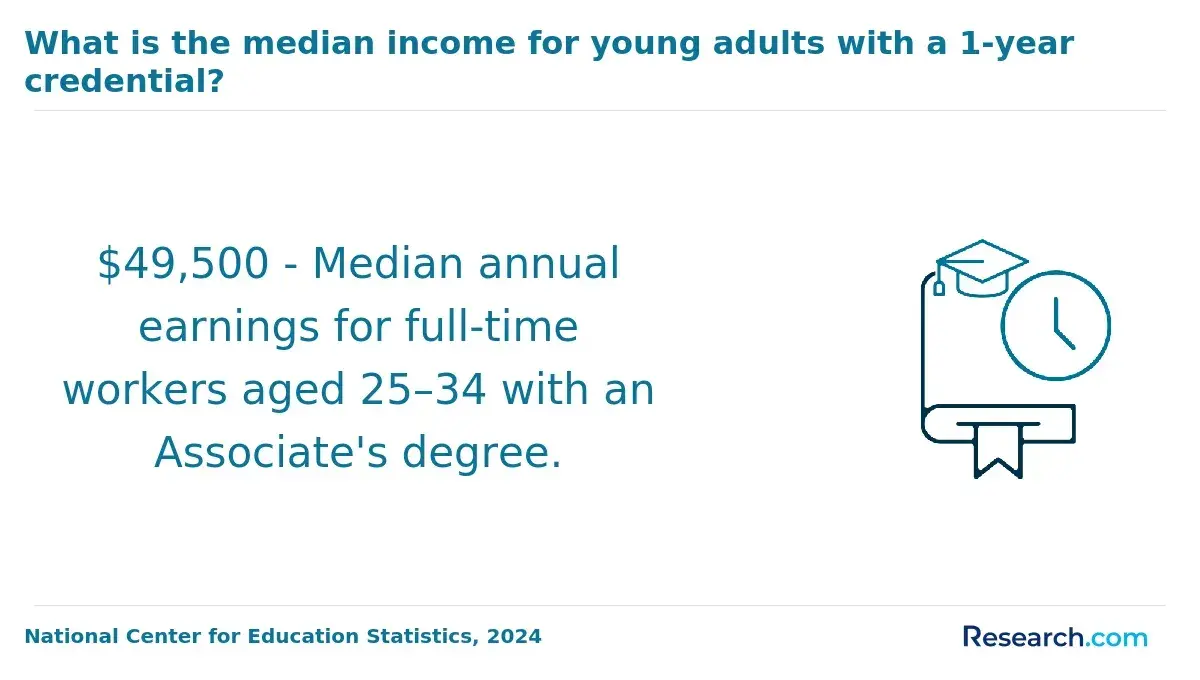
An associate degree can be useful for evidence, property, or technician roles, but it usually is not enough for scientific analyst positions. Students considering short formats should recognize that online associate degrees completed quickly may build career momentum but generally cannot replace the upper-level laboratory science sequence required for analyst work.
Before enrolling, take these steps to protect your options.
- Collect several job postings for the laboratory discipline and geographic area you want.
- Make a course-by-course checklist of every stated science and laboratory requirement.
- Confirm that your program offers those courses with hands-on labs rather than simulations alone.
- Ask whether students obtain internships, practicum placements, or research opportunities in operational laboratories.
- Keep course syllabi and official transcripts, because employers may review coursework in detail.
How do FEPAC-accredited forensic science degrees compare with non-accredited programs?
A FEPAC-accredited program is often the clearer choice for students who want an integrated forensic science curriculum and have not yet selected a specialty. A non-accredited program can be equally sensible when it is a rigorous chemistry or biology major that maps directly to a desired laboratory unit. The meaningful comparison is curriculum evidence, not the label alone.
This table identifies the trade-offs students should examine before treating accreditation as a shortcut for quality.
| Factor | FEPAC-accredited forensic science program | Non-accredited forensic science or natural-science program |
| Curriculum structure | Designed around forensic science educational standards | Varies substantially by school and major |
| Employer readability | Provides a recognizable program-quality signal | May require closer review of transcripts and course descriptions |
| Science depth | Can be broad, but depth differs by concentration | A chemistry or biology major may offer deeper discipline-specific preparation |
| Laboratory experience | Expected within the program, though facilities and hours still vary | Must be verified carefully, especially for online or interdisciplinary programs |
| Best fit | Students seeking a forensic-centered, on-campus laboratory pathway | Students targeting a specific scientific specialty or lower-cost transfer route |
A common mistake is choosing a non-accredited program solely because its title sounds specialized, without checking advanced chemistry, biology, and laboratory requirements. The opposite mistake is rejecting a strong chemistry or biology department simply because it is not FEPAC-accredited. For technical analyst jobs, a transcript that exceeds the science prerequisites may be more valuable than a broad degree title.
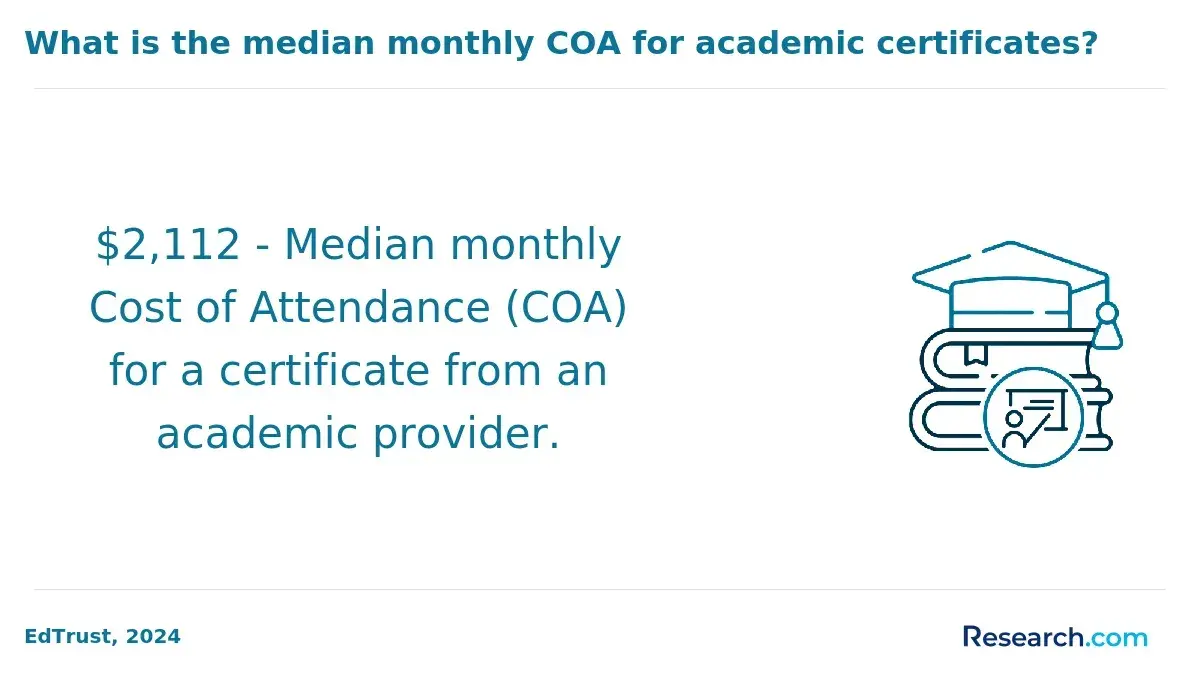
Cost should be compared as total net price, time to completion, commuting, required lab fees, and the risk of needing extra science courses after graduation. Accreditation can reduce curriculum uncertainty, but it does not by itself make a program affordable or ensure placement.
Can you qualify for crime laboratory roles with online forensic science or related degrees?
Yes, an online degree can support some crime laboratory career goals, but the answer depends on the role and on how laboratory requirements are delivered. Employers generally focus on whether the degree is from an appropriately accredited institution and whether the applicant completed the required science courses and credible hands-on laboratory work.
Fully online programs are usually a weaker fit for bench analyst positions when they rely on virtual labs for chemistry, biology, microscopy, or instrumentation. A hybrid program with intensive, documented in-person laboratories can be more defensible, particularly if it also provides research, internship, or practicum access. Online study can work well for criminal justice, laboratory management, evidence administration, or degree-completion coursework when the target position does not require advanced wet-lab preparation.
Candidates targeting support positions rather than specialized analyst posts can establish strong academic momentum through an online associate degree in criminal justice or laboratory technology. These two-year credentials prepare graduates for entry-level roles in evidence handling and property custody while fulfilling essential general science prerequisites. This tiered approach builds immediate field credibility before you invest in an intensive, upper-division bench science program.
Ask an online program four direct questions: where laboratories occur, how many in-person hours are required, whether the transcript distinguishes lab courses, and whether graduates have entered the exact type of agency role you want. If admissions staff cannot answer clearly, that is a red flag.
What courses and lab experiences do FEPAC-accredited programs typically require?
FEPAC-accredited programs generally include foundational science, forensic science theory, laboratory practice, ethics, legal concepts, and communication. Exact requirements differ by degree level and concentration, so students should compare the published curriculum with discipline-specific employer requirements.
The following course areas are especially important because they connect academic preparation to routine crime laboratory work.
| Course or experience area | Why it matters in crime laboratory work |
| General and analytical chemistry | Supports measurement, separation, instrumental methods, and chemical evidence analysis |
| Organic chemistry | Often important for drug chemistry, toxicology, and analytical laboratory roles |
| Biology, genetics, and molecular biology | Builds the foundation for biological evidence and DNA-related work |
| Statistics | Supports interpretation, validation concepts, uncertainty, and evidence reporting |
| Forensic science methods | Introduces evidence categories, laboratory workflows, and discipline-specific terminology |
| Hands-on laboratory courses | Develop technique, safety habits, documentation, contamination control, and instrument familiarity |
| Internship, practicum, or research | Provides supervised experience and evidence of professional readiness |
| Ethics, report writing, and testimony preparation | Supports impartial practice, clear reporting, and communication in legal settings |
Students interested in DNA work should pay special attention to the FBI Quality Assurance Standards and the course requirements named in local job postings. Requirements can be more specific than a general forensic science curriculum. Students interested in drug chemistry or toxicology should prioritize a sequence that includes substantial chemistry and instrument-based laboratory work.
Modern crime laboratories increasingly use automated instruments, laboratory information management systems, digital imaging, and large data sets. Those tools change workflows, but they do not eliminate the need for scientists who can validate results, follow quality procedures, document decisions, and explain findings responsibly.
How do FEPAC accreditation, regional accreditation, and state licensing interact for students?
These terms address different parts of an education and career decision. Institutional accreditation evaluates the college or university. FEPAC programmatic accreditation evaluates a qualifying forensic science program. State licensing, where it exists, regulates particular occupations and is not a universal license for crime laboratory analysts.
Most forensic science technician and crime laboratory analyst roles do not follow one nationwide individual licensure model. Agency hiring standards, laboratory accreditation, professional certification expectations, collective bargaining agreements, and state rules can all affect employment. For example, a medical laboratory profession may have distinct state credential requirements that are separate from forensic science education.
Students should avoid two costly assumptions: that institutional accreditation means a specialized forensic program meets crime-lab expectations, or that FEPAC accreditation makes a degree portable for every regulated health or laboratory occupation. Verify the specific career destination before enrolling, especially if you may move states after graduation.
For financial aid and transfer planning, confirm the institution's accreditation status, the receiving school's transfer policies, and whether lab courses transfer with their laboratory component. For career planning, save the job postings that shaped your course selection and revisit them before your final year.
What are typical salaries, promotion paths, and job outlook for crime laboratory professionals?
The U.S. Bureau of Labor Statistics reports that forensic science technicians had a median annual wage of $67,440 in May 2024. This is a national occupation-wide median, not a starting-pay estimate; pay can differ substantially by agency, geographic area, overtime rules, specialty, education, and public-sector pay scales.
BLS projects 13% employment growth for forensic science technicians from 2024 to 2034, faster than the average for all occupations. That outlook signals continuing demand, but it does not mean every local laboratory will hire frequently. Government budget cycles, background standards, and the limited number of public crime laboratories can make entry-level competition intense.
The career ladder below shows a common progression, although titles and timelines differ by employer.
| Career level | Typical focus | Common advancement evidence |
| Evidence or laboratory technician | Evidence intake, records, inventory, preparation, and support tasks | Reliable documentation, chain-of-custody knowledge, and quality compliance |
| Forensic science trainee or analyst | Supervised testing, method training, report writing, and competency development | Completed training plan, successful competency assessments, and proficiency performance |
| Forensic scientist or examiner | Independent casework, technical reporting, consultation, and possible testimony | Consistent casework quality, specialized expertise, and communication skill |
| Senior analyst, technical leader, or supervisor | Technical review, validation, training, quality systems, or staff leadership | Experience, leadership, advanced education or credentials, and agency-specific qualifications |
For students weighing return on investment, compare likely entry-level pay ranges in the agencies where you could work against total educational cost and the time needed to complete required science courses. A lower-cost public science degree with a strong internship may produce better value than a more expensive program that lacks laboratory depth.
How should students evaluate and choose reputable forensic science programs for lab careers?
Choose a program backward from the job, not forward from the marketing. Start with the laboratory discipline you want, identify its course requirements, and then test every program against that checklist. FEPAC accreditation is an important positive factor, but it should be one item in a broader evaluation.
Students who need speed should be cautious about assuming that fast degrees online lead directly to forensic analyst work. Accelerated study may be useful for general career advancement, but crime laboratory positions often require sequential science courses, in-person laboratories, and training that cannot be compressed without trade-offs.
Use the following questions during program comparison. Clear, documented answers are more useful than broad claims about job readiness.
- Is this exact program currently FEPAC-accredited, and if not, what independent evidence shows that its curriculum meets target employer requirements?
- Which chemistry, biology, genetics, statistics, and instrumental laboratory courses are required, and how many are completed in person?
- Can the school provide course syllabi or detailed descriptions for employer transcript reviews?
- What internships, research placements, practicum sites, or laboratory partnerships are available, and are they guaranteed or competitive?
- What is the total estimated cost after aid, including lab fees, housing, transportation, and any extra prerequisites?
- What jobs have recent graduates obtained, and can the school distinguish analyst roles from broader criminal justice employment?
- Will credits transfer if you begin at a community college, and which science courses have guaranteed equivalencies?
Major red flags include vague statements that a program "prepares students for all forensic careers," fully virtual science labs for a bench-science goal, no published faculty or facilities information, and pressure to enroll before you can see the degree plan. A reputable program will explain its limitations, distinguish crime-scene work from laboratory analysis, and help you understand what further training may be needed.
The smartest choice is the least expensive credible route that gives you the specific science credits, documented hands-on experience, and professional access required for your intended role. For many students, that is a FEPAC-accredited program; for others, it is a strong chemistry or biology degree supplemented with forensic experience.
Other Things You Should Know About Forensic Science
No. Many employers do not require a FEPAC-accredited degree. They typically evaluate whether you have the required bachelor's degree, specific science coursework, laboratory experience, and ability to pass the agency's hiring process.
It depends on the specialty. A FEPAC-accredited forensic science degree can provide broad forensic context, while chemistry may be stronger for controlled-substances or toxicology work. Compare both curricula with the requirements in real job postings.
Usually not without substantial additional science coursework. Criminal justice can fit crime scene, investigations, evidence, or administrative paths, but analyst roles commonly require laboratory-based chemistry, biology, or related natural-science education.
Some do. Analysts and examiners may explain methods, observations, and findings when called as witnesses. Strong report writing, impartiality, documentation, and the ability to communicate technical results clearly are therefore important career skills.
References
- Forensic Science Education Programs Accreditation Commission https://www.aafs.org/FEPAC
- Educational Standards (EQS) - The Chartered Society of Forensic Sciences https://www.csofs.org/quality-standards/educational-standards/
- Forensic Scientist Salary: State-by-State Median Guide https://www.allcriminaljusticeschools.com/forensics/salary/
- TJB | FSC | Licensing | Mandatory Legal and Professional Responsibility Course https://www.txcourts.gov/fsc/licensing/mandatory-legal-and-professional-responsibility-course/