2027 Mathematics Degrees With Actuarial Exam Validation by Educational Experience Courses

Co-Founder and Chief Data Scientist
Choosing a mathematics degree for actuarial work is not just about taking calculus: you need a program that supports professional exams and the required validation coursework. The U.S. Bureau of Labor Statistics projects 22% employment growth for actuaries from 2023 to 2033, far faster than average. This guide helps prospective students compare degree levels, VEE-aligned courses, online formats, costs, credentials, and career outcomes so they can choose a program that fits their exam and employment goals.
Key Things You Should Know
- A mathematics degree can support an actuarial career when it includes probability, statistics, financial mathematics, programming, and approved or eligible Validation by Educational Experience (VEE) coursework; a degree alone does not replace actuarial exams.
- For many entry-level actuarial analyst jobs, a bachelor's degree plus progress on at least one or two preliminary exams is more valuable to employers than a degree title alone; the U.S. Bureau of Labor Statistics reports a $125,770 median annual wage for actuaries.
- Students should confirm course-level VEE eligibility with the Society of Actuaries or Casualty Actuarial Society before enrolling, because approval rules, grade minimums, and credential requirements can change.
What are mathematics degrees with actuarial exam validation by educational experience courses?
A mathematics degree with actuarial exam validation by educational experience courses is a bachelor's or graduate program that combines advanced mathematics with coursework designed to meet, or help meet, professional actuarial education requirements. These programs may be called mathematics with an actuarial science concentration, actuarial mathematics, applied mathematics, or actuarial science.
Validation by Educational Experience, commonly called VEE, is a professional requirement used in actuarial credential pathways. Rather than taking a separate professional exam for each subject, candidates can receive validation for specified academic coursework when the course and grade meet the relevant professional organization's standards. VEE credit is separate from preliminary actuarial exam credit.
The distinction matters because an actuarial employer generally evaluates three different forms of preparation: academic foundation, exam progress, and practical skills. The table separates these components so applicants do not assume that a VEE course is equivalent to passing an actuarial exam.
| Component | What it demonstrates | Typical evidence | Why it matters |
| Mathematics degree | Quantitative reasoning and academic breadth | Transcript and degree | Provides the foundation for analytical roles and advanced exams |
| Preliminary actuarial exam | Mastery of tested professional material under timed conditions | Official exam transcript | Often expected for entry-level actuarial analyst hiring |
| VEE credit | Completion of required applied subject coursework | Approved course record and qualifying grade | Supports associate-level credential requirements |
| Technical portfolio | Ability to work with data and communicate results | Projects, internships, and software experience | Helps translate exam knowledge into workplace value |
A mathematics major is a strong option for students who want flexibility beyond insurance, including data analytics, finance, operations research, or graduate study. Students who want the most structured actuarial route may prefer a dedicated actuarial science major. When comparing broader college majors, choose mathematics if you enjoy proof-based work and want career options beyond a single industry.
Students should be cautious of programs that use actuarial language in marketing but do not identify the exact professional syllabus, VEE subject area, course approval status, or grade requirement. Ask for the course number, catalog description, approval period, and the professional organization's documentation before treating a class as credential-eligible.
How do actuarial-focused mathematics programs prepare students for professional actuarial exams?
Actuarial-focused mathematics programs prepare students by sequencing the underlying academic subjects before or alongside preliminary exam study. Strong programs do more than offer actuarial electives: they teach probability and mathematical statistics early, connect financial mathematics to exam-style problems, and give students time to build an exam schedule without overloading every semester.
For the Society of Actuaries pathway, common early examinations include Exam P, which emphasizes probability, and Exam FM, which emphasizes financial mathematics. Candidates pursuing the Casualty Actuarial Society pathway also build on these quantitative foundations before taking casualty-focused requirements. Exact exam names, modules, and curriculum rules can be revised by the credentialing bodies, so students should verify the current pathway before registering.
Effective programs usually provide the following forms of preparation. These supports can reduce the gap between doing well in a college class and performing successfully on a high-stakes professional exam.
- Probability and financial mathematics courses scheduled before the related preliminary exam.
- Faculty-led exam seminars, problem sessions, or structured independent-study options.
- Access to exam manuals, question banks, tutoring, and timed practice assessments.
- Programming assignments using tools such as R, Python, SQL, Excel, or statistical software.
- Internship support, employer presentations, and résumé guidance timed around recruiting cycles.
Exam preparation is valuable, but students should avoid choosing a degree solely because it advertises a high pass rate. Ask how many students sat for each exam, whether the figure covers first attempts, and whether the school includes only graduates or all enrolled students. A small, self-selected group can produce a strong percentage without showing that the curriculum supports most students.
Artificial intelligence and automation are changing routine reporting, coding assistance, and data cleaning, but they do not eliminate actuarial demand for judgment. Employers increasingly value candidates who can validate model assumptions, explain uncertainty to nontechnical audiences, and recognize when an automated output is unsuitable for pricing, reserving, or risk decisions.
What education requirements and validation pathways do actuaries need in the United States?
In the United States, actuaries are generally not licensed through a single state-level actuarial license in the way physicians or attorneys are. Instead, professional standing is built through actuarial organizations, principally the Society of Actuaries for life, health, retirement, investments, and related risk work, and the Casualty Actuarial Society for property and casualty insurance. Employers commonly expect a bachelor's degree and measurable exam progress for entry-level roles.
A typical candidate begins with a quantitative bachelor's degree, passes preliminary exams, completes VEE requirements where applicable, satisfies professionalism and online learning requirements, and then works toward associate and fellowship credentials. The exact sequence varies by organization and can change as syllabi are updated.
This overview shows why students should match their coursework to a target practice area rather than assuming every actuarial employer follows the same credential route.
| Career direction | Common professional organization | Academic emphasis | Early career focus |
| Life, health, retirement, investments | Society of Actuaries | Probability, financial mathematics, economics, finance, statistics | Benefits, life insurance, health insurance, pensions, enterprise risk |
| Property and casualty insurance | Casualty Actuarial Society | Probability, statistics, financial mathematics, risk modeling | Auto, homeowners, commercial insurance, reserving, pricing |
| Broader analytics or risk work | May or may not require an actuarial credential | Statistics, programming, machine learning, business analytics | Data analytics, underwriting analytics, consulting, financial risk |
VEE requirements commonly address economics and accounting and finance, although candidates must consult the current rules of their chosen organization. A qualifying course may require a minimum grade, may need to appear on an approved course list, and may need to have been completed within an applicable approval period. Retain syllabi and official transcripts because schools, course numbers, and approval records can change.
Do not confuse university accreditation with professional validation. Institutional accreditation supports academic quality and federal aid eligibility; it does not automatically mean every course earns VEE credit. Likewise, a VEE-approved course does not mean a student has passed a preliminary exam or completed all associate-level requirements.
Which mathematics degree levels best support an actuarial career path?
For most aspiring actuaries, a bachelor's degree in mathematics, actuarial science, statistics, or a closely related quantitative field is the practical entry point. It can qualify graduates for analyst roles when paired with exam progress, internships, and data skills. A master's degree can deepen quantitative expertise or help a career changer, but it is not normally required for entry-level actuarial work.
The best degree level depends on your starting point, budget, and desired role. The comparison below highlights when each option tends to make sense rather than presenting one credential as universally superior.
| Degree level | Typical purpose | Best fit | Main trade-off |
| Bachelor's degree | Builds the standard entry-level academic foundation | Students starting an actuarial career directly after high school or transfer study | Requires disciplined exam study alongside general education requirements |
| Master's degree | Adds advanced statistics, modeling, or specialized actuarial coursework | Career changers or graduates seeking stronger quantitative depth | Additional tuition and time may not replace the value of passed exams and work experience |
| Doctoral degree | Supports research-intensive quantitative work | People pursuing academia, advanced modeling research, or highly specialized roles | Usually unnecessary for traditional insurance actuarial positions |
| Graduate certificate or nondegree coursework | Fills prerequisite, programming, or VEE-related gaps | Degree holders who need targeted preparation | May not provide recruiting access or broad academic preparation |
A bachelor's degree is usually the best return-on-time choice for students who can complete probability, statistics, economics, finance, and programming within one curriculum. It also places candidates within the population commonly considered for actuarial internships, which can be as important as classroom performance.
A master's degree is more defensible when it solves a specific problem: your earlier degree lacked calculus and statistics, you are moving from another profession, or you want advanced analytics skills. It is less compelling if it delays exam attempts without adding relevant coursework, employer connections, or technical depth. Readers comparing earnings-oriented undergraduate options may also review highest paying bachelor degrees while recognizing that actuarial compensation depends heavily on exams, role, industry, and location.
What courses are typically included in mathematics programs that offer actuarial exam validation?
A well-designed actuarial mathematics curriculum starts with calculus and linear algebra, then adds probability, statistics, financial mathematics, economics, accounting, and computing. The most useful program is not necessarily the one with the most actuarial course titles; it is the one that clearly maps required classes to exam preparation, VEE eligibility, and employable technical skills.
The course groups below show what prospective students should expect to find and what each group contributes to an actuarial path.
| Course group | Representative subjects | Career or credential value |
| Mathematical foundation | Calculus I-III, linear algebra, differential equations, discrete mathematics | Supports quantitative reasoning and upper-level probability or modeling |
| Probability and statistics | Probability theory, mathematical statistics, regression, stochastic processes | Core preparation for actuarial examinations and risk analysis |
| Financial and business subjects | Interest theory, corporate finance, microeconomics, macroeconomics, accounting | May support financial mathematics preparation and VEE-related requirements |
| Computing and data | R, Python, SQL, Excel, databases, data visualization | Builds job-ready analytical and automation skills |
| Applied actuarial study | Loss models, life contingencies, risk theory, predictive analytics, insurance | Connects theory to insurance and actuarial practice |
Before enrolling, request a semester-by-semester plan. It should show when you will complete prerequisites, when you can reasonably attempt preliminary exams, and which courses are intended to satisfy VEE requirements. A program that leaves economics, finance, or programming until the final term may make internships and early exam planning harder.
Transfer students should obtain written evaluations for calculus, statistics, economics, and accounting credits early. A course accepted toward graduation is not automatically accepted for VEE purposes. Common mistakes include relying on an old catalog, overlooking a required grade threshold, and assuming a business course is equivalent to a specifically approved validation course.
How do online mathematics programs with actuarial validation compare to campus-based options?
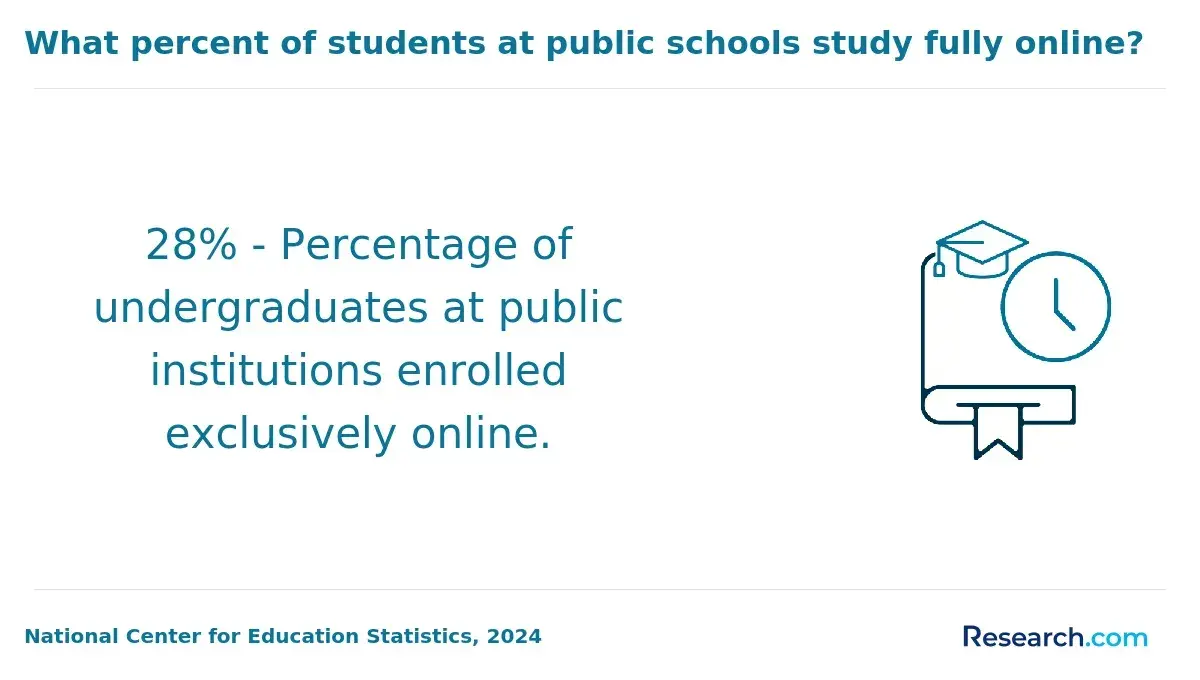
Online mathematics programs can work well for self-directed learners, working adults, parents, and students who need geographic flexibility. However, an online format is only a strong actuarial choice when it offers the same rigorous sequence in calculus, probability, statistics, and computing as a campus program, plus reliable access to faculty, proctored assessments, career services, and verification of VEE eligibility.
The format comparison below focuses on the factors that most affect exam preparation and recruiting access.
| Factor | Online program | Campus-based program | Decision consideration |
| Schedule flexibility | Often supports asynchronous study and part-time pacing | Usually follows fixed meeting times | Online may fit employment or caregiving responsibilities better |
| Exam-study structure | Requires substantial self-management | May provide in-person study groups and faculty access | Choose the environment in which you will consistently practice |
| Internship networking | May be virtual or require independent local outreach | May include campus recruiting and actuarial clubs | Ask for internship outcomes and employer engagement details |
| Course validation review | Must be checked course by course | Must also be checked course by course | Delivery mode does not itself determine VEE eligibility |
| Cost structure | May reduce relocation and commuting expenses | May offer campus resources included in fees | Compare total cost, not tuition alone |
An online program is a sensible choice when you can protect regular study time, participate in virtual office hours, and independently pursue internships or professional networking. Campus study can be better for students who benefit from immediate peer accountability, structured recruiting events, and face-to-face quantitative tutoring.
Students needing flexible pacing should examine whether a program has fixed cohorts, proctored midterms, group projects, or strict term deadlines before assuming it is fully asynchronous. A self paced bachelor's degree can be helpful for schedule flexibility, but self-pacing may make it harder to coordinate exam study, internship deadlines, and sequenced mathematics prerequisites.
What accreditation and professional approvals should actuarial-oriented mathematics programs have?
Start by confirming that the institution holds recognized institutional accreditation. This helps establish academic oversight and can affect access to federal financial aid, transferability, and employer confidence. In the United States, prospective students can verify an institution's recognized accreditation through official federal and accreditor records rather than relying only on a school's marketing language.
For actuarial preparation, professional alignment is equally important but different from institutional accreditation. A school may offer a respected mathematics degree without offering VEE-eligible courses, while another school may have qualifying courses but limited actuarial recruiting support.
Use the following checks to evaluate whether a program's claims are specific enough to support your credential plan.
- Confirm institutional accreditation and determine whether the school's status supports your financial-aid and transfer plans.
- Identify the exact mathematics, economics, accounting, finance, and statistics courses you would take, including course numbers and catalog descriptions.
- Check the current Society of Actuaries or Casualty Actuarial Society requirements for the credential path you intend to pursue.
- Verify whether each proposed VEE course is approved or otherwise eligible, including the approval period and minimum required grade.
- Ask for evidence of actuarial exam support, internship placement activity, alumni roles, and technical coursework in programming and data analysis.
One useful signal is whether a school participates in a recognized actuarial education initiative or maintains clear, current curriculum maps. It is not a substitute for checking individual course eligibility. Professional bodies can revise requirements, and a course can change instructors, content, or approval status over time.
Red flags include vague statements such as "actuarial exam preparation included" without naming exams, assurances that "all business courses count" without documentation, and advisors who cannot explain how students submit VEE applications. Treat professional approval as a course-level question, not a broad promise attached to the degree title.
What admission prerequisites and academic preparation are required for these mathematics programs?
Admission requirements vary by institution, but most bachelor's programs expect a solid high-school preparation in algebra, geometry, and precalculus. Competitive applicants often have completed calculus or demonstrate readiness to begin calculus immediately. Graduate programs commonly require prior coursework in multivariable calculus, linear algebra, probability, and statistics, although bridge courses may be available.
Actuarial mathematics is a good fit for students who enjoy solving unfamiliar quantitative problems, can persist through abstract material, and are willing to study independently for professional exams. It may be a less suitable choice for students who strongly dislike calculus, probability, programming, or repeated high-stakes testing.
Applicants can improve readiness before the first term by focusing on the skills below. Early preparation reduces the risk of delaying upper-level probability and statistics courses because of missed prerequisites.
- Review algebra, functions, logarithms, trigonometry, and basic derivatives before beginning calculus.
- Develop spreadsheet fluency, including formulas, logical functions, charts, and data cleaning.
- Complete an introductory Python, R, or SQL course to become comfortable working with data.
- Practice explaining quantitative results in writing, since actuarial work requires communication with business stakeholders.
- Read the current preliminary exam syllabi to understand the level of independent study the profession expects.
Transfer applicants should ask how prior courses apply to both the major and the recommended exam sequence. A transfer credit may satisfy a graduation requirement but still leave a gap in probability, financial mathematics, or VEE-related content. Students should also ask whether a failed or withdrawn prerequisite delays entry into courses offered only once a year.
What tuition costs, financial aid options, and time to completion can students expect?
Most full-time bachelor's degrees take about four academic years to complete, although transfer credit, summer study, part-time enrollment, and course sequencing can change that timeline. An actuarial concentration can add scheduling pressure because probability, statistics, and finance courses often have long prerequisite chains. Passing professional exams may continue after graduation while you work.
Published tuition is only one part of the investment. National Center for Education Statistics data for the 2023-24 academic year reported average undergraduate tuition and fees of $11,610 at public four-year institutions for in-state students and $41,540 at private nonprofit four-year institutions. These are national averages, not program quotes, and they exclude many living, transportation, and materials costs.
The table identifies cost categories that should be compared across schools. Reviewing all of them helps prevent a lower-tuition program from becoming the more expensive choice after housing, repeat courses, or lost transfer credit are considered.
| Cost factor | What to compare | Why it affects actuarial ROI |
| Tuition and mandatory fees | Per-credit and annual charges, including online fees | Determines the base cost of the degree |
| Living and commuting | Housing, food, transportation, relocation, and childcare | Can differ substantially between online and residential study |
| Exam-related expenses | Registration, study manuals, tutoring, and travel if needed | Professional exam progress requires a separate budget |
| Transfer credit | Number of accepted credits and remaining required courses | Lost credit can add semesters and tuition |
| Opportunity cost | Reduced work hours, delayed graduation, and internship access | Can matter as much as the listed tuition rate |
Financial aid options may include federal grants and loans for eligible students, state aid, institutional scholarships, work-study, employer tuition assistance, and actuarial department scholarships. Complete the Free Application for Federal Student Aid when eligible, then ask each school whether scholarships require full-time enrollment, a major declaration, or a specific GPA.
To control costs, compare net price after grants rather than sticker price, use approved community-college transfer courses only after confirming equivalency, and avoid taking extra electives that do not advance degree, exam, or career goals. Do not borrow based on an assumed future actuarial salary; earnings vary by exam progress, experience, employer, specialty, and region.
What actuarial job roles, salary ranges, and long-term career outlook follow these degrees?
A mathematics degree with actuarial preparation can lead to actuarial analyst, actuarial assistant, pricing analyst, reserving analyst, risk analyst, benefits analyst, underwriting analyst, and quantitative analyst roles. Traditional actuarial jobs are concentrated in insurance, consulting, employee benefits, pensions, healthcare, government, and financial services, but the same skills can transfer to analytics-heavy positions outside insurance.
The U.S. Bureau of Labor Statistics reports that actuaries had a median annual wage of $125,770 in May 2024 and projects 22% employment growth from 2023 to 2033. The median applies to the occupation as a whole, not to new graduates. Entry-level compensation can be lower, while candidates who accumulate exam credit, experience, and leadership responsibilities may advance substantially.
Job level is shaped by credential progress as well as degree level. This progression helps students set realistic expectations for the relationship between education, exams, and responsibility.
| Career stage | Possible roles | Typical work focus | What commonly strengthens candidacy |
| Student or intern | Actuarial intern, analytics intern | Data preparation, reporting, model support, documentation | Relevant coursework, one preliminary exam, Excel and programming skills |
| Early career | Actuarial analyst, actuarial assistant | Pricing, valuation, reserving, forecasting, experience studies | Additional exams, strong communication, internship or related work experience |
| Credential-track professional | Senior actuarial analyst, associate actuary | Model review, project leadership, business recommendations | Associate-level progress, industry knowledge, technical ownership |
| Advanced professional | Actuary, consulting manager, actuarial manager | Strategy, risk oversight, stakeholder leadership, model governance | Fellowship progress or completion, management and business judgment |
The degree is worth considering if you want a quantitatively demanding career with a structured professional credential path and are comfortable with multi-year exam study. Consider statistics, data science, financial analysis, or operations research instead if you want quantitative work but do not want professional exams to remain a significant part of early career advancement.
Employers increasingly expect technical fluency alongside actuarial knowledge. Build a portfolio with reproducible analysis, data visualizations, documented code, and concise business explanations. The strongest candidates can use modern tools while also checking assumptions, protecting confidential data, and communicating the limits of a model.
Other Things You Should Know About Mathematics
Yes, a mathematics degree can provide an excellent academic foundation for actuarial work. You will usually also need to pass preliminary actuarial exams, complete applicable VEE requirements, develop technical skills, and gain relevant work experience. A mathematics degree alone does not create an actuarial credential.
No. VEE courses validate specified academic subjects, such as economics or accounting and finance when they meet current requirements. They do not replace preliminary actuarial examinations, which are separate professional assessments.
Neither major is automatically better. Actuarial science may offer a more direct exam and insurance curriculum, while mathematics can provide broader flexibility for graduate study and quantitative careers. Choose the program with the strongest course mapping, exam support, programming instruction, internship access, and total cost for your goals.
Requirements vary by employer and hiring cycle, but passing one or two preliminary exams can make a student more competitive for many internship and entry-level opportunities. Prioritize steady academic performance, technical skills, and relevant experience rather than delaying applications until you have completed many exams.
References
- Validation by Educational Experience https://www.casact.org/exams-admissions/validation-educational-experience
- edu-vee - SOA https://www.soa.org/education/exam-req/edu-vee/