2027 Online Degrees With No Required Campus Travel or Hidden Residency Costs

Co-Founder and Chief Data Scientist
An "online" label does not always mean you can finish a degree without boarding a plane, attending a weekend residency, or paying campus-based fees. National Center for Education Statistics data show that 26% of U.S. postsecondary students were enrolled exclusively in distance education in fall 2022, making format details increasingly important. This guide is for students who need genuine location independence. Learn how to identify travel-free programs, evaluate accreditation and licensure limits, estimate total cost, and get written confirmation before committing.
Key Things You Should Know
- A truly no-travel degree has no required campus orientation, residency, intensive, lab, examination, clinical placement, or graduation event; "100% online" marketing alone is not enough.
- Institutional accreditation confirms a college meets broad quality standards, but it does not prove every program is travel-free or eligible for professional licensure in every state.
- Compare the complete cost of attendance - not just tuition - including mandatory technology, proctoring, course-material, clinical-placement, and campus-based fees that may remain on an online student bill.
How do truly no-travel online degrees work and what counts as hidden residency costs?
A truly no-travel online degree delivers instruction, advising, assignments, assessments, and required academic activities remotely. Students typically use a learning management system for asynchronous coursework, scheduled video sessions for live classes when applicable, and remote support for advising, tutoring, library access, and career services. "No required campus travel" does not mean a program is self-paced, inexpensive, or free of deadlines.
A residency is a required in-person academic experience, often lasting from a day to several weeks. It may be called an intensive, immersion, colloquium, practicum, boot camp, skills assessment, or orientation. A school can accurately call much of a program online while still requiring one of these events.
Use this distinction when reading program language. The comparison below separates common delivery labels from what they actually establish.
| Program label | What it usually means | What it does not establish |
| Fully online | Most or all academic courses are delivered online. | That exams, orientations, practica, or graduation have no in-person requirement. |
| Online with residency | Coursework is online with one or more mandatory campus or regional sessions. | Location independence for students who cannot travel. |
| Hybrid | Online and in-person instruction are both planned parts of the curriculum. | A remote completion path. |
| HyFlex | Students may have choices for attending some class meetings. | That every course and assessment can be completed remotely. |
| Self-paced online | Some scheduling flexibility may be available. | No proctoring, deadlines, placement requirements, or travel obligations. |
Hidden residency costs include more than airfare and hotels. They can include campus dining, local transportation, event registration, required professional clothing, child care, unpaid time away from work, and a second housing payment if an intensive lasts long enough. If you need a graduate credential on a compressed timeline, compare the format rules in fast masters degrees carefully: an accelerated calendar can reduce time to completion but does not automatically eliminate synchronous sessions or applied requirements.
Which accredited online colleges guarantee zero campus visits or on-site intensives?
No college-wide accreditation label can guarantee that every degree at an institution has zero travel requirements. The reliable guarantee must come from the specific program's current catalog, clinical handbook, and written confirmation from an authorized school representative. Requirements can differ even between two online majors at the same university.
Several regionally accredited institutions are widely known for substantial online offerings, including Western Governors University, University of Maryland Global Campus, and Southern New Hampshire University. Their program inventories can be useful starting points, but applicants should not infer a universal no-travel promise from an institution's online reputation. Nursing, teacher-preparation, counseling, social work, laboratory science, and other regulated or hands-on fields commonly have local placement or assessment requirements.
Programs that are generally easiest to structure without travel are classroom-based disciplines such as business, information technology, communications, general studies, English, history, and some data-related fields. Even then, transfer-credit evaluations, capstones, group presentations, and proctored tests should be reviewed. Students seeking flexible pacing can also compare a self paced accredited online college, while confirming whether its assessment model works from their location.
Before treating a school as a fit, ask for a direct written answer to this question: "Can a student living in my state complete every required course, assessment, orientation, capstone, and graduation requirement remotely, with no travel to a campus or testing center?" Keep the response with your enrollment records.
How can students verify that an online degree has no residency or travel requirements?
Verification should happen before applying, depositing money, or accepting federal aid. Marketing pages are useful summaries, but the academic catalog, course schedule, student handbook, and program-specific placement policies are more likely to state enforceable requirements.
Follow these steps to build a record of what the school has represented and to avoid relying on a verbal assurance alone.
- Download the current catalog and search the program name plus "residency," "intensive," "campus," "attendance," "orientation," "proctored," "clinical," "practicum," and "field experience."
- Map every required course, including electives, capstone, internship, and exit assessment, rather than reviewing only the degree overview.
- Ask admissions and the program director for written confirmation that your state of residence is eligible and no travel is required for your curriculum.
- Ask where exams are taken, who pays proctoring charges, and whether a nearby testing center could become mandatory if remote proctoring fails.
- Request an itemized estimate of tuition and mandatory fees for the full program, then save the estimate and the applicable catalog year.
- Recheck requirements before each registration period because program policies and state authorization can change.
Do not accept vague phrases such as "usually online," "online-friendly," or "minimal residency" as a no-travel commitment. A useful response identifies the program, catalog year, your location, each exception, and whether an alternative remote arrangement exists.
Remote coursework and location-independent completion are not the same thing. Proctored exams can often be completed at home using identity verification, a webcam, and secure-browser software, but some programs reserve the right to require an approved testing center. Students should confirm equipment requirements, time-zone availability, retake policies, accessibility accommodations, and whether remote proctoring is available in their location.
Clinicals, student teaching, supervised practice, internships, and field experiences are different: they may require local travel even if they do not require campus travel. A nursing student may complete clinical hours at an approved nearby site; a teacher candidate may work in a local school; an MBA student may complete a project for an employer. These can be compatible with living anywhere only when the school can arrange or approve a placement near the student.
The practical effect varies by requirement type.
| Requirement | Can it often be remote? | Potential travel impact |
| Timed written exam | Often, through live or automated online proctoring. | May require a testing center if remote conditions are not met. |
| Lab or skills check | Sometimes, depending on equipment and discipline. | May require a campus, partner site, or approved evaluator. |
| Clinical or practicum | Supervision and documentation may be online. | Usually requires commuting to a local approved site. |
| Internship | May be virtual in some occupations. | Depends on employer, field, and school approval. |
| Capstone presentation | Often, by video conference or recorded presentation. | Confirm whether an in-person defense or showcase is required. |
If your goal is business administration, IT, or another non-licensed field, an online capstone or employer-based project may be easier to complete remotely than a clinical placement. Still, ask whether you must secure the site yourself. A school's inability to find a local placement can delay graduation even when its courses are entirely online.
The best residency-free degree is not automatically the fastest or lowest advertised tuition option. Compare the program against your career target, prior college credit, weekly availability, employer tuition benefits, and whether the credential is accepted in the industry you want to enter. For many students, a recognized bachelor's degree with a coherent major is a better investment than a short program that does not meet job or advancement requirements.
Transfer credit can substantially change both time and cost, but policies vary. Ask which credits are accepted, whether credits apply to major requirements rather than only electives, whether a minimum number of credits must be earned at the institution, and whether professional or military training can be evaluated. Students prioritizing speed should review accelerated degree programs alongside standard-paced options, because heavier course loads may reduce flexibility even when no travel is required.
Use the following decision framework to identify the trade-offs that matter most.
| Your priority | Usually a stronger fit | Trade-off to examine |
| Maximum schedule control | Asynchronous programs with multiple start dates. | Less real-time interaction and firm assessment windows may still apply. |
| Fast completion | Accelerated terms or competency-based formats. | High weekly workload and limits on financial-aid pacing. |
| Lowest overall cost | Programs that accept substantial eligible transfer credit and publish fees clearly. | Lower tuition can be offset by fees, repeat-course rules, or limited aid. |
| Licensure preparation | Programs with explicit state-by-state disclosures and placement support. | Local travel for clinicals or supervised work may be unavoidable. |
| Career change support | Programs with relevant projects, advising, and employer connections. | May cost more or require structured synchronous participation. |
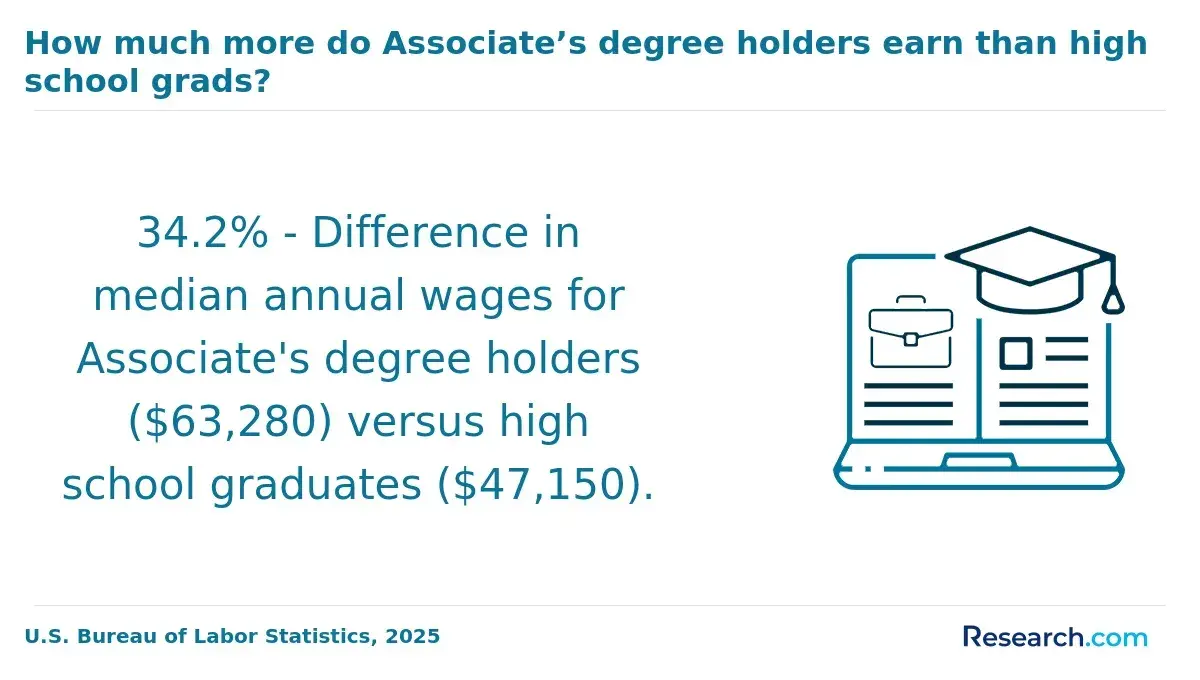
Estimate return on investment conservatively. Add tuition, mandatory fees, supplies, foregone earnings from reduced work hours, and any local placement travel. Then compare that estimate with realistic job requirements in your target field - not a school's headline salary claims. Outcomes vary by experience, location, occupation, employer, and economic conditions.
The clearest red flag is a mismatch between a promotional page and the catalog. A page may say "online," while the catalog refers to campus sessions, professional experiences, approved testing sites, or requirements that are "normally" completed in person. Treat the catalog and written disclosures as more important than broad advertising language.
Watch for these phrases and omissions before making an enrollment decision.
- "Low-residency," "limited residency," "blended," "hybrid," "immersion," or "intensive," without dates, locations, and costs.
- "Online coursework" rather than "all degree requirements can be completed remotely."
- Required "experiential learning" with no explanation of whether it is virtual, local, school-arranged, or student-arranged.
- "Proctored exams" without specifying whether home proctoring is available to students in your state or country.
- Licensure language that says the school "has not determined" whether the program meets requirements where you live.
- Fee schedules that list campus, student activity, facility, or program charges without an online-student exception.
- Admissions representatives who will not provide a program-specific written answer or direct you to the relevant policy.
Another common mistake is assuming optional events are always optional. Confirm whether orientation, networking weekends, capstone presentations, and commencement are optional for your exact program. If the answer is conditional - such as "unless the instructor requires it" - ask what alternatives have been approved for recent students and whether that alternative is guaranteed in your enrollment agreement.
Location independence has different practical meanings. Active-duty military learners may need continuity through relocation or deployment. Rural students may lack a nearby testing center or placement site. Disabled students may need accessible remote proctoring and captioned live sessions. International students may encounter time-zone, technology, payment, data-privacy, authorization, and professional-recognition constraints. A program that works well for one group may not work for another.
Before enrolling, evaluate the operational conditions that could interrupt completion, not only whether lectures are delivered online.
- Military students should ask about deployment withdrawals, leave policies, transfer-credit evaluation for military learning, and whether proctored exams can be completed from changing duty locations.
- Rural students should confirm broadband standards, backup options for timed exams, local site requirements, and who arranges any internship or practicum placement.
- Disabled students should contact disability services early about accessible course materials, captioning, flexible testing accommodations, assistive technology, and remote-proctoring alternatives.
- International students should verify that the institution enrolls students in their country, supports their time zone, accepts their payment method, and provides any necessary credential or licensure disclosures.
Students in regulated programs should be especially cautious. A local placement may be technically "near you" but still inaccessible because of transportation, site availability, background-check rules, or supervisor qualifications. Obtain confirmation of the school's placement responsibilities and contingency policy before committing to a program with required fieldwork.
What tools and official databases help confirm current accreditation and consumer protections for online degrees?
Use official records to verify a school's status, then use the school's current documents to verify the degree format. Accreditation, authorization, and consumer-protection information can change, so check it again if you defer enrollment or change programs.
These sources serve different verification purposes and work best when used together.
- The U.S. Department of Education's Database of Accredited Postsecondary Institutions and Programs can help confirm institutional and programmatic accreditation status.
- The Council for Higher Education Accreditation database can provide another accreditation reference point, particularly when reviewing recognized accreditors.
- The College Navigator database can help compare institutional characteristics, reported costs, retention, graduation measures, and aid information.
- Your state higher-education agency or consumer-protection office can explain complaint processes and state authorization questions.
- The college's catalog, tuition-and-fee schedule, state authorization disclosures, and program handbook are the best sources for its current travel, assessment, and placement rules.
Keep a simple enrollment file containing the catalog PDF, screenshots of the program page, your fee estimate, state-authorization disclosure, transfer evaluation, and written no-travel confirmation. If terms change after enrollment, these records make it easier to ask informed questions through the registrar, program director, financial aid office, or institutional complaint process.
Other Things You Should Know About Business Administration
Often, yes. Many business administration programs use online coursework, projects, and remote presentations. However, confirm the exact program has no required residency, in-person orientation, testing-center exam, internship, or capstone event.
Employer acceptance usually depends more on institutional accreditation, the degree level, your skills, work experience, and the relevance of the curriculum than on whether classes were online. Use a school with recognized accreditation and pursue projects or experience that demonstrate business skills.
They may. Some schools charge all students certain mandatory fees, while others waive specific campus charges for fully online learners. Request a written, itemized estimate for your program and enrollment level before you enroll.
They can. A program may offer home proctoring but require a testing center when technical, identity-verification, accessibility, or location conditions are not met. Ask whether remote proctoring is available to you and what happens if it is not.
- Distance Learning Requirements: What You Really Need https://studienfluesterer.com/en/blog/distance-learning-requirements/
- Does College Pay Off? A Comprehensive Return On Investment Analysis - FREOPP https://freopp.org/whitepapers/does-college-pay-off-a-comprehensive-return-on-investment-analysis/
- Hidden Costs in Online Education: Fees You Shouldn't Ignore https://matchtocollege.com/blog/hidden-costs-online-education-portal-charges-exam-fees-hidden-taxes
- Is College Worth it? | Return on Investment Analysis of College Degree https://educationdata.org/college-degree-roi