2027 CSWE Accreditation and State Social Work Licensure: What Transfers?

Co-Founder and Chief Data Scientist
Choosing a social work program without checking licensure rules can leave graduates unable to pursue the credential they want after moving. CSWE accreditation is the central education standard, but each state board controls licenses, exams, supervised experience, and transfer decisions.
The U.S. Bureau of Labor Statistics projects 7% employment growth for social workers from 2023 to 2033. This guide helps prospective students, graduates, and relocating professionals determine what usually transfers, what does not, and what to verify before enrolling or applying.
Key Things You Should Know
- A CSWE-accredited BSW or MSW is widely recognized by state boards, but accreditation alone does not create a transferable license; each state sets its own examination, background-check, supervision, and application rules.
- For independent clinical practice, an MSW is generally the essential degree: CSWE's Educational Policy and Accreditation Standards require at least 900 field-education hours for MSW programs, compared with at least 400 hours for BSW programs.
- The Bureau of Labor Statistics projects 7% growth in social work employment from 2023 to 2033, but better job access depends on choosing a degree and licensure level that match the state and practice setting where you intend to work.
How does CSWE accreditation impact eligibility for state social work licensure?
CSWE, the Council on Social Work Education, accredits social work education programs rather than individual practitioners. A degree from a CSWE-accredited program is the educational credential most state social work boards expect for initial licensure. It signals that the program met national standards for curriculum, faculty, assessment, and field education.
Accreditation matters because a state board may decline an application from a graduate whose program does not meet its educational standard, even if the school itself is institutionally accredited. When comparing distance-learning options, distinguish programmatic CSWE accreditation from broader institutional approval; a list of accredited online universities can be a starting point, but it does not confirm that a particular social work degree is CSWE-accredited.
The practical distinction below explains why applicants should check both the school and the licensing jurisdiction.
| Credential or approval | What it evaluates | Why it matters for licensure |
| CSWE program accreditation | BSW or MSW social work curriculum, field education, and program quality | Usually satisfies the degree-accreditation expectation for social work licensure |
| Institutional accreditation | The college or university as a whole | May affect federal aid and transfer credit, but does not replace CSWE accreditation for social work licensing |
| State licensure | An individual applicant's education, exam, conduct, and experience | Authorizes practice only under that state's laws and license scope |
Accreditation is not a promise of licensure. Boards can also require an approved criminal-background review, an ASWB examination, state-specific jurisprudence education or testing, and documented supervised practice. A program in CSWE candidacy or a program that later loses accreditation requires especially careful review with the state board before enrollment.
Which CSWE-accredited degrees transfer across state lines for social work licensure?
A CSWE-accredited degree is portable as an academic credential more often than a license is portable. Most boards recognize accredited BSW and MSW degrees, but the license level available with each degree and the additional conditions for endorsement differ substantially by state.
This comparison shows the usual role of each degree. State law, not the degree title alone, determines the license for which a graduate may apply.
| Degree | Typical licensure relevance | Portability considerations |
| CSWE-accredited BSW | May support entry-level or bachelor's-level social work licensure where available | Does not usually qualify a person for independent clinical licensure; some states have limited or no BSW-level license |
| CSWE-accredited MSW | Common educational requirement for master's-level and clinical social work licenses | Most portable foundation for clinical career goals, although exams and post-degree requirements still vary |
| Doctorate in social work or PhD | Can support research, teaching, leadership, or specialized roles | Usually does not substitute for the MSW education and supervised-experience route required for clinical licensure |
An MSW is the safer choice for someone who expects to relocate or pursue psychotherapy, behavioral health, hospital practice, or private practice. A BSW can be a sound lower-cost entry route for case management, community work, and human services, particularly for students who may later use advanced standing to complete an MSW. It is less suitable for someone whose nonnegotiable goal is independent clinical practice.
Do not assume that an active license automatically transfers. States commonly use "licensure by endorsement," "reciprocity," or "license by credentials" to review experienced applicants. Those labels do not mean identical rules; the new board can compare education, examination history, supervised hours, disciplinary history, and the scope of the prior license.
What are the key differences between CSWE standards and individual state licensure requirements?
CSWE establishes educational standards for accredited programs. State boards protect the public by deciding who may use a social work license title, what services each license holder may provide, and what conditions apply to independent practice. The two systems work together, but they answer different questions.
The following comparison separates the program-level requirements students can evaluate before enrollment from the individual requirements they must meet after graduation.
| Area | CSWE focus | State board focus |
| Curriculum | Competency-based social work education, ethics, diversity, policy, practice, research, and field learning | Whether the applicant's degree meets the state's statutory educational requirement |
| Field education | Minimum educational field requirements and program oversight | Whether field education satisfies degree review; post-degree supervised practice is generally separate |
| Examination | Does not license or test individual graduates | May require an appropriate ASWB examination and, in some jurisdictions, a state law or ethics requirement |
| Clinical independence | Prepares graduates at the generalist or specialized-practice level | Defines when a licensee may diagnose, treat independently, supervise, or bill insurers |
A frequent mistake is treating MSW field placement hours as if they were post-graduate clinical supervision hours. Field education is required for the degree; supervised professional experience is usually earned after the MSW under a board-approved supervisor. Keep those records separate from the beginning.
Another red flag is relying on a school's statement that a program is "designed to meet licensure requirements" without asking whether that statement applies to your residence state and intended license level. State rules can change, and the board's written guidance controls.
How do online social work programs meet CSWE accreditation and licensure criteria?
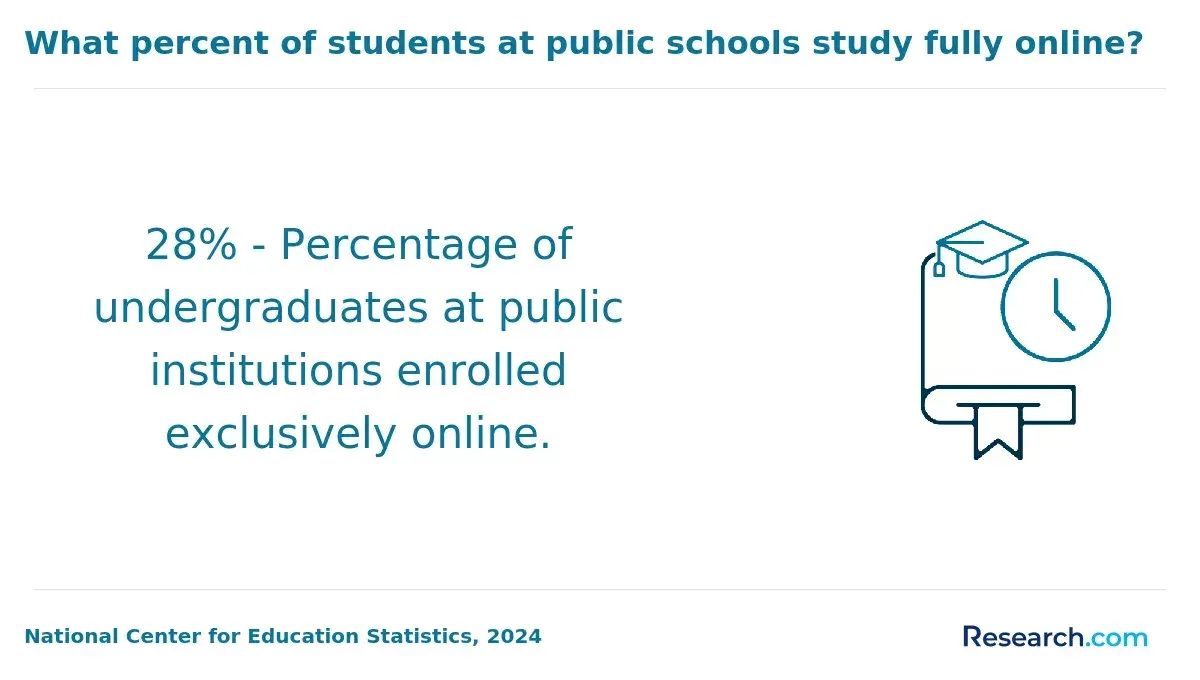
A fully online or hybrid social work program can be CSWE-accredited if the specific BSW or MSW program meets CSWE standards. Online delivery does not eliminate required competency assessment, faculty oversight, or field education. Students generally complete placements in person at approved agencies near their communities, with coordination among the school, agency, field instructor, and student.
The most important online-program question is not whether lectures are live or recorded. It is whether the school can secure an appropriate placement and confirm that its curriculum meets the rules in the state where the student is located. Students seeking flexibility may compare online college classes at your own pace, but social work field education has scheduled professional obligations and is rarely completely self-paced.
Online study can fit working adults when they need geographic flexibility, continued employment, or access to a specialized MSW track not offered nearby. Campus-based study may fit students who want local cohort relationships, easier access to university services, or more direct connection to regional agencies. Neither format is inherently more licensure-portable than the other when the program is CSWE-accredited and the placement meets program requirements.
Before committing, obtain written answers about placement support, expected travel, evening or weekend placement availability, out-of-state authorization, live attendance requirements, and who resolves a placement problem. Avoid programs that imply students can independently arrange any placement without formal approval; an unapproved placement may not count toward degree completion.
What coursework and field education must a social work program include for licensure?
CSWE-accredited programs organize learning around professional competencies rather than a single nationwide course list. Students typically study human behavior, social welfare policy, research, assessment, ethics, diversity and anti-oppressive practice, and direct practice with individuals, families, groups, organizations, and communities. MSW students also complete advanced or specialized-practice coursework.
Field education is the bridge between academic preparation and professional practice. CSWE standards require at least 400 field hours in BSW programs and at least 900 field hours in MSW programs. These are educational minimums, not a substitute for any supervised work experience required after graduation for clinical licensure.
Students should review the curriculum for these features because gaps can complicate a board's transcript review or leave them underprepared for their intended role.
- A clearly identified CSWE accreditation status for the exact BSW or MSW program and graduation period.
- Required foundation content in ethics, policy, research, human behavior, diversity, social justice, and generalist practice.
- Practice courses that align with the intended population or specialty, such as children and families, health, behavioral health, schools, or community practice.
- Formal field seminars, agency-based supervision, learning agreements, and documented completion of required hours.
- Transcript access and course descriptions that can be supplied to another state board if a later credential review is required.
Course names vary between schools, so do not reject a program merely because it uses different labels. Instead, ask the program how it documents required competencies and whether it has made state-specific curriculum disclosures for your location. If you plan school social work, substance-use treatment, or another regulated specialty, investigate any separate credential beyond social work licensure.
How do advanced standing and BSW-to-MSW pathways affect licensure portability?
Advanced standing allows qualified graduates of CSWE-accredited BSW programs to enter an MSW program beyond the foundation year. It can reduce duplicate coursework and time to completion, but it does not reduce the importance of the final MSW's accreditation, field education, or state licensing requirements.
For students beginning with a BSW, the route below clarifies the trade-off between an efficient education pathway and immediate flexibility.
| Pathway | Best fit | Licensure portability effect |
| BSW followed by advanced-standing MSW | Students certain about social work early and eligible for an accredited BSW | Can lead efficiently to the MSW credential most commonly expected for clinical licensing, subject to state requirements |
| Non-social-work bachelor's followed by traditional MSW | Career changers or students who discover social work later | Usually provides the same MSW-level educational base after graduation, but takes longer than advanced standing |
| BSW only | Students seeking bachelor's-level human services or generalist roles | May support licensure in some states but limits access to master's-level and independent clinical licenses |
Advanced standing should make sense only when the undergraduate BSW is CSWE-accredited and the receiving MSW formally accepts it. A student should not assume that transfer credits from an unrelated degree, certificate, or nonaccredited social work program will replace core MSW requirements.
Flexible pacing can help with employment or caregiving, but it may delay the date when post-MSW supervised experience can begin. Students weighing social work against other fields can also compare good majors in college to assess whether the profession's licensing path, fieldwork commitment, and career mission match their goals.
What steps are required to become a licensed social worker in different states?
The details vary, but the sequence is consistent: complete qualifying education, apply to the state board, satisfy any examination requirement, and complete additional supervised experience when pursuing a clinical or independent credential. Some states issue a master's-level license before supervised clinical practice; others use different titles or permit structures.
Use this process as a planning checklist, then replace the general steps with the exact instructions from the board in the state where you will practice.
- Identify the license level required for your target job, such as a bachelor's-level, master's-level, or independent clinical credential.
- Confirm that your intended BSW or MSW is CSWE-accredited and permitted to enroll students in your state.
- Complete the degree, required field education, and any state-required coursework or disclosures.
- Apply to the state board and provide official transcripts, identity documents, fees, and background-check information as required.
- Pass the examination or examinations required for that license level, following the board's authorization process.
- For clinical licensure, work under approved supervision and document hours, supervisor qualifications, settings, and dates.
- Submit the clinical application, maintain the license through renewals and continuing education, and verify requirements before relocating.
Start this review before applying to schools, not during the final semester. An employer may hire an MSW graduate for a role that does not require independent licensure, but a job in clinical therapy, diagnosis, supervision, or private practice can require a specific active credential. Job titles alone are not reliable indicators of what a state permits.
How do supervision hours and post-graduate experience transfer when moving to another state?
Post-graduate supervision is among the least portable parts of a social work career. A new state may accept some or all previously completed experience, but it can review whether the supervisor held the required credential, whether supervision occurred at the required frequency, whether clinical and nonclinical hours were categorized correctly, and whether the work setting was eligible.
Hours are easier to defend when records show the facts a board needs to evaluate. Maintain the following documentation throughout supervised employment rather than trying to reconstruct it years later.
- A signed supervision agreement identifying the supervisor's license number, jurisdiction, credential, and responsibilities.
- A contemporaneous log of direct client contact, indirect clinical work, supervision meetings, dates, and total hours.
- Employer verification of job title, employment dates, duties, work setting, and full-time or part-time status.
- Copies of your original license, examination score documentation when available, renewal history, and any board correspondence.
- Written confirmation from the destination board before relying on uncompleted hours toward its clinical-license requirement.
Licensed professionals relocating after they already hold an independent clinical credential may have a smoother endorsement review than pre-licensed clinicians moving mid-supervision. Even then, endorsement is not automatic. Requirements involving jurisprudence, continuing education, criminal-history review, telehealth registration, and scope of practice may still apply.
A common error is accepting supervision from a helpful manager who is not approved under the relevant board's rules. Before counting the first hour, verify supervisor eligibility and the approved supervision format with the board or written board guidance.
How do CSWE accreditation and licensure status influence social work career options and salary?
CSWE accreditation affects access to the educational pipeline; licensure affects the work a professional may legally perform. Employers in hospitals, behavioral health agencies, schools, government agencies, child welfare organizations, and private practices may prefer or require a license based on the role's responsibilities, payer rules, and state law. Independent clinical roles generally require the highest level of state clinical licensure.
The U.S. Bureau of Labor Statistics reported a median annual wage of $58,380 for social workers in May 2023. That figure describes the occupation as a whole, not a guaranteed result of an MSW or a clinical license. Pay can differ materially by specialty, region, employer type, experience, union coverage, and whether a position requires independent clinical practice.
This career comparison helps show why the degree decision should begin with the role you want to pursue rather than the fastest available program.
| Career direction | Common educational and credential pattern | Career implication |
| Case management and community services | BSW or MSW; license requirements vary by employer and state | Can offer entry points into human services, with scope generally narrower than independent clinical work |
| Hospital, behavioral health, and therapy settings | MSW and progressing toward or holding a state clinical license | Often aligns with assessment, care coordination, psychotherapy, and interdisciplinary care responsibilities |
| Private practice or clinical supervision | MSW, post-degree supervised experience, examination, and independent clinical license | Typically carries the strongest regulatory requirements and the greatest need for state-specific verification |
| Policy, advocacy, program administration, or research | BSW, MSW, or doctoral preparation depending on employer | May value social work training without requiring clinical independent-practice authority |
Technology is changing documentation, scheduling, telehealth, and administrative workflows, but it does not remove legal duties around confidentiality, informed consent, clinical judgment, and scope of practice. Students should seek programs that teach ethical technology use while avoiding claims that software or AI can replace supervised professional decision-making.
How can prospective students verify that a social work program will meet their licensure goals?
Verify licensure fit before paying an application fee or accepting an admission offer. The most reliable approach is to compare the program's official accreditation and state-authorization information with the licensing board's current requirements for your intended state and license level. Admissions staff can explain their program, but the licensing board makes the final eligibility decision.
Ask schools for answers in writing, especially if you plan to attend online, move during the degree, use advanced standing, or pursue clinical practice in a different state.
- Is the exact BSW or MSW program currently CSWE-accredited, and what is its accreditation status for my expected graduation period?
- Does the school enroll and place students in my current state, and what happens if I move while enrolled?
- How are field placements assigned, approved, supervised, and documented, and what costs or travel may students incur?
- Does the curriculum meet the educational requirements for my target state and intended license level, including any state-specific courses?
- What are the program's advanced-standing, transfer-credit, leave-of-absence, and time-to-completion policies?
- Can the school provide a licensure disclosure and the contact information for the person responsible for state authorization or compliance?
Also compare total cost, not tuition alone: include fees, field-placement travel, background checks, examination fees, lost work hours during placement, and the cost of any extra coursework a state may require. An option marketed as the easiest online degree may be a poor fit if it cannot meet the fieldwork, accreditation, or licensing expectations tied to your actual career goal.
Finally, save screenshots or PDFs of accreditation status, licensure disclosures, and written communications. They are useful reference records, although they do not override future state-board decisions or rule changes.
Other Things You Should Know About Social Work
Usually no. A BSW may support bachelor's-level licensure in states that offer it, but independent clinical social work typically requires a CSWE-accredited MSW, an examination, and post-degree supervised clinical experience.
No. CSWE accreditation supports recognition of your degree. A new state still decides whether to issue a license by endorsement or another application pathway and may require additional documentation, testing, or continuing education.
They can be, provided the exact MSW program is CSWE-accredited and meets the requirements of the state where you seek licensure. Confirm state authorization, field-placement arrangements, and your board's education rules before enrolling.
Field placement hours are completed as part of a BSW or MSW degree. Clinical supervision hours are generally completed after the MSW while working under an approved supervisor toward an independent clinical license. States commonly count them separately.
References
- Social Work Licensure https://socialworklicensemap.com/social-work-licensure/
- The Importance of a CSWE Accredited Program in Social Work https://online.tulane.edu/social-work/blog/importance-of-cswe-accredited-program
- What is CSWE Accreditation, and Why Is It Important? https://onlinedegrees.keuka.edu/blog/cswe-accreditation
- Accreditation and/or licensing requirements | SWTP https://socialworktestprep.com/blog/2024/october/25/accreditation-and-or-licensing-requirements/