2027 AACSB vs. ACBSP for Career Changers: Cost, Admissions, and Employer Recognition

Co-Founder and Chief Data Scientist
Changing careers into business means choosing more than a major: you must decide whether a school's accreditation, price, admissions policies, and employer connections fit your target role. AACSB and ACBSP are two prominent business-school accreditors, but they signal different institutional priorities. The U.S. Bureau of Labor Statistics projects 9% growth in management analyst employment from 2024 to 2034, faster than the average for all occupations. This guide helps prospective business students compare the accreditations, estimate trade-offs, and select a program with realistic career value.
Key Things You Should Know
- AACSB is often the stronger signal for research-oriented business schools and highly selective MBA recruiting, while ACBSP emphasizes teaching quality and student-learning outcomes; either can be a credible choice when the school matches your career goal.
- Accreditation alone does not determine cost, admission, salary, or hiring outcomes. For context, average 2024-25 undergraduate tuition and fees were $11,610 at public four-year institutions for in-state students and $43,350 at private nonprofit four-year institutions, according to NCES.
- Career changers should compare total cost, transfer-credit rules, work experience requirements, career services, internship access, and outcomes for their intended role - not simply choose the accreditation with the better-known name.
What is the difference between AACSB and ACBSP accreditation?
AACSB International and the Accreditation Council for Business Schools and Programs (ACBSP) are specialized accreditors for business education. They evaluate schools or business programs beyond the institution's broader accreditation. That broader institutional accreditation remains important because it affects federal financial-aid eligibility, credit transfer, and degree legitimacy.
The practical distinction is emphasis. AACSB standards place substantial attention on strategic management, faculty qualifications, intellectual contributions, curriculum quality, and engagement with business practice. ACBSP places particular emphasis on teaching excellence, continuous improvement, and evidence that students achieve stated learning outcomes. Neither label means every course, instructor, or career outcome will be identical.
This comparison shows what each accreditation may indicate to a career changer. It is a decision aid, not a ranking: individual schools can vary considerably within either group.
| Factor | AACSB | ACBSP | What it means for a career changer |
| Primary emphasis | Faculty qualifications, research and intellectual contributions, strategic impact, and business engagement | Teaching quality, student learning, and continuous improvement | Consider AACSB if you want research-active faculty or recruiting access at larger employers; consider ACBSP if applied instruction and teaching support are your priorities. |
| Common institutional profile | Often found at major public and private universities, though not exclusively | Found at a mix of public, private nonprofit, and other institutions | Do not use institutional type as a shortcut for quality, affordability, or return on investment. |
| Degree levels | Can cover undergraduate, master's, doctoral, and accounting education within an accredited business school | Can accredit business programs at associate, bachelor's, master's, and doctoral levels | Verify that your exact campus, delivery mode, degree, and concentration are within the accredited scope. |
| Employer meaning | Often familiar to corporate recruiters and MBA-focused employers | Can demonstrate an externally reviewed business curriculum and learning processes | For most entry and mid-career business jobs, work samples, experience, and skills remain at least as important as the accreditor. |
Accreditation is not the same as programmatic licensing approval. If your plan involves a licensed profession, such as accounting that leads toward CPA eligibility, confirm state-specific education rules separately. A business degree can support that path, but accreditation by itself does not establish eligibility for a license.
Which accreditation do employers recognize more?
AACSB generally has broader name recognition among employers that recruit heavily from business schools, particularly large consulting firms, financial-services employers, and organizations hiring MBA candidates through campus pipelines. That recognition can be useful when a recruiter must compare unfamiliar schools quickly. It is not a universal hiring requirement.
ACBSP can still be a positive quality signal, especially for employers focused on practical business preparation, regional hiring, or candidates with relevant work experience. Many hiring managers will never ask about the accreditor. They are more likely to assess whether you can analyze data, communicate with stakeholders, use relevant software, manage projects, and explain how your prior career experience transfers to the role.
Use accreditation as a screening factor, then investigate signals that are closer to hiring outcomes. The following checks are more predictive of whether a program can support your transition.
- Ask for recent career-outcomes information separated by degree level, format, and concentration, rather than a single schoolwide employment claim.
- Review whether employers in your intended field recruit there, sponsor projects, offer internships, or employ alumni in the roles you want.
- Compare required applied work, such as internships, consulting projects, case competitions, portfolios, or capstone courses.
- Look at faculty and advisory-board connections in your target industry, especially if you are moving into a specialized field such as healthcare administration, analytics, or supply chain.
AACSB may be worth paying more for when a specific target employer, competitive MBA pathway, or alumni network values it and the additional borrowing is manageable. It is usually not worth a large price difference merely for the label when a lower-cost ACBSP or institutionally accredited program offers stronger local employer ties, flexible scheduling, and measurable support for career changers.
How do admissions requirements compare for career changers?
Neither AACSB nor ACBSP sets one universal admissions checklist for every degree. Each school establishes its own requirements. The more important distinction is degree level: bachelor's completion programs often focus on prior college credits, while MBA programs commonly evaluate academic preparation, work experience, and readiness for quantitative coursework.
Career changers without a business background should not assume they are ineligible. Many programs accept applicants from liberal arts, healthcare, education, technology, military, and other backgrounds. They may require foundation courses in accounting, economics, finance, or statistics before or alongside core business classes.
The table separates the admissions patterns most career changers are likely to encounter. Confirm requirements directly with each school because test policies, GPA expectations, prerequisites, and transfer rules can change.
| Program type | Common admissions materials | Career-changer consideration |
| Bachelor's in business administration | High school or college transcripts, transfer-credit evaluation, and application materials | Prior credits can reduce time and cost, but only courses accepted by the receiving school count toward graduation. |
| Business bachelor's completion program | College transcripts and a minimum number of transferable credits; some schools also request a resume | Useful for students with an associate degree or substantial prior college work who need an efficient path to a bachelor's degree. |
| MBA for nonbusiness majors | Bachelor's degree, transcripts, resume, essays, recommendations at some schools, and possibly test scores | Look for built-in foundations or clearly priced prerequisite options instead of assuming you can skip quantitative preparation. |
| Specialized business master's | Bachelor's degree, transcripts, and prerequisites that may include statistics, calculus, programming, or economics | These can be a better match than a general MBA when you need focused preparation in analytics, finance, accounting, or supply chain. |
Before applying, calculate your prerequisite gap honestly. A candidate moving from communications into marketing may need fewer preparatory courses than someone moving from the arts into finance or analytics. Ask admissions whether prerequisite courses count toward the degree, how they affect tuition, and whether they must be completed before enrollment.
A common mistake is choosing a program because it advertises "no GMAT" without asking how it evaluates readiness instead. A holistic review can be appropriate, but you should still seek clear academic support, tutoring, and quantitative preparation if your transcript does not show recent math or statistics work.
How much do AACSB and ACBSP programs cost?
AACSB accreditation does not create a standard tuition rate, and ACBSP programs are not automatically less expensive. Price is driven more by degree level, institution, residency, online fees, course load, transfer credits, and financial aid. According to the National Center for Education Statistics, average published 2024-25 tuition and fees at public four-year institutions were $11,610 for in-state students and $30,780 for out-of-state students; the private nonprofit average was $43,350. These are institution-level undergraduate averages, not the net price of a particular accredited business program.
For a career changer, the useful comparison is total educational cost against the value of the transition - not just tuition per credit. This table identifies costs that can materially change the budget.
| Cost factor | Why it varies | How to compare it |
| Tuition and mandatory fees | Public residency policies, private pricing, graduate versus undergraduate status, and online fees differ by school | Request a written estimate for your intended start term and program format. |
| Transfer credits | Schools set their own limits and course-equivalency rules | Obtain a preliminary transfer evaluation before treating a completion timeline as reliable. |
| Foundation courses | Nonbusiness students may need accounting, economics, statistics, or finance preparation | Ask whether foundations add credits, time, or separate tuition charges. |
| Opportunity cost | Reducing work hours, commuting, childcare, and lost employer benefits can exceed some direct charges | Compare a realistic full-time and part-time budget, not tuition alone. |
| Employer support and aid | Tuition reimbursement, grants, scholarships, and federal aid eligibility vary | Ask whether aid applies to online enrollment, summer terms, and prerequisite courses. |
Start by comparing net price after grants and scholarships, then estimate the borrowing required. If cost is the dominant constraint, explore an affordable master degree option alongside local public institutions and employer-supported programs. A lower sticker price is valuable only if the school is institutionally accredited, the curriculum supports your target role, and the completion plan is realistic.
Do not mistake a short program for a low-cost program. Accelerated terms can reduce living and opportunity costs, but a high per-credit rate, additional prerequisite courses, or reduced ability to work may offset that benefit.
Which format suits career changers better: online or campus?
Online and campus business programs can both be credible when the school applies the same academic standards and clearly identifies the degree on the transcript. The better format depends on your schedule, need for career services, ability to learn independently, and access to local professional networks - not on accreditation alone.
Online learning often suits working adults who need asynchronous coursework and cannot relocate. Campus or hybrid study can be stronger for students who need structured routines, in-person recruiting, immediate faculty access, or a new local network. Hybrid programs can offer a middle path, but required residencies and group meetings should be evaluated before enrolling.
This comparison highlights the format trade-offs most relevant to a career transition.
| Decision factor | Online may fit better when | Campus or hybrid may fit better when |
| Work schedule | You need asynchronous access around full-time work, caregiving, or variable shifts | You can attend scheduled classes and benefit from a fixed weekly routine |
| Career networking | You already have industry contacts or the program provides strong virtual employer access | You are entering a new region or industry and need face-to-face networking opportunities |
| Learning support | You are comfortable managing deadlines, discussion-based work, and remote collaboration | You learn better through direct interaction, immediate feedback, and in-person study groups |
| Cost and logistics | You can avoid relocation and commuting costs | Local public tuition, campus recruiting, or access to facilities makes attendance worthwhile |
Some adults may also benefit from competency based programs, which can allow students to progress after demonstrating mastery rather than following a conventional weekly course sequence. This format can be efficient for self-directed students with prior knowledge, but it requires disciplined time management and may offer fewer cohort-based networking opportunities.
A frequent error is enrolling in an online program before testing its career support. Ask whether online students can use career coaching, attend employer events, access internship support, join student organizations, and receive the same alumni services as campus students. Also ask how group projects, exams, and presentations are scheduled across time zones.
What business courses do these programs usually include?
AACSB and ACBSP programs commonly cover the same foundational business disciplines. Accreditation influences how a school assesses and improves the curriculum; it does not create one identical course list. Course titles and sequencing vary by degree level, concentration, and whether the program is designed for students with prior business education.
Most business administration curricula build a broad operating vocabulary before moving into integration and specialization. The courses below are common because they develop skills employers frequently use across functions.
- Financial and managerial accounting, which help students interpret financial statements, budgets, costs, and performance measures.
- Microeconomics, macroeconomics, and business statistics, which support market analysis, forecasting, and evidence-based decisions.
- Finance, marketing, operations, and management, which introduce core business functions and their trade-offs.
- Business law, ethics, and organizational behavior, which address compliance, leadership, workplace dynamics, and responsible decision-making.
- Information systems, data analytics, and strategy or capstone courses, which connect technology, analysis, and cross-functional business decisions.
Career changers should choose electives based on a target role rather than selecting the easiest available classes. For example, a future operations analyst may benefit from supply chain, statistics, and analytics coursework; a prospective HR professional may prioritize organizational behavior, employment law, and compensation; an aspiring product manager may need analytics, marketing, and project-based work.
AI tools are also changing the value of business coursework. Employers increasingly expect graduates to evaluate AI-generated output, protect confidential information, interpret data responsibly, and communicate sound recommendations. Look for programs that teach applied analytics and ethical technology use rather than treating AI as a substitute for business judgment.
How long does it take to complete each program?
Completion time depends more on the credential, transfer credit, prerequisites, and enrollment intensity than on whether the business school is AACSB or ACBSP accredited. A bachelor's degree typically requires about 120 credits, although transfer students may need substantially fewer remaining credits. MBA and specialized master's programs vary widely because some include foundation coursework for nonbusiness majors.
The ranges below are planning estimates rather than promises. A school's catalog, transfer evaluation, and academic calendar determine the actual path.
| Credential path | Typical planning range | What can extend the timeline |
| Bachelor's degree from the first year | About four years of full-time study | Part-time enrollment, changed majors, repeated courses, and limited course availability |
| Bachelor's completion degree | Often about one to two years full time after substantial transferable credit | Unaccepted transfer courses, general-education gaps, and prerequisites |
| MBA | Often about one to two years full time; part-time pathways commonly take longer | Foundation courses, work schedules, internship choices, and cohort sequencing |
| Specialized business master's | Often about one to two years full time | Quantitative prerequisites, required projects, and internship requirements |
Before committing, request a term-by-term degree map showing remaining credits, prerequisite order, summer availability, and the latest expected completion date. This is particularly important if you need to qualify for a promotion, change jobs by a certain date, or coordinate education with employer tuition reimbursement.
If your long-term goal eventually includes research, university teaching, or senior academic leadership, a doctoral route is different from an MBA or business master's. Review PhD online programs only after confirming that a doctorate - not a professional master's degree or targeted work experience - is necessary for your objective.
What careers can business administration graduates pursue?
Business administration is a versatile degree rather than a license for one occupation. It can support a move into operations, sales, marketing, finance, human resources, project coordination, customer success, procurement, or general management. Your prior field often provides the strongest differentiator: a nurse moving into healthcare operations, for example, may be more competitive than a general applicant with no healthcare background.
The table connects common career directions with the preparation that usually matters beyond the degree.
| Career direction | Typical entry or transition roles | Helpful differentiators |
| Operations and supply chain | Operations coordinator, logistics analyst, procurement assistant, inventory analyst | Excel or data-analysis capability, process-improvement projects, and supply chain coursework |
| Marketing and sales | Marketing coordinator, account executive, sales operations analyst, customer success specialist | Portfolio work, customer research, CRM familiarity, and communication skills |
| Finance and business analysis | Financial analyst, budget analyst, business analyst, reporting analyst | Accounting, statistics, financial modeling, and comfort explaining findings to nontechnical stakeholders |
| Human resources | HR coordinator, recruiter, people operations specialist, compensation analyst | Employment-law knowledge, discretion with data, and relevant HR credentials where preferred |
| Project and program work | Project coordinator, implementation specialist, program assistant | Scheduling, stakeholder communication, project documentation, and demonstrated delivery experience |
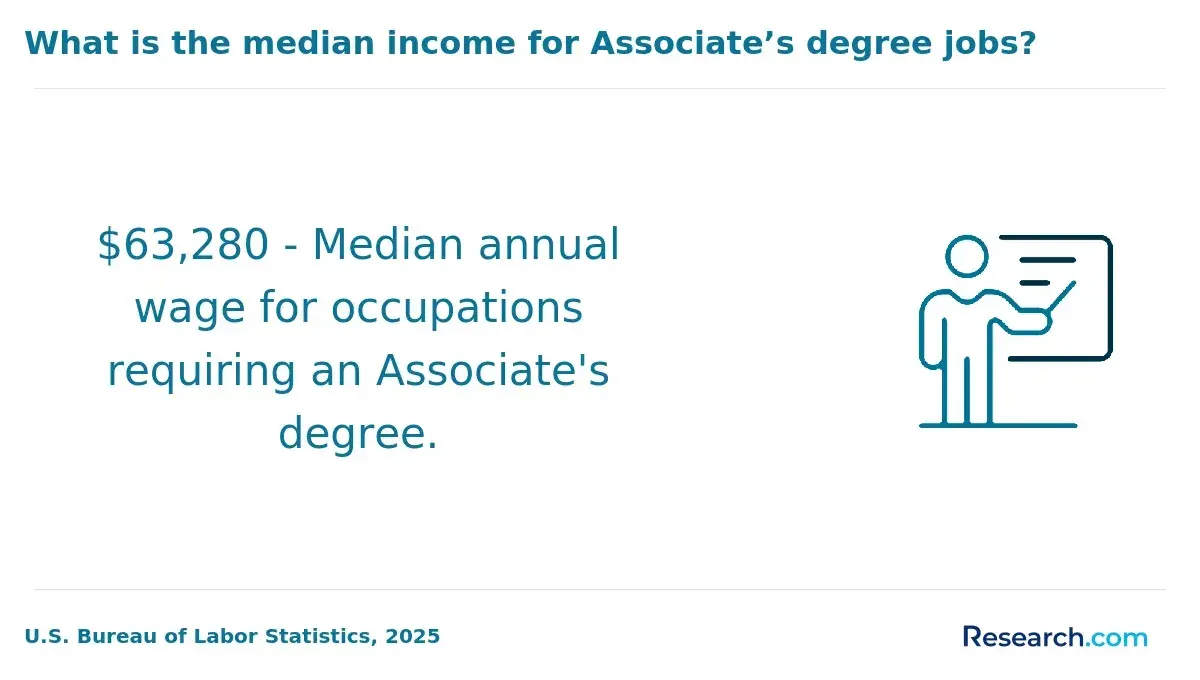
A degree may not be the fastest or most economical answer for every transition. If you need a narrow, entry-level skill quickly, compare business study with jobs that only require a certificate. Certificates can be useful for targeted tools or occupations, but they generally do not provide the broad advancement options or employer network of a bachelor's or master's degree.
Build evidence of capability while studying. Seek an internship, volunteer to improve a process at your current employer, complete a faculty-sponsored project, or create a portfolio that shows analysis and recommendations. A common mistake is waiting until graduation to gain relevant experience; career changers usually benefit from accumulating proof of business skills before the job search begins.
What salaries can graduates expect after graduation?
Business degree holders do not have one standard salary because job title, previous experience, geographic location, industry, degree level, and performance all matter. A career changer should use occupation-level wage data as a benchmark, not as a promise tied to a particular school or accreditation.
The U.S. Bureau of Labor Statistics reported a median annual wage of $101,190 for management analysts in May 2024. This occupation commonly requires a bachelor's degree and related experience, which is important: an entry-level business graduate should not assume immediate access to a median wage that reflects workers across experience levels.
The following comparison helps place salary expectations in context.
| Salary factor | Why it affects outcomes | How to use it in your decision |
| Prior professional experience | Career changers may bring industry knowledge, leadership experience, or client expertise that transfers to business roles | Target industries where your prior background solves a real employer problem. |
| Role level | Coordinator and analyst roles generally differ from manager, consultant, and director roles | Compare pay to the first realistic role, then map advancement requirements. |
| Location and industry | Pay differs across labor markets and sectors, while living costs also vary | Use local job postings and occupation data rather than national figures alone. |
| Skill depth | Data analysis, finance, operations, sales performance, and project delivery can affect competitiveness | Choose coursework and projects that produce job-relevant evidence. |
For return-on-investment planning, compare your current earnings and likely first-transition earnings with total program cost and time away from work. Avoid school marketing that presents broad salary averages without stating the graduating class, job titles, response rate, location, and whether the figure includes experienced students.
How should you choose a reputable business school?
Choose a reputable business school by verifying legitimacy first, then matching its outcomes and delivery model to your transition plan. AACSB or ACBSP accreditation can be a useful quality indicator, but it should sit alongside institutional accreditation, transparent costs, student support, and evidence that graduates move into relevant work.
Use the following process before submitting an application or deposit. It helps prevent the common mistake of choosing based on brand, rankings, or advertised tuition alone.
- Verify the institution's accreditation and confirm the business school's AACSB or ACBSP status directly through the accreditor and the school's current materials.
- Confirm that your exact degree, concentration, campus, and online or hybrid format are included in the program you are evaluating.
- Request a written estimate of tuition, fees, books, prerequisite costs, transfer credits, and expected time to completion.
- Ask for career-outcome information relevant to your degree level and format, including internship support, employer relationships, and services available to online students.
- Compare the curriculum with job postings for your target role, identifying gaps in analytics, accounting, software, industry knowledge, or project experience.
- Speak with admissions, financial-aid, and career-services staff, then ask current students or alumni about workload, faculty access, and the usefulness of career support.
Red flags include unclear institutional accreditation, pressure to enroll before a transfer evaluation is complete, vague claims about employment or salaries, unexplained fees, and an inability to describe support for online students. Also be cautious of programs that market speed while withholding the prerequisite sequence or typical student workload.
The best choice is usually the school that offers a credible, affordable route to your specific next role. An AACSB program may be the better investment for a competitive MBA or employer-network goal; an ACBSP program may be the better fit when its teaching model, schedule, price, and local connections make a career transition more achievable.
Other Things You Should Know About Business Administration
Not in every situation. AACSB is often more recognizable in research-oriented and highly competitive business-school recruiting contexts. ACBSP can be an excellent fit for students who prioritize teaching quality, applied learning, affordability, and flexibility. Compare the individual program's outcomes and costs.
Most employers do not automatically reject candidates because a business program is ACBSP accredited. Hiring decisions typically depend on the role, your experience, demonstrated skills, interview performance, and the school's overall credibility. Check whether employers you target list a specific accreditation preference.
Often, yes. Many MBA programs admit students from nonbusiness majors. You may need foundation coursework in areas such as accounting, economics, statistics, or finance, particularly if you have limited quantitative preparation.
Yes, but verify more than the label. Confirm the institution's accreditation, whether the business school or program is within AACSB or ACBSP scope, and whether online students receive comparable academic advising, career services, networking opportunities, and employer access.
References
- Understanding Business School Accreditation: AACSB and ACBSP Explained https://www.aiuniv.edu/blog/2015/april/aacsb-vs-acbsp
- AACSB vs ACBSP Accreditation https://www.bschools.org/faq/aacsb-vs-acbsp