2027 Post-Master's Palliative Care Nursing Certificates for Nurses in Maryland: Admission, Study Format, and Cost
Audited and Verified:
Our Editorial and Data Verification Process
Research.com uses government datasets, official education statistics and primary institutional information to support its career and degree guides. Our review process checks factual accuracy, occupational definitions, source dates and the requirements associated with the credentials discussed.
How This Article Was Fact-Checked
Our editorial team verifies salary estimates, employment projections, education requirements and program information against original data providers and official organizations. Salary figures are checked against the relevant occupational definitions and reporting periods. Information about licensure, accreditation and required in-person training is reviewed separately.
Fact-checked and verified on:

Co-Founder and Chief Data Scientist
A Maryland nurse considering a post-master's palliative care certificate needs to confirm more than whether a course is online. The award must fit the nurse's existing license, clinical role, budget, and goal - whether that is stronger palliative care practice or a new advanced practice position. This guide explains what to verify about Maryland programs, admissions, coursework, scheduling, and total cost.
It also separates a school-issued certificate from professional certification and APRN authorization, so you can avoid paying for a credential that does not lead to your intended role.
Key Things You Should Know
- A post-master's palliative care certificate builds on an existing graduate degree; it does not, by itself, award an RN license, a new APRN population focus, or specialty board certification.
- Confirm four program facts before applying: the exact award, admission eligibility, required in-person or supervised experiences, and the full tuition-and-fee estimate.
- Maryland program availability and prices require confirmation for your entry term; do not treat a school's palliative care courses or general nursing accreditation as proof that a distinct post-master's certificate is accepting applicants.
What is a post-master's palliative care nursing certificate in Maryland?
It is graduate-level study for a nurse who already holds a master's degree, focused on caring for people with serious illness and supporting their families. Depending on the curriculum, it may address symptom assessment, communication about goals of care, ethical decisions, and coordination across hospitals, clinics, homes, and hospice services. Palliative care is not limited to end-of-life care; it can accompany treatment intended to prolong life.
The name of the award matters. A transcripted post-master's nursing certificate is different from a short continuing-education course, and neither automatically qualifies an RN to practice as a nurse practitioner. Nurses whose immediate need is to progress from an associate degree to graduate study should compare continuing from an ADN into MSN study before considering a post-master's award.
Which Maryland schools offer accredited palliative care nursing certificates?
There is no verified, current list here of Maryland schools admitting students to a distinct post-master's palliative care nursing certificate. The University of Maryland School of Nursing and Johns Hopkins School of Nursing are reasonable institutions to ask about graduate palliative care study, but their other nursing programs or palliative care instruction should not be mistaken for confirmation that this particular award is open for a given term.
Ask each school for the certificate's official catalog title, awarding school, current application page, curriculum, and next start date. Then check institutional accreditation and whether the relevant nursing program falls within a nursing accreditor's stated scope.
Accreditation of an MSN program does not necessarily establish separate accreditation of every certificate. This distinction also applies when comparing online family NP certificate coursework comparisons: an FNP certificate has a different clinical and credentialing purpose from palliative care study.
What are the admission requirements for palliative care nursing certificates?
Expect a school to review a graduate nursing transcript and RN license, but do not assume every program admits the same applicants. Some may accept an MSN or DNP in a non-APRN specialty; others may target practicing APRNs or require particular graduate courses. Applications may also call for a résumé, statement of purpose, recommendations, and proof of clinical eligibility if supervised experiences are included.
Send admissions staff your degree transcript, license information, and a brief description of your intended role. Ask whether prior graduate courses can be applied to the certificate and obtain the decision in writing. If you are not yet an RN, a post-master's nursing certificate is not an initial-licensure route; practical nurse to registered nurse study options address a different starting point.
Online coursework may be possible, but the format of a specific Maryland certificate - and whether it currently enrolls students - must be confirmed with the school. "Online" may still include scheduled live discussions, campus sessions, simulation, or locally completed supervised experiences. A nurse working shifts should request the actual class meeting times and attendance rules, not just the delivery label.
If clinical learning is required, ask who approves the site and preceptor, whether your workplace can qualify, and whether placements outside Maryland are permitted. A school's approach to comparing clinical site support for FNP students illustrates why placement assistance deserves a direct question, although FNP and palliative care certificates may have different requirements.
Coursework may cover serious-illness communication, symptom management, psychosocial and spiritual concerns, ethics, family support, and interdisciplinary care coordination. The balance depends on the award: a clinically oriented certificate may assess applied patient-care competencies, while another may emphasize leadership, education, or quality improvement. Request a current course sequence rather than assuming that a program title guarantees particular skills or clinical hours.
Compare the syllabus with your current work. An experienced hospice RN may benefit more from advanced communication or program-development coursework than from repeated introductory content. By contrast, accelerated mental health NP master's coursework serves a separate psychiatric advanced-practice objective; overlap in communication topics does not make the credentials interchangeable.
There is no defensible single completion time without a confirmed school, credit requirement, and course schedule. Your timeline depends on whether courses run every term, whether part-time enrollment is allowed, and whether a required experience can be arranged promptly. Previously completed graduate work may help only if the receiving school approves its application to the award.
Ask for a term-by-term plan showing the earliest and a realistic part-time completion date, including any clinical or campus commitments. Advertised short timelines for comparing shorter family NP training pathways should not be applied to a palliative care certificate - or assumed feasible around full-time employment.
A reliable Maryland-specific price requires a currently offered certificate, its required credits, and the school's charges for your entry term. No verified program price is available here, so a quoted total or claim that one Maryland school is cheapest would be misleading. Request an itemized estimate that includes tuition, mandatory fees, books, technology, and any travel or placement-related expenses. Ask whether tuition differs by residency or course format.
Compare the total cost to finish, not tuition per credit alone. Employer assistance may reduce your expense, but reimbursement rules can depend on grades, continued employment, or annual limits. Broader cost comparisons across online NP pathways can provide context if your actual goal is NP preparation; those prices should not be substituted for a palliative care certificate quote.
A nurse providing palliative care in Maryland needs the nursing license or lawful practice authority appropriate to the job. An RN certificate does not create APRN authority. An NP position also requires education, national certification, and Maryland authorization appropriate to its advanced-practice role and population focus; palliative care coursework alone does not replace them.
Professional hospice and palliative nursing certifications are separate from school-issued certificates. Their eligibility rules vary by credential and may consider license type and practice experience, so check the certifying organization's current handbook before enrolling primarily for exam eligibility. If your target is psychiatric NP practice instead, PMHNP education costs and program choices concern a different qualification, even when the patients served have serious illness.
Palliative care nurses work in hospital consultation teams, oncology and other specialty clinics, home-based services, and hospice. An RN may provide assessment, education, coordination, and symptom-related nursing care within RN scope. A palliative care NP's responsibilities depend on the NP's population focus, Maryland authorization, employer privileges, and demonstrated competence. Employers may also seek nurses for education, quality improvement, or service leadership.
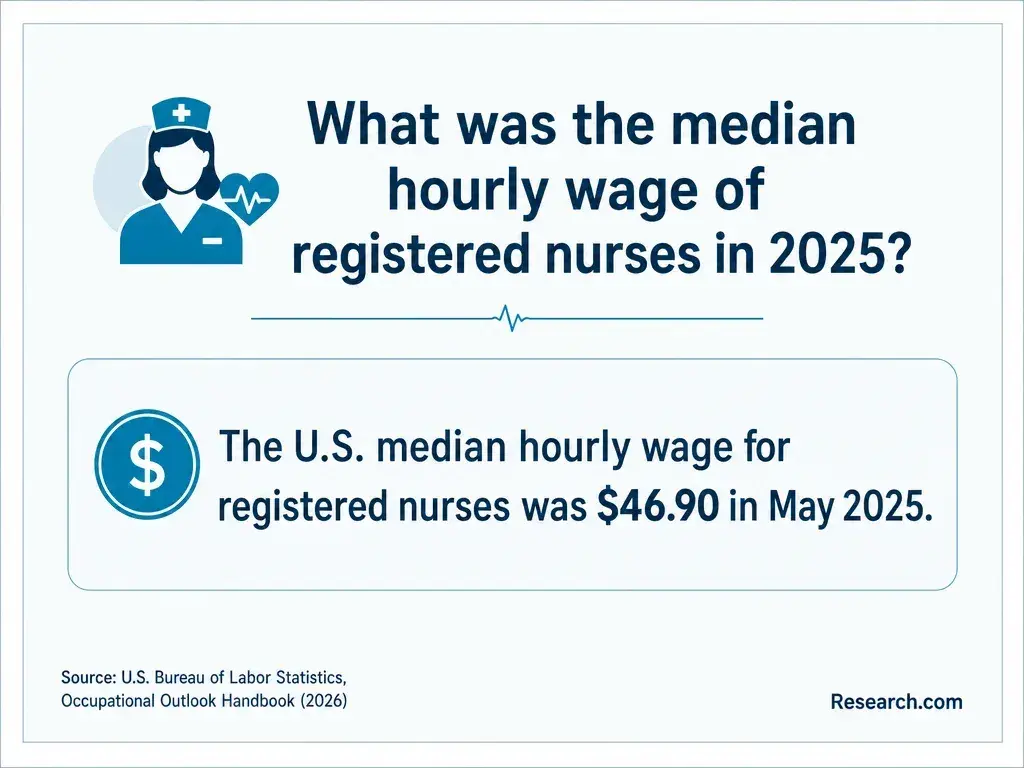
There is no single national "palliative care nurse" wage that predicts an individual offer. The U.S. Bureau of Labor Statistics reports wages for broader occupations such as registered nurses and nurse practitioners, not graduates of this certificate. Compare local postings by license, duties, setting, schedule, and experience rather than assuming the certificate produces a salary increase.
Nurses aiming primarily at organizational improvement may also weigh online DNP programs emphasizing organizational practice against a narrower specialty certificate.
How can nurses choose a reputable palliative care certificate program?
Start with the outcome you need: stronger care in your present role, eligibility for a particular professional certification, or preparation for a different licensed position. Only then compare awards. A reputable program should be able to explain precisely what it teaches, whom it admits, how learning is assessed, and what it does not qualify graduates to do.
Before committing, get written answers to the questions most likely to change your decision:
- Is this specific post-master's certificate accepting applicants for my intended term, and what credential appears on the transcript?
- What accreditation applies to the institution and relevant nursing program, and are there enrollment or placement restrictions for my location?
- Which sessions, site visits, supervised experiences, and preceptors are required, and who arranges them?
- What is my individualized course plan and total estimated cost, including fees and potential delays?
- Does the curriculum match my intended job and the current eligibility rules of any certification I plan to pursue?
If a shorter educational step better fits your goal, compare it honestly rather than buying a graduate credential for its title. For example, RN-to-BSN pathways using applied projects address degree completion, not post-master's palliative specialization. Employer training and targeted continuing education may be sufficient when your goal is improved practice in an existing role.
Other Things You Should Know About Nursing
No. Palliative care addresses symptoms and quality of life during serious illness and can accompany disease-directed treatment. Hospice is a particular model of care generally associated with the end of life.
Possibly. Employers set educator qualifications, which may include clinical experience, teaching skills, a graduate degree, or another credential. Check the requirements of the specific position.
Do not assume it will. Confirm the Maryland Board of Nursing's applicable renewal rules and whether the school's coursework meets them before relying on those credits.
Potentially, but enrollment authorization and any supervised-experience rules depend on the student's location and the program. Ask the school to confirm eligibility for your state before applying.
- Rule 3341-3-05 | Credit transfer - graduate. https://codes.ohio.gov/ohio-administrative-code/rule-3341-3-05
- APRN Education Requirements - Kansas State Board of Nursing https://ksbn.kansas.gov/aprn-education-requirements/
- Ethical considerations at the end-of-life care - PMC - NIH https://pmc.ncbi.nlm.nih.gov/articles/PMC7958189/
- How to Apply to Graduate School Successfully | LVC Office of the Registrar https://www.lvc.edu/news/how-to-apply-to-graduate-school-successfully/
- Palliative Care, Certificate, Master's, Doctoral/PhD | umaryland.edu https://graduate.umaryland.edu/palliative/
- Graduate admissions Steps to apply Prepare required materials | The Ohio State University https://gpadmissions.osu.edu/grad/prepare-required-materials.html
- Graduate School: Transfer Credits for Prior Coursework | wisc.edu https://policy.wisc.edu/library/UW-1216
- Graduate Credit Transfer Policy - Campus Offices https://campus.collegeforcreativestudies.edu/policy/transfer-credits-graduate/
- Distance Education - University Policy https://universitypolicy.gmu.edu/policies/distance-education/
- Post Master's Certificate of Advanced Study (CAS) | Bowie State https://www.bowiestate.edu/academics/colleges/college-of-professional-studies/departments/nursing/graduate-programs/post-masters-certificate/