2027 Online Nutrition Degrees Meeting Prerequisites for Graduate Dietetics Programs

Co-Founder and Chief Data Scientist
Choosing an online nutrition degree is not enough if your goal is to become a registered dietitian nutritionist (RDN): the coursework, supervised-practice pathway, and graduate-program fit all matter. Since January 1, 2024, candidates must hold a graduate degree to qualify for the national RDN examination. This guide helps future dietitians compare online bachelor's options, verify prerequisite coverage, avoid accreditation mistakes, estimate costs and timelines, and choose a program that supports their next step.
Key Things You Should Know
- An online nutrition bachelor's degree can prepare you for graduate dietetics study, but it does not by itself make you eligible for the RDN exam; candidates need a graduate degree and must complete an ACEND-accredited pathway.
- Look for a program that covers science prerequisites such as anatomy and physiology, chemistry, microbiology, statistics, food science, and nutrition assessment; missing courses can add one or more terms before graduate admission.
- The U.S. Bureau of Labor Statistics reports a $73,850 median annual wage for dietitians and nutritionists in 2024 and projects 7% employment growth from 2024 to 2034, making careful program alignment important for return on investment.
How do online nutrition degrees qualify you for graduate dietetics programs and internships?
An online nutrition degree can qualify you for graduate dietetics programs when it provides the academic foundation those programs require. It is important to distinguish a general nutrition degree from a dietetics pathway. Nutrition programs may prepare students for wellness, public health, food-industry, or graduate study roles, while dietetics education follows requirements connected to Registered Dietitian Nutritionist eligibility.
For most prospective RDNs, the typical sequence is a bachelor's degree, prerequisite science and nutrition courses, an ACEND-accredited graduate program or coordinated pathway, supervised practice, and the national examination administered by the Commission on Dietetic Registration. Some graduate programs combine graduate coursework with supervised experiential learning, while others require applicants to arrange or apply separately for practice placements.
The comparison below shows why the degree title alone is not a reliable indicator of readiness.
| Undergraduate option | Typical purpose | Fit for graduate dietetics admission | Key verification step |
| Nutrition science bachelor's degree | Nutrition foundations, health science, research preparation | Often a strong fit if prerequisite sciences are included | Match completed courses against each target graduate program's checklist |
| Dietetics bachelor's degree or DPD pathway | Structured dietetics preparation | May provide the most direct academic alignment | Confirm current ACEND status and whether a verification statement is available |
| General health or wellness degree with nutrition electives | Broad health education | Possible, but commonly requires additional sciences | Request a formal prerequisite review before enrolling |
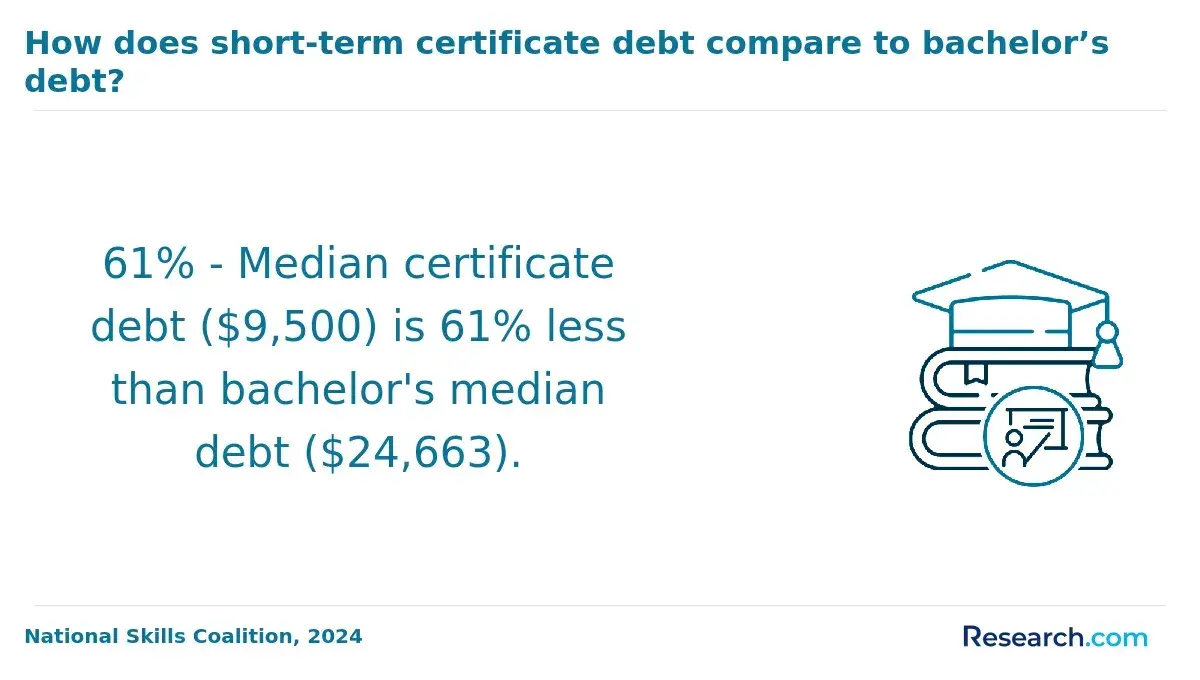
| Nutrition certificate | Focused knowledge or career exploration | Usually insufficient as a stand-alone graduate dietetics preparation route | Check whether credits are transcripted and transferable |
Online study works best for students who can independently manage deadlines and who have access to approved in-person lab options when needed. It may be a poor fit for someone who wants a fully remote route with no local laboratory, practicum, proctoring, or clinical obligations; dietetics education still includes hands-on competency requirements.
What accreditation should online nutrition programs have to meet dietitian eligibility requirements?
The most important accreditation question is whether the education pathway is recognized by the Accreditation Council for Education in Nutrition and Dietetics (ACEND). ACEND accreditation is the central programmatic standard for education routes that lead toward RDN eligibility. Institutional accreditation also matters because it affects federal financial aid, transfer-credit acceptance, and graduate-school recognition.
A school's regional or institutional accreditation does not automatically mean its nutrition curriculum meets dietetics requirements. Conversely, a respected online nutrition program may be institutionally accredited but designed for nutrition careers that do not require RDN eligibility. Ask the program directly whether its curriculum leads to a Dietetics Verification Statement, supports a specific ACEND-accredited graduate pathway, or is intended only to satisfy selected prerequisites.
Use these checks before treating any online program as an RDN-preparation option.
- Confirm the institution's accreditation status through its official accreditation information and federal school records.
- Search the ACEND program directory for the exact program and location, not just the university name.
- Ask whether online students receive the same verification statement or pathway eligibility as campus students.
- Request a written course map showing how degree requirements align with the graduate programs you may apply to.
- Check state licensure rules if you plan to practice in a state that regulates dietitians or nutritionists separately.
A common mistake is assuming "accredited nutrition degree" means "eligible for the dietitian exam." Avoid this by separating institutional accreditation, ACEND programmatic accreditation, graduate-degree requirements, and state licensure requirements. They serve different purposes.
What prerequisites do graduate dietetics programs require, and can they be completed online?
Graduate dietetics programs set their own admission standards, but many require a combination of nutrition coursework and foundational sciences. Online coursework can often satisfy lecture-based prerequisites when the receiving graduate program accepts it and the credit appears on an accredited college transcript. Laboratory requirements deserve additional scrutiny because some schools require in-person labs or specify acceptable virtual-lab formats.
The table summarizes common prerequisite categories. It is a planning tool, not a substitute for each program's current admissions requirements.
| Prerequisite area | Why graduate programs use it | Can it commonly be completed online? | What to verify |
| General chemistry and organic chemistry or biochemistry | Supports metabolism and food-science study | Lecture often yes; lab acceptance varies | Required lab format, sequence, and minimum grade |
| Anatomy and physiology | Supports clinical nutrition assessment | Often yes; lab policies vary | Whether separate courses and labs are required |
| Microbiology | Supports food safety and clinical applications | Sometimes; in-person lab may be preferred | Lab requirement and recency limits |
| Statistics | Supports evidence-based practice and research literacy | Usually yes | Accepted course level and quantitative emphasis |
| Nutrition, lifecycle nutrition, and food science | Builds dietetics-specific knowledge | Often yes | Required topics and whether a verification statement is needed |
Students can reduce surprises by building a prerequisite spreadsheet before applying. List every target graduate program across the top, every required course down the side, and record course number, credits, grade, lab format, and whether admissions has confirmed equivalency.
Do not rely only on a university adviser's verbal assurance if your eventual graduate school is elsewhere. The receiving program decides whether coursework meets its standards, and requirements can change between application cycles.
How do online nutrition bachelor's programs compare to campus-based options for future dietitians?
Online and campus-based nutrition degrees can lead to similar graduate-school preparation when course content, credit hours, laboratory access, faculty support, and accreditation alignment are equivalent. The better format depends less on prestige and more on whether you can complete required science labs, obtain advising, and maintain the academic performance needed for competitive graduate admission.
This comparison highlights the practical trade-offs for future dietitians.
| Factor | Online nutrition bachelor's program | Campus-based program | Better choice when |
| Schedule flexibility | Often accommodates work and family schedules | Usually follows fixed meeting times | Choose online if you need asynchronous coursework |
| Science laboratories | May require local, hybrid, intensive, or approved partner labs | Usually available on campus | Choose campus if you need frequent hands-on lab access |
| Networking | Requires intentional outreach and virtual engagement | May offer easier faculty and peer contact | Choose campus if you value built-in local connections |
| Advising for dietetics pathways | Quality varies substantially by program | May be embedded in a dietetics department | Choose the format with documented RDN-pathway advising |
| Location flexibility | May reduce relocation needs | Often requires commuting or moving | Choose online if geography is your main constraint |
Students considering an accelerated format should make sure speed does not remove essential lab time or reduce grades in demanding sciences. Compare course pacing, exam schedules, and transfer rules with fast track schools only after confirming that the program supports your specific dietetics prerequisites.
Campus learning can be especially useful for students who need structured study routines, immediate lab access, or close relationships with faculty who can later write graduate-school recommendations. Online learning can be the smarter option for employed students, caregivers, military-connected learners, and students outside commuting distance of a suitable program.
What courses and lab experiences must an online nutrition degree include for dietetics readiness?
A dietetics-ready online curriculum should develop both nutrition knowledge and the scientific reasoning needed for graduate clinical education. Exact course names differ, so evaluate learning outcomes, credits, and lab components rather than relying on labels such as "health science" or "nutrition studies."
The strongest undergraduate plans usually include the following course groups because they recur across graduate dietetics admissions requirements.
- Foundational sciences: general chemistry, organic chemistry or biochemistry, anatomy and physiology, and microbiology, with labs accepted by intended graduate programs.
- Quantitative and behavioral coursework: statistics, psychology, sociology, and sometimes algebra or research methods.
- Core nutrition: introductory nutrition, nutrition across the lifespan, medical nutrition therapy or nutrition assessment where available, food science, and community nutrition.
- Food systems and professional preparation: foodservice management, food safety, cultural competency, communication, and evidence-based practice.
- Applied experiences: supervised projects, community outreach, foodservice observation, research exposure, or approved local learning experiences when the program offers them.
Lab science is the most frequent planning obstacle in online programs. A virtual lab may be accepted by one graduate school and rejected by another, particularly for chemistry or microbiology. Before registering, send the course description, credit hours, lab syllabus, and delivery format to the graduate admissions office and retain its response.
Another common error is completing prerequisites years before applying without checking recency rules. Some programs limit how old science courses may be, especially when applicants have been out of school for an extended period. If you need to refresh coursework, choose the specific classes required rather than repeating an entire degree unnecessarily.
What admission criteria and transfer policies affect entry into online nutrition degree programs?
Admission requirements for online nutrition bachelor's programs commonly include a high school diploma or equivalent, transcripts, minimum GPA standards, and placement or prerequisite requirements for college-level math and science. Transfer applicants may also need course descriptions or syllabi for science credits. Requirements vary considerably, particularly for upper-division programs and programs with limited lab capacity.
Transfer policy can change the cost and completion timeline more than the advertised program length. A school may accept a large number of transfer credits overall while accepting fewer credits toward major requirements, laboratory sciences, or upper-level nutrition courses.
Before applying, ask admissions and departmental advisers these focused questions.
- Which of my prior courses will apply specifically to the nutrition major and to graduate dietetics prerequisites?
- Are transferred science labs accepted, and is there a time limit on chemistry, anatomy, physiology, or microbiology credits?
- Can I take missing prerequisites as a nondegree student, and will those credits be eligible for financial aid?
- What minimum grade must I earn in science and nutrition courses to progress or graduate?
- Do online students receive pre-dietetics advising, faculty recommendation support, and graduate-application guidance?
- What local arrangements are required for labs, proctoring, field experiences, or foodservice activities?
Applicants with a prior bachelor's degree should compare a second bachelor's degree against taking only missing prerequisites. A second degree can make sense when your existing transcript lacks many sciences and nutrition courses or when you want structured advising. Targeted coursework is often more efficient when you already meet most requirements, but only a formal evaluation from the intended graduate program can confirm that.
How long do online nutrition degrees take, and what tuition and financial aid can students expect?
A traditional bachelor's degree is commonly designed as a four-year, roughly 120-credit program for full-time students. Transfer credit, part-time enrollment, prerequisite gaps, lab availability, and summer study can shorten or lengthen that timeline. After the bachelor's degree, future RDNs must also plan for graduate education and supervised-practice requirements, so the full route usually extends beyond undergraduate study.
Tuition varies by residency, institution, transfer credits, course load, technology fees, lab fees, and required travel. Rather than comparing tuition per credit alone, estimate the total cost of completing every prerequisite, laboratory, degree requirement, and graduate application step. Public institutions may offer lower rates for in-state students, but a private nonprofit program can still be a better value if it accepts more transfer credits or prevents extra terms.
Adult learners returning to college should compare pacing, prior-learning policies, and student support alongside published tuition. Resources on best degrees for older adults can help learners evaluate online formats, but dietetics-focused students still need to verify science labs and graduate prerequisites separately.
Federal financial aid may be available to eligible students attending an institution approved to participate in federal student aid programs. Start with the FAFSA, then compare grants, scholarships, work-study options, employer tuition assistance, and institutional aid before borrowing. Federal loan limits, satisfactory academic progress rules, and aid eligibility can differ for second-degree students, part-time students, and nondegree prerequisite enrollment.
To control costs, prioritize transferable general education credits, confirm lab fees in advance, use in-network or approved local lab arrangements when available, and avoid taking duplicate courses without written confirmation that they are needed.
What careers can graduates pursue with an online nutrition degree that meets dietetics prerequisites?
An online nutrition degree can support entry-level nutrition and health roles while preparing you for graduate dietetics study. Career options depend on state laws, employer policies, experience, and whether you hold an RDN credential. A bachelor's degree alone generally does not authorize someone to present themselves as a registered dietitian or provide services reserved for licensed professionals in regulated states.
Graduates may pursue roles such as nutrition education assistant, community health worker, wellness-program coordinator, foodservice supervisor, health coach where permitted, research assistant, nutrition program specialist, or food-industry representative. These jobs can build communication, program-planning, food systems, and population-health experience while you apply to graduate school.
The table separates roles that may be accessible with undergraduate preparation from roles commonly requiring the RDN credential.
| Career direction | Typical education and credential position | Common work setting | Important limitation |
| Nutrition education or community outreach | Bachelor's degree may be sufficient for some roles | Nonprofits, public health programs, community organizations | Scope of nutrition counseling varies by employer and state |
| Foodservice and wellness coordination | Bachelor's degree plus relevant experience may be sufficient | Schools, workplaces, recreation, senior living, food companies | Clinical nutrition responsibilities may require an RDN |
| Research support | Bachelor's degree often supports assistant-level roles | Universities, hospitals, research organizations | Advancement may require graduate training |
| Clinical dietitian or medical nutrition therapy provider | Graduate degree, ACEND pathway, RDN credential, and possible state license | Hospitals, clinics, long-term care | Cannot be reached through a general degree alone |
| Private-practice dietitian | Usually RDN credential and applicable state licensure | Private practice, telehealth, consulting | Business, payer, and state-practice rules apply |
If income is your primary criterion, compare career ladders rather than assuming every nutrition-related title has the same pay potential. Explore best degrees to make money alongside your interest in nutrition, science, and patient care; a degree is most useful when its credential pathway matches the work you actually want to do.
What are salary expectations and job outlook for nutrition and dietetics-related careers?
The U.S. Bureau of Labor Statistics reports that dietitians and nutritionists had a median annual wage of $73,850 in 2024. This median covers workers across settings and experience levels; it is not a starting-salary promise, and pay can vary materially by state, employer, specialty, schedule, credentialing status, and management responsibility.
Employment of dietitians and nutritionists is projected to grow 7% from 2024 to 2034, faster than the average for all occupations according to the Bureau of Labor Statistics. Demand is influenced by aging populations, chronic-condition management, foodservice oversight, public-health needs, and interest in preventive care. However, job growth does not eliminate competition for supervised practice placements, graduate admissions, or desirable clinical positions.
Technology is changing nutrition work without replacing the need for professional judgment. Electronic health records, telehealth platforms, nutrient-analysis software, and AI-assisted documentation can streamline tasks, while RDNs remain responsible for evidence-based assessment, ethical practice, individualized care, and compliance with employer and state requirements.
Students interested in research, university teaching, advanced leadership, or specialized health-science careers may eventually consider doctoral education. An online PhD may offer scheduling flexibility in some disciplines, but it is generally not required for entry-level dietitian practice and should be evaluated separately for research fit, funding, residency expectations, and faculty mentorship.
For stronger return on investment, consider total educational debt, the number of additional terms needed for prerequisites, likely geographic mobility for supervised practice, and whether you prefer clinical, community, foodservice, research, or corporate work. The RDN route is often most compelling for students who want clinical credibility and a regulated professional pathway rather than only broad wellness knowledge.
How can students evaluate and choose reputable online nutrition programs aligned with dietetics goals?
Choose an online nutrition program by working backward from your intended graduate dietetics program and eventual state of practice. The best option is not necessarily the least expensive, shortest, or most heavily advertised; it is the one that lets you complete accepted prerequisites, preserve financial-aid eligibility, access needed labs, and receive reliable academic support.
Use the following decision process to compare programs consistently.
- Identify whether your goal is RDN eligibility, a non-credentialed nutrition career, or exploration before committing to graduate school.
- Select several ACEND-accredited graduate programs or pathways you could realistically attend and record their current prerequisites.
- Audit each online bachelor's curriculum course by course, including credits, labs, delivery mode, and upper-level requirements.
- Request written confirmation about transferred credits, virtual-lab acceptance, verification-statement eligibility, and local experiential requirements.
- Calculate total attendance cost, including tuition, fees, books, lab kits, proctoring, travel, and any courses not included in the major.
- Compare student support, faculty access, tutoring, career advising, graduate-placement information, and policies for online learners.
- Review state licensure implications before assuming an online program will support practice where you live.
Red flags include vague claims that a program "prepares you for dietetics" without naming the pathway, no clear explanation of lab delivery, an inability to provide a curriculum map, pressure to enroll before transfer evaluation, and claims of guaranteed licensure, internships, admission, or earnings. Reputable schools explain what they can document and acknowledge requirements controlled by graduate programs, credentialing bodies, and state regulators.
Before making a deposit, ask for the current catalog, sample degree plan, estimated total cost, transfer evaluation, and written clarification of how the program supports your target graduate dietetics pathway. That documentation is more useful than broad rankings or marketing language.
Other Things You Should Know About Nutrition
Possibly, but not through the bachelor's degree alone. You must complete a graduate degree, an ACEND-accredited education and supervised-practice pathway, and the national RDN examination. Online undergraduate coursework must be accepted by your intended graduate program, including required labs.
No. A nutrition degree can cover broad nutrition science and wellness topics, while a dietetics pathway is specifically structured around professional dietetics competencies. Check whether the program leads to a Dietetics Verification Statement or only provides individual prerequisites.
Some graduate programs accept online or virtual labs, but others require in-person labs or review them individually. Obtain approval from each graduate program before enrolling in an online lab course.
Yes. Candidates became required to hold a graduate degree to be eligible for the RDN examination beginning January 1, 2024. They must also meet ACEND education and supervised-practice requirements.
References
- Online Nutrition & Dietetics Master of Science Degree https://www.idea.edu/program/dietetics
- Top 35 Online Nutrition and Dietetics Programs https://becomeanutritionist.org/top-35-online-nutrition-and-dietetics-programs/
- Best Online Master's Degree Programs in Dietetics for 2025 https://www.onlinemastersdegrees.org/best-programs/nutrition/dietetics/
- Eligibility & Requirements https://www.kumc.edu/school-of-health-professions/academics/departments/dietetics-and-nutrition/academics/online-masters-program/eligibility-and-requirements.html