2027 Fertility Clinic vs Women's Health Clinic Nursing: Daily Work, Schedules, and Career Fit
Audited and Verified:
Our Editorial and Data Verification Process
Research.com uses government datasets, official education statistics and primary institutional information to support its career and degree guides. Our review process checks factual accuracy, occupational definitions, source dates and the requirements associated with the credentials discussed.
How This Article Was Fact-Checked
Our editorial team verifies salary estimates, employment projections, education requirements and program information against original data providers and official organizations. Salary figures are checked against the relevant occupational definitions and reporting periods. Information about licensure, accreditation and required in-person training is reviewed separately.
Fact-checked and verified on:

Co-Founder and Chief Data Scientist
Fertility and women's health clinics can both offer a move into outpatient nursing, but they organize care around different patient needs, and their schedules are not equally predictable. For nursing students, new graduates, and RNs considering a transition, the distinction affects which skills to build and which jobs to pursue.
This comparison covers daily work, hours, preparation, pay context, and the questions that reveal whether a particular clinic fits your experience and life outside work.
Key Things You Should Know
- Fertility nurses coordinate time-sensitive treatment cycles; women's health clinic nurses typically support a broader mix of preventive, gynecologic, and sometimes prenatal care.
- Both settings may advertise weekday hours, but fertility monitoring and procedures can require early starts, weekends, holidays, or call. Confirm the actual rotation before accepting an offer. Most RN roles require an active RN license and specialty onboarding, not a specialty degree.
- The U.S. Bureau of Labor Statistics reported a $93,600 median annual wage for all RNs in May 2024 - not a salary estimate for either clinic specialty.
What does a fertility clinic nurse do compared with a women's health clinic nurse?
Fertility nursing centers on evaluation and treatment intended to help patients conceive or preserve fertility. Women's health clinic nursing covers a wider range of reproductive and gynecologic needs; the exact mix depends on whether the practice offers primary gynecology, contraception, prenatal care, menopause services, or other services.
The comparison below describes common RN work, not tasks every employer assigns. Procedures and medication responsibilities depend on the nurse's license, training, state law, and clinic policy.
| Work feature | Fertility clinic RN | Women's health clinic RN |
| Typical workflow | Coordinates testing, monitoring visits, treatment-cycle instructions, procedures, and follow-up | Supports scheduled visits, symptom calls, screenings, patient education, procedures, and follow-up |
| Patient communication | Explains complex, date-sensitive instructions and helps patients navigate uncertain or disappointing results | Addresses concerns across life stages, including prevention, symptoms, pregnancy-related questions where offered, and ongoing care |
| Key coordination partners | Fertility clinicians, laboratory and embryology teams, procedure staff, pharmacies, and patients | Gynecology or obstetric clinicians, medical assistants, imaging or laboratory staff, and referral services |
Fertility work often rewards comfort with detailed protocols and rapid communication when a treatment plan changes. Women's health practice may better suit a nurse who wants broader clinical variety and continuity across different concerns. In either setting, the RN assesses, educates, documents, and escalates concerns within scope; the RN does not independently prescribe treatment. Nurses interested instead in diagnosing and prescribing should investigate an appropriate advanced practice route, such as short-format family NP degree and certificate routes, while checking whether its population focus matches the intended job.
How do fertility clinic and women's health nursing schedules differ?
Fertility clinic hours are driven partly by treatment timing. Monitoring may start early in the morning, and procedures or patient instructions may fall on weekends or holidays. A posted Monday-Friday clinic schedule does not necessarily describe the RN's rotation. Telephone triage and after-hours messages can add work beyond appointment times.
Women's health clinics more commonly organize RN coverage around booked office sessions, but evening appointments, urgent calls, rotating sites, and weekend coverage are possible. A clinic attached to a hospital or an obstetric practice may have different call expectations from a gynecology-only office. Neither specialty guarantees a nine-to-five schedule.
Ask for a sample four-week schedule and clarify who covers early monitoring, weekends, holidays, call, and messages after closing. If you plan to study while employed, compare those obligations with mandatory classes or placements; even RN-to-BSN project-based learning options may have deadlines and group-work commitments that are difficult to fit around unpredictable shifts.
What education and licensing do fertility and women's health nurses need?
For an RN position, the usual foundation is completion of a qualifying prelicensure nursing program, eligibility to take the NCLEX-RN, and an active RN license issued by the relevant state board of nursing. Graduating, passing an exam, and holding a license are separate steps. Employers then assess experience and provide orientation to their procedures, documentation systems, medication workflows, and escalation rules.
Some clinics employ LPNs/LVNs, medical assistants, or care coordinators in different roles. Their titles do not make their duties interchangeable with an RN's. An LPN/LVN who wants RN positions can compare LPN-to-RN pathway options for working practical nurses, but must verify the program's actual duration, clinical attendance, board approval, and NCLEX-RN eligibility.
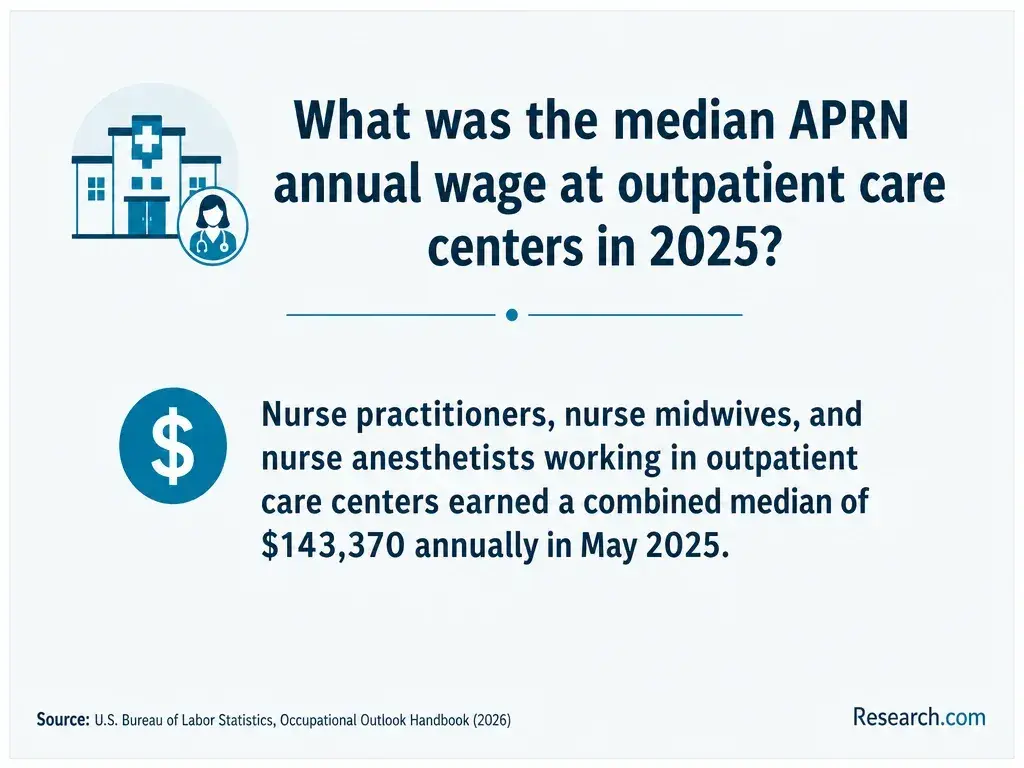
A women's health nurse practitioner or other advanced practice clinician needs role- and population-focused graduate preparation, applicable national certification, and state APRN authorization. RN experience in either clinic does not itself confer advanced practice authority.
Choose a pathway according to your current credential and target job. A specialty-branded degree is generally not necessary to apply for an ambulatory RN role; supervised preparation and a supportive first employer can matter more.
| Starting point | Relevant route | What it does - and does not - provide |
| Not yet an RN | Board-eligible ADN/ASN or BSN; an accelerated BSN may fit someone with a prior degree | Prepares for initial RN licensure steps, not immediate independent specialty practice |
| Licensed RN with an associate degree | Apply to clinics directly; consider RN-to-BSN if an employer prefers or requires it | Expands academic preparation without replacing specialty orientation |
| Experienced RN seeking an NP role | Graduate program with the appropriate population focus and clinical preparation | Can support certification eligibility when program and certifier requirements are met; does not automatically grant APRN authority |
For ADN-prepared RNs planning eventual graduate study, MSN bridge options for ADN-prepared RNs may reduce duplicated coursework. First confirm whether a specific track prepares graduates for the intended advanced practice role; a non-APRN MSN does not. If your goal is an RN clinic job now, applying and obtaining targeted training may be faster and less costly than enrolling in graduate school.
Foundational nursing courses in assessment, pharmacology, pathophysiology, maternal and reproductive health, patient education, and clinical judgment are useful in both settings. Fertility nurses additionally benefit from learning reproductive physiology, treatment terminology, medication teaching, procedure preparation, and precise cycle documentation. Women's health nurses draw heavily on preventive care, gynecologic assessment support, sexual health communication, and triage.
Coursework provides a foundation, not proof that a nurse can safely manage a clinic's protocols. During orientation, look for supervised practice in telephone triage, medication checks, EHR documentation, privacy, and communicating unexpected results. Patients may also need mental health support, but recognizing distress and arranging a referral is different from practicing as a psychiatric NP. Accelerated psychiatric NP certificate options are relevant only to an appropriately eligible nurse seeking that separate advanced practice role.
Online coursework can help nurses study while working, but online does not mean entirely remote. Prelicensure programs require hands-on learning and supervised clinical preparation; RN-to-BSN and graduate programs may also require on-site activities, projects, or clinical placements. Check who arranges placements, where they may occur, and whether required sessions conflict with early clinic shifts.
Judge the program by the credential it actually awards, not its delivery format. A nurse comparing online advanced practice programs should verify population focus and supervised experiences before assuming the degree supports women's health practice. For example, planning a faster MSN-PMHNP pathway addresses psychiatric advanced practice, not preparation for a fertility RN job or an automatic route to women's health NP practice.
Requirements and total costs vary too much to infer from a job title. Prelicensure applicants should check each school's prerequisite sciences, grades, entrance requirements, clinical eligibility rules, and expected course sequence. RN-to-BSN applicants generally need an RN license; graduate tracks have their own degree, license, experience, and placement requirements. Admission to a university is not necessarily admission to its nursing program.
An ADN commonly takes about two academic years of nursing study after applicable prerequisites; a traditional BSN commonly takes about four years overall. Accelerated, bridge, and part-time timelines depend on prior credits and course availability. For a useful cost comparison, request a written estimate covering tuition and fees, books, equipment, required visits, clinical travel, exams, and income you may forgo. Do not assume a shorter advertised program has the lower total cost.
If selectivity is a barrier, nursing admission choices for a broader applicant pool can help identify schools to investigate. Confirm each school's current requirements and whether its program qualifies you for the license you need; accessibility alone is not a measure of career fit.
For fertility RNs, the American Society for Reproductive Medicine's Nurses' Professional Group offers the Reproductive Endocrinology and Infertility Nursing Certification (REI-NC). For eligible RNs in women's health, the National Certification Corporation offers the Maternal Newborn Nursing (RNC-MNN) and Inpatient Obstetric Nursing (RNC-OB) credentials, but those inpatient-focused credentials are not automatically a match for an outpatient gynecology job. Check each certifier's current eligibility and renewal rules before paying for preparation.
Ask employers whether they require a credential, prefer one after experience, or value demonstrated clinic competencies more. Certification does not replace an RN license or employer orientation. Likewise, short online Doctor of Nursing Practice degrees are academic programs, not fertility or women's health RN certifications; a DNP is usually unnecessary for either staff RN role.
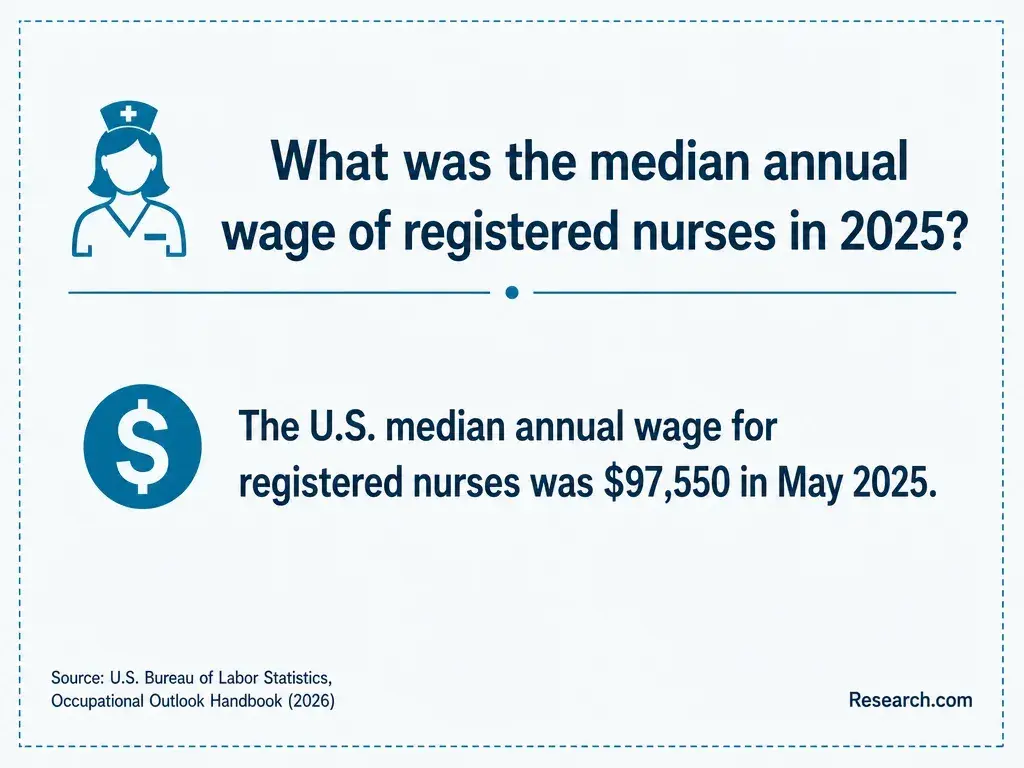
There is no reliable national BLS wage category that separates fertility clinic RNs from women's health clinic RNs. As context, the U.S. Bureau of Labor Statistics reported a May 2024 median annual wage of $93,600 for registered nurses and projected 5% RN employment growth from 2024 to 2034. Those figures cover RNs across settings and experience levels; they cannot tell you which clinic will pay more or predict a local offer.
Compare written offers using base pay, guaranteed hours, weekend or call pay, benefits, commute, and paid orientation. Fertility experience may lead toward treatment coordination, procedure support, patient education, or clinic operations. Women's health experience can support broader ambulatory gynecology, prenatal services where offered, triage, and care coordination. Advancement depends on openings and qualifications, not simply time served.
Graduate study may suit a nurse pursuing an advanced practice or leadership position, but should be evaluated against that position's actual requirements. Even post-master's DNP programs without traditional clinical rotations should not be mistaken for a substitute for a new APRN population-focus program or a guarantee of higher clinic pay.
How can you choose an accredited nursing program for reproductive health?
Start with the job you want and work backward: staff RN, licensed practical nurse, or a specific advanced practice role. Then verify the exact program rather than relying on a school-wide claim. Institutional accreditation, nursing program accreditation, and state board approval or recognition serve different purposes. For initial RN licensure, confirm with the program and relevant state board that the pathway meets eligibility requirements in your intended jurisdiction.
Request the program's current accreditation status and scope, clinical placement policy, required in-person dates, total-cost estimate, and published outcomes with their reporting years. Ask whether students can obtain experiences relevant to reproductive health, while recognizing that a specialty placement may not be guaranteed. If considering graduate study, verify that the named track - not merely the degree title - supports the certification and state authorization required for your target role. This matters more than choosing among DNP programs with accessible admission requirements.
Finally, speak with prospective employers as well as schools. Ask what experience they require, how long orientation lasts, how competencies are assessed, and who supports a new nurse when protocols or patient needs change. Those answers may show that a well-supported RN transition is a better next step than another degree.
Other Things You Should Know About Nursing
Sometimes. Hiring policies vary. Look for a structured orientation, an assigned mentor, and supervised progression rather than assuming graduation alone prepares you for independent clinic triage.
It may involve medication teaching or administration, depending on the position. Ask which tasks RNs perform, what training is provided, and how medication safety is checked.
It can be. Nurses may support patients through uncertainty, unsuccessful cycles, or pregnancy loss. Ask how the team shares difficult conversations and what support is available to staff.
Yes, but expect to learn the new clinic's patient mix and workflows. Highlight transferable skills such as education, triage, documentation, and sensitive communication when applying.
- Nurses' Time Allocation and Multitasking of Nursing Activities | nih.gov https://pmc.ncbi.nlm.nih.gov/articles/PMC6371290/
- Nursing and Patient Safety | PSNet https://psnet.ahrq.gov/primer/nursing-and-patient-safety
- What is a Triage Nurse? | AdventHealth University https://www.ahu.edu/blog/what-is-a-triage-nurse
- 8 Nursing Certifications for RNs | fortis.edu https://www.fortis.edu/blog/nursing/8-nursing-certifications-for-rns.html
- Women's Health Nurse Practitioner Career Guide | Mass General Brigham University of Health Professions https://www.mgbu.edu/news-and-more/opinions/nursing/womens-health-nurse-practitioner-career-guide-advancing-reproductive-hormone-and-sexual-health
- Innovation and Best Practices in Health Care Scheduling | NAM https://nam.edu/perspectives/innovation-and-best-practices-in-health-care-scheduling/
- Nurse Midwife - Explore Healthcare Careers | Mayo Clinic College of Medicine and Science https://college.mayo.edu/academics/explore-health-care-careers/careers-a-z/nurse-midwife/
- Telephone triage nursing: When patients call | American Nurse https://www.myamericannurse.com/telephone-triage-nursing-when-patients-call/
- What Is Nurse Triage and How Can It Benefit Your Practice | Guideway Care https://guidewaycare.com/blog/what-is-nurse-triage-and-how-can-it-benefit-your-practice/
- Disparities in access to effective treatment for infertility in the United States: an Ethics Committee opinion (2021) https://www.asrm.org/practice-guidance/ethics-opinions/disparities-in-access-to-effective-treatment-for-infertility-in-the-united-states-an-ethics-committee-opinion-2021/