
2027 Healthcare Administration vs. Health Information Management Degree: Explaining the Difference

Co-Founder and Chief Data Scientist
Choosing between healthcare administration and health information management is really a choice between two different ways to influence healthcare. Healthcare administration is the better fit if you want to lead departments, manage budgets, supervise teams, improve operations, or move toward executive roles. Health information management is the better fit if you want to work with patient data, electronic health records, coding, compliance, privacy, and healthcare technology.
Both degrees can lead to stable healthcare careers, but they do not prepare you for the same work. One is broader and management-focused; the other is more technical and data-focused. This guide compares the two paths by curriculum, difficulty, skills, career outcomes, costs, and decision factors so you can choose the degree that matches your strengths, work style, and long-term goals.
Key Points About Pursuing a Healthcare Administration vs. Health Information Management Degree
- Healthcare Administration degrees focus on management and policy, offering careers in hospital management; average tuition is around $15,000 annually with programs typically lasting four years.
- Health Information Management emphasizes data systems and medical records, leading to roles like HIM specialists; tuition averages about $13,000 yearly with most programs lasting 2-4 years.
- Both fields show growth, but Healthcare Administration careers often command higher salaries, while HIM offers quicker entry and certification opportunities in the expanding health IT sector.
What are Healthcare Administration Degree Programs?
Healthcare Administration degree programs prepare students to manage the business, people, policies, and operations of healthcare organizations. These programs are designed for students who want to work in leadership or supervisory roles in hospitals, clinics, long-term care facilities, insurance organizations, public health agencies, and related healthcare settings.
Most bachelor’s programs generally span four years and combine healthcare-specific coursework with business and management training. Students learn how healthcare organizations are financed, regulated, staffed, evaluated, and improved. The goal is not to train clinicians, but to prepare professionals who can keep healthcare services efficient, compliant, financially sustainable, and patient-centered.
Common coursework in healthcare administration
- Healthcare management: How departments, facilities, and service lines are organized and supervised.
- Healthcare finance and economics: Budgeting, reimbursement, cost control, and resource allocation in healthcare settings.
- Healthcare law and policy: Regulations, compliance responsibilities, patient rights, and policy trends that affect organizations.
- Leadership and human resources: Hiring, training, performance management, conflict resolution, and team development.
- Quality improvement: Using data, process analysis, and performance measures to improve care delivery and operations.
Admission typically requires a high school diploma and competitive GPA scores. Some programs may also expect students to complete general education courses before taking upper-level major courses. Graduates are often prepared for entry-level supervisory, coordinator, analyst, or administrative roles, with advancement usually depending on experience, graduate education, certifications, and the size of the employer.
What are Health Information Management Degree Programs?
Health Information Management degree programs focus on the collection, accuracy, security, use, and governance of healthcare data. These programs are a strong fit for students who want to work where healthcare, technology, compliance, and information systems overlap.
HIM professionals help make sure patient records are complete, coded correctly, protected from unauthorized access, and usable for billing, reporting, research, quality improvement, and clinical decision-making. Because healthcare organizations rely heavily on electronic health records and data-driven operations, HIM training often includes both technical and regulatory content.
Common coursework in health information management
- Medical coding and classification systems: How diagnoses, procedures, and services are documented for reporting and reimbursement.
- Electronic health records: How patient information is stored, retrieved, audited, and used across healthcare systems.
- Healthcare compliance: Legal and ethical standards related to health information, privacy, confidentiality, and documentation.
- Data management: Methods for organizing, validating, analyzing, and protecting healthcare information.
- Information governance: Policies and procedures for maintaining data quality, access, retention, and security.
Most bachelor’s level programs take about four years of full-time study. Students with prior college credits may finish sooner, sometimes within two to three years. Admission usually requires a high school diploma or equivalent, and programs may require prerequisite courses in math, science, computer literacy, or general education before students formally enter the HIM major.
Many HIM programs also include internships, practicums, or supervised field experiences in healthcare settings. These experiences are important because employers often look for graduates who understand not only the rules of health information, but also how records, coding, privacy, and data systems function in real organizations.
What are the similarities between Healthcare Administration Degree Programs and Health Information Management Degree Programs?
Healthcare Administration and Health Information Management degrees both prepare students for non-clinical healthcare careers. Neither path is mainly about direct patient care. Instead, both focus on the systems that support care delivery: operations, compliance, technology, documentation, business processes, and organizational performance.
The overlap matters because many healthcare employers need professionals who understand the healthcare environment even if they are not licensed clinicians. Students in both fields learn how healthcare organizations function, why regulations matter, and how decisions affect patients, staff, revenue, and outcomes.
- Degree level: Both programs commonly lead to a four-year Bachelor’s degree, although completion time can vary by transfer credits, enrollment status, and program format.
- Healthcare systems knowledge: Students in both majors study how healthcare organizations operate, how services are delivered, and how policy and regulation influence daily work.
- Business and technology exposure: Both programs may include business principles, healthcare technology, data use, compliance, and process improvement.
- Analytical thinking: Both paths require students to interpret information, solve operational problems, and make decisions in complex healthcare environments.
- Flexible learning formats: Programs may be available through classroom instruction, online courses, hybrid formats, internships, and practicums.
- Typical admission expectations: A high school diploma or equivalent is usually required, and some schools may expect prerequisite coursework in healthcare, business, technology, math, or science.
Both degrees can also support long-term advancement, especially when paired with experience, graduate study, or professional certifications. Students who want a shorter credential before committing to a full degree may also compare healthcare certificates and other accelerated options, including the best 6 month online course with high salary.
The key similarity is that both degrees prepare students to improve healthcare from behind the scenes. The key difference is where that work happens: Healthcare Administration usually focuses on people, operations, and organizational leadership, while HIM focuses on records, data quality, privacy, and health information systems.
What are the differences between Healthcare Administration Degree Programs and Health Information Management Degree Programs?
The main difference is the type of problem each degree trains you to solve. Healthcare Administration prepares students to manage organizations, departments, staff, budgets, and strategy. Health Information Management prepares students to manage patient information, coding accuracy, data integrity, privacy, compliance, and health technology systems.
Both degrees are valuable, but they lead to different daily responsibilities. A healthcare administration graduate may spend more time in meetings, planning initiatives, supervising teams, reviewing budgets, or improving workflows. An HIM graduate may spend more time auditing records, working with electronic health record systems, reviewing documentation, supporting compliance, or analyzing healthcare data.
| Comparison point | Healthcare Administration | Health Information Management |
| Primary focus | Managing healthcare organizations, departments, personnel, budgets, and operations. | Managing, protecting, coding, analyzing, and governing healthcare data. |
| Typical coursework | Leadership, finance, healthcare policy, human resources, quality improvement, and organizational management. | Medical coding, electronic health records, data privacy, health informatics, compliance, and information governance. |
| Core strengths developed | Leadership, communication, strategic planning, budgeting, negotiation, and operational decision-making. | Technical accuracy, data management, coding knowledge, regulatory compliance, auditing, and information security awareness. |
| Typical work style | Collaborative, people-facing, meeting-heavy, and often leadership-oriented. | Detail-oriented, systems-based, compliance-focused, and often more technical. |
| Possible roles | Clinical director, health manager, program manager, department supervisor, or healthcare administrator. | Health information manager, data analyst, compliance officer, coding manager, or records manager. |
Job market signals also differ. Healthcare Administration roles are expected to grow by 29% between 2023 and 2033 due to increasing demand for healthcare leadership. HIM positions are also expanding as healthcare organizations rely more heavily on digital records, data governance, compliance, and data-driven decision-making.
Students who enjoy leadership, organizational change, and broad management responsibilities may prefer Healthcare Administration. Students who enjoy accuracy, technology, systems, privacy rules, and healthcare data may find HIM a better match.
What skills do you gain from Healthcare Administration Degree Programs vs Health Information Management Degree Programs?
Healthcare Administration and Health Information Management build different skill sets because they prepare students for different types of responsibility. Healthcare Administration emphasizes leading people and managing organizations. Health Information Management emphasizes managing healthcare data and protecting information systems.
The best choice depends partly on what kind of work you want to be trusted with. Do you want to make staffing, budgeting, and operational decisions? Or do you want to ensure that health records are accurate, secure, compliant, and useful?
Skill Outcomes for Healthcare Administration Degree Programs
- Strategic planning: Learning how to set organizational goals, evaluate performance, respond to regulatory changes, and guide long-term healthcare initiatives.
- Budgeting and financial management: Understanding how hospitals, clinics, and other healthcare organizations manage costs, allocate resources, and maintain financial stability.
- Human resources management: Building the ability to recruit, train, supervise, and retain staff while supporting efficient healthcare operations.
- Leadership and communication: Developing the ability to coordinate teams, present recommendations, handle conflict, and communicate with clinical and non-clinical stakeholders.
- Operations improvement: Learning how to identify workflow problems, improve processes, and support better patient and organizational outcomes.
Skill Outcomes for Health Information Management Degree Programs
- Healthcare informatics: Using electronic health records and healthcare information systems to improve data workflows and information access.
- Medical coding and billing: Applying classification systems like ICD-10 to document patient care accurately for reporting and reimbursement.
- Data analysis and auditing: Reviewing health records for accuracy, completeness, quality, and usefulness in clinical and business decision-making.
- Information security: Protecting patient information, reducing privacy risks, and supporting compliance with HIPAA laws and organizational policies.
- Regulatory compliance: Understanding documentation standards, privacy requirements, and ethical responsibilities related to health information.
In practical terms, Healthcare Administration graduates are often evaluated on how well they lead teams, improve services, manage resources, and support organizational goals. HIM graduates are often evaluated on how well they maintain data quality, reduce documentation risk, protect patient information, and support reliable health information systems.
Students comparing flexible study options, including later-career degree paths, may also review degrees for older adults online.
Which is more difficult, Healthcare Administration Degree Programs or Health Information Management Degree Programs?
Neither degree is automatically harder for every student. Healthcare Administration is usually more challenging for students who dislike leadership projects, public speaking, group work, finance, policy analysis, or ambiguous management problems. Health Information Management is usually more challenging for students who dislike technical systems, detailed documentation, coding rules, compliance requirements, or data-heavy assignments.
Healthcare Administration programs tend to test judgment, communication, and decision-making. Students may complete case studies, business plans, policy analyses, presentations, budget exercises, and group projects. The difficulty often comes from applying concepts to messy real-world situations where there is no single perfect answer.
Health Information Management programs tend to test precision, technical understanding, and regulatory knowledge. Students may complete coding exercises, health record audits, data projects, compliance reviews, and documentation assignments. The difficulty often comes from mastering detailed rules and applying them accurately.
| Student strength | Degree that may feel more manageable | Why |
| Leadership and communication | Healthcare Administration | The program emphasizes management, teamwork, presentations, policy, and operational decision-making. |
| Technology and data | Health Information Management | The program emphasizes electronic records, coding, informatics, data quality, and compliance systems. |
| Comfort with ambiguity | Healthcare Administration | Management problems often involve competing priorities, limited resources, and judgment-based recommendations. |
| Attention to detail | Health Information Management | Documentation, coding, privacy, and data governance require accuracy and consistency. |
Research intensity can be greater in HIM because health data technologies and compliance regulations change quickly. However, Healthcare Administration can be demanding for students who are not comfortable with organizational politics, financial analysis, and leadership accountability.
If you plan to continue beyond a bachelor’s degree, compare graduate outcomes carefully. Some students use salary and advancement potential to guide their next step, including by reviewing the highest paid masters degree options.
What are the career outcomes for Healthcare Administration Degree Programs vs Health Information Management Degree Programs?
Healthcare Administration and Health Information Management both lead to healthcare careers, but the career outcomes differ in scope and daily responsibility. Administration graduates typically move toward leadership, operations, and management roles. HIM graduates typically move toward data, records, compliance, privacy, coding, analytics, and information systems roles.
Career Outcomes for Healthcare Administration Degree Programs
Healthcare administration career outcomes are tied to the need for skilled leaders in hospitals, clinics, public health agencies, long-term care organizations, insurance companies, and healthcare networks. The U.S. Bureau of Labor Statistics projects a 29% growth in medical and health services manager jobs from 2023 to 2033. Median salaries for healthcare administration graduates are around $137,730 annually, with significant upward mobility in executive roles.
- Hospital Administrator: Oversees daily hospital operations, staffing, compliance, financial performance, and service quality.
- Clinical Director: Manages clinical departments, coordinates staff, supports care delivery goals, and works with providers and administrators.
- Program Manager: Develops, implements, and evaluates healthcare initiatives across departments, facilities, or community programs.
Career growth in administration often depends on experience, leadership results, graduate education, and the ability to manage increasingly complex teams or service lines.
Career Outcomes for Health Information Management Degree Programs
Health information management job prospects are shaped by the growth of electronic health records, privacy requirements, reporting needs, and healthcare analytics. Growth varies by specialization, with administrative health information managers expecting about 28% growth and technical specialists 15-16%. Salaries range widely from $58,250 for specialists to $164,070 for senior system managers.
- Health Information Manager: Oversees the accuracy, organization, access, and privacy of patient data in healthcare settings.
- Compliance Officer: Reviews policies and documentation practices to help health records meet legal and regulatory standards.
- Data Analyst: Interprets health data to support clinical decisions, operational planning, reporting, and performance improvement.
HIM career growth often depends on technical proficiency, knowledge of healthcare regulations, experience with electronic health record systems, coding expertise, and the ability to translate data into usable information.
Students interested in advanced credentials should compare program length, employer expectations, and return on investment before enrolling. Those considering fast-track doctoral routes can explore the shortest phd program options as part of a broader education plan.
How much does it cost to pursue Healthcare Administration Degree Programs vs Health Information Management Degree Programs?
The cost of a Healthcare Administration or Health Information Management degree depends more on the school, degree level, residency status, and delivery format than on the major itself. Public institutions, private institutions, online programs, transfer credits, and prior learning can all change the total price.
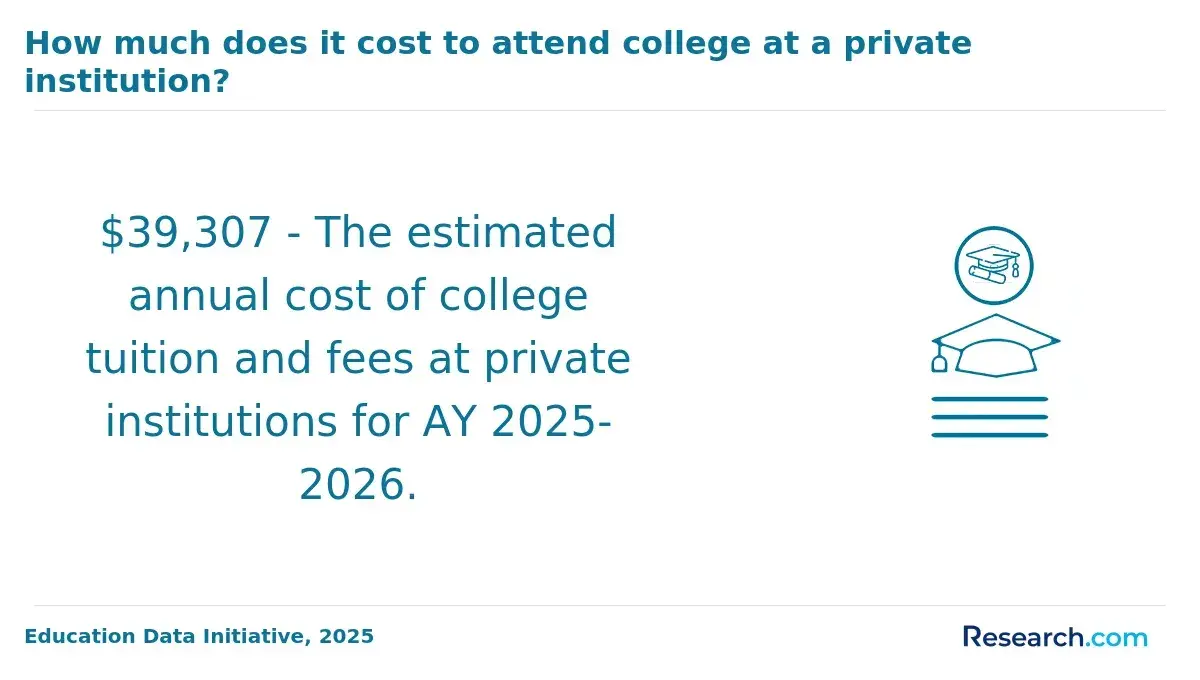
For a bachelor’s degree in Healthcare Administration, tuition at public universities for in-state students averages about $9,596 yearly, while private institutions typically charge around $34,051 annually. Online bachelor’s programs in health fields tend to average $7,784 per year, although technology fees or online learning fees may apply.
At the master’s level, public universities offer graduate tuition near $12,596 annually, while private institutions average $29,931. Affordable online Master of Healthcare Administration programs range from about $5,550 to $9,522 per year, totaling approximately $11,100 to $19,044 for the full course of study.
Health Information Management degrees often follow similar tuition patterns. However, some students may reduce costs by starting with an associate degree, certificate, transfer pathway, or online program before completing a bachelor’s degree. Shorter-term or lower-division credentials can be less costly, but students should check whether credits will transfer and whether the credential matches their career goal.
Cost factors to compare before enrolling
- Accreditation: Make sure the institution and program meet the standards expected by employers, graduate schools, and financial aid providers.
- Transfer credit policy: Generous transfer policies can shorten completion time and lower tuition costs.
- Program format: Online learners may save on housing or commuting, but they may pay technology or distance learning fees.
- Internship or practicum requirements: Fieldwork can add indirect costs, such as transportation, schedule changes, or reduced work hours.
- Financial aid eligibility: Scholarships, grants, loans, and employer tuition benefits are commonly available, especially for students in accredited programs.
The lowest tuition is not always the best value. A program that has stronger employer connections, better transfer credit policies, relevant internships, or more targeted career preparation may offer a better return even if the advertised tuition is higher.
How to choose between Healthcare Administration Degree Programs and Health Information Management Degree Programs?
Choose Healthcare Administration if you want to manage people, departments, budgets, operations, and strategy. Choose Health Information Management if you want to work with healthcare data, records, privacy, coding, compliance, analytics, and information systems. The better degree is the one that matches how you want to spend most of your workday.
Use these questions to make the decision
- Do you want a leadership-heavy career? Healthcare Administration is usually the stronger fit if your goal is to become a department manager, program leader, clinical director, or administrator.
- Do you prefer data and systems over direct supervision? HIM may be better if you enjoy structured rules, technology platforms, documentation accuracy, privacy, and analytics.
- How much patient or staff interaction do you want? Healthcare administrators often interact with teams, executives, providers, and sometimes patients. HIM professionals may have less patient contact and more records- or systems-focused work.
- What subjects are you strongest in? Healthcare Administration leans toward management, finance, communication, and policy. HIM leans toward technology, data analysis, compliance, coding, and healthcare regulations.
- What career outcome matters most? Healthcare management roles expect a 29% increase by 2033 with competitive salaries. HIM demand grows as electronic health records, data privacy, and health analytics become more important.
- Does the curriculum match your goal? A strong Healthcare Administration program should include leadership, finance, operations, policy, and quality improvement. A strong HIM program should include electronic health records, coding, compliance, data governance, and information security.
| Choose this path if... | Better fit |
| You want to supervise teams and improve healthcare operations. | Healthcare Administration |
| You want to work with electronic health records, data quality, and privacy. | Health Information Management |
| You are comfortable making decisions with incomplete information. | Healthcare Administration |
| You enjoy rules, accuracy, documentation, and technical systems. | Health Information Management |
| You want a broad management degree within healthcare. | Healthcare Administration |
| You want a specialized healthcare data and information systems degree. | Health Information Management |
Before applying, compare accreditation, total cost, internship requirements, faculty experience, career services, certification preparation, transfer policies, and online flexibility. Working students should also compare affordable online options, including low cost online universities for working adults.
What Graduates Say About Their Degrees in Healthcare Administration Degree Programs and Health Information Management Degree Programs
- : "The Healthcare Administration program challenged me like nothing else, pushing my critical thinking and organizational skills to new heights. The hands-on internships provided invaluable real-world experience that gave me a competitive edge in the job market. Since graduating, my career has taken off, and the salary growth reflects what I anticipated. Highly recommend for anyone serious about a leadership role in healthcare. Lawrence"
- : "What stood out most in the Health Information Management curriculum was the unique blend of technology and healthcare concepts. Learning about electronic health records and data privacy opened my eyes to the evolving landscape of healthcare services. The career outlook is promising, and I feel well-prepared to work in diverse healthcare settings thanks to the program's thorough training. Yitzchok"
- : "Reflecting on my journey through the Healthcare Administration degree, I appreciate how the coursework balanced theory and practical application seamlessly. The program illuminated the inner workings of healthcare systems and unveiled numerous career paths I hadn't considered before. Graduating equipped with these skills has already facilitated a significant income boost and a fulfilling professional trajectory. Cameron"
Other Things You Should Know About Healthcare Administration Degree Programs & Health Information Management Degree Programs
Healthcare Administration graduates typically work in hospitals, clinics, long-term care facilities, and government agencies, focusing on managing operations and staff. Health Information Management graduates are often employed in hospitals, insurance companies, public health organizations, and consulting firms, where they manage patient data and ensure compliance with healthcare regulations.
Admission requirements for a Healthcare Administration degree in 2027 typically include a bachelor's degree and relevant experience. Health Information Management programs often require a degree in health sciences. Both may require prerequisite courses in health systems or management principles, varying by institution.
Healthcare Administration requires leadership, financial management, and strategic planning skills, while Health Information Management focuses on data analysis, coding, and information technology proficiency. Each discipline develops its unique skill set to address specific industry needs efficiently.
References
- What Is Health Information Management? | University of Cincinnati https://online.uc.edu/blog/what-is-health-information-management/
- Healthcare Administration | ECPI University https://www.ecpi.edu/programs/healthcare-administration-bachelor-degree
- Healthcare Management vs Healthcare Administration | George Washington University https://healthcaremba.gwu.edu/blog/healthcare-management-vs-healthcare-administration
- Healthcare Management vs. Health Information Management https://www.herzing.edu/difference/hcm-vs-him
- MHA vs HIM Programs: Health Administration vs Health Informatics https://www.onlineeducation.com/healthcare/faqs/mha-vs-masters-in-him
- Health Information Management | EICC https://eicc.edu/classes-programs/pathway/health/information-management/default.aspx
- Healthcare Administration: Skills and Responsibilities - CityU of Seattle https://www.cityu.edu/blog/what-is-healthcare-administration/
- The Role of Health Information Managers in Healthcare https://www.baker.edu/about/get-to-know-us/blog/role-health-information-managers-in-healthcare/
- Healthcare administration vs. healthcare management | edX https://www.edx.org/resources/healthcare-administration-vs-healthcare-management
- Medical and Health Services Managers : Occupational Outlook Handbook: : U.S. Bureau of Labor Statistics https://www.bls.gov/ooh/management/medical-and-health-services-managers.htm


