
2027 Return on Investment vs Social Return in Healthcare Projects

Co-Founder and Chief Data Scientist
A healthcare project can save a hospital money while doing little for patients - or improve community health without generating revenue for the organization paying for it. That distinction matters when administrators decide which programs to fund, expand, or redesign. This guide explains financial return on investment (ROI) and social return, shows how to evaluate both without overstating results, and connects those methods to healthcare administration training and careers. It is for professionals assessing projects as well as readers deciding whether an MBA, MHA, or more targeted education would help them do that work.
Key Things You Should Know
- Financial ROI compares an organization's attributable financial gains with its project costs; social return examines changes for patients and communities, including benefits the organization cannot collect as revenue.
- A credible evaluation defines whose costs and benefits count, compares results with what would likely have happened without the project, and avoids counting the same benefit twice.
- For career planning, the May 2025 median wage of $126,520 for all US management occupations is context, not a healthcare project evaluator's salary or an expected return from an MBA.
What is the difference between financial ROI and social return in healthcare projects?
Financial ROI asks whether a project pays off for the organization funding it. Social return asks what changes the project produces for people and communities relative to the resources invested. The answers can differ because the hospital, insurer, patient, and public may bear different costs and receive different benefits.
The comparison below shows why the perspective must be stated before choosing a metric.
| Question | Financial ROI | Social return |
| Whose perspective? | Usually the sponsoring organization or payer | Patients, caregivers, communities, and other affected groups |
| Typical benefits | Lower operating costs, avoided spending, or additional revenue | Better health, improved access, reduced burden on families, or greater equity |
| Typical result | A financial ratio, payback period, or net present value | Outcome measures, a cost-benefit estimate, or a qualified social-return ratio |
| Main limitation | May miss benefits outside the organization's budget | Some outcomes are hard to attribute or value in money |
Consider a transportation service that helps patients attend appointments. A clinic might see fewer missed visits, while patients gain access to care and avoid lost work time. Conversely, additional visits could increase the clinic's costs even if patients benefit. Neither perspective alone settles whether to fund the service; the decision depends on the project's goals and who can pay for it.
Roles also differ. Healthcare administrators make budget and service decisions, while health information specialists may focus on the records needed to measure results. Readers considering those paths can compare healthcare administration versus health information management degrees.
How is financial ROI calculated for healthcare projects?
Start by naming the decision-maker and time horizon. For a hospital, financial ROI is generally (attributable financial benefits − total project costs) ÷ total project costs. Costs may include staffing, technology, training, maintenance, and implementation disruption. Benefits might include genuinely avoided expenses or additional net revenue - not gross charges or savings that another organization realizes.
Compare the project with a plausible "no-project" scenario. If labor costs fell because patient volume also fell, the entire reduction should not be credited to a new scheduling system. When costs and benefits occur over several years, discounting future cash flows and calculating net present value can be more informative than a simple ROI ratio. Test uncertain assumptions, especially adoption, reimbursement, and ongoing staffing costs.
Project ROI and education ROI are separate decisions. A professional learning these methods should compare tuition, fees, time away from work, and likely career opportunities - not assume that a positive hospital-project ROI proves a degree will pay for itself. A review of graduate healthcare administration degree costs and options can help establish the education-cost side of that comparison.
How is social return measured in healthcare projects?
Social return begins with an explicit outcome: for example, improved access to follow-up care, rather than simply the number of patients contacted. Evaluators can report outcomes in their natural units, use cost-effectiveness analysis to compare resources with health gains, or estimate monetary values for benefits where credible methods exist. A social-return ratio is only as trustworthy as those valuations and the evidence that the project caused the changes.
The following sequence keeps an assessment useful even when a single monetary ratio would be misleading.
- Identify affected groups and agree on outcomes that matter to them, including possible harms or added burdens.
- Record baseline measures and select a credible comparison, such as a similar group or a well-justified historical trend.
- Measure changes, account for other causes and benefits that would have occurred anyway, and check whether gains persist.
- Report costs, outcome changes, uncertainty, and any monetary valuations separately before presenting a summary judgment.
Disaggregate results where appropriate: an average improvement can conceal that a service reached some neighborhoods but not others. Reliable measurement also depends on sound data governance. Professionals pursuing health information roles can examine CAHIIM-accredited health information management study options; that accreditation concerns health information education, not proof that a project's impact estimate is valid.
The best degree depends on the role, not the project label. An MBA with relevant healthcare coursework may suit a professional moving toward financial and operational leadership. An MHA typically centers healthcare organizations and their management. An MPH or another methods-intensive graduate degree may fit someone whose main goal is population-health evaluation. A specialized analytics or health informatics program may be more direct for data-focused work. None substitutes for clinical licensure where a position requires it.
Prior experience matters as much as the credential. An operations manager might use an MBA to strengthen finance skills; a finance professional entering healthcare may need exposure to care delivery and reimbursement; a researcher seeking a leadership role may need management practice. Ask programs to identify actual courses, applied projects, and employer connections rather than relying on a concentration's name. If speed matters, compare the course load and placement support behind planning for a one-year master's in health administration with the time available to gain relevant experience.
Look for coursework that lets you connect a budget decision to a defensible outcome claim. Relevant offerings may include managerial accounting, healthcare finance, reimbursement, health policy, statistics, epidemiology, quality improvement, and program evaluation. Course titles vary, and a general MBA finance course is not automatically equivalent to training in healthcare payment or causal evaluation.
Yes, if the program provides rigorous quantitative work and opportunities to apply it to credible healthcare problems. Online delivery can accommodate employment, but it does not guarantee flexible deadlines, access to suitable data, or the same recruiting experience as a campus program.
Before enrolling, ask whether finance and evaluation courses use real or realistic datasets, whether students receive feedback on models and written recommendations, and whether a capstone can address an employer or community problem. Confirm live-session times, group-work expectations, required visits, and access to career services. For an MBA specifically, a healthcare management MBA completion timeline comparison can inform scheduling - but completing sooner is valuable only if the curriculum and workload fit the intended job.
Check institutional accreditation first, then any relevant programmatic accreditation. CAHME accredits eligible graduate healthcare management programs; AACSB, ACBSP, and IACBE concern business education; CAHIIM concerns eligible health informatics and information management programs. These are different signals, and institutional accreditation alone does not establish that a specific curriculum teaches project evaluation.
When considering an MHA, verify the particular program and delivery format rather than assuming every offering at an institution has the same status. A comparison focused on CAHME accreditation in online MHA program selection can help frame that check. Professional certifications may supplement relevant experience, but employers set their own preferences; no general certificate makes every graduate qualified to conduct rigorous outcomes research.
Potential roles include healthcare financial analyst, quality improvement analyst, population health program manager, health services researcher, and healthcare operations manager. A financial analyst may model staffing and reimbursement; a quality analyst may track care processes and outcomes; a program manager may coordinate delivery and report results to funders. Job titles overlap, so compare actual duties and required methods.
Entry routes differ. A person with healthcare operations experience may move into a project or analyst assignment by building finance and measurement skills. A substantial switch into research-oriented evaluation may require stronger statistics training and a portfolio of study designs. For someone still choosing undergraduate preparation, flexible start dates for healthcare administration bachelor's study may help with timing, but a start date is less important than access to quantitative coursework and relevant work experience.
What salaries and job outlook apply to healthcare project evaluation careers?
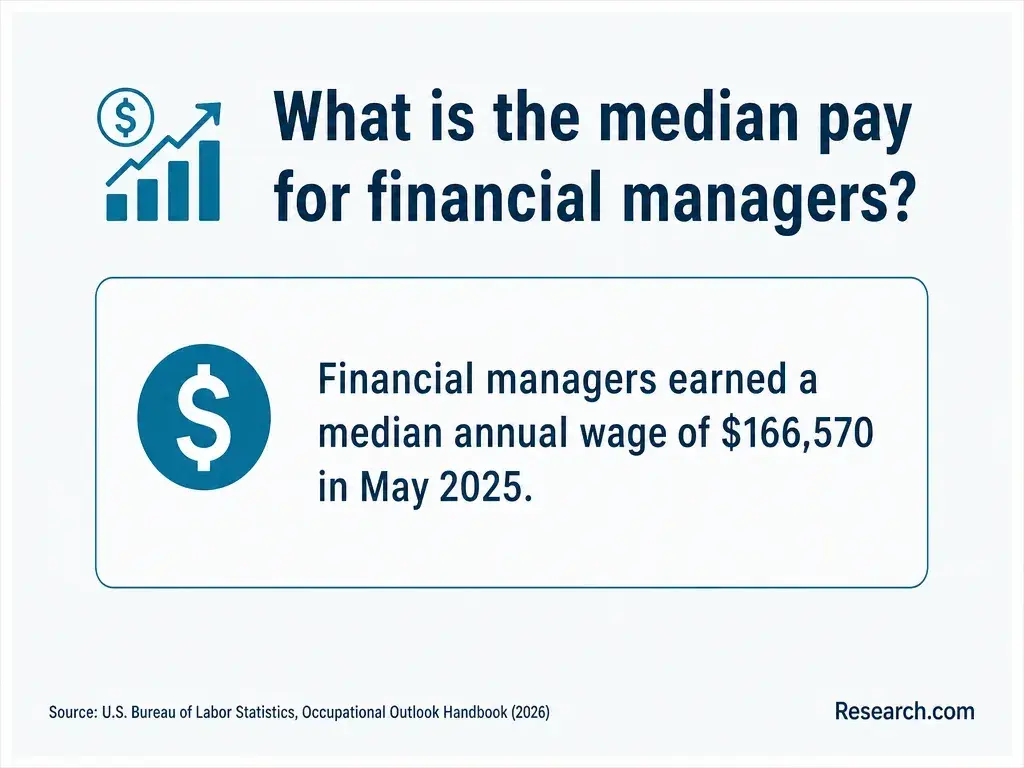
There is no single salary or outlook for "healthcare project evaluator": analyst, research, and management positions belong to different occupations. As broad context, the US Bureau of Labor Statistics reports a $126,520 median annual wage for management occupations in May 2025. That figure covers managers across industries and career stages; it is not an entry-level healthcare salary, an MBA-graduate salary, or a forecast of personal earnings.
Evaluate opportunities by the specific occupation, location, employer, and experience required. Ask whether a contemplated degree is necessary for the positions you can realistically pursue and whether employer assistance offsets its cost. The same discipline applies before paying for advanced study: financial planning for a healthcare administration doctoral degree should weigh the intended research or leadership role against total costs and time, rather than presume a salary increase.
Other Things You Should Know About Healthcare Administration
Often, but access and use depend on the data, purpose, applicable privacy rules, and organizational approvals. Confirm requirements with the organization's privacy and compliance teams before extracting records or sharing results.
Set review points before launch and revisit them when costs, participation, or outcomes change materially. Some health benefits take longer to appear than operational costs, so one early review may not settle the decision.
The accountable leadership or governing body should decide within the organization's mission, budget, and approval rules. A clear report should identify who receives the benefits, who pays, and whether a partner or funder could share the cost.
Reconsider it when credible evidence shows limited benefit, unexpected harm, or costs that cannot be sustained. First check whether implementation failed or the underlying approach failed; the remedies may differ.
- Cost-Benefit Analysis | POLARIS https://www.cdc.gov/polaris/php/economics/cost-benefit.html
- Evaluating the impact of healthcare interventions using routine data - PMC https://pmc.ncbi.nlm.nih.gov/articles/PMC6584784/
- Health Sector Cost-Benefit Analysis Guidance | Millennium Challenge Corporation https://www.mcc.gov/resources/doc/guidance-health-sector-cost-benefit-analysis/
- Virtual/Mobile Overdose Response in Canada: A Social Return on Investment Analysis - ScienceDirect https://www.sciencedirect.com/science/article/pii/S1098301524066440
- Ten Best Resources for CEA in Impact Evaluations | tandfonline.com https://www.tandfonline.com/doi/full/10.1080/19439342.2022.2034916
- Value-Based Care: What It Is, and Why It's Needed | commonwealthfund.org https://www.commonwealthfund.org/publications/explainer/2023/feb/value-based-care-what-it-is-why-its-needed
- Social return on investment | betterevaluation.org https://www.betterevaluation.org/methods-approaches/approaches/social-return-investment


