2027 Healthcare Strategy Manager: What an MHA Portfolio Should Demonstrate

Co-Founder and Chief Data Scientist
A healthcare strategy manager must turn complicated questions about access, costs, quality, and growth into decisions leaders can act on. An MHA can help build that judgment, but a degree title alone does not show how well someone can analyze a service line or defend a recommendation.
This guide is for prospective MHA students and graduates targeting strategy roles. It explains what to put in a portfolio, which courses and program features support strong work, and how to judge whether an MHA is the right investment for your background.
Key Things You Should Know
- A strong MHA portfolio shows a decision process - not just charts: define a healthcare problem, evaluate alternatives, account for financial and patient-care consequences, and recommend a measurable course of action.
- Use a small set of well-documented projects, such as a service-line assessment or access improvement plan; distinguish actual results from projections and protect patient and employer information.
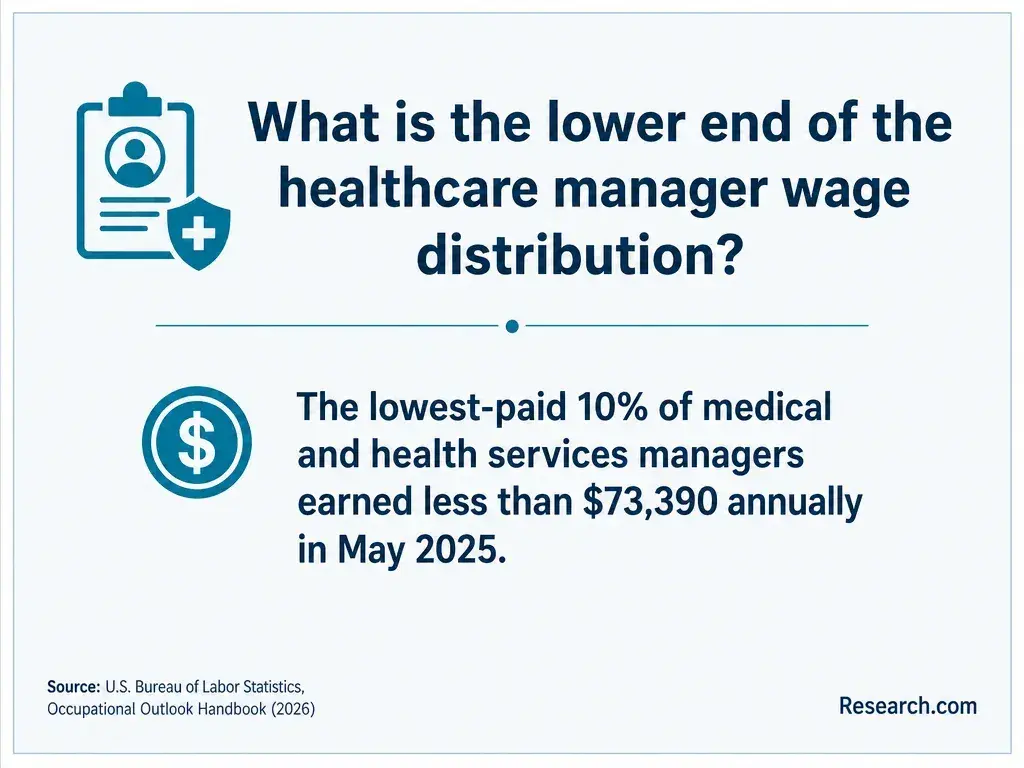
- Check program accreditation, applied-project access, total cost, and career support before enrolling. The Bureau of Labor Statistics' $126,520 median for all management occupations in May 2025 is not an MHA graduate salary or a healthcare strategy manager pay estimate.
What should a healthcare strategy manager's MHA portfolio demonstrate?
An MHA portfolio is a curated collection of work showing how you apply healthcare administration knowledge. For a strategy role, its purpose is to make your reasoning visible: What problem did you investigate, what evidence did you trust, which alternatives did you compare, and what decision did you recommend?
The following comparison separates evidence that supports a strategy hiring decision from material that merely shows course completion.
| Capability | Convincing portfolio evidence | Less convincing evidence |
| Problem framing | A specific question, affected population, organizational goal, and decision-maker | A broad description of healthcare challenges |
| Analysis | Documented sources, assumptions, calculations, and sensitivity checks | Charts without methods or context |
| Strategic judgment | Alternatives weighed against access, quality, finances, and feasibility | A recommendation with no trade-offs |
| Execution | Stakeholder roles, operational constraints, measures, and review points | A proposal that ends at approval |
A portfolio should also establish your individual contribution, especially when work was completed by a team. Applicants moving from analytics, finance, clinical operations, or another field can use it to connect existing strengths to healthcare decisions. For example, data skills alone do not establish knowledge of care delivery; understanding the health information management and healthcare administration degree differences can help you explain whether your experience is primarily in information systems or organizational leadership.
Why is CAHME accreditation important for an MHA program?
The Commission on Accreditation of Healthcare Management Education (CAHME) evaluates qualifying graduate healthcare management programs against standards for areas such as curriculum, competencies, and outcomes. For a prospective strategy manager, accreditation is one useful signal that the program's management preparation receives specialized external review. It is not a guarantee that its courses, projects, schedule, or employer connections fit your goals.
Verify the specific program and its current status directly with CAHME and the institution; institutional accreditation alone is not the same as CAHME program accreditation. When you find online CAHME-accredited health administration master's programs, also examine whether online students can complete substantial strategy projects and receive useful feedback. A non-CAHME-accredited program is not automatically unsuitable, but you should investigate its curriculum, graduate outcomes, and reasons for its accreditation status rather than assume equivalence.
What skills does an MHA graduate need for healthcare strategy management?
Healthcare strategy managers typically assess opportunities and risks for a hospital, health system, payer, or other healthcare organization. They need financial and quantitative fluency to interpret budgets, utilization, and performance measures; knowledge of healthcare operations and payment to understand what those numbers mean; and communication skills to gain support across clinical and administrative teams.
Strong candidates can distinguish an attractive projection from an implementable plan. A proposed expansion, for instance, must account for workforce capacity, patient access, reimbursement assumptions, competing priorities, and how success will be measured. The portfolio should show that you can explain these trade-offs to a nontechnical executive audience without hiding uncertainty.
If you are still completing undergraduate education, review university healthcare administration bachelor's offerings for a foundation in healthcare organizations and management. Applicants who already hold a bachelor's degree in another field generally do not need to earn a second healthcare administration bachelor's degree before exploring an MHA; their specific knowledge gaps matter more.
Course titles vary, so judge a curriculum by what students actually do. Healthcare finance and accounting support investment decisions; strategy and policy courses develop organizational judgment; operations and quality courses connect plans to care delivery; and analytics courses help students test assumptions. A capstone or practicum is especially valuable when it produces a defensible recommendation rather than only a literature review.
This comparison shows why a balanced course mix matters more than any single course labeled "strategy."
| Course area | Contribution to strategy work | Question to ask about the course |
| Healthcare finance | Connects service decisions to budgets and financial risk | Are students asked to evaluate alternatives using realistic assumptions? |
| Analytics and population health | Supports demand, access, and performance analysis | Do students examine data limitations and equity implications? |
| Operations and quality | Tests whether a proposal can work in practice | Does assessment extend beyond proposing a goal? |
| Strategy or applied capstone | Integrates evidence into an executive decision | Is there a substantial deliverable with faculty or organizational feedback? |
Students without a bachelor's degree who are planning a longer education path can compare fast-track healthcare administration bachelor's programs. An accelerated undergraduate path may shorten the route to graduate eligibility, but it does not replace the graduate-level finance, analysis, and applied work needed for an MHA strategy portfolio.
Choose projects that resemble decisions an organization might actually face. A service-line proposal could assess demand and capacity; an outpatient access analysis could compare scheduling changes; a payer-contract scenario could test financial exposure. An effective project does not need a favorable result: a well-supported recommendation not to expand can demonstrate excellent judgment.
For each project, build a short executive summary backed by enough detail for a reviewer to inspect your reasoning. The sequence below keeps the work decision-focused.
- State the decision, intended audience, organizational context, and your own role.
- Identify data sources, limitations, assumptions, and any information you could not obtain.
- Compare feasible options using relevant financial, operational, quality, and access measures.
- Present a recommendation, principal risks, implementation responsibilities, and measures to monitor.
- Label forecasts as forecasts and describe observed outcomes only when you can substantiate them.
Use public, synthetic, or properly authorized de-identified material; removing names alone may not make a dataset safe to publish. Never disclose proprietary plans or patient information to make a project appear more impressive. An MHA portfolio is evidence of managerial decision-making, not a substitute for advanced research training; professionals seeking that distinct path can explore online doctoral leadership study for healthcare professionals.
Requirements differ by school and program format. Applicants generally need a completed bachelor's degree and may be asked for transcripts, a résumé, a statement of purpose, recommendations, or an interview. Schools set their own policies on minimum grades, tests, prerequisites, and professional experience; do not assume that a healthcare major, clinical license, or several years in a hospital is universally required.
For a strategy-focused application, describe a decision you helped shape, the evidence you used, and what you still need to learn about healthcare. A candidate from consulting or finance might emphasize analysis while acknowledging care-delivery knowledge gaps; a clinician might emphasize operational insight while showing readiness for budgeting and organizational strategy. If you are changing industries, comparing MHA experience requirements for non-healthcare applicants can help you identify where your background is eligible before you invest time in an application.
Completion time depends on required credits, course sequencing, full-time or part-time enrollment, and any practicum or capstone. Tuition depends on the school's rate and billing method, while mandatory fees, materials, travel, and financing can increase the amount paid. Without a named program and its current published charges, a single price or completion time would be misleading.
To compare offers, calculate required credits multiplied by the applicable tuition rate, add mandatory charges and any required travel, then account for employer support or other funding. Confirm whether a faster schedule permits part-time work and whether required courses run often enough to support the advertised timeline. Review one-year healthcare administration master's choices against those same criteria: speed helps only if the curriculum, project access, and workload fit your strategy goals.
Yes, an online MHA can suit someone who needs to keep working and can obtain meaningful feedback on applied projects. Delivery mode alone says little about fit. Ask whether courses include scheduled live meetings, group work, campus visits, or placements; whether online students can work with healthcare organizations; and whether career services support their target employers and locations.
An employed healthcare professional may be able to develop an approved workplace project, while an industry changer may need a program with stronger practicum access and networking. Compare the complete price as well as the format: low-tuition healthcare administration degree programs online are worth examining, but low advertised tuition does not establish low total cost or a strong strategy portfolio.
Possible paths include strategy analyst, planning or business-development specialist, service-line analyst, and, with appropriate experience, strategy or planning manager. Responsibilities differ by employer. Someone already working in healthcare operations or analysis may be positioned to pursue a lateral move into strategy; an applicant changing both industry and function may need an intermediate role before managing strategy work.
The Bureau of Labor Statistics reports a May 2025 median annual wage of $126,520 for all management occupations and projects about 1.1 million annual openings across that broad group from 2025 to 2035. Neither figure describes healthcare strategy managers specifically or predicts an MHA graduate's offer. Use actual postings in your location to check job titles, experience requirements, and pay, then explore roles after healthcare administration study without treating the highest-paid positions as immediate entry points.
Do healthcare strategy managers need licenses or professional certifications?
Healthcare strategy management is generally an administrative function, not a clinical license. Employers may value relevant analytics, project-management, finance, or healthcare-management credentials, but a certification is not a universal substitute for demonstrated work. Separate the requirements of the strategy position from those of a clinical or other regulated role you might also hold; check the specific job description and applicable state rules.
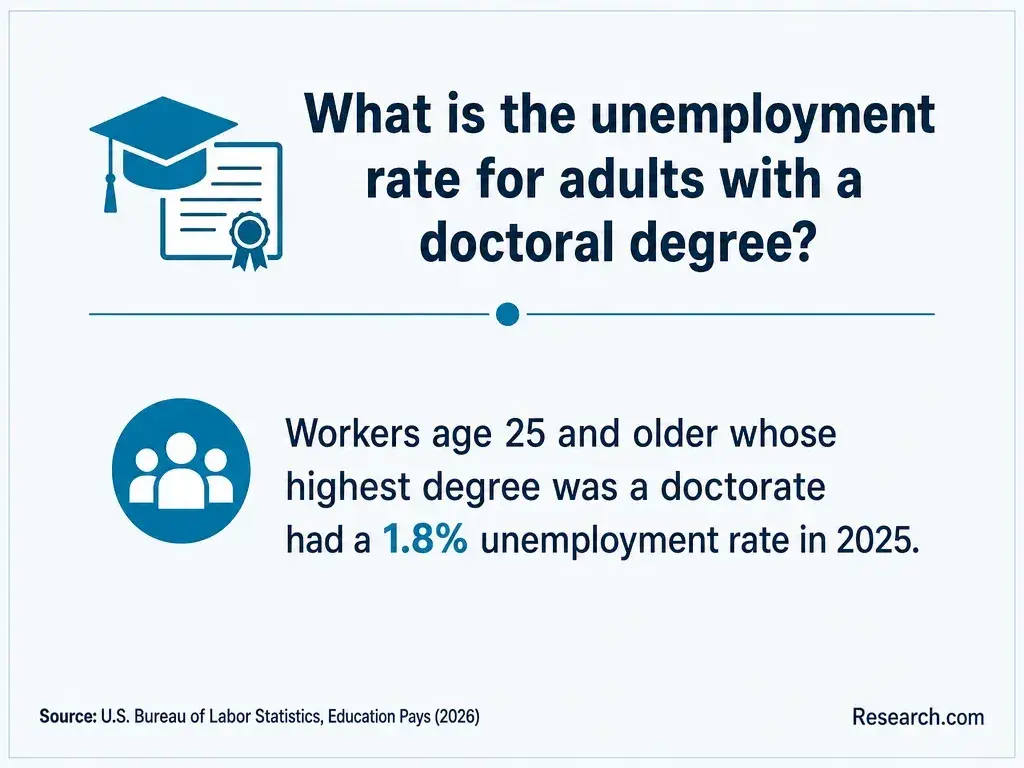
Choose additional education only for a defined gap. An MBA may suit broader cross-industry management goals, while an MHA may better match healthcare-specific operations and policy; a targeted course may be enough if you already have both experience and a strong portfolio. A doctorate is a different commitment, not a routine requirement for strategy management. If considering one for later leadership or academic goals, examine healthcare administration doctoral costs beyond advertised tuition before assuming another degree improves your near-term job prospects.
Other Things You Should Know About Healthcare Administration
Either can work. Choose a format that a hiring manager can review quickly, with readable summaries and accessible supporting work. Check that every file and link functions before applying.
Yes. Label it as a proposal, explain the decision it was intended to inform, and avoid implying that projected benefits occurred. Sound analysis can be valuable even when priorities change.
Name the team's overall deliverable, then specify the analysis, recommendations, or presentation elements you personally owned. Give teammates credit for their work.
Review it before each job search and whenever assumptions, policies, or market conditions materially change. Date analyses so readers can tell when the evidence was current.
- Tools and Strategies for Quality Improvement and Patient Safety | nih.gov https://www.ncbi.nlm.nih.gov/books/NBK2682/
- Six Domains of Healthcare Quality | Agency for Healthcare Research and Quality https://www.ahrq.gov/talkingquality/measures/six-domains.html
- Data Quality in Health Research: Integrative Literature Review | nih.gov https://pmc.ncbi.nlm.nih.gov/articles/PMC10646672/
- Summary of the HIPAA Privacy Rule | hhs.gov https://www.hhs.gov/hipaa/for-professionals/privacy/laws-regulations/index.html
- Healthcare Management Careers: Non-Clinical Paths | Missouri Baptist University (Mobap) https://www.mobap.edu/news/healthcare-management-careers-in-non-clinical-settings/
- Using Portfolios in Program Assessment | Assessment and Curriculum Support Center https://manoa.hawaii.edu/assessment/resources/using-portfolios-in-program-assessment/
- An Equity Agenda for the Field of Health Care Quality Improvement - NAM https://nam.edu/perspectives/an-equity-agenda-for-the-field-of-health-care-quality-improvement/
- 21st Century Healthcare Consulting Career Development and Planning | himss.org https://www.himss.org/resources/21st-century-healthcare-consulting-career-development-and-planning/
- Healthcare Consultant Job Description | alabamanonprofits.org https://careers.alabamanonprofits.org/career/healthcare-consultant/job-descriptions
- Role of the Health Services Manager - Springer Publishing https://connect.springerpub.com/content/book/978-0-8261-4807-0/chapter/ch01