2027 From Medical Transcriptionist to Healthcare Administration

Co-Founder and Chief Data Scientist
Medical transcriptionists already know how clinical documentation moves through a healthcare organization. Moving into administration means building on that knowledge - not assuming it counts as management experience. As documentation tools and workflows change, you may be considering a role with more responsibility for people, processes, or budgets. This guide explains the jobs you can pursue first, when a bachelor's degree or graduate degree may help, and how to compare programs without paying for more education than your goal requires.
Key Things You Should Know
- The most practical first move is often an adjacent role in health information, medical records, documentation quality, or office operations; a senior administrator position usually requires broader experience.
- An MBA is not required for most entry-level administrative work. Choose an MHA or healthcare-focused MBA only when its management training fits a specific advancement goal.
- The median annual wage across all US management occupations was $126,520 in May 2025, according to the Bureau of Labor Statistics (BLS). That broad figure is not an expected salary for someone entering healthcare administration from transcription.
What Is the Path From Medical Transcriptionist to Healthcare Administration?
Healthcare administration covers the business and operational work that keeps care organizations running, from coordinating staff and records to managing budgets, compliance, and services. Transcription experience provides a useful starting point: you understand clinical language, documentation deadlines, confidentiality, and how errors can affect downstream work. It does not, by itself, demonstrate experience supervising employees or running a department.
A practical transition is to seek responsibility for a process before seeking responsibility for an entire team. For example, a transcriptionist might help resolve documentation backlogs, train colleagues on workflow changes, or track quality issues, then apply for a coordinator or supervisor position. Ask a manager which duties you can take on now and what qualifications the next internal role requires. For a wider view of possible destinations, compare job pathways for healthcare administration graduates against the experience you can realistically build.
Experience with medical records does not automatically qualify you to code diagnoses, manage a revenue cycle, or direct clinical staff. Those moves may require distinct training, demonstrated work experience, or professional credentials.
What Education Is Required for a Healthcare Administration Career?
There is no single degree requirement for every healthcare administration job. Some support and coordinator positions accept relevant experience or an associate degree; many management postings seek a bachelor's degree and related work experience. Employers may prefer graduate education for some higher-level roles, but a master's degree does not replace a record of managing operations and people.
Start with the postings for roles you want at hospitals, clinics, insurers, or other local employers. Separate required qualifications from preferred ones. If you already have a bachelor's degree in another subject, you may be able to apply directly to graduate programs rather than earn another undergraduate degree. MHA programs open to applicants with other professional backgrounds can help you explore that possibility, although each school sets its own admission rules.
Most administrative roles are not clinical practice roles and do not confer clinical licensure. A job that includes specialized health information, coding, or regulated facility responsibilities may have additional employer or state requirements. Doctoral study is generally a later, goal-specific decision rather than a starting requirement for this career change.
Which Healthcare Administration Degree Is Best for Career Advancement?
The best credential depends on the gap between your current qualifications and your target job. The comparison below distinguishes preparation for an initial transition from education aimed at broader leadership.
| Option | When it may fit | Main limitation |
| Targeted course or certificate | You need a defined skill, such as supervisory fundamentals or health information workflow knowledge. | It may not meet a job posting's degree requirement. |
| Associate or bachelor's degree | You need the undergraduate credential requested for your target administrative roles. | It does not substitute for management experience. |
| Master of Health Administration (MHA) | You have an undergraduate degree and want focused preparation in healthcare organizations and operations. | It may be more education than an initial coordinator role requires. |
| MBA with healthcare coursework | You want broad business management training, potentially applicable beyond healthcare. | The healthcare content may be limited unless you verify the curriculum. |
An MBA typically includes a broad core in areas such as finance, operations, strategy, and leadership. A healthcare concentration, when a school formally offers one, adds focused coursework; an isolated healthcare elective is not the same thing. An MHA generally puts healthcare organizations closer to the center of the curriculum. If the MBA fits your long-term goal, compare online healthcare MBA tuition and program options rather than assuming the degree's price or concentration content from its name.
Online study can let a working transcriptionist remain employed and apply lessons to current workflows. Campus study may make scheduled discussions and local employer connections easier to access. Neither format is automatically better for a career change: the decisive question is whether you can gain relevant experience while studying and use the program's career support.
Before enrolling online, ask about live sessions, group meetings, exams, internships or practicums, and required campus visits. Also ask whether career services help online students find administrative projects or connect with employers. An asynchronous course can still have fixed deadlines and substantial collaborative work. When comparing affordability, look at online healthcare management degrees with lower tuition alongside any travel, technology, and placement costs.
Undergraduate programs commonly introduce healthcare systems, organizational management, accounting, information systems, and legal or ethical issues. Graduate programs generally approach those subjects at a decision-making level, with work in budgeting, quality improvement, operations, policy, analytics, and leadership. Course titles and depth vary by school, so inspect required courses rather than relying on the degree name.
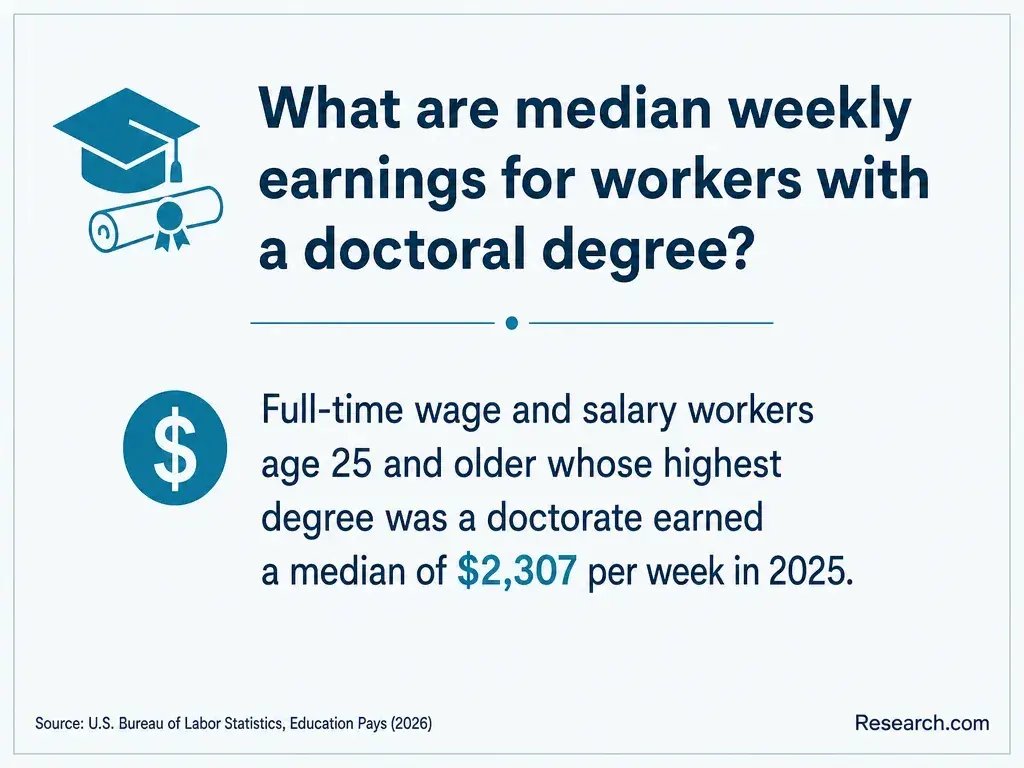
For a transcriptionist, the most valuable assignments may be those that turn documentation knowledge into operational evidence: analyzing a workflow, making a budget case for a process change, or presenting a quality-improvement proposal. Ask whether projects can use your workplace and whether the program teaches you to manage staff and resources, not just understand healthcare terminology. Doctoral study serves different goals; choosing between healthcare management doctoral study routes matters mainly if you later pursue advanced research, teaching, or a leadership role for which that training is useful.
Requirements depend on the institution and degree level. Undergraduate applicants should check prior coursework, transfer-credit rules, and any minimum academic standards. Graduate applicants should verify the bachelor's degree requirement, professional experience expectations, transcripts, recommendations, essays, and whether a test or prerequisite coursework is required. A nonbusiness bachelor's degree does not automatically rule out an MHA or MBA, but accounting or quantitative preparation may help.
Before applying, describe your transcription experience in terms of measurable responsibilities: documentation quality, coordination with clinicians, workflow improvement, or training. If your target program expects management experience you do not have, ask whether a relevant project or supervisory assignment would strengthen a later application. If you are considering a doctorate eventually, review planning an accelerated healthcare leadership doctoral pathway separately; doctoral admission and transfer policies should not drive the choice of your first administrative credential.
Completion time depends on degree level, transfer credits, enrollment pace, and whether the program requires a practicum or capstone. Part-time study may preserve your income but extend the period over which you pay tuition and fees. An accelerated program may shorten the calendar without reducing the work you must complete.
To compare costs, request each school's total required credits and its current tuition and mandatory fees, then add books, software, travel, and any placement-related expenses. Ask your employer whether tuition assistance is available and whether it requires you to remain employed after reimbursement. Health administration master's programs by tuition cost can provide a starting comparison, but confirm the full cost for your enrollment status directly with each school. Avoid borrowing for a graduate degree solely on the assumption that it will bring an immediate promotion.
Near-term possibilities include medical records coordinator, documentation quality coordinator, practice operations assistant, and other administrative support roles that value familiarity with clinical records. With relevant operational and supervisory experience, a worker may pursue office manager, health information supervisor, or department operations roles. Job titles vary substantially across employers, so compare duties rather than titles alone.
The strongest applications connect education to evidence: a completed workflow project, experience training coworkers, responsibility for a budget, or documented improvement in a team process. A short master's program may suit someone who already holds a bachelor's degree and has a clear advancement opportunity, but speed alone will not supply missing management experience. Use a one-year health administration degree program comparison only after confirming that the pace leaves room for the work experience your target job expects.
Pay varies by occupation, employer, location, and level of responsibility. As broad context, BLS reports that the median annual wage for all US management occupations was $126,520 in May 2025. That figure includes managers outside healthcare and does not represent the pay of transcriptionists, new administrators, MHA graduates, or MBA graduates.
For a useful personal comparison, find pay ranges for specific local jobs you could qualify for now and after gaining experience. Weigh a potential increase against tuition, time, and the possibility that promotion will take longer than degree completion. A doctorate is not a reliable shortcut to higher pay; if advanced study later becomes relevant, compare online healthcare administration doctoral formats compared by career purpose, not duration alone.
How Should You Choose an Accredited Healthcare Administration Program?
First, verify that the institution holds recognized institutional accreditation. Then check whether the particular program has specialized accreditation, if that matters for your goals. CAHME accreditation applies to eligible healthcare management graduate programs; business-school accreditation and institutional accreditation are different designations. Do not assume that every program at an accredited university has the same specialized accreditation.
Make a shortlist using the qualifications in your target job postings. For each program, confirm its curriculum, total cost, schedule, applied-project opportunities, and support for working students. If specialized graduate accreditation is a priority, find online CAHME-accredited health administration master's programs and verify each program's current status and online format with the accreditor and school. The best choice is the one that closes a documented skills or credential gap at a cost you can manage - not necessarily the most advanced degree available.
Other Things You Should Know About Healthcare Administration
Yes, if you can point to specific responsibilities such as training colleagues, coordinating a workflow change, or resolving quality problems. Describe what you did and its effect without claiming supervisory experience you did not have.
No. It may be useful for a coding-focused role, but general operations positions can call for different skills. Check the requirements of the jobs you want before paying for a credential.
Possibly. Ask about internal openings, cross-training, and projects involving records, quality, or office operations. Internal opportunities depend on your employer's staffing needs and hiring standards.
No. Administrative education does not grant a clinical license. Clinical supervision roles may require professional licensure or experience that management coursework cannot replace.
- Health Insurance Portability and Accountability Act (HIPAA) Compliance - StatPearls - NCBI Bookshelf https://www.ncbi.nlm.nih.gov/books/NBK500019/
- Transitioning from Practice to Health Care Administration - PMC https://pmc.ncbi.nlm.nih.gov/articles/PMC6824883/
- HIM Careers Without RHIA: Your Path Forward | The College of St. Scholastica https://www.css.edu/about/blog/i-want-to-work-in-him-but-i-dont-have-the-rhia-credential/
- Health Information Management Job Titles | Charter Oak State College https://www.charteroak.edu/health-information-management/job-titles.php
- Healthcare Administrator Career Guide & Degree Paths | News & Updates from the Antioch University Community https://commonthread.antioch.edu/healthcare-administrator-career-guide-degree-paths/
- Health Information Manager - Explore Healthcare Careers | Mayo Clinic College of Medicine and Science https://college.mayo.edu/academics/explore-health-care-careers/careers-a-z/health-information-manager/
- Healthcare Administration Career Guide | American College of Education https://ace.edu/student-success/career-guides/healthcare-administration/
- RHIT vs. RHIA Certification: Which Is Right for You? | UW Online Collaboratives https://uwex.wisconsin.edu/stories-news/rhit-vs-rhia-certification/
- What Careers Can You Get With a Healthcare Administration Degree? Here are 12 Roles to Explore. https://www.cambridgehealth.edu/blog/what-careers-can-you-get-with-a-healthcare-administration-degree-here-are-12-roles-to-explore/
- What Is Medical Transcription? | HealthChannels https://jobs.healthchannels.com/us/en/blogarticle/what-is-medical-transcription