2027 Accounts Receivable Days vs Cash Collection Rate

Co-Founder and Chief Data Scientist
A healthcare organization can collect nearly everything it expects to receive and still wait too long for the cash. It can also shorten payment times while leaving collectible revenue unpaid. Accounts receivable days and cash collection rate expose these different problems.
This guide is for healthcare staff and prospective administrators who need to interpret the measures, improve revenue cycle decisions, or choose relevant education. You'll learn how to calculate and compare the metrics, and when a degree, targeted coursework, or certification is the more useful next step.
Key Things You Should Know
- Accounts receivable (AR) days measures speed: average net receivables divided by average daily net patient service revenue estimates how long revenue remains outstanding; an annual calculation commonly uses 365 days.
- Cash collection rate measures yield: it compares cash received with a defined revenue or expected-payment base. Always check the denominator and whether claims and payments come from the same period or claim cohort.
- Read them together: falling AR days does not prove that the organization collected all collectible revenue, and a strong collection rate does not mean payments arrived promptly.
What are accounts receivable days and cash collection rate in healthcare?
AR days, sometimes called days in AR, estimates the time between earning patient-service revenue and converting outstanding receivables into cash. It is a balance-sheet-to-revenue measure, not the literal age of every unpaid claim.
Cash collection rate describes how much cash the organization received relative to a specified amount it could or expected to collect.
In healthcare, the distinction matters because billed charges, contracted reimbursement, patient responsibility, and actual payment can differ substantially. A collection-rate report should say whether its base is gross charges, net patient revenue, or expected reimbursement on eligible claims.
Consistent coding and patient-account records are essential to both measures; online health information management education with programmatic accreditation may suit someone whose primary interest is the data and documentation behind those records rather than revenue cycle leadership.
How do you calculate accounts receivable days and cash collection rate?
For an annual view, AR days = average net patient accounts receivable ÷ (annual net patient service revenue ÷ 365). Average beginning and ending net receivables when possible rather than relying on one potentially unusual closing balance. Keep the receivable balance and revenue base consistent about contractual allowances and the entities included.
There is no single universal cash collection rate formula. One operational measure is cash receipts during the period ÷ net patient service revenue for the period × 100%.
A claim-cohort measure, often called net collection rate, is payments received on eligible claims ÷ expected collectible reimbursement on those same claims × 100%. Define how refunds, patient payments, unresolved claims, and write-offs enter either calculation before comparing results.
A period-based rate mixes collections on older claims with revenue earned now, so it can exceed 100% without indicating an error. A cohort-based rate is better for testing eventual collection yield, but immature claims should not be treated as final losses.
If calculating these measures reveals a gap in basic accounting preparation, choosing an accredited university for healthcare administration study is a starting point; examine the actual accounting and healthcare finance courses as well.
What is the difference between accounts receivable days and cash collection rate?
The measures answer different questions. This comparison shows what each can, and cannot, tell an administrator reviewing a dashboard:
| Measure | Primary question | What a favorable result can miss |
| AR days | How long does revenue remain in receivables? | Accounts may be written off rather than collected, reducing AR without producing cash. |
| Period-based cash collection rate | How do this period's receipts compare with this period's net revenue? | Receipts from older claims can conceal weak collections on newer claims. |
| Cohort-based net collection rate | How much expected reimbursement was ultimately collected on a defined group of claims? | Good eventual yield can coexist with slow payment. |
Read AR days alongside a consistently defined collection rate and receivable aging. If the problem is interpreting financial performance across departments, compare tuition for online healthcare management MBAs only after checking whether their finance courses address healthcare reimbursement; a general management degree is not a substitute for learning the underlying claims data.
Registration errors, incomplete insurance verification, coding or documentation gaps, claim rejections, denials, delayed follow-up, and difficult patient collections can extend AR days.
Underpayments or missed appeals can also lower eventual collection yield. A payer backlog may worsen timing even when the organization ultimately receives what it is owed.
Interpret changes cautiously. A write-off can make AR days look better without improving cash, while a shift toward slower-paying payers can lengthen AR days without proving staff performance declined.
Review aging by payer and account status, denial reasons, and payments against expected reimbursement before changing staffing or vendor contracts.
Teams building entry-level operational capacity may value online bachelor's choices with rolling healthcare administration starts, but enrollment timing matters less than coursework and hands-on exposure to claims workflows.
Revenue cycle managers use AR days to prioritize slow-moving receivables and collection rates to investigate payment shortfalls.
Finance leaders use both to assess cash-flow risk, evaluate process changes, and distinguish a temporary payment delay from revenue that may never be collected. Results are more useful when segmented by payer, service line, and account age using consistent definitions over time.
Administrators should investigate the cause before setting a target or rewarding a lower AR balance. Aggressive write-offs, for example, may improve a speed measure while harming revenue.
Senior leaders considering review doctoral education options in healthcare administration should see doctoral study as preparation for broader organizational inquiry and leadership - not as a prerequisite for managing these routine indicators.

Relevant coursework typically spans financial accounting, healthcare finance, reimbursement and payer contracts, health information systems, data analysis, and operations improvement.
A useful applied assignment would reconcile a receivables balance with net revenue, define a collection-rate denominator, and explain why the measures moved in different directions.
Course titles alone are insufficient: inspect syllabi for claims, denials, patient responsibility, and financial reporting exercises. A broad MBA may teach budgeting and managerial finance without much claim-level work; an MHA or focused revenue cycle course may be more direct.
If speed is important, a one-year healthcare administration master's planning guide can help frame the workload question, but an accelerated schedule is worthwhile only if it leaves room to practice these skills.
The best degree depends on the work the reader already does and the role they want next. These paths differ in how directly they address claims operations versus wider management:
| Path | Potential fit | Important limitation to check |
| Healthcare administration bachelor's degree | Building a foundation for administrative or supervisory work | May offer limited advanced reimbursement analysis |
| Master of Health Administration (MHA) | Moving from healthcare operations toward departmental leadership | Revenue cycle depth varies by curriculum |
| MBA with healthcare coursework | Adding broad finance, operations, and management skills | A healthcare elective does not necessarily constitute a formal concentration |
| Health information management degree | Focusing on records, coding systems, and data integrity | May be less focused on enterprise financial leadership |
Experienced billing staff may gain more immediately from targeted training than another degree. Applicants seeking graduate-level healthcare leadership can examine master's-level healthcare management programs accredited by CAHME; verify each program's current accreditation and curriculum rather than assuming accreditation guarantees a revenue cycle specialization.
Some do, but online delivery does not establish subject depth. Look for explicit instruction in reimbursement, payer contracting, revenue cycle analytics, or healthcare financial operations, then check whether those courses are required, elective, or unavailable to online students. Ask for a recent syllabus and an example of the data or casework students use.
Also verify live-session times, group assignments, required visits, and access to relevant projects if you plan to study while employed. Someone needing a quicker undergraduate route can investigate faster online study routes in healthcare administration, while confirming that acceleration does not crowd out the finance and information-systems work needed for their target role.
Billing and collections specialists work with accounts and follow-up queues; revenue cycle analysts examine aging, payment patterns, and denials; managers oversee workflows and staff; and finance or revenue cycle directors connect results to budgets and strategy.
Moving between those roles usually requires progressively stronger claims knowledge, data skills, and responsibility for decisions - not simply a new credential.
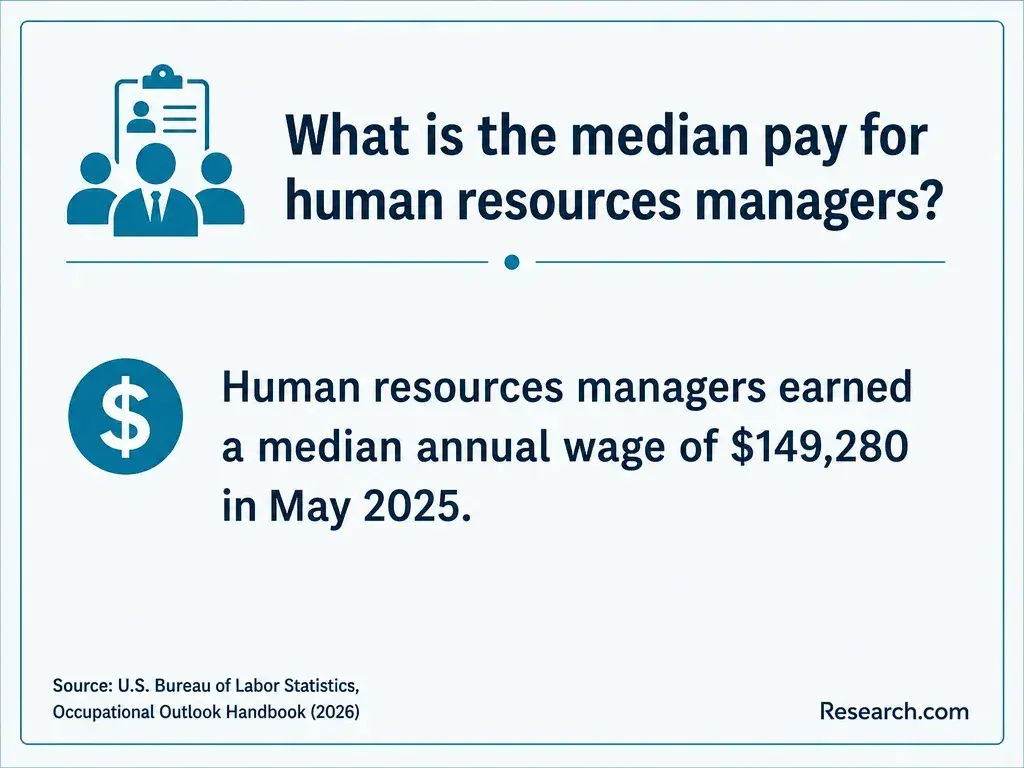
For salary context, the U.S. Bureau of Labor Statistics reports a $126,520 median annual wage for management occupations in May 2025. That figure covers a broad occupational group, not revenue cycle managers specifically, and it is not an expected salary for MHA or MBA graduates.
A working analyst considering graduate study should compare the skills required for actual local openings with lower-cost graduate options for healthcare administration professionals and employer-supported training before committing to tuition.
Which certifications strengthen a healthcare revenue cycle career?
Role-specific credentials can demonstrate focused knowledge in areas such as revenue cycle operations, patient financial services, coding, or healthcare financial management.
Their value depends on the issuing organization's current eligibility rules, exam content, renewal requirements, and whether employers for your intended role request the credential. Coding certification, for instance, addresses a different skill set from managing collection performance.
Start with job postings and the tasks you need to perform, then compare certification requirements with the gaps in your experience. A certificate or certification may be more efficient than a graduate degree for a narrow operational gap.
Conversely, accelerated online healthcare leadership doctorate programs address a substantially broader educational goal and should not be treated as substitutes for revenue cycle training.
Other Things You Should Know About Healthcare Administration
Yes. Scheduled installments can leave a balance outstanding after a patient begins paying. Track plan balances and missed installments separately so a change in collection timing is not mistaken for a change in ultimate collectibility.
It can report cash as a share of gross charges, but it must label the measure clearly. Contractual discounts make gross charges different from expected reimbursement, so that rate cannot stand in for net collection rate.
No. An outside vendor may perform follow-up, but the healthcare organization still needs agreed definitions, access to underlying data, and oversight of results and patient-facing practices.
Use a consistent reporting cadence that supports timely investigation. Frequent operational reviews can identify emerging backlogs, while longer-period comparisons help leaders avoid overreacting to short-term payment fluctuations.
- Building less-flawed metrics: Understanding and creating better measurement and incentive systems - PMC https://pmc.ncbi.nlm.nih.gov/articles/PMC10591122/
- KPI and Metrics | Office of Planning, Assessment, and... - opair https://opair.psu.edu/planning-handbook/kpi-metrics/
- Understanding Days Sales Outstanding (DSO) | investopedia.com https://www.investopedia.com/terms/d/dso.asp
- KPI vs metrics vs measures: What's the difference? | Klipfolio https://www.klipfolio.com/articles/metrics-measures-kpis-goals
- Accounts Receivable Days: Definition and Formula | BILL https://www.bill.com/learning/accounts-receivable-days
- Days Sales Outstanding (DSO) | Definition, Formula and Example | AFP https://www.financialprofessionals.org/glossary/days-sales-outstanding-dso
- Accounts Receivable Turnover | Financial Accounting https://courses.lumenlearning.com/suny-clinton-financialaccounting/chapter/accounts-receivable-turnover/