2027 How to Become a Clinical Research Administrative Assistant With a Healthcare Administration BS

Co-Founder and Chief Data Scientist
A healthcare administration bachelor's degree can prepare you for the organizational side of clinical research, but it does not automatically teach you how a study operates. If you are considering this career - or choosing a degree to pursue it - you need to know which skills transfer, what research-specific training employers may expect, and whether another credential is worth the cost.
This guide explains the work, outlines a practical route into an entry-level role, and helps you evaluate programs and job offers without confusing administrative support with clinical or research leadership.
Key Things You Should Know
- A healthcare administration BS can be relevant, but employers may also consider applicants with other degrees or administrative experience; study-specific training is the key gap to close.
- There is no nationwide professional license for clinical research administrative assistants. Employer-required human-subjects protection and Good Clinical Practice training are more directly relevant than an MBA.
- The Bureau of Labor Statistics does not publish a salary series for this exact title. Its $126,520 median wage for management occupations in May 2025 is not an entry-level assistant salary.
What does a clinical research administrative assistant do?
A clinical research administrative assistant supports the people and records that keep a study organized. Depending on the employer, the job may be advertised as research administrative assistant, clinical trials assistant, or research program assistant. Typical work includes scheduling study meetings, tracking documents, preparing correspondence, maintaining logs, and helping staff locate current study materials.
The boundary between administrative support and study coordination matters when reading job descriptions. This comparison shows why similar-sounding titles can demand different experience.
| Role | Typical emphasis | What to check in a posting |
| Research administrative assistant | Scheduling, records, purchasing, and team support | Whether tasks involve confidential participant information |
| Clinical trials assistant | Study-document tracking and operational support | Whether prior trial experience or sponsor systems are required |
| Clinical research coordinator | Day-to-day study activities and, where authorized, participant-facing tasks | Required experience, delegated duties, and clinical qualifications |
Assistants should follow the study team's procedures rather than independently make eligibility, consent, or clinical decisions. A graduate degree is generally a poor first step if your immediate goal is an assistant opening; one-year healthcare administration master's planning guide is more relevant if you later pursue management-level study.
Can a healthcare administration bachelor's degree prepare you for this career?
Yes. A healthcare administration BS can build useful skills in medical terminology, healthcare operations, records management, privacy, budgeting, and communication. Those skills transfer particularly well to research offices that need someone to coordinate schedules, maintain accurate files, and communicate with clinical and administrative staff.
The degree's limitation is its breadth: healthcare operations coursework may not cover research protocols, informed consent documentation, investigational product records, or sponsor requirements. Compare healthcare administration undergraduate degrees at U.S. universities by their actual courses and placement opportunities, not the degree title alone. If you already hold the BS, gaining research-office experience will usually address a more immediate hiring gap than earning another broad management degree.
What education and training are required for clinical research administrative assistants?
There is no single national education requirement for this job title. An employer may accept a high school diploma plus relevant office experience, prefer an associate degree, or request a bachelor's degree. Research experience, accurate data entry, confidentiality, and familiarity with electronic records can matter as much as the major.
For a healthcare administration graduate, the most direct preparation is to match training to local postings. These steps turn a general degree into evidence of job readiness:
- Review assistant and trials-assistant postings from nearby hospitals, universities, and research organizations; note recurring software, terminology, and experience requirements.
- Complete introductory human-subjects protection and Good Clinical Practice training if a prospective employer recommends it, or be ready to complete its approved courses after hiring.
- Seek a research-office internship, student job, volunteer assignment, or administrative role where you can demonstrate document control and confidential-record handling.
- Tailor your résumé to verifiable work: scheduling, spreadsheets, electronic records, meeting support, and error checking.
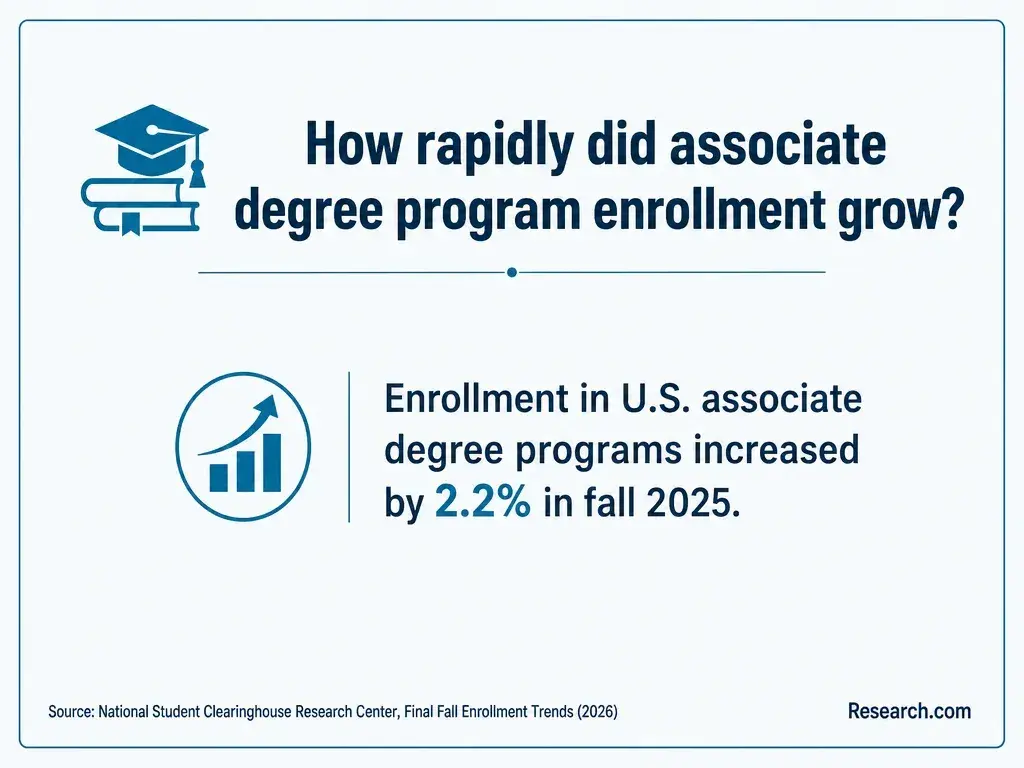
If you are still completing an associate degree, resolve questions about transferring into a health administration program before enrolling; accepted credits can change both your completion time and total cost.
Prioritize courses that strengthen both office execution and your understanding of research safeguards: medical terminology, health information systems, healthcare law and privacy, statistics, research methods, project coordination, and professional writing. If available, an introduction to clinical trials or research ethics is especially useful. Statistics helps you understand study terminology; an assistant role does not ordinarily require you to design analyses.
Choose electives according to the work you want. A health information management course may help with record integrity, while a supervised research placement may provide more persuasive hiring evidence than an additional general management elective. If you are considering a more specialized information-management career, compare CAHIIM-accredited degree pathways in health information management; that accreditation is not a general requirement for clinical research assistant jobs.
No nationwide license is required specifically to work as a clinical research administrative assistant. Employers may require training in human-subjects protection, Good Clinical Practice, privacy, or their own study systems before granting access to particular records or tasks. Training requirements depend on the employer and the duties assigned; a course-completion certificate is not a professional license.
Professional research certifications may have experience and eligibility requirements, so do not assume you need one before applying for an entry-level post. An MBA or MHA is likewise not an entry credential for this role. Even master's-level healthcare management programs accredited by CAHME serve a different educational purpose: preparation for health administration, rather than authorization to perform clinical research tasks.
First, verify the university's institutional accreditation through its official accreditation information and the U.S. Department of Education's accreditation database. Then examine the bachelor's curriculum, internship access, transfer-credit policy, total charges, and whether local research employers recognize the program's preparation. Do not treat a school's general accreditation as proof that every individual program holds specialized accreditation.
Ask whether the program offers research-relevant electives and whether an online student can complete an approved placement near home. If you may eventually pursue management, compare undergraduate options on their own merits before looking at online graduate health administration programs. Graduate-program accreditation and entry-level research hiring are separate decisions.
Bachelor's admission requirements vary by school and applicant status. First-year applicants may need secondary-school records; transfer applicants typically submit college transcripts and must meet the institution's credit and grade policies. A traditional bachelor's pathway often takes four academic years of full-time study, but accepted transfer credits, part-time enrollment, and required placements can substantially change the timeline.
Compare the full cost rather than a tuition headline: required credits, per-credit charges, mandatory fees, books and software, and any travel or unpaid placement expenses. Ask each school for a written estimate based on your expected transfer credits and course load, then compare aid offers and borrowing needs. A healthcare administration degree affordability guide can help you screen options, but the school's current estimate should control your budget. If you already have a BS, calculate the cost of targeted training before considering a second degree.
Either format can prepare you for administrative work if the curriculum is sound and you can obtain relevant experience. Online study may make it easier to keep a job, but check for live sessions, fixed deadlines, group projects, and placement requirements. Campus study may make nearby research offices easier to access, though proximity alone does not secure an internship.
Choose the format around your strongest route to experience: ask where recent students completed placements, whether remote students receive placement support, and whether local hospitals or universities offer student research-office jobs. If start timing matters, review health administration undergraduate programs with rolling entry options, then confirm the next actual start date and course sequence with each school.
Look at academic medical centers, hospital research departments, independent research sites, contract research organizations, and pharmaceutical or medical-device companies. Search several job titles, because a hospital's "research program assistant" and a company's "clinical trials assistant" may have overlapping duties but different software and experience expectations.
A practical progression is to gain reliable administrative experience, learn the systems used by a study team, and then assess coordinator or research-operations openings against their stated requirements. Advancement is not automatic: participant-facing, regulatory, and supervisory roles may require additional experience or qualifications. Shorter graduate pathways in healthcare management are worth considering only if your later goal calls for management education; they are not a substitute for learning how studies run.
What salary and job outlook can clinical research administrative assistants expect?
The Bureau of Labor Statistics does not report a national median wage or growth projection for the exact title "clinical research administrative assistant." Depending on their duties, these jobs may be classified alongside administrative support or other research roles. Compare posted pay for assistant-level vacancies in your location, and check whether benefits, overtime eligibility, and required experience differ before using one offer to judge another.
For perspective - not as an assistant pay estimate - the BLS reports a May 2025 median annual wage of $126,520 for management occupations and projects faster-than-average employment growth for that broad group from 2025 to 2035. Those figures describe managers, not new research assistants or the effect of earning a healthcare administration degree. Senior leadership paths, including those for which healthcare leadership doctoral study with accelerated timelines might eventually be relevant, should not be used to forecast your starting salary. Base your near-term decision on local assistant postings and the experience they require.
Other Things You Should Know About Healthcare Administration
Not for every administrative opening. Read the duties carefully: roles involving participant care or clinical procedures may require qualifications that a healthcare administration degree does not provide.
Yes. Some roles focus on schedules, purchasing, meetings, and document tracking. Ask which tasks involve participant information and what access training is required.
Prepare examples of protecting confidential information, catching documentation errors, meeting deadlines, and coordinating competing requests. Be clear about which research systems you have - and have not - used.
Usually not. An MBA teaches broad business management, while entry-level research administration calls for reliable office skills and study-specific training. Revisit graduate education when you have a defined management goal.
- Pathways for Students and Graduates | Student Internships and Jobs | Working at CDC | Careers at CDC https://jobs.cdc.gov/working-at-cdc/student-intern-jobs/pathways.html
- Good Clinical Practice | fda.gov https://www.fda.gov/about-fda/center-drug-evaluation-and-research-cder/good-clinical-practice
- Salaries: What You Can Expect to Earn | Duke Clinical and Translational Science Institute https://ctsi.duke.edu/career-development/education-and-workforce-development/entry-level-clinical-research-careers-0
- What Can You Do With a Bachelor's Degree in Healthcare Administration? - Colorado State University Global https://csuglobal.edu/blog/what-can-you-do-bachelors-degree-healthcare-administration
- Application of Good Clinical Practice at UW-Madison - Research https://research.wisc.edu/application-of-good-clinical-practice-at-uw-madison/
- 8 Careers You Can Consider With a Health Administration Degree | Indeed.com https://www.indeed.com/career-advice/finding-a-job/health-administration-degree-careers
- Clinical Research Assistant vs Coordinator: Key Differences | bayrivercolleges.ca https://bayrivercolleges.ca/clinical-research-assistant-vs-coordinator/
- Clinical Research Associates Qualifications, Skills & Experience | parexel.com https://jobs.parexel.com/en/Clinical-Research-Associate-qualifications-experience-skills
- Pathway to Becoming a Clinical Research Associate | citiprogram.org https://about.citiprogram.org/blog/the-pathway-to-becoming-a-clinical-research-associate/
- CRC vs. CRA: Coordinator vs. Associate Roles | CASRAI https://casrai.org/compare/clinical-research-coordinator-vs-associate