2027 A Missing-Charge Reconciliation Worksheet: A Healthcare Administration Student Portfolio Project

Co-Founder and Chief Data Scientist
A missing-charge reconciliation worksheet can show employers that you understand how healthcare services move from documentation to a bill - and what happens when that process breaks down. For a healthcare administration student, it is a practical portfolio project that connects revenue cycle concepts to careful analysis without requiring access to patient records.
This guide explains what to put in the worksheet, how to investigate exceptions, and how to present your findings responsibly. It also helps you decide whether a degree, targeted training, or work experience is the best next step toward a revenue cycle role.
Key Things You Should Know
- Compare an authorized encounter or service log with posted charges, then document each unmatched item's status, owner, and resolution—not just its apparent financial value.
- Use synthetic or properly de-identified records for a public portfolio. A mismatch may reflect a timing difference, duplicate, correction, or nonbillable service rather than a lost charge.
- The project can support applications for revenue cycle analyst and charge-capture roles, but a worksheet alone does not establish coding competence or qualify a graduate for management.
What Is a Missing-Charge Reconciliation Worksheet in Healthcare Administration?
A missing-charge reconciliation worksheet compares a trusted record of services or encounters with charges posted in a billing or patient accounting system. Its purpose is to identify items that need investigation before staff assume a service was omitted from a bill. Hospitals and clinics may use different source systems, cutoff times, and reconciliation rules, so a student project should state its assumptions.
For a portfolio exercise, use fictional encounter references and service descriptions. The table below shows a compact worksheet design; its entries illustrate statuses, not actual patient accounts or billing determinations:
| Encounter | Source service | Posted charge | Exception status | Next owner or action |
| SIM-A | Documented imaging service | No match at cutoff | Pending verification | Check charge feed and documentation |
| SIM-B | Documented laboratory service | Matched | Reconciled | No further action |
| SIM-C | Scheduled procedure | No match | Service not confirmed | Verify whether the procedure occurred |
The source record must be appropriate to the question: a schedule indicates what was planned, not necessarily what occurred. Students comparing academic pathways can start with institutionally accredited colleges with online healthcare administration degrees, then inspect each program's actual coursework for revenue cycle content.
How Does Charge Reconciliation Support Healthcare Revenue Cycle Management?
Charge reconciliation is an upstream control in the revenue cycle. By checking whether supported services reached the charge record, staff can find workflow problems before a claim is finalized. An exception may point to an interface delay, incomplete documentation, an incorrectly mapped service, or a charge that needs review. It does not prove that the organization may bill for the item.
This distinction matters when measuring performance: count suspected omissions separately from confirmed, appropriately corrected charges. Otherwise, a report can overstate revenue opportunity and encourage inappropriate billing. Students who need to fit foundational coursework around employment can consider choosing a healthcare administration program around its start dates, while verifying when the relevant finance and information-systems courses actually run.
What Skills Does This Healthcare Administration Portfolio Project Demonstrate?
A strong worksheet demonstrates more than spreadsheet proficiency. It shows that you can define a control, join records using consistent encounter and service identifiers, distinguish a true exception from a timing difference, and document an investigation that another person could reproduce. A short findings memo can show communication skills by separating confirmed results from unresolved questions.
Employers may also look for sound judgment: who is authorized to validate a service, when to escalate a coding question, and why a student should not assign charges based solely on a spreadsheet match. If speed to graduation matters, compare healthcare administration degrees on an accelerated timetable against the time you would still need for substantive projects or supervised experience.
Build the exercise around a clearly defined service area and reconciliation cutoff. The sequence below keeps the analysis auditable and prevents a missing spreadsheet match from becoming an unsupported billing recommendation:
- Define scope: Specify the setting, service types, source records, posting window, and whether professional or facility charges are included.
- Create synthetic inputs: Prepare a service log and charge file with encounter IDs, service dates, service identifiers, and posting dates; include a few deliberate exceptions.
- Standardize and match: Normalize identifiers, check duplicates, and compare records using encounter and service details rather than patient names alone.
- Investigate exceptions: Label each as pending, matched after cutoff, duplicate, not performed, or requiring authorized documentation or coding review.
- Record resolution: Add an owner, evidence checked, disposition date, and explanation; keep unresolved items separate from confirmed corrections.
- Summarize findings: Report the defined population, exception categories, limitations, and a process improvement that follows from the evidence.
For a more substantial capstone, a student might examine how posting delays affect reconciliation rather than merely build a larger spreadsheet. Those considering graduate study can review shorter online graduate healthcare management pathways but should check whether a compressed schedule allows time for a meaningful applied project.
Healthcare finance or revenue cycle courses provide the billing context. Health information systems and analytics courses help students understand data fields, interfaces, matching, and exception reports. Medical terminology, coding fundamentals, compliance, and quality improvement courses can help them recognize when a discrepancy must go to a qualified reviewer rather than be "fixed" in a spreadsheet.
Course titles alone are a poor test of preparation. Look for assignments using realistic, privacy-safe data and feedback on documentation and controls. A health administration master's degree offered online may develop broader operational leadership skills, but applicants should verify that its curriculum includes the hands-on revenue cycle work they want. An MBA healthcare elective is likewise not a substitute for coding training.
Present the worksheet as a simulated control exercise. Include a brief problem statement, data dictionary, blank template, small synthetic example, matching rules, exception log, and findings memo. Explain what you checked, which decisions require authorized staff, and what you would improve with access to an approved workplace process. Do not publish patient information or employer files; obtain permission before sharing any workplace-derived material, even if you believe it has been de-identified.
On a résumé or in an interview, describe the scope and your reasoning rather than claiming revenue recovered from simulated records. The same evidence-based presentation can remain useful later in a larger academic portfolio, including one developed while exploring an online healthcare administration doctoral program comparison; doctoral study is not necessary for this project or most entry-level revenue cycle work.
There is no single degree requirement across revenue cycle jobs. Some entry-level billing and patient-account positions emphasize employer training and relevant experience; analyst postings may seek a bachelor's degree, spreadsheet or reporting ability, and familiarity with healthcare data. Management roles generally demand demonstrated operational responsibility. Always compare actual postings in your target market before choosing a program.
A healthcare administration bachelor's degree can build broad context, while focused courses or workplace experience may be a more direct route for someone already in billing. A master's degree can make sense for a professional moving toward broader operations leadership, not simply to complete a reconciliation worksheet. Compare curriculum and total cost when considering lower-cost graduate options for healthcare administration professionals.
Healthcare administration and charge reconciliation do not have a universal professional license. Requirements depend on the specific job: an employer may prefer revenue cycle, health information, or coding credentials, while licensed clinical roles follow separate state rules. A certification can demonstrate defined knowledge, but it does not authorize a student to determine independently that a service is billable or to change a clinical record.
Before paying for a credential, read local job descriptions and check the credentialing organization's current eligibility and renewal rules. A doctorate is an academic qualification, not a license; even affordable online doctorates in healthcare administration are unlikely to be the most direct preparation for routine charge reconciliation.
Relevant paths include charge-capture specialist, revenue cycle analyst, billing or patient-account specialist, and, with appropriate experience, revenue cycle supervisor or manager. Responsibilities differ: a specialist may work exceptions, an analyst may track patterns and reporting controls, and a manager may oversee staff, workflows, and accountability. Job titles are inconsistent across employers, so read duties and experience requirements rather than relying on the title.
For a student without healthcare billing experience, an adjacent entry-level role plus this portfolio project may be more credible than applying immediately for management. An MBA may help an experienced professional pursue broader financial or operational leadership, but it does not replace revenue cycle experience. Compare the likely career benefit with total program cost using an online healthcare management MBA affordability guide before committing.
How Much Do Healthcare Revenue Cycle Professionals Earn and Where Is Demand Growing?
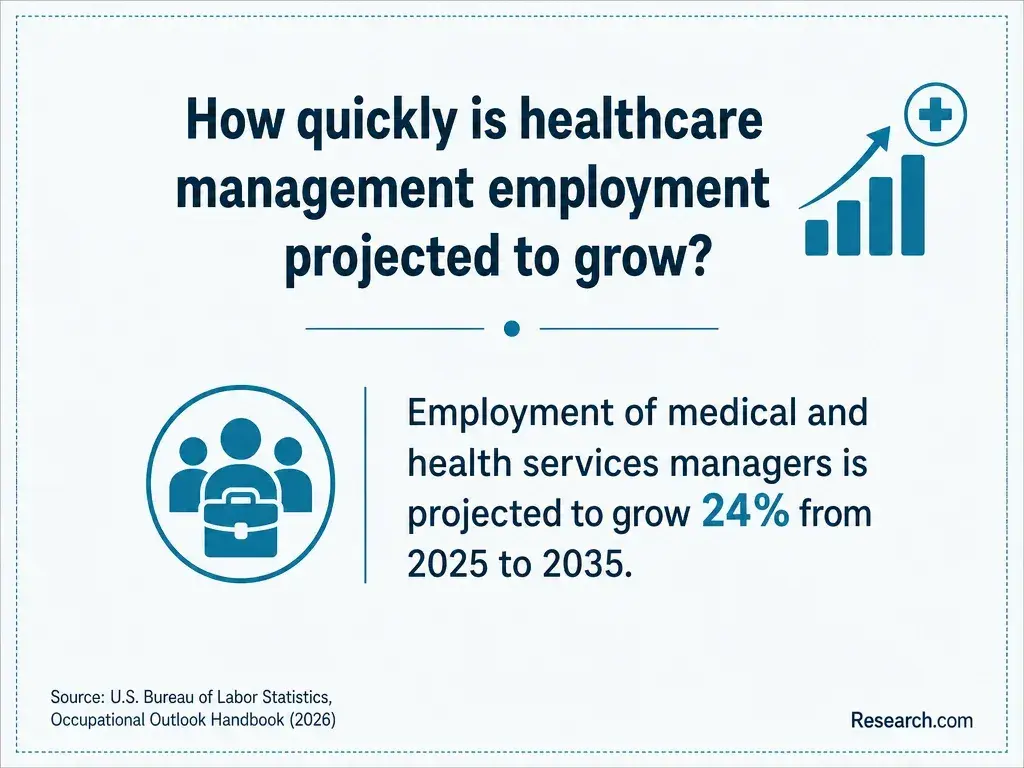
Pay depends heavily on role, location, employer, and experience. The U.S. Bureau of Labor Statistics reports a $126,520 median annual wage in May 2025 for management occupations overall. That broad figure is not the median for charge-capture specialists, revenue cycle analysts, healthcare administrators specifically, or MBA graduates; it should not be used to estimate an entry-level offer.
Healthcare organizations need people who can manage billing workflows and investigate data exceptions, but demand for a particular revenue cycle title cannot be inferred from management-wide projections. To judge your prospects, compare local postings for required systems, credentials, experience, and pay. If a graduate degree is under consideration, healthcare administration graduate study within a one-year format may reduce time in school, but verify its total cost and whether it offers the practical experience your target jobs require.
Other Things You Should Know About Healthcare Administration
Yes. A zero-exception result is useful if the population, cutoff, matching rules, and checks are documented. It is not proof that every service was billed correctly.
Only if the project clearly separates the two charge streams and their source records. Combining them without distinct rules can create false exceptions.
Not from unmatched records alone. An item must be verified as performed, documented, billable, and appropriately corrected before a recovered-revenue claim is supportable.
No. Reconciliation checks whether expected records and posted charges align; a coding audit evaluates whether codes and related billing decisions are supported and accurate.
- Ten quick tips for protecting health data using de-identification and perturbation of structured datasets - PMC https://pmc.ncbi.nlm.nih.gov/articles/PMC12456793/
- Quality Practices for Effective Investigations and Conciliations | U.S. Equal Employment Opportunity Commission https://www.eeoc.gov/quality-practices-effective-investigations-and-conciliations
- 21.5.7 Payment Tracers | Internal Revenue Service https://www.irs.gov/irm/part21/irm_21-005-007r
- What is synthetic data - and how can it help you competitively? | MIT Sloan https://mitsloan.mit.edu/ideas-made-to-matter/what-synthetic-data-and-how-can-it-help-you-competitively
- Charge Capture Reconciliation: Encounter-to-Claim Guide | PROMBS https://prombs.com/blog/charge-capture-reconciliation/
- Account Reconciliation: Process, Examples & Best Practices | Numeric https://www.numeric.io/blog/a-comprehensive-approach-to-account-reconciliation
- Charge Capture in Inpatient Settings: Where Revenue Leaks and How to Stop It | adsc.com https://www.adsc.com/blog/charge-capture-inpatient-settings-revenue-leaks
- Missing Charge Identification | medaptus https://www.medaptus.com/missing-charge-identification/
- Prevent medical coding mistakes and reduce claim denials | athenahealth.com https://www.athenahealth.com/resources/blog/medical-coding-mistakes-reduce-claim-denials
- Charge Capture: Workflow, Reconciliation & Checklist | veroscribe.com https://www.veroscribe.com/blog/charge-capture-guide