2027 Transferring an AAS in Health Information Technology Into a Healthcare Administration BS

Co-Founder and Chief Data Scientist
An AAS in Health Information Technology (HIT) can prepare you to work with health records and information systems, but moving into healthcare operations may call for a bachelor's degree. Transferring into a Bachelor of Science (BS) in Healthcare Administration is one route - if the program accepts enough of your coursework to make the move worthwhile. This guide explains how credits are evaluated, what the degree adds, and how to compare time, cost, and career fit before you enroll.
Key Things You Should Know
- Yes, an AAS in HIT can transfer into a Healthcare Administration BS, but acceptance of credits - and how they meet degree requirements - depends on the receiving school.
- A typical bachelor's degree requires about 120 semester credits; transferring credits does not necessarily eliminate upper-division, general education, or residency requirements.
- Choose a program based on a written degree audit and total remaining cost, not an advertised maximum transfer-credit allowance. A BS can support a move toward administration, but it does not guarantee a management job.
Can you transfer an AAS in Health Information Technology into a Healthcare Administration BS?
Yes. An Associate of Applied Science (AAS) in HIT can provide a foundation for a Healthcare Administration BS. The two fields overlap in healthcare terminology, privacy, records, and information systems, while the bachelor's program generally adds organizational management, finance, policy, and operations.
The obstacle is not usually the degree title. It is whether the receiving school applies your AAS courses to specific bachelor's requirements. Applied technical courses may transfer as electives rather than replace administration courses. Some schools offer AAS-to-BS pathways or agreements with community colleges; others evaluate each course individually. Start by comparing associate-to-bachelor's health administration routes, then request a school-specific evaluation of your transcript.
How many AAS Health Information Technology credits transfer into a Healthcare Administration bachelor's program?
There is no universal number. A school may accept a course for transfer but apply it only as a free elective. What matters is how many requirements the credits fulfill, not just the total shown on a transfer evaluation.
This comparison shows where common AAS coursework may fit. It is a planning guide, not a promise that a particular course will transfer.
| AAS HIT coursework | Possible BS application | What to check |
| English, mathematics, and other general education | General education requirements | Course equivalency, grades, and any remaining distribution requirements |
| Medical terminology, healthcare systems, and privacy | Major requirements or electives | Whether the BS requires a distinct administration-focused course |
| Coding, data, and health information systems | Major electives or free electives | Whether technical credits count toward the degree or exceed an elective limit |
| Practicum or field experience | Elective credit, if accepted | Whether a separate administration internship or capstone is still required |
Ask for a degree audit showing accepted credits, their placement, and every remaining course. A program that accepts more credits is not necessarily faster if those credits do not satisfy required courses. If you are still choosing a bachelor's major, understanding how healthcare administration differs from an HIM degree can help you decide which curriculum makes better use of your HIT background.
What requirements apply when transferring into a Healthcare Administration BS?
Requirements vary by institution. Expect the school to review transcripts from every college attended, confirm that you meet its transfer-admission rules, and evaluate individual courses for degree credit. Some programs also set minimum grades for particular courses or require prerequisites before upper-division study.
Before applying, ask the transfer office and the healthcare administration department these questions. Their answers will tell you whether the pathway works on your schedule.
- Will the school evaluate an unofficial transcript before admission, and when will the official degree audit be available?
- Which AAS courses satisfy general education, major, and elective requirements?
- Are there minimum grades, upper-division credit requirements, or credits that must be completed at this institution?
- Does the program require an internship, background check, or access to an approved local placement site?
If you need to start between traditional semesters, compare admission cycles for rolling-start healthcare administration degrees. A convenient start date helps only if the required courses are offered in a sequence you can actually follow.
First, verify that the institution holds recognized accreditation and check that status directly with the accreditor or the U.S. Department of Education's accreditation database. Institutional accreditation matters for academic recognition and can affect federal financial aid eligibility. Also check whether another college or graduate program you may later attend will accept the degree; transfer and admission decisions remain institution-specific.
Do not confuse accreditation for different disciplines. The Commission on Accreditation for Health Informatics and Information Management Education (CAHIIM) accredits eligible health informatics and health information management programs; it is not a general requirement for every healthcare administration BS. If preserving a pathway toward health information management credentials is central to your decision, investigate choosing an online CAHIIM-accredited HIM program instead of assuming an administration degree will serve the same purpose.
Curricula differ, but a Healthcare Administration BS generally shifts the emphasis from managing health information to managing healthcare organizations and services. You may study healthcare finance and budgeting, operations, human resources, quality improvement, healthcare law and policy, and organizational leadership. Research methods, statistics, an internship, or a capstone may also be required.
Your HIT background can make information governance and workflow problems familiar. The likely new learning curve is using staffing, financial, regulatory, and quality information to make organizational decisions. Compare required course descriptions - not just degree names - to see whether a program develops the skills needed for the jobs you want.
A bachelor's degree is also a distinct step from graduate preparation. For example, choosing an MHA when your background is outside healthcare addresses a different applicant decision; your AAS supplies healthcare context, but it does not replace the bachelor's degree normally needed for graduate admission.
Choose the format that lets you complete the remaining requirements, including any fieldwork, rather than choosing on convenience alone. Online study may allow you to keep an HIT job and apply coursework at work. Campus study may make it easier to use local employer connections, attend in-person support sessions, or complete a school-arranged internship. Neither format automatically offers better instruction or placement access.
For an online program, ask whether courses are asynchronous, whether live meetings are required, how group work is scheduled, and who arranges local internships. Confirm that the school can enroll students in your state and support any required placement there. If graduate study is a longer-term goal, you can later compare online Master of Health Administration study routes; do not let a possible future degree distract from whether the bachelor's program fits now.
The answer depends on the degree audit, course availability, and how many classes you can take each term. If, for illustration, a 120-credit BS applies 60 of your AAS credits toward graduation, 60 credits remain. That does not guarantee completion in two years: prerequisites, upper-division sequencing, internships, and part-time enrollment can extend the schedule.
For a useful cost comparison, multiply remaining billable credits by tuition per credit, then add mandatory fees, books or software, and any internship-related or campus travel expenses. Compare the resulting total with available grants, employer tuition assistance, and the amount you would need to borrow. Ask each school for a term-by-term course plan and cost estimate based on your evaluated transcript - not a price based on an ideal transfer case.
Be wary of comparing this bachelor's pathway with one-year healthcare administration master's programs as though they were interchangeable shortcuts. A master's program ordinarily requires a completed bachelor's degree first.
The strongest initial opportunities usually build on your existing HIT experience. You might seek roles coordinating health information operations, supporting EHR implementation, tracking quality or compliance work, or supervising a records-related team. Broader practice-management and healthcare operations roles may become realistic as you gain experience with staffing, budgets, and service delivery.
A BS can strengthen your candidacy, but employers may still expect supervisory experience, familiarity with a particular care setting, or evidence that you have improved a process. While enrolled, look for a project or stretch assignment that connects your HIT skills to an administrative outcome - such as improving a documentation workflow - and record what you contributed. A doctorate is not a typical entry requirement for these roles; doctoral-level healthcare management education options are a separate consideration for later, specialized goals.
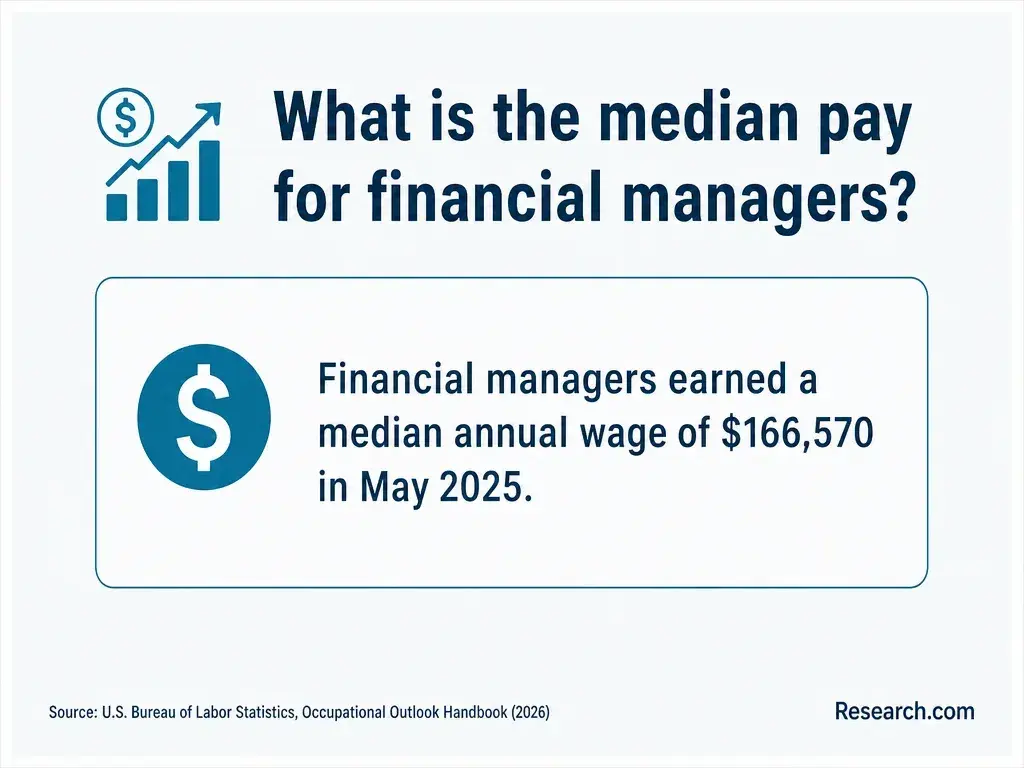
Pay depends on the occupation, employer, location, and your experience - not simply on holding the BS. For context, the U.S. Bureau of Labor Statistics reports a $126,520 median annual wage for management occupations in May 2025. That figure covers managers across many industries and levels; it is not a starting salary or an earnings estimate for Healthcare Administration BS graduates.
BLS projects management occupations overall to grow faster than the average for all occupations from 2025 to 2035. That broad outlook does not tell you how many healthcare administration jobs are available in your area. When assessing a target role, compare local postings for required experience and responsibilities, then review healthcare administration roles and pay context without treating the highest-paying titles as immediate post-graduation outcomes.
Do Healthcare Administration graduates need licenses or professional certifications?
Most general healthcare administration jobs do not require a single nationwide administrator license. Requirements depend on the role and state: some regulated facility-leadership positions, including nursing home administration, have specific licensing rules. Check the applicable state board before treating any degree as sufficient for a regulated job.
Certifications may help in particular functions, but they are not substitutes for experience or automatically conferred by a Healthcare Administration BS. If you hold - or hope to qualify for - an HIT or HIM credential, verify its eligibility and continuing-education rules separately before changing degree tracks. Later, a management-focused graduate degree may suit some professionals; shorter online MBA options in healthcare management are worth comparing only if broad business training serves a defined career goal.
Other Things You Should Know About Healthcare Administration
Often, yes, but admission and transfer rules vary. Ask whether completing the AAS first would activate a transfer agreement or change how your credits are applied.
Possibly. Some schools offer prior-learning assessment or credit for approved credentials, but acceptance, fees, and limits vary. Request a written policy before relying on those credits.
Not necessarily. Schools commonly review prior grades for admission while calculating a separate GPA for coursework completed after transfer. Confirm the institution's policy.
Usually not. Have a bachelor's program evaluate your existing coursework first; a second associate degree makes sense only if it fulfills a specific requirement or career objective more efficiently.
- .10 Evaluation of Individual Course Equivalencies. | Library of Maryland Regulations https://regs.maryland.gov/us/md/exec/comar/13B.06.02.10
- School-Determined Requirements | 2024-2025 Federal Student Aid Handbook https://fsapartners.ed.gov/knowledge-center/fsa-handbook/2024-2025/vol1/ch1-school-determined-requirements
- Health Information Management Associate Degree and Program | mcckc.edu https://mcckc.edu/programs/health-information-management/index.aspx
- Tuition in Detail - One Stop Student Services https://onestop.utk.edu/billing-payments/tuition-detail/
- On-Campus Bachelor of Science in Health Information Management | kumc.edu https://www.kumc.edu/school-of-health-professions/academics/departments/health-information-management/academics/health-information-management/on-campus-bachelors-degree-in-health-information-management.html
- How to Transfer - Apply Montana https://applymontana.mus.edu/colleges/transfer/how-to-transfer.html
- Program: Health Information Technology A.A.S. | sunywcc.edu https://catalog.sunywcc.edu/preview_program.php
- Bachelor of Science in Health Information Management Online | Texas State https://online.txst.edu/degrees/undergraduate/bs-health-information-management/
- Coding & Revenue Cycle Management Degree Program | chcp.edu https://www.chcp.edu/degrees-certificates/coding-and-revenue-cycle-management-aas-degree/
- Credit Requirements for the College of Arts & Sciences | UVA College of Arts & Sciences https://college.as.virginia.edu/credits