2027 How to Become a Healthcare Staffing Coordinator With a Healthcare Administration BS

Co-Founder and Chief Data Scientist
A healthcare administration bachelor's degree can prepare you to coordinate staffing, but employers also need evidence that you can keep schedules accurate when coverage changes quickly. For aspiring coordinators and current healthcare workers considering a degree, the practical decision is which combination of education and hands-on experience will make you employable without unnecessary expense.
This guide explains the job, how to prepare for it, what to check before enrolling, and when a graduate degree may - or may not - help you advance.
Key Things You Should Know
- A healthcare administration BS is relevant preparation, but staffing coordinator positions do not have one universal degree requirement; scheduling experience and familiarity with healthcare operations can matter just as much.
- A traditional bachelor's pathway commonly takes about four years of full-time study; transfer credits and enrollment pace can substantially change the time and total cost.
- There is no reliable national wage figure specific to healthcare staffing coordinators. The $126,520 median annual wage for all management occupations in May 2025 should not be treated as a coordinator's salary.
What does a healthcare staffing coordinator do?
A healthcare staffing coordinator helps a hospital, clinic, long-term care facility, or staffing agency put appropriately qualified personnel on each shift. The work can include maintaining schedules, filling absences, tracking availability, communicating assignments, and escalating coverage gaps to a supervisor. Depending on the employer, coordinators may also check that required credentials are current, document overtime, and work with agency staff.
The job is more than arranging names on a calendar. A coordinator must understand which positions can cover a particular assignment, follow the organization's staffing rules, and communicate changes without disclosing information unnecessarily. Clinical leaders - not a coordinator's degree - determine clinical staffing needs and professional scope of practice.
Staffing coordination is also distinct from maintaining patient records. If you are comparing these functions, health information management and healthcare administration degree differences can clarify which field better matches the work you want to do.
What education is required to become a healthcare staffing coordinator?
There is no single nationwide educational requirement for this job title. Some employers may consider applicants with a high school diploma or an associate degree and relevant scheduling experience; others prefer a bachelor's degree, particularly when the position includes reporting, workforce analysis, or broader administrative responsibilities. Read individual job postings rather than treating a preferred qualification as a legal requirement.
A healthcare administration BS is a direct route if you want both entry into staffing operations and room to pursue other administrative roles. If you already work in healthcare, however, moving into scheduling through your employer may be faster and less expensive than waiting to finish a degree. Ask to assist with shift coverage, learn the scheduling system, and document examples of resolving coverage problems.
Applicants who already have college credit should investigate moving from an associate degree to a healthcare administration bachelor's before starting over. A written transfer-credit evaluation can materially change the time and cost of the BS.
How does a healthcare administration bachelor's degree prepare you for staffing coordination?
A healthcare administration program can provide the context behind daily scheduling decisions: how care organizations operate, how labor affects budgets, why documentation matters, and how to communicate across clinical and administrative teams. Courses in operations, human resources, data analysis, and healthcare law can be especially useful when a coordinator must flag overtime, recognize a credentialing issue, or explain a coverage shortfall.
Coursework alone does not establish that you can manage a last-minute absence or use an employer's scheduling platform. Look for internships, practicums, or relevant employment that let you work with schedules, staffing reports, or front-office operations. When you compare online bachelor's degrees in healthcare administration, give practical experience and access to local placement opportunities as much attention as course titles.
Curricula vary, but a healthcare administration BS usually combines general education with healthcare-specific business and operations courses. Relevant subjects may include healthcare systems, organizational behavior, accounting or budgeting, human resources, health law and ethics, information systems, and statistics. Some programs add a practicum or capstone; verify whether it is required and whether a placement is available near you.
For staffing coordination, the most useful question is not simply whether a course exists, but what you will do in it. An operations assignment involving shift coverage or a spreadsheet-based staffing forecast offers more direct practice than a course description that only mentions "leadership." If your main interest is managing health records or preparing for a health information credential, examine online degree options in CAHIIM-accredited health information management instead of assuming a healthcare administration degree provides the same preparation.
Healthcare staffing coordination itself does not have a universal professional license. An employer may nevertheless require training in its scheduling software, privacy procedures, credential-verification process, or applicable workplace policies. A staffing coordinator should verify a clinician's credentials when assigned to do so, but that does not make the coordinator clinically licensed.
Voluntary training in healthcare operations, human resources, or scheduling may help address a specific skills gap. Before paying for a certificate, check local job postings and ask employers whether they recognize it. A graduate degree is not a substitute for a required clinical license, either. If your long-term goal is a clinical or executive role, investigate its requirements separately; healthcare administration doctoral study schedules and formats describe educational pathways, not permission to practice a licensed profession.
Choose based on where you can complete the degree and build relevant experience. Online study may suit someone already working shifts in a healthcare setting, while a campus program may make it easier to use nearby employer connections or scheduled in-person support. Neither format guarantees an internship or a job.
Ask whether courses have required live meetings, proctored exams, or group projects; whether a practicum can be completed locally; and who arranges placements. For a campus program, check whether class and travel times leave room for healthcare work. Comparing those details across online bachelor's degrees in healthcare administration would be useful, but a prospective student should also verify each school's current format directly. You may also explore MHA options before gaining healthcare experience.
Requirements depend on whether you apply as a first-year or transfer student. Schools commonly ask first-year applicants for a high school transcript or equivalent credential and an application; transfer applicants generally submit transcripts from prior colleges. Individual schools may set GPA thresholds or request other materials, so check the current admissions page rather than assuming every program follows the same policy.
If speed matters, ask for a credit evaluation before committing. Confirm which credits satisfy major requirements, whether any courses must be taken in sequence, and when practicums are offered. Those details can matter more to your finish date than a program's advertised pace. Faster online study routes in healthcare administration are worth considering only if their transfer rules and course schedules work for your circumstances.
A conventional full-time bachelor's path takes roughly four years, but your timeline depends on accepted transfer credits, course availability, enrollment intensity, and any practicum. Part-time study can make employment easier to maintain while extending the period over which you pay fees and living expenses.
There is no meaningful single price for a healthcare administration BS. Compare the total credits you would still need with tuition per credit or per term, then add mandatory fees, materials, and any placement or travel costs. Request a written estimate based on your transfer evaluation - not just a published annual tuition figure. When reviewing economical online healthcare administration study options, also check institutional accreditation, financial-aid eligibility, and whether the lowest advertised price applies to your residency and enrollment status.
With demonstrated staffing experience, you might pursue senior scheduler, staffing supervisor, workforce operations specialist, recruiting coordinator, or healthcare operations coordinator roles. The next step depends on what you have actually done: supervising schedulers calls for people-management experience, while workforce analysis may require stronger spreadsheet and reporting skills. Hospital and agency staffing can also differ substantially in their pace and responsibilities.
For a move toward broader department management, seek responsibility for budgets, process improvement, and cross-team decisions before assuming another degree is necessary. A master's in healthcare management or an MBA may become useful for a specific advancement goal, but neither automatically qualifies you for management.
Doctoral education is a still more specialized choice, generally better evaluated against research, teaching, or advanced leadership goals than against an entry-level staffing job. If that is a distant objective, choosing between healthcare management doctoral study routes should come after you have identified the role you want.
How much do healthcare staffing coordinators earn and what is their job outlook?
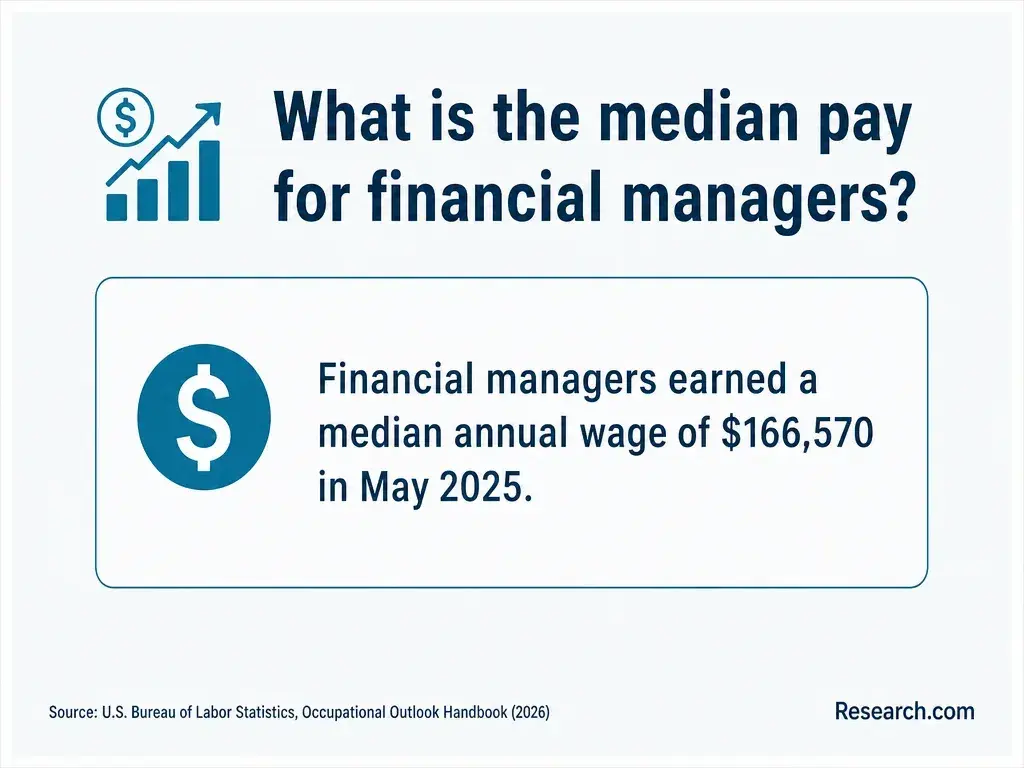
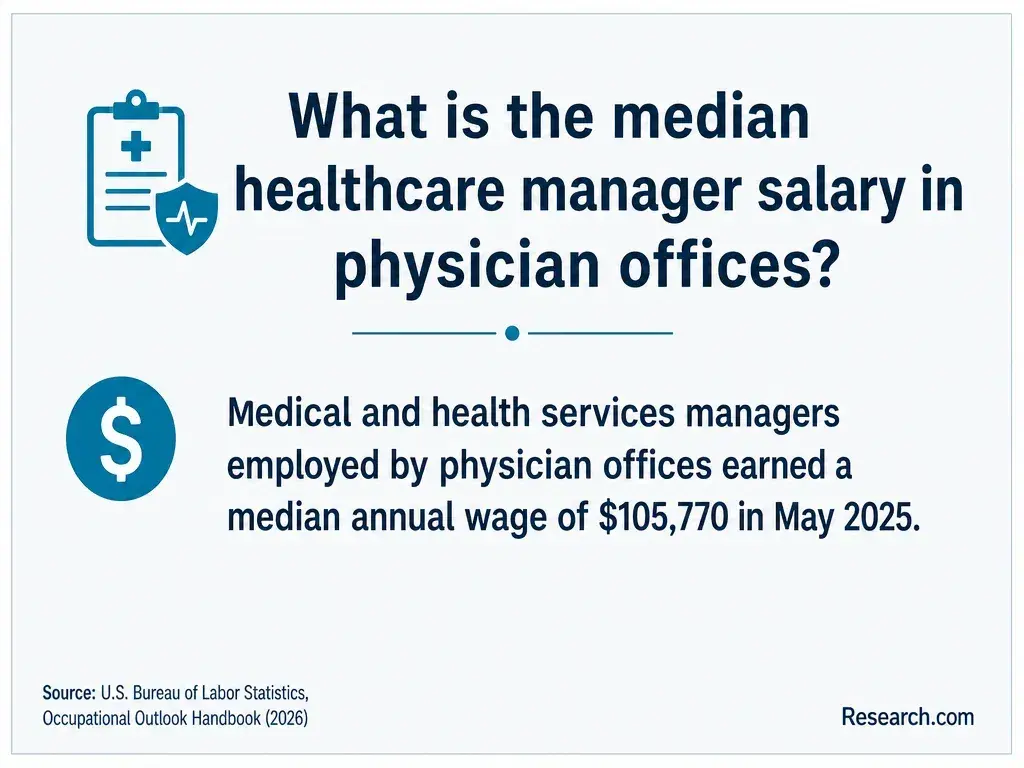
A precise national median for healthcare staffing coordinators is difficult to state responsibly: the title spans different employers and duties and does not have a single clearly corresponding Bureau of Labor Statistics occupation. For a useful pay estimate, compare local postings that specify similar scheduling responsibilities, shift expectations, and supervisory scope. Do not use a healthcare manager's pay as a starting coordinator salary.
For context, the Bureau of Labor Statistics reports a $126,520 median annual wage for the broad group of management occupations in May 2025. That figure covers managers across industries, not healthcare staffing coordinators or graduates of a particular degree. The BLS also projects management occupations overall to grow faster than the average for all occupations from 2025 to 2035, but that broad outlook does not establish demand for this specific title in your area.
If you are considering graduate study mainly to increase earnings, compare actual promotion requirements and local pay before enrolling. Compare fast-track healthcare management MBA curricula against the responsibilities of the roles you want; a shorter program is not necessarily the better investment if you first need supervisory experience.
Other Things You Should Know About Healthcare Administration
Yes. Clinical experience can help a nurse understand coverage needs and professional roles, although the employer may still expect scheduling, reporting, and administrative skills.
Not always. Facilities with round-the-clock care may need evening, weekend, holiday, or on-call coverage. Ask about the actual schedule when applying.
Spreadsheet skills and comfort learning scheduling, timekeeping, and HR systems are valuable. Specific platforms vary by employer, so focus on accurate data entry and reporting as well as software names.
Seek scheduling or shift-coverage tasks in a healthcare workplace, including front-desk, unit support, or administrative positions. Keep examples of how you handled changes accurately and communicated them promptly.
- Healthcare Administrator Career Guide & Degree Paths | News & Updates from the Antioch University Community https://commonthread.antioch.edu/healthcare-administrator-career-guide-degree-paths/
- 5 Careers in Healthcare Administration | Warner Pacific University https://www.warnerpacific.edu/blog/careers-in-healthcare-administration/
- Health-Care Administration, BS (Online) | Loma Linda University https://llu.edu/academics/programs/school-allied-health-professions/health-care-administration-bs-online
- What Jobs Can You Get With a Healthcare Administration Degree? [Quiz] | UMass Global https://www.umassglobal.edu/blog-news/jobs-can-you-get-a-healthcare-administration-degree-quiz
- Students Recognize the Importance of Gaining Internship Experience | naceweb.org https://www.naceweb.org/job-market/internships/students-recognize-the-importance-of-gaining-internship-experience
- Health Administrator Career | explorehealthcareers.org https://explorehealthcareers.org/careers/public-health/health-administrator/
- How to Write an Effective Home Care Staffing Coordinator Job Description - Healthcare and Medical Staffing Insights https://scionmedicalstaffing.com/medical-blog/home-care-staffing-coordinator-job-description
- How to Become a Healthcare Administrator and Job Duties | Public Health Degrees https://www.publichealthdegrees.org/careers/healthcare-administrator/
- Staffing Coordinator - MGM Healthcare https://mgmhealthcare.com/job_openings/staffing-coordinator-2/
- What Classes Do You Take in Healthcare Admin? | bestcolleges.com https://www.bestcolleges.com/healthcare/bachelors/healthcare-administration-courses/