2027 A Virtual Visit Readiness Checklist: A Healthcare Administration Student Portfolio Project

Co-Founder and Chief Data Scientist
A virtual visit can fail before the clinician joins: a patient cannot connect, an interpreter is missing, or staff do not know where to route an urgent concern. A healthcare administration student can turn those operational risks into a useful portfolio project.
This guide shows you how to build and evaluate a virtual visit readiness checklist, present the findings responsibly, and decide which educational path will help you develop the skills behind it. The result should demonstrate sound administrative judgment, not pretend that a classroom checklist is ready for clinical use.
Key Things You Should Know
- Build the checklist around the full visit journey: eligibility and scheduling, connection and accessibility, clinical handoff, documentation, and follow-up.
- Show how you tested the workflow with a fictional scenario or authorized, de-identified information; label recommendations separately from verified findings.
- For 2026 use, have an organization verify current state licensure, payer, privacy, and prescribing rules before adopting any student-created checklist.
What Is a Virtual Visit Readiness Checklist in Healthcare Administration?
A virtual visit readiness checklist is an operational tool for confirming that a patient, care team, technology, and administrative workflow are prepared for a remote appointment. It is not a clinical assessment or a substitute for a clinician's decision about whether telehealth is appropriate.
A student portfolio version should specify who checks each item, when they check it, and what happens if it fails. For example, "confirm connection" is vague; "scheduling staff send joining instructions, and front-desk staff route connection failures to the approved backup process" defines an accountable workflow.
Students exploring undergraduate health administration programs and entry schedules can use the project to assess whether a program offers applied assignments rather than relying on course titles alone.
How Does a Virtual Visit Portfolio Project Prepare Healthcare Administration Students?
The project asks students to translate policy and patient needs into a repeatable process. A strong submission identifies a specific setting, such as an outpatient primary care practice, maps a visit from booking through follow-up, finds a plausible failure point, and proposes a testable improvement. That is closer to an administrator's work than a generic essay about telehealth benefits.
Keep the scope small enough to validate. A student could compare a draft workflow against public guidance and conduct a role-play using fictional patient information. If an organization permits observation or testing, obtain its approval first.
Students considering a faster degree should review accelerated online healthcare management degrees for sufficient time and support to complete substantive applied work; a short timeline alone does not establish project quality.
What Should Healthcare Administration Students Include in a Virtual Visit Checklist?
Organize the checklist by the point at which staff can still prevent or resolve a problem. Each item should have an owner, a pass/fail condition, and an escalation route appropriate to the chosen organization.
- Before scheduling: Confirm that the requested service and patient circumstances fit the organization's telehealth policy; identify when an in-person appointment or clinical review is needed.
- At scheduling: Record the patient's preferred contact method, language and accessibility needs, joining instructions, and approved backup contact process.
- Before connection: Confirm that staff and patient know how to use the platform, reach technical support, and switch to an approved alternative if the connection fails.
- At check-in: Follow organizational procedures for identity, current location, contact information, consent when required, privacy concerns, and interpreter access.
- During and after the visit: Define who handles urgent escalation, documentation, orders, referrals, patient instructions, and unresolved technical problems.
Do not copy a classroom template directly into practice. An organization must adapt it to its services, staffing, platform, policies, and applicable law. When comparing online healthcare administration bachelor's degrees at accredited universities, ask whether students receive feedback on this kind of operational deliverable.
A well-documented checklist can demonstrate process mapping, role assignment, risk identification, patient-centered communication, and quality improvement. The strongest evidence is not a polished form by itself. It is the reasoning behind a revision—for example, showing how a failed connection exposed an unclear handoff between scheduling and technical support.
It can also show leadership judgment: deciding which issues staff may resolve, which require a clinician, and which must go to compliance or legal specialists. Those skills differ from providing clinical care or interpreting law independently.
Students interested in senior leadership can compare online accelerated doctoral routes for healthcare leaders, but a doctorate is not necessary to demonstrate these entry-level operational competencies.
Evaluate the experience from the patient's perspective and the staff's perspective. A workflow that appears efficient on paper may fail for someone using a phone, needing an interpreter, or having limited private space.
- Choose a fictional patient scenario and map every step from appointment request to follow-up.
- Test the joining instructions on the devices and formats the scenario assumes; note where the patient must guess what to do.
- Run a tabletop exercise with a connection failure or accessibility need, recording who responds and how the visit proceeds.
- Separate observed problems from assumptions, then revise the checklist and repeat the exercise.
Possible measures include whether the patient can find the joining instructions, whether staff can identify the correct escalation route, and whether follow-up ownership is clear. Report the number of test scenarios and their limits; a role-play is not evidence of real-world patient outcomes.
For students comparing the cost of learning these skills, low-tuition healthcare administration degree programs online may be worth reviewing alongside access to applied coursework and feedback.
The applicable rules depend on the patient's location, provider, service, payer, and organization. In a US setting, the checklist should prompt authorized staff to verify clinician licensure or other permission to practice where the patient is located; current payer coverage and documentation requirements; and any state rules affecting consent or prescribing. It should not claim that one nationwide telehealth rule settles every visit.
HIPAA may govern how a covered entity and its business associates handle protected health information, including platform use and vendor arrangements. Other requirements can apply, including disability-access and effective-communication obligations, state privacy laws, and special protections for certain substance-use-disorder records.
Students should identify these as review points, not issue legal conclusions. For work centered on health records and information governance, online CAHIIM-accredited programs for health information careers offer a different educational focus from a general administration degree.
Because telehealth payment and prescribing policies can change, date the checklist and name the person or department responsible for reviewing it before use. Never place real patient information in a public portfolio without explicit authorization and appropriate protections.
Present a brief case study, not just the final checklist. State the setting and scope, describe the fictional or authorized information used, show the workflow problem, explain the revision, and close with limitations and a proposed next test. A reader should be able to distinguish what you observed from what you recommend.
Include a clean, dated checklist and a short explanation of your individual contribution if the project was collaborative. Remove patient identifiers, internal credentials, screenshots containing sensitive information, and confidential organizational procedures unless publication is expressly permitted.
The portfolio's purpose is to demonstrate judgment and communication; it is not, by itself, a reason to incur the healthcare administration doctorate fees and completion costs associated with a separate advanced-degree decision.
Telehealth operations may appear in healthcare administration, health information management, public health, or healthcare-focused business coursework, but its presence is not guaranteed by a degree title. Compare current course descriptions and applied-project requirements rather than assuming that every program teaches virtual visit workflow.
The following comparison helps match a program type to the skill gap the checklist reveals. It describes typical emphases, not a promise about any particular school.
| Education path | Likely emphasis | Best fit for this project |
| Healthcare administration bachelor's degree | Foundations in healthcare systems, operations, and management | Students building broad administrative knowledge |
| Healthcare administration or management master's degree | More advanced organizational leadership and improvement work | Professionals seeking greater responsibility in healthcare operations |
| Health information management degree | Health data, records, and information governance | Students drawn to documentation and information workflows |
| Healthcare-focused MBA | General business core with healthcare content where offered | Professionals who need broader finance, strategy, and management training |
A certificate or employer training may be more direct if the only gap is a particular telehealth workflow. Students considering a graduate credential can review 12-month healthcare administration graduate programs, then verify whether the actual curriculum leaves room for meaningful applied work.
Start by verifying the institution's recognized institutional accreditation through the accreditor and official education records. Then check whether the specific degree has relevant programmatic accreditation, if that matters to your goal.
Institutional and programmatic accreditation are not interchangeable. Ask the school whether telehealth, quality improvement, privacy, or patient-access projects are required, optional, or absent.
Compare total tuition and required fees, course availability, online scheduling, fieldwork requirements, and access to instructor or employer feedback. Request a recent syllabus or project description rather than relying on marketing language.
Doctoral study serves a different purpose from an entry-level portfolio assignment: students pursuing research or senior leadership goals can compare doctoral pathways in healthcare management after establishing why that level of study fits their experience and goals.
What Healthcare Administration Careers Use Virtual Visit Readiness Skills?
Patient-access coordinators, telehealth operations specialists, practice managers, quality-improvement staff, and health information professionals may work on parts of virtual visit delivery.
Responsibilities vary: one role may troubleshoot scheduling and handoffs, while another manages policy implementation or analyzes service problems. A student checklist can support an interview, but relevant experience, employer requirements, and sometimes additional education remain important.
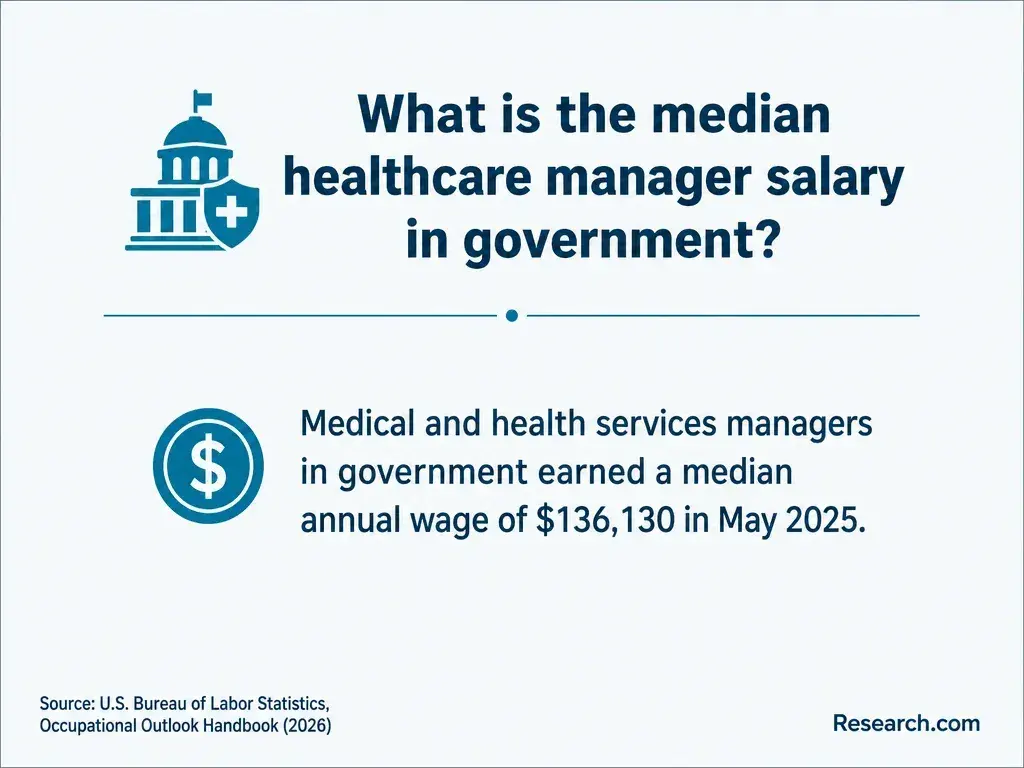
For salary context, the US Bureau of Labor Statistics reports a $126,520 median annual wage for management occupations in May 2025. That broad figure is not the pay for telehealth jobs, entry-level administrators, or graduates of any degree program; use occupation- and location-specific information when weighing a career move.
Professionals aiming beyond operations toward research or executive roles can compare online doctoral completion pathways in healthcare administration, but a shorter pathway should not outweigh the credential's relevance to the intended role.
Other Things You Should Know About Healthcare Administration Programs
Yes. Use a clearly labeled fictional practice and patient scenario, public-facing guidance, and a tabletop test. Do not describe the result as validated in a healthcare organization.
The organization should route it through its designated clinical, operations, privacy, compliance, and technology reviewers as appropriate. A student or single supervisor cannot approve every aspect on their behalf.
Set a review schedule and revise it when the organization changes platforms, services, workflows, or applicable rules. A dated owner and review record make updates easier to track.
No. An MBA may suit someone seeking broader management training, but a healthcare administration course, targeted certificate, or supervised workplace project may be a better route for learning this specific workflow.
- Accessibility Checklist & Testing - Utah Design System https://designsystem.utah.gov/guidelinesStandards/accessibilityChecklistTesting
- Protecting patients' privacy | hhs.gov https://telehealth.hhs.gov/providers/best-practice-guides/telehealth-for-behavioral-health/preparing-patients-for-telebehavioral-health/protecting-patients-privacy
- Addressing virtual care disparities for patients with limited English proficiency - PubMed https://pubmed.ncbi.nlm.nih.gov/35049259/
- WCAG 2.1 AA Manual Testing Checklist | NCDIT - NC.gov https://it.nc.gov/digital-accessibility/digital-accessibility-resources/wcag-21-aa-manual-testing-checklist
- Best Practices for Patient Engagement with Telehealth | harvard.edu https://learn.hms.harvard.edu/insights/all-insights/best-practices-patient-engagement-telehealth
- Best Practices for In-Person and Telehealth Visits | AccountableHQ https://www.accountablehq.com/post/patient-privacy-during-consultations-best-practices-for-in-person-and-telehealth-visits
- States with Telehealth Consent Requirements - CCHP https://www.cchpca.org/topic/consent-requirements-medicaid-medicare/
- Documenting Visits | MATRC https://matrc.org/explore-telehealth/documenting-a-visit/