
2027 Manager Span of Control in Healthcare Organizations

Co-Founder and Chief Data Scientist
A healthcare manager can have a reasonable-looking number of direct reports and still lack enough time to coach staff, resolve problems, and respond to safety concerns. That makes span of control a practical staffing and leadership decision - not just an organization-chart calculation. This guide is for current and aspiring healthcare managers who need to assess supervisory capacity, understand its effect on care, and decide whether additional education would help. You will learn what to measure, when a span may need redesign, and how to choose preparation that fits the responsibility you want.
Key Things You Should Know
- There is no universal safe number of direct reports for a healthcare manager; shift coverage, staff experience, clinical risk, and available support matter as much as headcount.
- Assess both reporting relationships and actual supervisory work, including coaching, scheduling, escalation, and time spent across locations or shifts.
- The $126,520 median annual wage reported for all US management occupations in May 2025 is not a healthcare-manager salary or a promised return on a degree.
What is span of control in healthcare organizations?
Manager span of control is the number of people who report directly to a manager. A nurse manager supervising nurses and charge nurses, for example, has a different span from a director who supervises several department managers. Employees supervised through those managers are indirect reports, not part of the director's direct-report count.
The number alone describes structure, not workload. A manager's practical span also depends on whether reports work different shifts, need frequent guidance, or perform work with substantial clinical or regulatory consequences. A health information manager may supervise coding and records staff whose work demands different oversight from bedside care; students interested in that function can examine HIM degree selection and CAHIIM accreditation.
How many direct reports should healthcare managers supervise?
There is no defensible organization-wide target. A span that works for an experienced, colocated administrative team may be too broad for a new clinical team spread across nights, weekends, and multiple sites. Conversely, a small team may not require another management layer if staff have clear responsibilities and reliable support.
Start with the work rather than a benchmark: count direct reports, identify when each person works, and estimate the manager time required for check-ins, performance issues, staffing decisions, incident follow-up, and improvement projects. Then compare those demands with the manager's actual availability. If important supervision is routinely delayed, investigate whether to add a lead, redistribute reports, provide administrative support, or narrow the role.
Education can improve a manager's budgeting and organizational judgment, but it does not create more supervisory hours. Accelerated online MBA study for healthcare professionals may suit an experienced manager seeking broader operations responsibility; it is not a substitute for adequate coverage on the unit.
What factors determine an effective healthcare management span?
The most useful question is how much direct attention the team's work requires. These factors help explain why equal headcounts can place very different demands on two managers.
- Work and risk: Clinical complexity, changing patient needs, and the consequences of delayed decisions increase oversight demands.
- Team experience: New hires and staff learning unfamiliar workflows generally need more coaching than an established team.
- Coverage: Multiple shifts, sites, and remote employees make observation and timely communication harder.
- Support and authority: Charge staff, administrative support, clear escalation rules, and delegated decision rights can reduce bottlenecks without removing accountability.
- Manager workload: Vacancies, budget duties, direct patient care, and major change projects compete with people management.
Managers should document these conditions before proposing a reorganization. Someone pursuing broader operational responsibility can use an accelerated healthcare administration program comparison to examine education options, while addressing immediate coverage problems through staffing and role-design decisions.
Span of control affects safety through the manager's ability to notice problems, support staff, and follow through - not through a simple numerical threshold. When supervisory demands exceed available time, coaching may be postponed, concerns may wait for escalation, and corrective actions may be harder to sustain. A narrower span does not automatically improve care if responsibilities remain unclear or teams lack resources.
To evaluate a proposed change, look at the process between a reported concern and its resolution: who receives it, who can act, and whether the manager can verify that the response worked. Review staff feedback and locally tracked quality measures alongside turnover and overtime patterns. These indicators can reveal a problem, but none proves that span of control alone caused it.
Aspiring managers can seek training in quality improvement, healthcare operations, and communication early in their education. Undergraduate healthcare administration options at accredited universities offer one route to that foundation; clinical safety responsibilities still require the appropriate role-specific preparation.
The best degree depends on the role a reader already holds and the responsibility they want next. These pathways differ in breadth, specialization, and how much prior experience an employer may still expect.
| Education path | Potential fit | Important limitation |
| Bachelor's in healthcare administration | Entry-level administrative work and preparation for later supervision | Does not by itself establish readiness to lead a clinical unit |
| Master of healthcare administration (MHA) | Healthcare-specific operations, policy, and organizational leadership | Program depth and practical opportunities vary |
| MBA with relevant healthcare coursework | Broad finance, strategy, and operations skills for experienced professionals | A healthcare elective is not necessarily a formal concentration or clinical qualification |
| Doctoral study | Selected research, teaching, or advanced leadership goals | Usually unnecessary for a first management appointment |
A first-time manager should weigh supervised experience and employer training alongside a degree. A working professional comparing bachelor's pathways should also review total tuition and fees, transfer-credit policies, and scheduling; online bachelor's programs in healthcare administration by cost can be a starting point, not a substitute for checking each school's current charges.
Relevant coursework may cover organizational behavior, staffing and labor budgets, healthcare operations, quality improvement, employment practices, and change management. The practical test is whether students apply those ideas to decisions a manager faces: allocating coverage, defining supervisory roles, interpreting workforce data, and communicating a change across departments.
An MBA generally approaches these decisions through a broad business core; an MHA generally places them in a more explicitly healthcare-focused curriculum. Neither guarantees hands-on practice. Compare course descriptions and applied projects rather than assuming a program's title establishes its depth. If speed matters, comparing one-year master's curricula in healthcare administration can help identify what is taught within a compressed schedule and what experience students are expected to bring.
There is no single license required for every healthcare administration manager. Requirements depend on the job and jurisdiction. A clinical manager may need to maintain a professional clinical license, while certain regulated facility-administrator positions have state-specific licensing requirements. An administrative degree or MBA does not confer either type of license.
Professional certifications can demonstrate knowledge in a particular function, but they are not interchangeable with a degree or legal authorization to practice. Before enrolling, check actual job postings and the relevant state licensing authority for the role you want. People entering from outside healthcare may find MHA degree options for applicants changing sectors useful, while recognizing that admission without healthcare experience is different from eligibility for a regulated position.
Clinical and administrative supervision call for different starting experience. Nurse managers commonly build on nursing practice and licensure; practice managers may coordinate scheduling, revenue-cycle work, and patient-service operations; health information managers oversee records or coding functions; and department directors may supervise other managers across a larger service line.
For a career changer, the most realistic first move is often an adjacent operations role that uses existing budgeting, people-management, or process-improvement skills while building healthcare knowledge. A degree can strengthen that transition, but employers may still require clinical credentials or substantial sector experience. Doctoral study is generally a later decision for someone targeting research, teaching, or selected senior roles; readers with those aims can review doctoral education options in healthcare administration.
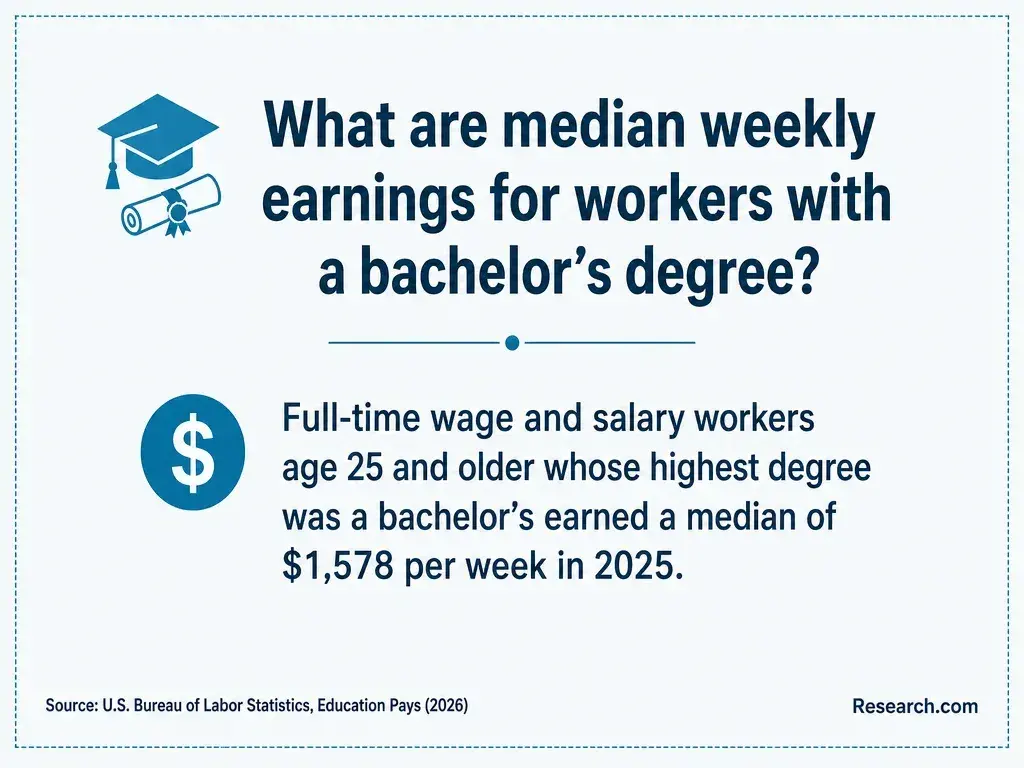
The US Bureau of Labor Statistics reports a $126,520 median annual wage for management occupations overall in May 2025. That figure covers many industries and management jobs, so it should not be treated as the typical pay for a healthcare manager, an entry-level supervisor, or an MBA graduate. Role, location, employer, clinical background, and scope of responsibility can materially change compensation.
BLS projects management employment overall to grow faster than the average for all occupations from 2025 to 2035, but that broad outlook does not establish demand for a particular healthcare management job. For a personal career decision, compare current local postings, stated experience requirements, and realistic pay against the full cost of education. That calculation is especially important before pursuing a doctorate: budgeting for an online healthcare administration doctorate should account for fees and time as well as tuition, without assuming a salary increase.
How can students choose an accredited healthcare administration program?
First verify institutional accreditation, then examine whether the specific program has applicable specialized accreditation. These are different checks: accreditation of a university does not establish that its healthcare administration master's program holds CAHME accreditation. Likewise, business-school accreditation and a healthcare concentration describe different aspects of an MBA.
Match the credential to the intended role, then compare required courses, applied learning, delivery format, total charges, and access to relevant career support. Ask whether online students must attend live sessions or travel, whether an advertised healthcare focus is a formal concentration, and whether the program meets any education requirements for a regulated role in the state where you plan to work. Students seeking an MHA can use healthcare administration master's choices with CAHME accreditation as a comparison starting point and verify each program's current status directly before applying.
Other Things You Should Know About Healthcare Administration
Count formal direct reports separately, but include temporary and contract workers when assessing actual oversight demands. A manager may still be responsible for their onboarding, coordination, or escalation.
They can divide duties, but staff need to know who handles scheduling, performance feedback, clinical escalation, and final decisions. Shared responsibility without clear authority can create delays.
Software can improve visibility and reduce administrative work, but it cannot replace observation, coaching, or timely decisions. Evaluate whether it frees meaningful manager time rather than assuming it supports a wider span.
Follow the organization's governance process, typically involving the affected leaders and human resources. Changes affecting clinical oversight should also be reviewed by the appropriate clinical leadership before implementation.
- Nursing Shared Governance - StatPearls - NCBI Bookshelf - NIH https://www.ncbi.nlm.nih.gov/books/NBK549862/
- Nurse Manager Span of Control in Hospital Settings - PMC - NIH https://pmc.ncbi.nlm.nih.gov/articles/PMC10660758/
- Understanding the Impact of Span of Control on Nurse Managers and Hospital Outcomes - PubMed https://pubmed.ncbi.nlm.nih.gov/37159015/
- Core Principles & Values of Effective Team-Based Health Care - NAM https://nam.edu/perspectives/core-principles-values-of-effective-team-based-health-care/
- Span of Control: What's the Optimal Team Size for Managers? | Gallup.com https://www.gallup.com/workplace/700718/span-control-optimal-team-size-managers.aspx
- A Systematic Literature Review to Inform Healthcare Leaders | ProQuest https://search.proquest.com/openview/47eccfee988dc5d058ec6af62133aea1/1
- Span of Control in Health Care Organizations | au.dk https://ps.au.dk/en/king-frederik-center-for-public-leadership/research-projects/center-projects/span-of-control-in-health-care-organizations
- How Span of Control Impacts Nurse Managers and Hospital Outcomes | American College of Healthcare Executives https://www.ache.org/News-and-Insights/ACHE-Blog/2024/How-Span-of-Control-Impacts-Nurse-Managers-and-Hospital-Outcomes
- Defining the Complexity of Patients Through an Acuity Tool | Journal of Oncology Navigation & Survivorship https://www.jons-online.com/issues/2022/april-2022-vol-13-no-4/4495-defining-the-complexity-of-patients-through-an-acuity-tool-a-scoping-review


