2027 A Behavioral Health Intake Handoff Checklist: A Healthcare Administration Student Portfolio Project

Co-Founder and Chief Data Scientist
A behavioral health intake handoff can fail when a referral reaches the next team without a clear owner, an urgent concern goes unflagged, or a follow-up is never confirmed. For a healthcare administration student, designing a checklist around those risks is a practical way to demonstrate process improvement, not clinical judgment.
This guide shows what the project should contain, how to build it safely, and which degree pathways can help you turn the work into a credible portfolio piece and an informed career decision.
Key Things You Should Know
- A strong portfolio project maps the intake-to-handoff workflow, assigns responsibility, and tests whether the receiving team can act without searching for missing information.
- Use fictional cases and de-identified process examples; a student checklist must not replace clinical assessment, emergency protocols, or an organization's privacy rules.
- The Bureau of Labor Statistics reports a May 2025 median wage of $126,520 for management occupations overall, not an expected salary for a new healthcare administration graduate.
What Is a Behavioral Health Intake Handoff Checklist Project?
It is a portfolio-ready process improvement project that defines what information must move from an intake or referral team to the person responsible for the next step in behavioral health care. An intake may begin with a call, electronic referral, walk-in, or transfer.
A handoff is complete only when the receiving role has accepted responsibility and the next action is documented according to the organization's policy.
The student's deliverable should include a brief workflow map, a checklist, an explanation of who uses it, and a test using fictional scenarios.
Its value lies in making operational gaps visible: an unanswered referral, an unclear appointment status, or a concern that needs prompt clinical review. A checklist cannot determine a diagnosis, authorize treatment, or establish a universal safety procedure.
This is a manageable project for an undergraduate as well as a graduate student. Someone comparing online healthcare administration bachelor's programs with rolling starts can ask whether coursework permits a simulated workflow project, rather than assuming access to a clinical placement.
What Should a Behavioral Health Intake Handoff Checklist Include?
Organize the checklist around the receiving person's decisions, not around every field in an intake form. The following components create a usable draft that a qualified site supervisor could adapt to local policy:
- Referral identity and destination: Use the organization's approved identifiers, referral source, receiving team, and reason for the handoff; omit unnecessary personal details from a portfolio copy.
- Current status: Record whether contact was made, an appointment was offered or scheduled, required information is pending, and the person has been informed of the next step.
- Time-sensitive concerns: Provide a place to flag issues for review by an authorized clinician and identify the applicable escalation pathway; do not ask administrative staff to make clinical risk determinations.
- Access and coordination needs: Note relevant language or accessibility needs, preferred contact method where appropriate, and coordination barriers that the receiving team must address.
- Ownership and closure: Identify who sends and accepts the handoff, when it occurred, the next action and due point, and how an unaccepted or incomplete handoff is tracked.
Information-sharing rules depend on the setting and record. HIPAA, applicable state law, and, in some substance use disorder treatment contexts, 42 CFR Part 2 may affect access or disclosure.
Have a privacy or compliance professional review any real-world version. If the project's main challenge is record structure and data governance rather than service operations, compare healthcare administration versus health information management degrees before choosing a study path.
How Does This Portfolio Project Prepare Healthcare Administration Students?
The project turns a broad goal - improve care coordination - into an operational artifact an employer can inspect. Students practice defining a process boundary, identifying where responsibility changes hands, balancing completeness against staff workload, and proposing a way to detect missed follow-ups. Those are administration skills; clinical staff must still define clinical content and escalation rules.
Build the portfolio version in stages: map a fictional current process, draft the checklist, run several fictional cases through it, revise fields that cause confusion, and write a short rationale for the changes.
A useful test case includes a referral with missing information; another includes a handoff the receiving team cannot accept. Explain what happens to each case rather than merely displaying a polished form.
In an interview, present the original problem, your assumptions, the revised workflow, and what would require site approval before implementation.
That evidence may be particularly valuable in a compressed graduate program, where time to develop and test a project is limited. When considering year-long master's programs in healthcare administration, ask how much supervised project development their schedules actually allow.
First, confirm that the institution holds recognized institutional accreditation. Then check program-level accreditation separately. The Commission on Accreditation of Healthcare Management Education, or CAHME, accredits eligible graduate healthcare management programs; its status does not automatically extend to every degree, delivery format, or program at an institution.
Business-school accreditation, such as AACSB accreditation, answers a different question and should not be mistaken for CAHME accreditation.
Accreditation is a screening tool, not proof that a course offers behavioral health fieldwork or a handoff project. Verify the exact program and format in the accreditor's directory, then ask whether the curriculum includes supervised applied work and whether graduates meet any employer-specific education expectations.
Students who want a graduate program with this particular credential can compare CAHME-accredited master's programs in healthcare administration while checking each listing directly before applying.
The best degree depends on the work you want to own. A handoff project can support several pathways, but it does not make the degrees interchangeable. This comparison distinguishes broad management training from preparation focused on healthcare operations or information systems:
| Pathway | Best fit for this project and career goal | Limitation to check |
| Healthcare administration bachelor's degree | Building entry-level operations, scheduling, referral, or coordinator skills | Management roles may still require substantial work experience |
| Master of Health Administration or similar degree | Developing healthcare-specific leadership, quality, finance, and operations skills | Programs differ in applied experience and admission expectations |
| MBA with relevant healthcare coursework | Adding broad business management skills for someone with a healthcare career direction | A healthcare elective is not necessarily a formal concentration or a substitute for healthcare experience |
| Health information management pathway | Working primarily with records, information governance, and health data processes | May offer less emphasis on service-line leadership |
For someone seeking behavioral health operations roles, experience coordinating referrals or improving clinic workflows may matter more than choosing the most senior-sounding degree.
An MHA can be a closer academic match than an MBA when the main knowledge gap is healthcare delivery. Compare the actual coursework and applied requirements when you explore online graduate health administration programs.
Healthcare operations and quality improvement courses help students map handoffs, define responsibilities, and measure whether referrals reach an appropriate next step.
Health information systems and privacy coursework supports decisions about documentation and access. Healthcare finance and organizational behavior help explain why staffing capacity, incentives, and communication can disrupt an otherwise sensible workflow.
An MBA generally adds a broad core in areas such as accounting, finance, operations, and leadership. Healthcare electives or a verified healthcare concentration may apply those tools to provider organizations, but course titles alone do not establish clinical or behavioral health expertise.
If you already work in a clinic and need stronger budgeting or management skills, low-cost healthcare management MBA options online may be worth comparing with an MHA or individual graduate courses. If you need direct preparation in care delivery operations, examine the healthcare-specific coursework first.
Yes, if the program permits applied work, provides meaningful feedback, and has a safe way to use simulated or properly authorized materials.
Online delivery alone does not provide access to a behavioral health organization or permission to use patient records. A fully fictional project is more appropriate than using real intake documents without organizational approval.
Before enrolling, ask who approves a project topic, whether an employer-based project is allowed, how privacy review works, and whether required meetings or field experiences fit your schedule. Check live-session times, group-work expectations, and any campus visits rather than equating "online" with asynchronous study.
A shorter program can be appealing, but compare project supervision and course sequencing, not speed alone, when reviewing fast-track online healthcare management graduate degrees.
Requirements vary by degree and school. Bachelor's programs typically evaluate prior education and transfer credit. Graduate programs generally require a bachelor's degree and may request a résumé, statement, recommendations, or relevant experience; testing and prerequisite policies differ.
A nonbusiness degree does not automatically rule out an MHA or MBA, but applicants should check whether introductory accounting, statistics, or healthcare knowledge is expected.
No single tuition figure or completion time accurately represents these pathways. Compare each school's published credit requirement, tuition basis, mandatory fees, materials, possible fieldwork or travel costs, and part-time options.
A lower advertised per-credit price may not yield the lowest total expense if the program requires more credits or fees. Ask admissions staff for a written estimate based on your transfer credits and intended course load, and confirm the conditions of any employer tuition assistance.
If you have not yet worked in healthcare, seek a program that makes its experience policy clear and offers a realistic route to applied learning. Guidance on MHA applications without a prior healthcare job can help frame that comparison; admission alone will not replace experience when seeking a supervisory job.
A student with limited healthcare experience might target intake operations, referral coordination, patient access, or quality-support positions. With relevant experience, possible next steps include clinic operations supervision, behavioral health program administration, or care coordination management.
Employers set their own job requirements, and supervising licensed clinicians is different from performing clinical work. A healthcare administration degree does not grant counseling, social work, nursing, or other clinical licensure.
Optional credentials in areas such as healthcare quality, project management, or health information may help when they match a job description, but eligibility and value vary by certifying body and employer.
Check experience requirements before paying for an exam. Doctoral study is generally a separate decision for research, teaching, or advanced leadership goals - not a routine prerequisite for managing intake. Readers considering that route can assess lower-cost doctoral study in healthcare administration against the roles they actually want.
What Are the Salary and Job Outlook for Healthcare Administrators?
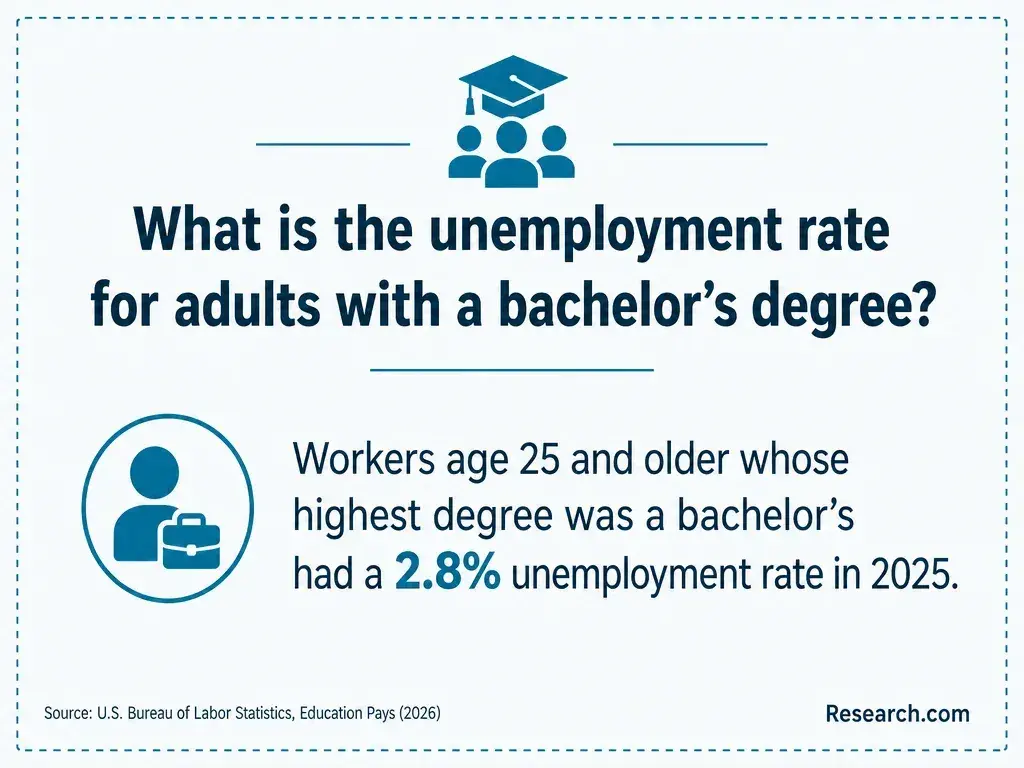
The U.S. Bureau of Labor Statistics reports that management occupations had a median annual wage of $126,520 in May 2025. That figure covers management occupations across industries; it is not the median for behavioral health intake staff, new healthcare administration graduates, or MBA holders. It is useful as broad management context, not as a personal earnings forecast.
BLS projects management occupations overall to grow faster than the average for all occupations from 2025 to 2035, with about 1.1 million openings annually on average from growth and replacement needs. Those openings span many management fields and do not establish demand for a particular behavioral health role.
For a job decision, compare local postings by title, setting, required experience, and supervisory scope; healthcare management careers and compensation factors can provide additional context without replacing local salary research.
Other Things You Should Know About Healthcare Administration
Use a fictional case unless the organization has explicitly authorized another approach. Removing a name alone may not adequately protect someone's identity, especially when circumstances are distinctive.
At minimum, the relevant operational lead, clinical lead, and privacy or compliance staff should review the parts within their authority. A classroom project is not an approved clinical protocol.
Run fictional cases through the workflow and record where the handoff stalls, which fields are unclear, and what you changed. This demonstrates reasoning without claiming a measured improvement in patient outcomes.
Bring a clean checklist, a one-page workflow map, and a brief explanation of your assumptions and testing. Be ready to identify what would need local policy and clinical review before implementation.
- Exploring its role during the mental health intake visit - PMC https://pmc.ncbi.nlm.nih.gov/articles/PMC2689076/
- Tool: Handoff | Agency for Healthcare Research and Quality https://www.ahrq.gov/teamstepps-program/curriculum/communication/tools/handoff.html
- Information Related to Mental and Behavioral Health, including Opioid Overdose | HHS.gov https://www.hhs.gov/hipaa/for-professionals/special-topics/mental-health/index.html
- Step 4 - Gather Credible Evidence | Program Evaluation https://www.cdc.gov/evaluation/php/evaluation-framework-action-guide/step-4-gather-credible-evidence.html
- eCFR:: 42 CFR Part 2 -- Confidentiality of Substance Use Disorder Patient Records https://www.ecfr.gov/current/title-42/chapter-I/subchapter-A/part-2
- Changes to Substance Use Disorder Confidentiality Regulations - Center for Health Care Strategies https://www.chcs.org/resource/changes-to-substance-use-disorder-confidentiality-regulations/
- Protecting Health Information | Focus: PHI https://coephi.org/protecting-health-information/
- Warm Hand-Offs: A NACo Opioid Solutions Strategy Brief https://www.naco.org/resource/osc-warm-hand-offs