2027 How to Become a Clinical Data Coordinator With a Healthcare Administration BS

Co-Founder and Chief Data Scientist
A healthcare administration bachelor's degree can prepare you to work with health data, but clinical data coordinator jobs often require more hands-on data and research experience than the degree alone provides. If you already have this BS - or are deciding whether to earn one - this guide explains what coordinators do, which skills employers may expect, and how to build a credible route into the field. It also covers online study, program costs, accreditation, certifications, and salary research so you can choose training that matches the jobs you want.
Key Things You Should Know
- A healthcare administration BS can qualify you to apply for clinical data coordinator roles, but employers may also look for experience with electronic data capture, data quality checks, and clinical research procedures.
- Match your preparation to the setting: research-trial data roles, hospital quality-data roles, and health information roles overlap but do not have identical requirements.
- There is no single national wage figure for the exact title "clinical data coordinator." The Bureau of Labor Statistics' $126,520 median for management occupations in May 2025 is not a coordinator salary benchmark.
What Does a Clinical Data Coordinator Do?
A clinical data coordinator helps ensure that health or research data are complete, consistent, and ready for review. In a clinical trial, that may mean tracking information entered into an electronic data capture (EDC) system, identifying missing or inconsistent entries, sending queries to the appropriate site staff, and documenting corrections. In a hospital or health system, a similarly titled job may focus instead on quality measures, registries, or reporting.
The distinction matters when you search for jobs. A clinical research coordinator may recruit participants and coordinate visits; a clinical data coordinator generally concentrates on the records those activities produce. Employers use titles differently, so read the duties rather than relying on the title alone. Data coordination can be a starting point for more specialized work, but explore higher-paying healthcare administration careers separately rather than assuming their pay or qualifications apply to this role.
How Do You Become a Clinical Data Coordinator With a Healthcare Administration BS?
Start with what your degree already offers: knowledge of healthcare organizations, privacy, operations, and reporting. Then compare that foundation with local job postings. A hospital registry opening may favor health-records experience, while a trial-data opening may emphasize EDC systems and research documentation.
Use the following sequence to turn a broad administration background into evidence that you can do the work:
- Choose a target setting - clinical trials, hospital quality, or a disease registry - and collect several relevant job descriptions.
- Identify the recurring gaps in your preparation, such as spreadsheet analysis, SQL, medical terminology, EDC workflows, or research procedures.
- Gain supervised experience through an internship, research office, quality department, registry team, or adjacent records role; document the data checks and reporting tasks you actually performed.
- Apply for coordinator and adjacent entry-level roles with a résumé that connects those tasks to each posting's requirements.
If you are still completing your degree, an associate degree or prior college credits could shorten the route - but confirm how major requirements transfer before enrolling. A guide to planning a healthcare administration bachelor's transfer can help you frame those questions for an admissions adviser. An MBA is not normally the most direct next step for an entry-level data role; practical data experience is usually the more immediate gap to address.
What Education and Training Does a Clinical Data Coordinator Need?
There is no universal degree or license for this job title. A healthcare administration BS may meet an employer's bachelor's-degree preference, but the best additional training depends on the records you will handle. The table separates three common routes so you can compare openings against your background.
| Target setting | Knowledge to build | Experience to look for |
| Clinical trials | Research documentation, data queries, EDC workflows, and applicable good clinical practice | Research office or trial-support work |
| Hospital quality or registry | Measure definitions, data validation, reporting, and clinical terminology | Quality improvement, registry, or analytics support |
| Health information | Health records, coding context, privacy, and data integrity | Medical records or health information work |
For roles centered on health information, compare your administration curriculum with CAHIIM-accredited health information management study options. That comparison is especially important if you might later pursue a credential tied to graduation from an eligible health information program. A general healthcare administration degree does not automatically meet those education rules.
Accreditation applies to an institution or an eligible program - not to a graduate's ability to practice clinical data coordination. Check that your college holds recognized institutional accreditation. Then investigate any program-level accreditation relevant to your goal: a healthcare administration program and a health information management program are different academic pathways, and employers or certification bodies may treat them differently.
For most clinical data coordinator postings, the practical question is whether your degree is accepted and whether you can demonstrate the requested data skills. Do not assume that a school's accreditation makes you eligible for a particular certification; check that credential's current rules directly. The same program-versus-institution distinction matters if you later consider an advanced degree: use an online healthcare administration doctoral program comparison to investigate individual programs, not as evidence that a doctorate is required for data coordination.
Healthcare administration bachelor's programs commonly address healthcare operations, finance, policy, ethics, information systems, and organizational management. Courses and their depth vary by school. Those subjects help you understand why organizations collect data and how reporting affects decisions, but they may not teach you to resolve trial-data queries or use an employer's EDC platform.
When comparing curricula, look for applied statistics, database or analytics work, health information courses, and a project or internship involving real workflows. Ask to see course descriptions rather than treating a broad "healthcare technology" label as proof of technical training. If your longer-term goal is managing a healthcare team rather than entering data operations, choosing a faster healthcare management master's program may eventually be relevant; it is not a substitute for the job-specific experience needed to enter clinical data coordination.
You can complete some healthcare administration bachelor's programs online and learn complementary skills through online coursework. You generally cannot assume that online study alone supplies the supervised experience an employer wants. Check whether a program requires an internship, whether you can arrange one locally, and whether its career support reaches remote students.
Online delivery also does not guarantee open scheduling. Ask about live meetings, group assignments, required visits, and course availability before committing - particularly if you work while studying. If start-date flexibility matters, review rolling start policies for online healthcare administration study and confirm the current schedule with each school. A remote degree can prepare you for the field, but it does not make the job itself remote.
Bachelor's admission requirements vary by institution and by whether you apply as a first-year or transfer student. Schools may request prior transcripts and evidence that you meet their general admission standards; some programs have separate major-entry requirements. Check the current admissions page and ask how transfer credits will apply to both general education and the major.
If you already hold a healthcare administration BS, you do not need to enroll in another bachelor's program just to apply for coordinator jobs. Consider a targeted course, employer training, or supervised project first. Graduate admission is a separate decision with different requirements: 12-month health administration graduate degree options are worth comparing only if their curriculum supports your longer-term goal, not merely because they can be completed quickly.
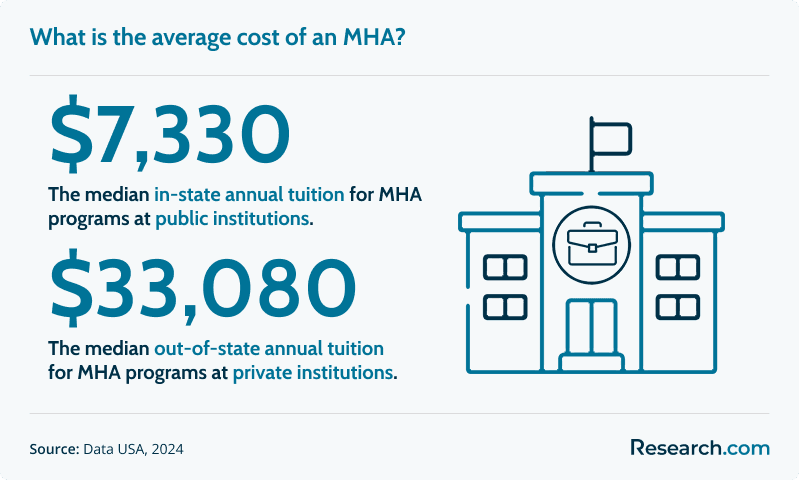
There is no reliable single price for this degree. The amount you pay depends on the school's tuition and fees, transfer-credit acceptance, enrollment pace, aid eligibility, and any internship-related expenses. Published tuition may be charged per credit or per term; neither figure alone is your total cost.
To compare offers, request a written estimate covering tuition, mandatory fees, books or software, remaining credits after transfer, and the likely time to completion. Then compare the estimated net cost after grants or employer assistance, not just the advertised rate. Cost-conscious choices for a healthcare administration degree can provide a starting shortlist, but verify current prices and your own aid package before deciding. If you already have the BS, compare the cost of another degree with the narrower training needed for the jobs you want.
Pay varies with employer, location, experience, and whether the work involves research trials, registries, or health-system reporting. The Bureau of Labor Statistics does not publish a wage series for the exact title "clinical data coordinator," so a salary for a broader occupation should not be presented as this job's typical pay. For perspective, the BLS reported a $126,520 median annual wage for all management occupations in May 2025; clinical data coordinator positions are not necessarily management jobs, making that figure unsuitable for estimating an entry-level offer.
For a useful estimate, compare salary ranges in current postings for the same duties and geographic market, then check whether the role requires prior trial or technical experience. Evaluate an education investment against a plausible position you could obtain - not the pay of a future leadership role. That caution also applies if you later review doctoral tuition in healthcare administration: an advanced degree's price and possible career outcomes do not establish what a coordinator will earn.
What Certifications Help Clinical Data Coordinators Advance?
A certification can signal relevant knowledge, but the right one depends on your work. Clinical research credentials from organizations such as ACRP or SOCRA may fit trial-focused professionals; eligibility can include documented work experience. Health information credentials, including RHIA or RHIT, follow their own education and examination rules. Check the issuing organization's current eligibility requirements before paying for preparation or an exam.
For a new graduate, first determine whether local employers request a credential or would value supervised EDC, registry, or quality-data experience more. A certificate course, professional certification, graduate degree, and doctorate are not interchangeable. Be particularly cautious about treating advertised fast healthcare administration doctorates as a shortcut into this occupation; they serve different educational and career goals.
Other Things You Should Know About Healthcare Administration
Some positions allow remote or hybrid work, but others require access to a hospital, research site, or on-site team. Confirm the location and any required site visits in each posting.
Not always. Spreadsheet skills and careful data review may matter more in some entry-level roles; others request SQL or experience with specific systems. Use your target postings to decide what to learn.
It depends on the employer. Many data-focused roles involve little patient contact, while positions that combine data and research coordination may include participant-facing duties.
Describe a class, internship, or work project in which you checked data quality, documented errors, or produced a report. Use synthetic or appropriately de-identified data in any public portfolio, and never publish protected patient information.
- Regulations: Good Clinical Practice and Clinical Trials | fda.gov https://www.fda.gov/science-research/clinical-trials-and-human-subject-protection/regulations-good-clinical-practice-and-clinical-trials
- Online Electronic Data Capture and Research... - PMC - NIH https://pmc.ncbi.nlm.nih.gov/articles/PMC6170092/
- Salaries: What You Can Expect to Earn | Duke Clinical and Translational Science Institute https://ctsi.duke.edu/career-development/education-and-workforce-development/entry-level-clinical-research-careers-0
- How to Become A Clinical Research Coordinator | American Military University https://www.amu.apus.edu/area-of-study/health-sciences/resources/how-to-become-a-clinical-research-coordinator/
- Should I Go Into the Field of Health Informatics? | University of San Diego Online Degrees https://onlinedegrees.sandiego.edu/should-i-go-into-the-field-of-health-informatics-8-points-to-consider/
- How to Build a Career Path in Clinical Data Management | ICON https://careers.iconplc.com/blogs/2024-11/how-to-build-a-career-path-in-clinical-data-management
- Beginner's Guide to an Electronic Data Capture (EDC) System | Advarra https://www.advarra.com/blog/beginners-guide-electronic-data-capture-edc-system/
- Senior Clinical Data Coordinator - Clinical Research https://jobs.hackensackmeridianhealth.org/job/paramus/senior-clinical-data-coordinator-clinical-research/19511/100825620688
- What Does a Clinical Data Manager Do in a CRO? | Quanticate https://www.quanticate.com/blog/what-does-a-clinical-data-manager-do
- Electronic Data Capture-Selecting an EDC System | Journal of the Society for Clinical Data Management https://www.jscdm.org/article/id/29/print/