2027 Designing a Same-Day Appointment Pilot for an MHA Project

Co-Founder and Chief Data Scientist
A same-day appointment pilot can look successful because the schedule is full while patients who need care still cannot get it. For an MHA student, the challenge is to test whether a scheduling change improves timely access without creating unsafe triage, excessive staff work, or unused capacity. This guide shows how to define the access problem, select a manageable pilot, measure demand and costs, and decide whether the change should continue. It is designed for students working with a real healthcare organization as well as those developing a proposed capstone project.
Key Things You Should Know
- Define same-day access by when a patient requests care and when an appropriate appointment is offered - not simply by how many slots the clinic labels "same-day."
- Pair an access measure with safety, patient-experience, and workload measures; a faster appointment is not an improvement if it displaces other patients or overwhelms staff.
- Start with one service line or visit type, establish a baseline, and agree in advance on the conditions for continuing, changing, or stopping the pilot.
What Is a Same-Day Appointment Pilot in Healthcare Administration?
A same-day appointment pilot is a limited test of a process that offers eligible patients an appropriate visit on the day they request care. The visit might be in person or by telehealth, depending on clinical suitability and organizational policy. "Same-day" describes the interval between request and appointment; it does not mean every request is clinically urgent or that every patient must see their usual clinician.
The pilot is an administrative and clinical collaboration. An MHA student may map scheduling steps, analyze demand, coordinate stakeholders, and evaluate results, but clinicians must determine triage rules and appropriate care settings. Students entering the field can explore graduate healthcare administration pathways for industry newcomers; regardless of prior experience, access projects require supervision and local operational knowledge.
A useful pilot has a defined site, eligible patient group, start and end dates, an accountable leader, and a comparison with usual scheduling. It is a test of whether a specific change works in that setting, not proof that the same design will work across an entire health system.
How Can an MHA Student Design a Same-Day Appointment Pilot?
Begin with a project charter that a clinic sponsor and clinical lead can approve. The sequence below keeps the intervention small enough to assess while making its limits explicit.
- Define the population and service: Specify the clinic, visit types, operating days, and requests eligible for same-day scheduling. Document exclusions that require clinical review.
- Write a testable aim: State the access measure to improve, the baseline period, the pilot period, and the safety and workload measures that must not deteriorate.
- Map the current process: Follow a request from phone call or portal message through triage, slot assignment, visit, and follow-up; identify who owns each handoff.
- Select one scheduling change: Test a defined number or release pattern of slots, a routing rule, or both rather than changing every clinic template at once.
- Agree on review and stop rules: Decide who examines results, how often the team can adjust the workflow, and which safety or staffing signals trigger an immediate review.
The deliverables can include a charter, process map, data dictionary, resource estimate, approved workflow, and evaluation memo. Students comparing accelerated healthcare administration degrees should confirm that a program's project timeline allows enough time for baseline measurement, organizational approvals, and follow-up; a short course calendar may support a proposal rather than a live pilot.
What Problem Should a Same-Day Appointment Pilot Solve?
Specify the access failure before reserving slots. A clinic might receive many requests that could be handled promptly but offers appointments days later. Another might have adequate appointments yet lose patients during telephone routing. Those problems call for different interventions.
Separate appointment supply from request handling. If patients cannot reach a scheduler, adding slots alone may have little effect. If urgent requests are routed inconsistently, a clinically approved triage process matters more than a larger same-day block. If capacity is already fully used, protecting slots for one group can lengthen waits for another.
Ask patients and staff where the delay occurs, then check their accounts against scheduling records. Define whose access matters: established patients, new patients, people seeking an acute visit, or patients needing a particular clinician. Students still choosing an education route can compare less expensive healthcare administration degree options, but the project question should remain the clinic's specific access problem rather than the student's degree pathway.
The primary measure should reflect the patient's experience from request to offer. This table distinguishes that outcome from measures that explain whether the pilot is working and whether it is creating unintended consequences.
| Measure | Working definition | Interpretation |
| Same-day offer rate | Eligible requests offered an appropriate appointment on the request date divided by all eligible requests | Primary access measure; count declined offers so patient preference is not confused with lack of supply |
| Completed same-day visit rate | Eligible requests resulting in a completed visit that day divided by all eligible requests | Shows realized access but also reflects patient availability and cancellations |
| Time to next available appointment | Interval from request to the next clinically appropriate offered slot | Checks whether protecting same-day slots worsens access for others |
| Slot utilization and unused releases | Reserved slots filled or released in time for another patient | Identifies capacity lost through an overly restrictive template |
| Balancing measures | Staff overtime, clinician overruns, triage escalations, complaints, and follow-up delays | Tests whether faster access shifts costs or risks elsewhere |
Define the request timestamp consistently across calls, portal messages, and in-person contacts. Keep a record of eligibility, offer, acceptance, visit type, and reason an offer was declined. Where data extraction is difficult, health information management expertise can help establish reliable definitions; CAHIIM-accredited degree pathways in health information management concern that distinct professional field, not a requirement for an MHA pilot.
Examine requests by day of week, time of day, visit type, clinician or care team, and channel. Compare those patterns with available appointments, cancellations, no-shows, and the time needed to prepare for each visit. Demand means requests for appropriate care, not just appointments that happened to be booked; otherwise, patients turned away disappear from the analysis.
Look for variation before choosing a slot policy. A fixed block held until closing may leave capacity unused, while releasing it too early may defeat the same-day purpose. Ask whether short visits can safely use the same slots as complex visits and whether telehealth is clinically and operationally suitable. Review patterns with schedulers and clinicians, who can explain exceptions that raw timestamps cannot.
Students developing these analytical skills through an associate-to-bachelor's route may find understanding healthcare administration articulation and transfer options useful for education planning. For the pilot itself, the essential skill is to distinguish measured demand from the demand a clinic's current process fails to record.
The best workflow change targets the bottleneck found in the baseline. Before launch, give schedulers and clinicians one written process that covers requests arriving through every channel.
- Routing: Use clinician-approved criteria to direct symptoms needing urgent assessment away from routine scheduling and identify visits eligible for the pilot.
- Slot management: Set who may book protected slots, when unfilled slots are released, and how cancellations return to the available pool.
- Continuity: State when the patient should see their usual care team and how another clinician will receive the necessary record and send follow-up information.
- Communication: Give patients a clear offer, location or connection instructions, and alternatives if the same-day option does not meet their needs.
- Escalation: Identify a named clinical decision-maker when symptoms, visit length, or scheduling eligibility are unclear.
Train staff on exceptions as well as the standard path, then test the process with realistic request scenarios. If staff need broader preparation to move from scheduling into administrative roles, flexible start dates for healthcare administration bachelor's study may help with education planning; they do not replace clinic-specific workflow training.
Compare the pilot with the existing schedule, not with an imaginary cost-free alternative. A same-day slot that replaces a routinely filled appointment has a different cost from one created by recovering previously unused capacity. Review staffing, clinician time, technology changes, and the effect of released or unfilled slots.
Track incremental expenses such as scheduler training, configuration work, overtime, and additional clinical coverage. Also track potential offsets, including appointments recovered from cancellations; do not assume that more completed visits automatically produce positive net revenue. Payer contracts, visit mix, staffing arrangements, and billing rules affect the financial result.
An MHA student should present a range of plausible resource scenarios if local cost figures are unavailable, labeling assumptions rather than inventing a return on investment. When education cost is part of the student's own decision, budget-friendly graduate study in healthcare administration is a separate comparison from whether this clinic can afford the pilot.
Same-day scheduling must not become an informal substitute for clinical triage. A licensed clinical lead should approve symptom escalation criteria, visit eligibility, telehealth suitability, and the process for patients who need a different care setting. Administrative staff should know when to stop scheduling and obtain clinical guidance.
Protect patient information in appointment messages, shared work queues, reports, and student-accessible datasets under the organization's privacy and security policies and applicable law, including HIPAA where relevant. Check accessibility and language-assistance processes so patients are not excluded because they cannot use a portal or communicate easily by phone. Obtain the organization's determination about required approvals and whether the activity is quality improvement or research; a student should not make that determination alone.
Advanced study does not confer authority to approve clinical or legal safeguards. Even administrators considering cost-conscious doctoral education for healthcare administrators need the organization's clinical, privacy, and compliance reviewers for this work.
Compare the pilot with the baseline using the same eligibility rules, request channels, and measure definitions. Display results over time rather than relying only on a before-and-after total: a brief improvement followed by unused slots tells a different story from sustained access. Note changes in staffing, seasonality, clinician availability, or patient mix that could explain the pattern.
Review the primary access measure alongside completed visits, next-available appointments, patient feedback, triage escalations, and staff workload. Segment results where feasible to see whether one request channel or patient group benefited while another lost access. Small pilots may not establish a causal effect; describe what the observed results support and what remains uncertain.
End with a decision memo: continue the workflow, modify the slot or routing rule and retest, or stop. Include implementation problems and missing data, not just favorable outcomes. A capstone-quality evaluation is a bounded operational assessment, not automatically doctoral research; students planning further study can review healthcare administration doctorate schedules before applying rather than treating a short pilot as a substitute for a doctoral research plan.
How Can a Same-Day Appointment Pilot Support Healthcare Administration Careers?
A well-documented pilot can demonstrate skills relevant to ambulatory operations, access management, quality improvement, and healthcare project management: defining a problem, aligning clinical and administrative stakeholders, working with imperfect data, assessing resources, and recommending a defensible next step. In an interview, explain your own contribution and the limits of the results rather than claiming credit for a clinic-wide outcome.
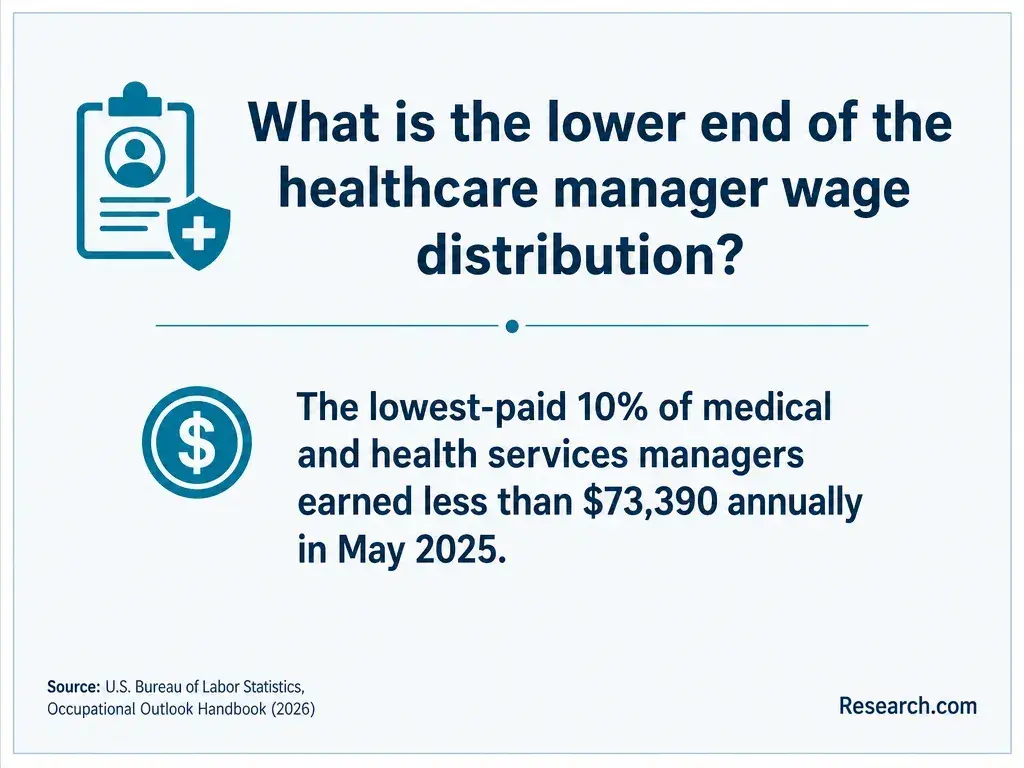
An MHA is specialized management preparation, not a clinical license or a guarantee of an operations leadership role. Prior healthcare experience and responsibility for implementation matter. For salary context, the U.S. Bureau of Labor Statistics reports a $126,520 median annual wage for management occupations in May 2025. That figure covers management jobs broadly; it is not the salary of MHA graduates or a forecast for a student completing this project.
For a student seeking an initial healthcare operations role, a strong pilot portfolio and relevant work experience may be more useful immediately than another credential. Established leaders considering later study can review accelerated healthcare leadership doctorate formats, but should compare the time and expense with the specific leadership or research responsibilities they want to pursue.
Other Things You Should Know About Healthcare Administration
Yes. A proposal can use a process map, approved aggregate data, stakeholder interviews, and a prospective measurement plan. Do not present projected results as observed outcomes.
Not necessarily. The clinic should decide when continuity is clinically important and how another clinician will receive relevant information and communicate follow-up.
No. Follow the healthcare organization's review process and the school's requirements. The applicable determination depends on the project's design and intended use.
Document the gap and propose a consistent way to capture requests before claiming an access improvement. A small prospective log may be more credible than an incomplete historical extract.
- Informed Consent FAQs | hhs.gov https://www.hhs.gov/ohrp/regulations-and-policy/guidance/faq/informed-consent/index.html
- Improving Patient Outcomes Through Effective Hospital... - PMC https://pmc.ncbi.nlm.nih.gov/articles/PMC10676194/
- Testing New Ways to Schedule Appointments at Community Health Centers to Help Patients Access Care - NCBI Bookshelf https://www.ncbi.nlm.nih.gov/books/NBK613089/
- Strategy 6A: Open Access Scheduling for Routine and Urgent Appointments | Agency for Healthcare Research and Quality https://www.ahrq.gov/cahps/quality-improvement/improvement-guide/6-strategies-for-improving/access/strategy6a-openaccess.html
- From Pilots to Practice: Speeding the Movement of Successful Pilots to Effective Practice - NAM https://nam.edu/perspectives/from-pilots-to-practice-speeding-the-movement-of-successful-pilots-to-effective-practice/
- 6.2 Quality Improvement Measures | University of West Florida Pressbooks https://pressbooks.uwf.edu/nursingleadership/chapter/9-3-measuring-and-improving-quality/
- What is an MHA Degree and Who Should Pursue One? | Cornell Brooks Public Policy https://publicpolicy.cornell.edu/masters-blog/what-is-an-mha-degree-and-who-should-pursue-one/
- UCLA Online MHA Capstone Projects Spring 2025 - ExecHPM https://www.exechpm.ucla.edu/ucla-online-mha-capstone-projects-spring-2025/
- What can I do with an MHA? - Arnold School of Public Health | University of South Carolina https://sc.edu/study/colleges_schools/public_health/departments/hspm/students/what-can-i-do-with-an-mha.php
- What Is an MHA? A Guide for Healthcare Professionals | UIC https://healthcareadministration.uic.edu/news-stories/what-is-an-mha/