2027 A Rural Clinic Referral Directory: An Undergraduate Healthcare Administration Case Study

Co-Founder and Chief Data Scientist
A rural clinic may know which specialists serve its region yet still struggle to find one who accepts a patient's insurance, offers a workable appointment, and can receive the referral. A referral directory project turns that operational problem into an undergraduate healthcare administration case study. This guide explains what students should build, what the exercise teaches, and how to judge degrees that prepare them for similar work. It is for prospective students and early-career professionals deciding whether an undergraduate program - or later graduate study - fits their goals.
Key Things You Should Know
- A useful referral directory records verified access details and an update owner; a list of specialist names alone will not solve the clinic's referral problem.
- An undergraduate project can demonstrate operations, data-quality, and patient-access skills without qualifying a student to make clinical referral decisions.
- The Bureau of Labor Statistics reports a $126,520 median annual wage for all management occupations in May 2025 - not an entry-level healthcare administration salary.
What Is a Rural Clinic Referral Directory Case Study in Healthcare Administration?
It is an applied project in which students design or improve a clinic's process for finding appropriate referral destinations. The deliverable might be a controlled spreadsheet, a database prototype, or a workflow specification. Its value lies less in the software than in whether staff can trust the information and keep it current.
Consider a hypothetical clinic whose staff repeatedly call distant specialty practices to check appointment availability. A student team could define required fields - specialty, location, referral method, insurance participation, telehealth availability, accessibility information, verification date, and contact owner - then test how staff would use them. These are project design choices, not a real clinic's measured results. Clinical staff, not students or the directory, decide whether a referral is medically appropriate.
The directory is an administrative access tool, not a patient record. That distinction also helps students exploring understanding healthcare administration and HIM degree distinctions: administrators improve workflows, while health information management programs place greater emphasis on health data and records practices.
Why Is Rural Healthcare Administration Important for Patient Referrals?
Distance, limited local specialty availability, transportation, insurance rules, and unreliable contact information can each interrupt a referral. An administrator cannot remove every barrier, but can make the handoff more dependable: define who checks a destination, how staff transmit information, when they follow up, and what happens if an appointment cannot be secured.
A directory is therefore only one part of referral management. Students should examine the workflow around it, including patient preferences, the receiving practice's requirements, and escalation to an appropriate clinician when a referral stalls. For someone interested in leading these processes across multiple sites, online Master of Health Administration programs are a possible later step; an undergraduate project is a better starting point for testing interest than assuming a graduate degree is immediately necessary.
What Degree Do You Need to Work in Healthcare Administration?
There is no single degree requirement for every healthcare administration job. Entry-level coordinator and operations-support roles may be accessible with an associate or bachelor's degree, depending on the employer and the applicant's experience. Management roles commonly call for a bachelor's degree plus relevant work experience; more complex leadership roles may favor graduate preparation. None of these degrees grants a clinical license.
A bachelor's in healthcare administration or health services administration directly addresses operations, policy, finance, and organizational management. A business or public health degree can also be relevant when paired with healthcare experience. Students with prior credits can investigate accelerated bachelor's study in health services administration, but should confirm which credits transfer and whether an accelerated schedule leaves room for meaningful fieldwork.
Later, an MHA may suit someone committed to healthcare operations, while an MBA offers a broader management core and may include healthcare electives or a formal concentration. A doctorate is generally a different decision, oriented toward advanced leadership, teaching, or research rather than entry into referral coordination. Compare that goal carefully before considering doctoral program selection in healthcare management.
The strongest project teaches students to separate a directory that looks complete from one staff can use reliably. To do that, a team needs a repeatable process:
- Define the referral problems with clinic staff and identify which decisions belong to licensed clinicians.
- Agree on required fields, permitted information sources, verification methods, and an owner for each update.
- Check a sample of entries with receiving practices and record when each detail was confirmed.
- Have staff test realistic scenarios, including an unavailable specialist or an insurance mismatch, then revise the workflow.
Students can assess whether entries remain current and whether staff can identify a usable next step; they should not claim that the directory improved patient outcomes without appropriate evidence. Nor should a class project become an unmaintained tool on which a clinic depends. A graduate-level evaluation might study referral outcomes more rigorously, but that is a different scope from an undergraduate case study. Readers interested in that distinction can compare online doctoral completion pathways in healthcare administration.
Look for courses that connect healthcare operations with data and decision-making: healthcare systems, medical terminology, health information practices, quality improvement, organizational behavior, accounting, and introductory statistics. A rural health or population health course adds context, but an applied project or internship may show more clearly whether students can handle a real clinic workflow.
Students considering graduate business study should distinguish its purpose. An MBA's finance, leadership, and operations core can help an experienced administrator manage resources; it does not replace training in referral rules, health data practices, or clinical judgment. Accelerated graduate business study for healthcare management makes more sense after confirming that its pace and healthcare coursework support a specific career goal.
Either format can prepare students for administrative work if the curriculum is sound and students can practice applying it. The important comparison is access to supervised projects, local internships, instructor feedback, and collaboration - not delivery mode alone. An online student near a rural clinic may have a particularly relevant local project; another may need to arrange one independently.
Ask whether classes have live attendance requirements, how group work is scheduled, and whether the program helps students secure field placements where they live. Frequent entry points may help with scheduling, but choosing a healthcare administration program around its start dates should not take priority over placement support or total cost.
Requirements vary by degree and institution. Bachelor's applicants generally need to document prior schooling; transfer applicants should request an individual credit evaluation. Graduate applicants typically need a bachelor's degree and may also face program-specific experience, statement, recommendation, or prerequisite requirements. Do not assume that a healthcare job, a business major, or a test score is universally required.
Before applying, ask admissions staff which prior courses transfer, whether the program requires an internship, and whether placement can be completed near home. If graduate study is the objective, compare those answers with the requirements for an MHA or MBA rather than treating the credentials as interchangeable. An applicant considering an online MHA program should verify its current admissions policy directly with the school.
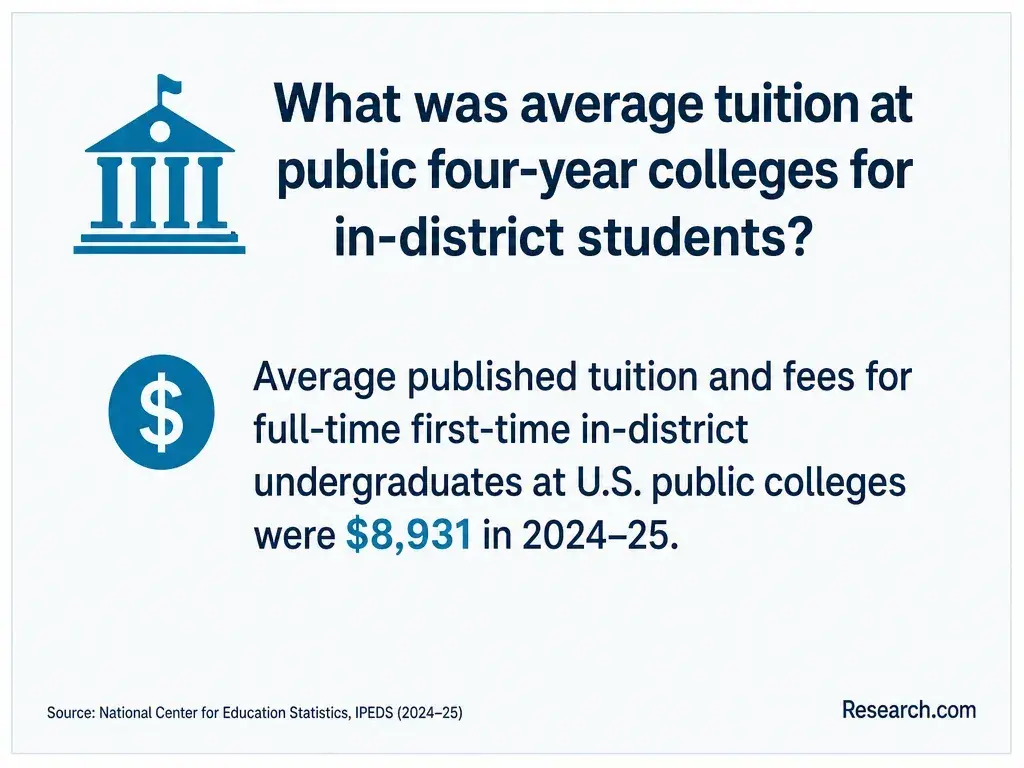
There is no responsible single price or completion time: both depend on institution, residency-based tuition rules, transfer credits, enrollment pace, and degree level. A bachelor's student entering with substantial accepted credit may finish sooner than a first-time student; an accelerated calendar does not necessarily mean less work. Graduate costs also differ substantially between programs.
Compare the full expected cost, not the advertised tuition rate. Include mandatory fees, books or software, any travel for fieldwork, and the effect of studying less than full time on living expenses and financing. Request a written estimate based on your accepted credits and planned course load, then compare tuition for online healthcare administration degrees using the same assumptions. Employer assistance or transfer credit can change the decision more than a headline per-credit price.
Possible starting points include referral coordinator, patient access coordinator, practice operations assistant, and quality or program support roles. Responsibilities vary: one job may emphasize scheduling and insurance checks, while another focuses on reports, vendor information, or process improvement. A graduate with clinic experience may be better positioned for supervisory work than someone whose only exposure was a classroom project.
The Bureau of Labor Statistics reports a median annual wage of $126,520 for all management occupations in May 2025. That figure covers many industries and experienced roles; it is not a salary expectation for a new healthcare administration graduate. The BLS also projects about 1.1 million annual openings across management occupations from 2025 to 2035, which likewise cannot be treated as openings specifically for rural healthcare administrators.
After gaining responsibility for budgets, teams, or multiple sites, some professionals consider an MHA or MBA. Compare the cost of economical online MBA options in healthcare management against a credible next role and any employer support; a degree alone will not create a management vacancy or substitute for operational experience.
Which Accreditation and Certifications Matter in Healthcare Administration?
First, verify that the institution holds recognized institutional accreditation; this matters for academic quality review and can affect credit transfer and aid eligibility. Then check program-level recognition rather than assuming every healthcare administration degree has the same accreditation. CAHME evaluates eligible graduate healthcare management programs, not every undergraduate major or MBA. Prospective MHA students can review CAHME-accredited MHA degree programs and verify a program's current status with the accreditor.
Certifications can demonstrate particular skills, but most entry-level referral directory work does not require a universal healthcare administration certification. If an employer names a credential, check its eligibility rules and whether the associated training addresses the job. For an undergraduate applicant, relevant experience and a well-executed, maintainable project may be more useful than collecting unrelated credentials.
Other Things You Should Know About Healthcare Administration
It can record the lead as unverified, but staff should not treat it as an available referral destination until they confirm the details needed for that patient.
Not without the clinic's authorization and appropriate privacy safeguards. A simulated workflow or approved, de-identified information is often a better starting point.
No. Suitability, connectivity, coverage, and where the patient is located during care can all matter. Staff should verify the receiving service's current requirements.
The clinic should assign an accountable staff owner and a review process before adopting it. If it cannot maintain the information, the project should remain a prototype rather than become a live referral resource.
- Find Healthcare Providers: Compare Care Near You | Medicare https://www.medicare.gov/care-compare/
- Building a Reliable National Provider Directory - Lessons From Other Sectors - PMC https://pmc.ncbi.nlm.nih.gov/articles/PMC12774433/
- Screening and Referral Care Delivery Services and Unmet Health-Related Social Needs: A Systematic Review | cdc.gov https://www.cdc.gov/pcd/issues/2021/20_0569.htm
- Summary of the HIPAA Privacy Rule | hhs.gov https://www.hhs.gov/hipaa/for-professionals/privacy/laws-regulations/index.html
- High-value referrals | who.int https://iris.who.int/server/api/core/bitstreams/3ea58f50-7068-4cb5-8f54-a17dbcdeaace/content
- Rural Access to Health Care Services Request for Information | HRSA https://www.hrsa.gov/rural-health/rfi-rural-health-care-access
- Find a Mental Health Program - NY. Gov https://my.omh.ny.gov/bi/pd
- A Look at Rural Hospital Closures and Implications for Access to Care: Three Case Studies | KFF https://www.kff.org/medicaid/a-look-at-rural-hospital-closures-and-implications-for-access-to-care/
- Healthcare Access in Rural Communities Overview | Rural Health Information Hub https://www.ruralhealthinfo.org/topics/healthcare-access
- Mental Health Providers | countyhealthrankings.org https://www.countyhealthrankings.org/health-data/community-conditions/health-infrastructure/clinical-care/mental-health-providers