2027 MHA Programs With Healthcare Supply Chain Analytics

Co-Founder and Chief Data Scientist
Hospitals need reliable supplies without tying up resources in excess inventory, and better data can help leaders balance cost, availability, and patient care. If you want to work on those decisions, an MHA may offer useful management preparation - but not every program teaches supply chain analytics in meaningful depth. This guide explains how to identify relevant coursework and applied projects, compare online and campus options, assess costs and career fit, and decide whether an MHA or a more technical credential is the better investment.
Key Things You Should Know
- Look beyond an MHA's name: confirm that its current catalog includes supply chain or operations coursework, analytics tools, and a healthcare-focused applied project.
- Check institutional accreditation and whether the specific MHA program holds Commission on Accreditation of Healthcare Management Education (CAHME) accreditation; neither establishes that supply chain analytics is a formal concentration.
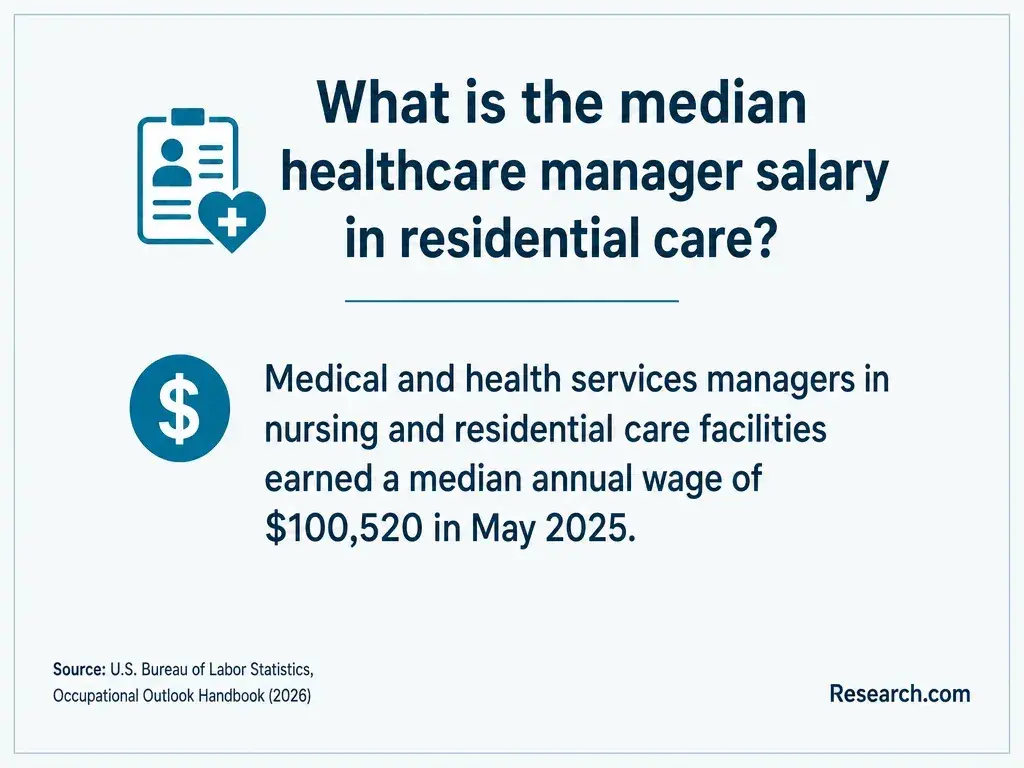
- The U.S. median annual wage for management occupations was $126,520 in May 2025, but that broad figure is not an MHA graduate salary or a forecast for supply chain roles.
What are MHA programs with healthcare supply chain analytics?
A Master of Healthcare Administration (MHA) prepares students to manage healthcare organizations. A program with healthcare supply chain analytics adds opportunities to use purchasing, inventory, utilization, and financial data to improve how supplies move from vendors to care teams. The subject may appear as a formal concentration, a course, an elective cluster, or a capstone topic; those are not equivalent credentials.
The distinction matters when comparing schools. An MHA centered on leadership and finance may suit an experienced hospital operations professional, while an applicant seeking hands-on forecasting or database work may need deeper technical study. Healthcare administration also differs from health information management (HIM), which focuses more directly on health data and information systems; a comparison of healthcare administration versus HIM curriculum and career options can help clarify that choice.
Which accreditation should you look for in an MHA program?
First, confirm that the university holds recognized institutional accreditation. Then check whether its specific MHA program is accredited by CAHME, the specialized accreditor for healthcare management education. A university's accreditation does not mean every degree has specialized accreditation, and CAHME accreditation does not certify a supply chain analytics concentration.
Verify both statuses in the relevant accreditor's directory, including the program's name and delivery format, rather than relying on an older advertisement. If you are beginning with undergraduate study, guidance on choosing an accredited university for healthcare administration study covers the earlier degree level; recheck accreditation separately when selecting a graduate program.
What careers can MHA graduates pursue in healthcare supply chain analytics?
Career fit depends heavily on what you have already done. A hospital purchasing specialist may use an MHA to pursue broader operations responsibility; an analyst from another industry may first need experience with clinical stakeholders, healthcare procurement, and product standardization. The degree alone does not confer a managerial title or substitute for technical proficiency.
The following roles show how management and analytics responsibilities differ. Job titles and qualifications vary by employer.
| Potential role | Typical focus | Experience that strengthens a candidacy |
| Healthcare supply chain analyst | Tracks spending, inventory, utilization, and supplier performance | Data analysis and familiarity with healthcare purchasing data |
| Materials or inventory manager | Oversees stock availability, workflows, and staff | Inventory operations and people management |
| Strategic sourcing or procurement manager | Evaluates vendors, contracts, and product categories | Contracting, negotiation, and clinical collaboration |
| Healthcare operations leader | Connects supply decisions with budgets, service lines, and organizational goals | Cross-functional leadership and demonstrated operational results |
Professionals aiming instead for research-intensive or senior academic paths should compare healthcare management research and professional doctorates with an MHA. A doctorate serves a different purpose and is not a routine requirement for the roles above.
The MHA core commonly addresses healthcare finance, quality, policy, leadership, and operations. For this career goal, the differentiating coursework concerns sourcing, inventory, demand forecasting, cost analysis, and communicating findings to clinical and financial leaders. Course titles alone cannot establish technical depth: a class that interprets dashboards differs from one requiring students to clean data and build forecasts.
Ask for recent syllabi and examples of capstone or practicum work. A useful project might examine stockouts alongside carrying costs, while accounting for patient safety and clinician preferences. Also check which software students actually use and whether an employer-based project is permitted. Applicants still completing undergraduate preparation can consider shorter healthcare administration bachelor's pathways, but a bachelor's program should not be mistaken for graduate-level analytics training.
Neither format is inherently better. Online study can let a working supply chain professional apply assignments at their current organization. Campus study may make in-person collaboration or local employer engagement easier. In either format, the stronger option is the one that provides the relevant coursework, accessible instruction in analytics tools, and a feasible applied project.
Before choosing online study, ask whether classes are asynchronous, when live sessions occur, how group work is scheduled, and whether a practicum or campus visit is required. "Online" does not necessarily mean self-paced. If affordability determines whether you can enroll, compare online healthcare management degrees with lower tuition alongside their curriculum and required in-person commitments.
Requirements vary by institution. Applicants generally need a bachelor's degree and may be asked for transcripts, a résumé, recommendations, and a statement of purpose. Schools set their own policies on professional experience, prerequisite coursework, interviews, and GRE or GMAT scores; do not assume a test waiver or a healthcare-experience requirement applies everywhere.
A nonhealthcare applicant should connect existing experience - such as logistics, finance, analytics, or team leadership - to a specific healthcare goal, then identify gaps in clinical operations or healthcare terminology. Some MHA programs open to applicants with other professional backgrounds may offer a viable entry point, although admission and subsequent hiring are separate hurdles. Check each program's current requirements before spending time or money on an application.
Completion time depends on required credits, course sequencing, enrollment pace, and any practicum or capstone. Full-time study is usually faster than part-time study, but an analytics elective offered infrequently can extend the timeline. Ask schools for a sample schedule that includes every course you want - not just the shortest advertised path through the general MHA.
Accelerated 12-month health administration graduate degree options may appeal if you can sustain the workload. Confirm that a shorter schedule still permits the supply chain coursework and practical experience you need; speed alone is not evidence of career fit.
There is no single reliable price for this category: tuition may be charged per credit or by term, and required credit loads differ. Calculate the cost from the current tuition schedule and your planned enrollment pattern, then add mandatory fees, materials, software, and any travel or practicum expenses. A tuition-only figure understates the amount you may pay.
For an apples-to-apples starting point, use resources for comparing costs of healthcare administration master's degrees, then confirm each figure with the school. Ask whether relevant electives carry extra fees, whether employer assistance applies to part-time enrollment, and how borrowing would change your total repayment cost. A less expensive general MHA may offer poorer value if it lacks the analytics training central to your goal.
Pay varies with the role, employer, location, and prior experience. The U.S. Bureau of Labor Statistics reports a $126,520 median annual wage for management occupations in May 2025. That is a broad occupational benchmark, not the median for healthcare supply chain analysts, MHA alumni, or newly promoted managers; an analyst role and a department leadership role should not be evaluated against the same pay expectation.
For a personal return-on-investment estimate, compare local postings for roles you could plausibly obtain with your current experience, then weigh a realistic compensation change against program cost and time. Additional degrees do not automatically produce higher earnings. If a later doctorate is part of your plan, review healthcare administration doctorate schedules before applying so that its separate time commitment is not folded into an optimistic MHA payback estimate.
Which certifications complement an MHA in healthcare supply chain analytics?
A certification is most useful when it addresses a specific gap. Supply chain credentials can demonstrate procurement or inventory knowledge; analytics training can strengthen spreadsheet, SQL, visualization, or forecasting skills. Healthcare-specific certifications may be more relevant once you have the experience their issuing organizations require. Check eligibility, exam content, renewal obligations, and employer recognition before enrolling.
For someone already managing healthcare supplies, a focused credential and a documented improvement project may be more direct than another degree. Conversely, a professional seeking broad organizational leadership may benefit more from an MHA than from a narrow tool certificate. A doctorate is a substantially different commitment; a healthcare leadership doctoral program timeline comparison can help distinguish that longer path from targeted professional development.
Other Things You Should Know About Healthcare Administration
Supply chain and analytics roles generally do not require a clinical license. Employers may nevertheless value experience working with clinicians and understanding how supply decisions affect care.
Possibly, if the program approves the project and the employer permits data use. Confirm confidentiality, data-access, and project-supervision rules before relying on this option.
No. Many analytical methods transfer, but healthcare work adds clinical-product requirements, care continuity, and coordination with clinicians to the decision.
Identify transferable purchasing or analytics work, learn basic healthcare supply workflows, and build a project that shows how you evaluate cost without overlooking availability or patient care.
- | Agency for Healthcare Research and Quality https://www.ahrq.gov/
- Supply chain management and health services research - PMC https://pmc.ncbi.nlm.nih.gov/articles/PMC8928015/
- Supply Chain Management - Lehigh Catalog https://catalog.lehigh.edu/coursesprogramsandcurricula/businessandeconomics/supplychainmanagement/
- Admissions | Big Data Analytics | Arts & Letters | SDSU https://big.sdsu.edu/admissions
- Stony Brook | online MHA - Program in Public Health https://publichealth.stonybrookmedicine.edu/mha
- Master of Healthcare Administration MHA | Suffolk University https://www.suffolk.edu/business/degrees-programs/healthcare-administration/graduate/mha
- Prerequisites | Master of Science in Analytics https://analytics.ncsu.edu/admissions/prerequisites/
- Know the Difference Between In-Person, Online, Virtual & Hybrid Classes | Pima Community College, Tucson, Arizona https://www.pima.edu/news/announcements/general-announcements/types-of-classes.html
- Supply Chain Analytics (Certificate) - UNL Graduate Studies https://graduate.unl.edu/academics/programs/SCAN-GCER/
- 4.1.21 Instructional Modalities and Distance Education | Illinois State https://policy.illinoisstate.edu/academic/4-1-21