2027 Healthcare Partnerships Director: Assessing MHA Career Fit

Co-Founder and Chief Data Scientist
Healthcare partnerships directors turn relationships among providers, payers, community organizations, and other partners into workable agreements. If you are considering that role, the key decision is whether a Master of Health Administration (MHA) would close a real gap in your experience - or add expense without changing your prospects. This guide explains the work, the background employers may value, and how MHA programs compare with other paths. It also puts salary and job-outlook figures in context so you can judge both career fit and the value of further education.
Key Things You Should Know
- An MHA can strengthen healthcare finance, operations, and leadership skills, but partnerships director roles generally also call for a record of building relationships and delivering results.
- The Bureau of Labor Statistics reports a $126,520 median annual wage for all management occupations in May 2025 - not a salary estimate for healthcare partnerships directors.
- Choose an MHA for a specific skills or career-access gap; compare its full cost and practical opportunities with an MBA, targeted training, or advancement through work experience.
What Does a Healthcare Partnerships Director Do?
A healthcare partnerships director develops and manages relationships that help an organization meet clinical, operational, or community goals. Depending on the employer, partners might include physician groups, hospitals, insurers, employers, technology vendors, or social-service organizations. The title is not standardized: one position may emphasize referral relationships, while another centers on strategic alliances or community health initiatives.
The work typically combines identifying prospective partners, assessing mutual goals, negotiating arrangements with legal and compliance teams, coordinating implementation, and monitoring results. A director might track referral access, service use, contract performance, or patient experience. Because healthcare information is sensitive, partnership plans may also require close review of privacy, data-sharing, and other applicable rules.
This is a relationship-and-execution role, not a clinical license or a health data engineering job. If data systems interest you more than negotiating and managing alliances, online CAHIIM-accredited health information management programs address a different professional focus. A partnerships director still needs enough data literacy to question a proposed metric and work effectively with technical colleagues.
Is a Healthcare Partnerships Director Career a Good Fit?
The strongest fit is often someone who already knows how to influence people outside their reporting line and can show what happened after an agreement was signed. Experience in provider relations, business development, care coordination, payer contracting, community engagement, or healthcare operations can transfer well. A move from another industry is possible, but it may first require learning how healthcare organizations make decisions and measure outcomes.
Look closely at the kind of partnership work you want. If you enjoy opening doors but dislike maintaining agreements, a director role may feel more operational than expected. If you prefer internal process improvement to external negotiation, healthcare operations leadership may be a better target. Ask employers whether success means generating new agreements, improving existing ones, expanding access to care, or meeting revenue goals; those answers describe substantially different jobs.
For someone without a bachelor's degree, completing that foundation may be a more immediate step than planning for an MHA. Accelerated healthcare management undergraduate programs are one option to examine, but confirm how their schedule fits your job and whether relevant work experience can be gained alongside study.
What Education Is Required for Healthcare Partnerships Directors?
There is no single degree or license that qualifies someone to be a healthcare partnerships director. Employers set their own requirements, and relevant professional results may matter as much as a graduate credential. A bachelor's degree in healthcare administration, business, public health, communications, or another field can provide a starting point; the more important question is whether the candidate understands the partnerships being managed.
An MHA is most directly aligned with leadership inside healthcare organizations. An MBA may make more sense for someone seeking broader commercial strategy or business development roles across industries, especially if it offers meaningful healthcare coursework. A Master of Public Health may better suit partnership work focused on population health or public programs. None replaces experience with negotiation, implementation, and stakeholder management.
Applicants still completing their first degree can review undergraduate healthcare administration options at accredited universities. Those who already hold a bachelor's degree should examine actual director job postings before paying for another qualification: note which requirements recur and which can be met through a project or a move into an adjacent role.
An MHA can help a partnerships professional understand the organization behind the agreement: how services are financed, how operations affect capacity, and why a promising alliance may fail during implementation. That knowledge is useful when proposing arrangements that clinical, finance, legal, and operations teams can support. It does not, by itself, demonstrate that you can win a partner's trust or manage a difficult negotiation.
The best degree choice depends on the gap you need to close. This comparison distinguishes what each path may contribute to partnerships work; individual curricula vary.
| Education path | Potential value for partnerships work | Key limitation to check |
| MHA | Healthcare operations, finance, policy, and organizational leadership | May offer limited direct practice in alliance development or sales |
| MBA | General management, strategy, finance, and commercial decision-making | Healthcare-specific content may be limited |
| Master of Public Health | Population health, evaluation, and public or community partnerships | May be less focused on provider operations or commercial agreements |
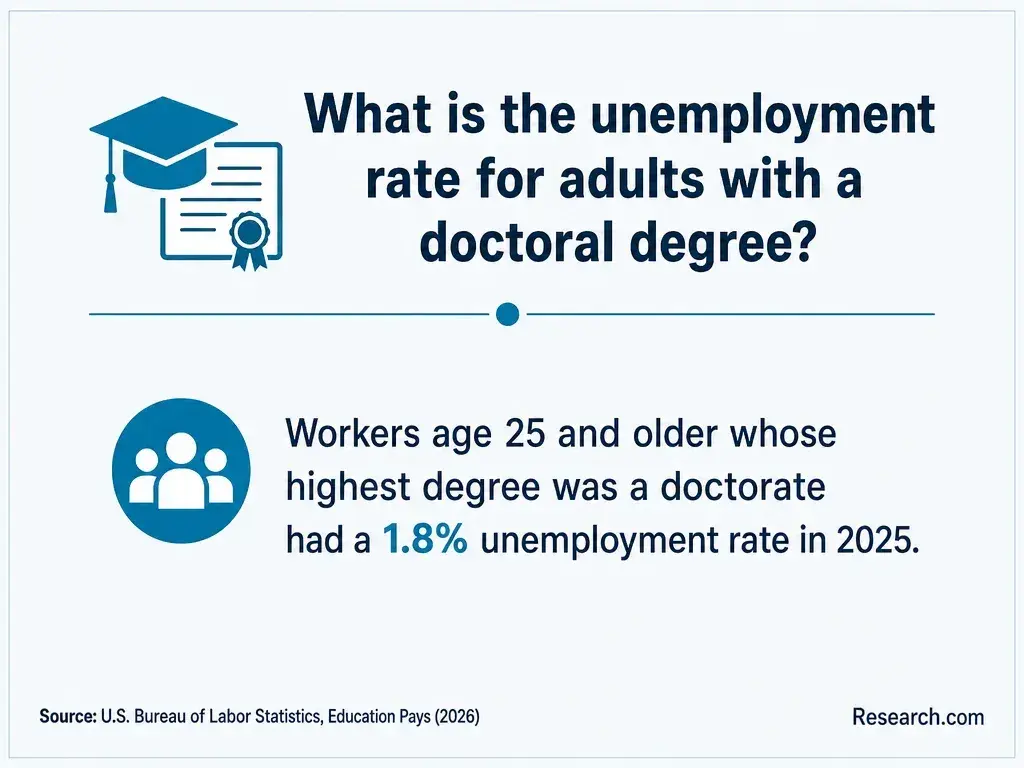
If you already lead healthcare partnerships and seek broader executive or research responsibilities, a doctorate is a separate decision - not the standard entry route for this job. An online healthcare administration doctoral program comparison may help at that later stage, but first establish whether the roles you want actually call for doctoral study.
MHA coursework commonly addresses healthcare finance, organizational leadership, operations, policy, quality, and strategic planning. For a future partnerships director, the value lies in applying those subjects together: assessing whether a proposed collaboration is financially workable, operationally feasible, and consistent with an organization's responsibilities to patients.
Do not assume that every program offers a partnerships course or substantial negotiation practice. Review the course descriptions and ask how students apply learning through projects, internships, practicums, or work-based assignments. A useful project might require evaluating a proposed partnership and explaining how its outcomes would be measured. The availability and format of such work depend on the program.
Accreditation is another distinction worth checking. Institutional accreditation concerns the university; specialized programmatic accreditation concerns a particular field or program. If that matters to your employers or goals, a guide to selecting an online CAHME-accredited graduate program can help you narrow your questions. Verify the accreditation status of the specific program and delivery option rather than assuming it applies to every degree at the school.
Neither format is automatically better. An online MHA may let an employed professional apply coursework to current partnership projects without leaving a job. A campus-based program may be more practical for someone seeking a structured internship or a local network in a new healthcare market. The decisive difference is access to relevant experience, not where lectures are delivered.
Before choosing, ask whether classes are live or self-paced, whether group meetings occur at fixed times, and whether a practicum or campus visit is required. Also ask who can use career services, how students find project partners, and whether the program supports people changing into healthcare rather than only those already employed in it. Online delivery alone does not establish scheduling flexibility or equivalent recruiting access.
Use those answers when you compare online MHA degree programs. For this career goal, a program that helps you complete a credible partnership-related project may be more valuable than one that merely offers a convenient course schedule.
Admission policies vary by school. Programs generally evaluate an applicant's undergraduate education and may request a résumé, statement of purpose, recommendations, or an interview. Professional experience expectations, prerequisite courses, and GMAT or GRE policies are program-specific; do not assume either that a test is required or that experience in healthcare is mandatory.
If you work outside healthcare, explain how your existing skills relate to the field. A candidate from technology partnerships, for example, could describe negotiating with complex organizations while acknowledging a need to learn provider operations and healthcare regulation. Relevant volunteering, employer projects, or introductory coursework can make that transition more concrete, but none should be mistaken for a universal admission requirement. You can investigate accredited MHA options for applicants new to healthcare and then confirm each school's current policy directly.
Ask admissions staff whether the program expects students to arrange their own applied placements and whether those placements can be completed through a current employer. That answer affects both admission fit and the degree's usefulness for a career change.
Duration and price depend on the program's required credits, course sequence, enrollment pace, and tuition policy. An advertised fast track may require a demanding course load or prior preparation; part-time study may fit employment better but extend the period over which fees and other expenses arise. There is no reliable single price for an MHA across schools.
For an apples-to-apples comparison, request each school's required credit total and current per-credit or total-program tuition, then add mandatory fees, books or software, and any required travel or practicum expenses. Check whether the price changes with enrollment status and whether employer tuition assistance applies. If borrowing, consider financing costs as well as the amount billed by the university. Leaving work or reducing hours introduces an additional opportunity cost.
A faster schedule is worthwhile only if it leaves room to build usable experience. When planning for a one-year master's in health administration, verify the actual course sequence and applied-learning requirements before treating the advertised timeline as your own.
There is no single Bureau of Labor Statistics wage series for "healthcare partnerships director." Titles and responsibilities differ too much to treat a broad occupational figure as a director-specific salary. For context, the Bureau of Labor Statistics reports that the median annual wage across all management occupations was $126,520 in May 2025. That figure includes managers outside healthcare and does not represent MHA graduates or predict an individual offer.
Pay for a particular position can depend on the employer, location, scope of responsibility, and whether the work centers on community programs, provider relationships, or commercial growth. Compare openings with similar duties in your target market, and ask how base pay, incentives, and performance expectations are defined. A higher-paying title is not necessarily the better financial choice if obtaining it would require substantial additional tuition or time away from work.
If you are considering further education chiefly to increase earnings, require stronger evidence than an occupational median: examine actual job requirements and the likely cost of the degree. That is especially important before considering a doctorate; healthcare leadership doctorate credit transfer and duration can affect its cost, but the credential should address a specific career need rather than an assumed salary increase.
What Is the Job Outlook for Healthcare Partnerships Directors?
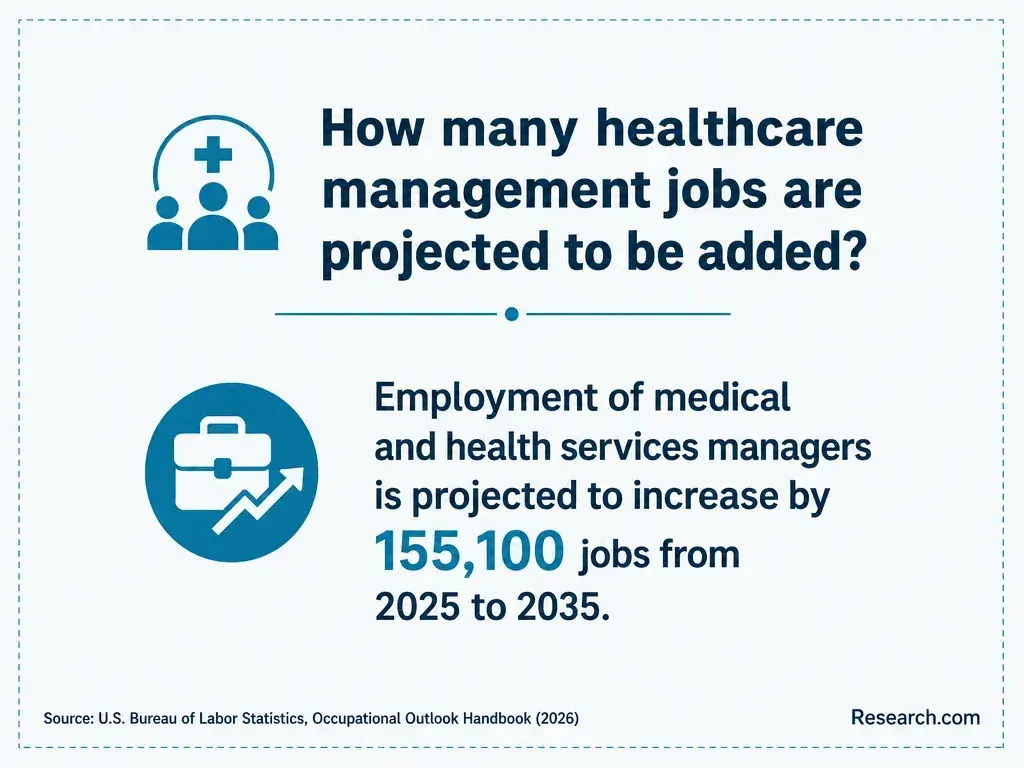
No national projection isolates healthcare partnerships directors, so broader management projections should be read cautiously. The Bureau of Labor Statistics projects management occupations overall to grow faster than the average for all occupations from 2025 to 2035, with about 1.1 million openings annually across that broad group from growth and replacement needs. Those openings are not a forecast of partnerships director vacancies.
For a more useful local outlook, follow the employers you would actually consider and compare postings over time. Look for recurring requests for provider-network experience, contracting, community engagement, implementation, or measurable partnership results. That exercise reveals whether your next move should be an MHA, a role with greater partnership responsibility, or a targeted skill-building project.
Start with the position you could plausibly pursue next, not the most senior title you hope to hold eventually. If you still need to finish a bachelor's degree while entering healthcare, compare online health administration degree start schedules against hiring and work commitments. If you already manage alliances, seek evidence that an MHA would improve your candidacy for the specific leadership roles you want.
Other Things You Should Know About Healthcare Administration
Not usually for the partnerships role itself. Clinical licensure may matter if a position also requires licensed professional duties; check the specific posting and applicable state requirements.
Not necessarily. Some roles have commercial targets, but others focus on care access, community relationships, or implementing shared services. Read the performance measures in the job description.
Possibly. Ask to support a cross-organization project, document your contribution, and track its results. That may give you evidence of readiness before you apply for director roles.
Ask which partnerships need attention, who approves agreements, how implementation is staffed, and how success is measured. The answers reveal the role's actual authority and challenges.
- Defining and Implementing Value-Based Health Care - PMC https://pmc.ncbi.nlm.nih.gov/articles/PMC7185050/
- MHA or MPH? Salary, career path, and ROI | USC Price https://priceschool.usc.edu/price-blog/mha-or-mph-salary-career-path-and-roi/
- MHA Competencies - College of Health Professions https://www.health.txst.edu/ha/prospective-students/competencies/mha.html
- What Is Healthcare Administration? Definition, Roles, and Professional Paths | Walden University https://www.waldenu.edu/online-masters-programs/master-of-healthcare-administration/resource/what-is-healthcare-administration
- 5 Steps for Building Strategic Partnerships in Your Negotiations | Harvard Business School https://online.hbs.edu/blog/post/strategic-partnerships-in-negotiation
- Select MHA Jobs - NYU Wagner - New York University https://wagner.nyu.edu/careers/resources/employment-statistics/mha
- MHA vs. MBA: Which Master's Degree Is Right for Healthcare Leaders? https://healthcareadministration.uic.edu/news-stories/mha-vs-mba/
- MHA Competencies | ufl.edu https://phhp.ufl.edu/academics/masters-programs/mha/uf-mha-competencies/
- Stakeholder Analysis & Engagement - UNC School of Medicine https://www.med.unc.edu/ihqi/resource-center/stakeholder-analysis/
- MPH vs. MHA vs. MBA: Choosing the Right Path for Your Career in Healthcare - Purdue Online https://www.purdue.edu/online/mph-vs-mha-vs-mba-choosing-the-right-path-for-your-career-in-healthcare/