2027 A Member Inquiry Category Dashboard: An Undergraduate Healthcare Administration Case Study

Co-Founder and Chief Data Scientist
A member inquiry dashboard can turn repeated questions about benefits, billing, and access to care into evidence for better operations. For an undergraduate healthcare administration student, building one is also a way to test whether the degree teaches useful skills - not just healthcare terminology.
This illustrative 2026 case study follows that project while explaining how to evaluate programs, costs, online study, and entry-level careers. It is for prospective students and career changers deciding whether an undergraduate degree is the right route into healthcare administration.
Key Things You Should Know
- A useful member inquiry dashboard defines categories consistently, separates inquiry volume from resolution, and protects sensitive information; a chart alone does not establish why members are contacting an organization.
- An undergraduate healthcare administration degree can prepare students for operations and support roles, but most management positions also require relevant work experience.
- The U.S. median annual wage for all management occupations was $126,520 in May 2025; it is not a starting-salary estimate for healthcare administration graduates.
What is a healthcare administration degree and what careers can it lead to?
An undergraduate healthcare administration degree studies how healthcare organizations organize services, manage resources, work within regulatory requirements, and improve operations. It prepares students for administrative work, not clinical practice or a clinical license. Common early-career directions include patient access, health plan member services, practice operations, scheduling, and quality-support roles.
In this illustrative case study, a student working with a health plan team proposes a dashboard that groups member inquiries by their main reason for contact. The point is to help a supervisor distinguish, for example, a surge in billing questions from a recurring difficulty finding an in-network provider. The student's job is to define the measures and explain their limits - not to assume that a high inquiry count proves staff performance is poor.
A bachelor's degree may help someone enter or advance within an administrative team. A professional who already has a degree and substantial healthcare experience may instead benefit from comparing online MHA degree programs. An MHA develops graduate-level healthcare management knowledge; it is not a necessary first step for every applicant.
What are the education and accreditation requirements for healthcare administration programs?
Start by checking the institution's recognized accreditation. That matters for degree credibility and can affect transfer credit, employer acceptance, and federal student aid eligibility. Then examine the actual degree and curriculum: a healthcare administration program, a business degree with a healthcare concentration, and a health information management program can emphasize different skills.
Do not assume that accreditation of the university establishes specialized accreditation for every program it offers. In particular, students pursuing health information management credentials should check whether their specific program meets any applicable programmatic accreditation requirements. A comparison of online health information management programs accredited by CAHIIM is more relevant to that goal than a general list of healthcare administration degrees.
Before enrolling, confirm the school's current accreditation status and ask whether the degree meets the requirements of any credential or occupation you intend to pursue. Requirements belong to the credentialing body, employer, or state - not to the degree title alone.
How do you choose the best healthcare administration degree program?
The best program is the one that fits your starting point and intended work. For this dashboard project, a strong curriculum would connect healthcare operations with data definitions, privacy, communication, and process improvement. A student aiming for general practice operations may value a different mix of courses than someone targeting health information management.
Compare online healthcare administration majors at accredited U.S. schools using the same questions for each institution:
- Can you identify required courses in healthcare operations, finance, information systems, and applied analysis rather than relying on the program name?
- Will the school evaluate your existing credits before you commit, and which required courses must still be taken there?
- Is there an internship, employer project, or other way to demonstrate administrative work to hiring managers?
- What are the full costs, required meeting times, and available career services for online students?
Ask for written answers when a feature could determine your decision. A promised "flexible" format, for example, is less useful than a published course schedule and a clear policy on required live work.
Typical subjects include healthcare organization and policy, accounting or budgeting, management, ethics, health information, and quality improvement. Offerings vary by school. The dashboard case connects these subjects: operational knowledge shapes the categories, quantitative coursework supports interpretation, and ethics governs how inquiry records are handled.
The following table shows an illustrative design, not results from a real health plan. Categories need documented definitions so that a change in the chart reflects member inquiries rather than a change in how staff label them.
| Primary inquiry category | Example question | What the dashboard can show |
| Benefits and eligibility | "Is this service covered?" | How often coverage questions are recorded |
| Provider access | "How do I find an in-network specialist?" | Whether access questions are recurring |
| Billing and claims | "Why was this claim denied?" | The share of recorded contacts assigned to payment issues |
| Care navigation | "Where should I go for help?" | Demand for guidance about next steps |
Coursework should also teach students to distinguish contacts from issues: one member may contact the organization repeatedly about the same claim. A useful project would state its counting rule, time period, treatment of multiple-topic inquiries, and what the data cannot explain. If identifiable information is involved, access and use must follow the organization's privacy rules and applicable law.
An undergraduate project demonstrates foundational management analysis, not the depth of graduate training. Someone who already holds a bachelor's degree and needs broader business leadership skills might consider shorter online MBA options in healthcare management; an MBA's general management core is different from a specialized undergraduate healthcare curriculum.
An online degree can support the same learning goals when the courses, feedback, and applied work are strong. Delivery mode alone does not establish effectiveness. For the dashboard case, an online student needs access to appropriate software, meaningful instructor feedback on definitions and interpretation, and a permitted source of data or a well-designed simulated dataset.
Check whether courses are asynchronous or require live meetings, how group projects work, and whether an internship or campus visit is mandatory. Students balancing employment should also ask when required courses are offered; an appealing start date does not necessarily mean every course is available on demand. If entry timing matters, compare undergraduate health administration programs and entry schedules against the actual sequence needed to graduate.
Campus study may be preferable if you want face-to-face recruiting or easier access to a local placement. Online study may fit better if you can secure relevant experience near home and the program provides dependable remote support. Neither format guarantees an internship or an employer connection.
Requirements vary by institution and by whether you apply as a first-year or transfer student. Schools commonly request evidence of prior education and may have separate rules for transfer evaluation, prerequisite coursework, or admission to an upper-division major. Do not assume that a background outside healthcare prevents admission.
For a transfer applicant, the consequential question is not just whether credits are accepted, but which degree requirements they satisfy. Request a course-by-course evaluation and a remaining-course plan before assuming that prior study will shorten the degree. Students considering healthcare administration degree completion through accelerated study should check whether the proposed pace leaves time for required projects or field experience.
If you hope to use workplace inquiry data for a class project, ask your employer and instructor about approval before collecting it. Admission to a program does not authorize access to member records.
A bachelor's degree commonly follows a four-year full-time academic plan, but an individual timeline depends on accepted transfer credits, enrollment pace, course availability, and any internship. An accelerated calendar can shorten elapsed time without reducing the work required.
Published tuition may be quoted per credit, term, or program. To compare schools, request an estimate based on your remaining required credits and include mandatory fees, materials, technology, and any travel or placement expenses. The lowest advertised tuition may not produce the lowest total cost if fewer of your credits transfer or required courses are offered infrequently.
Use the same assumptions when you review costs of online healthcare administration degrees. Ask financial aid staff about your eligibility and borrowing options, and check whether an employer offers education assistance. Aid and reimbursement depend on individual circumstances; neither should be treated as a guaranteed discount.
Realistic targets depend on prior experience. A new graduate might seek work as a patient access representative, member services specialist, administrative coordinator, or practice operations assistant. Someone already employed in healthcare may be better positioned for a supervisor-track role because they bring knowledge of workflows and employer systems as well as the degree.
The dashboard project can strengthen an application if the student can explain the operational problem, category definitions, privacy safeguards, and a recommendation supported by the findings. It cannot substitute for experience managing staff, budgets, or clinical operations. A useful next step is to compare job postings in your local market and note which roles ask for experience you can gain while studying.
For advancement into broader healthcare management, experience may matter more immediately than another credential. If graduate education later becomes relevant, compare the curriculum and total cost of affordable master's programs in healthcare administration with the responsibilities of the jobs you want. An MHA is an option, not an automatic requirement for promotion.
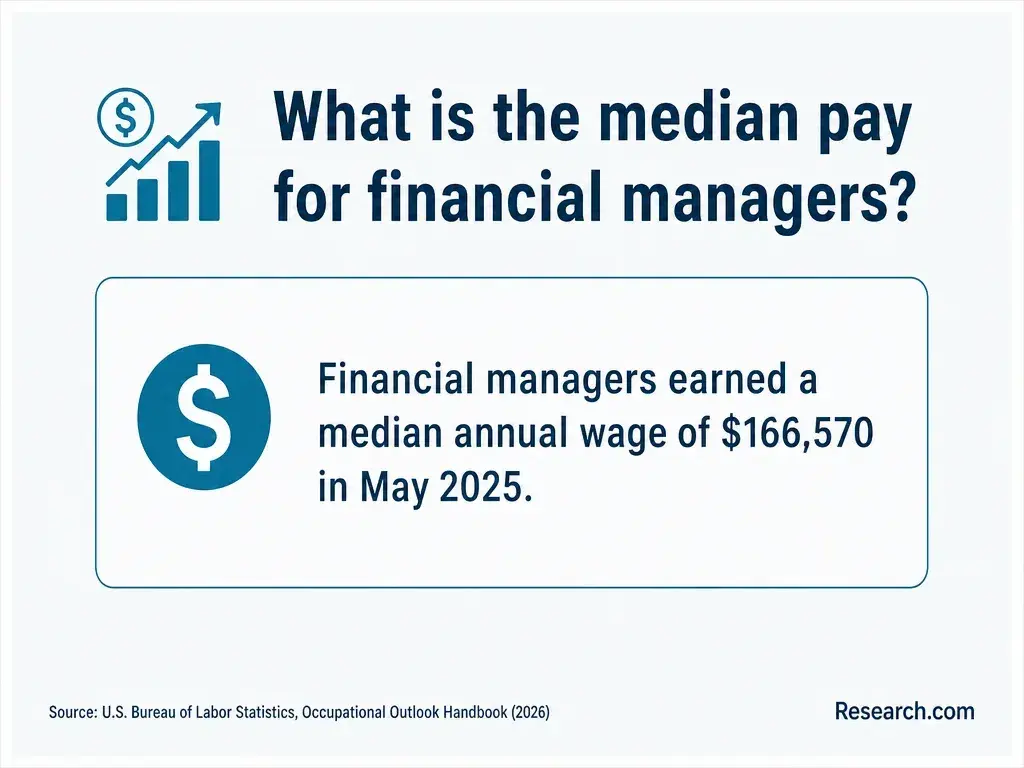
Pay differs substantially between entry-level administrative work and experienced management. The U.S. Bureau of Labor Statistics reported a $126,520 median annual wage for all management occupations in May 2025. That broad figure includes managers outside healthcare and should not be used to forecast a new healthcare administration graduate's pay.
For a more useful comparison, look at local postings for the exact job title and experience level you can realistically pursue. Then weigh likely pay against the program's full cost and any income you would give up while studying. If you are considering graduate study primarily to raise earnings, an online healthcare management MBA affordability guide can help frame the cost side - but neither an MBA nor an undergraduate degree causes a predictable salary increase on its own.
Do healthcare administrators need certification or a professional license?
Many general administrative jobs do not require a professional license, but requirements depend on the position and state. Certain roles, including nursing home administration, have specific licensing rules. Clinical licenses are separate from healthcare administration degrees.
Optional credentials can be worthwhile when they match a target function, such as health information management, but eligibility may depend on an approved program, work experience, or an examination. Check the relevant board or credentialing organization before choosing a degree for that purpose. A dashboard project is evidence of applied skill; it is not a certification.
If your goal is higher-level operational leadership rather than a regulated role, graduate education is another route to consider. Compare credentials with faster online master's programs in healthcare management based on the jobs you seek, not on speed alone. A shorter program does not remove an employer's experience requirements.
Other Things You Should Know About Healthcare Administration
Yes. Simulated or appropriately de-identified data can support a project on categorization and interpretation. Ask the instructor what the assignment requires and do not use workplace records without authorization.
That depends on its purpose. Contact counts show workload; unique-member counts show how many people sought help. Label the measure clearly, because repeat contacts can make the two tell different stories.
Set a consistent rule for assigning a primary category and, if useful, a secondary one. Document the rule so readers understand how totals were produced.
No. A rise could reflect a policy change, seasonal demand, better recording, or an actual service problem. Review the underlying inquiries and other operational evidence before drawing a conclusion.
- Implementation costs of hospital-based computerised decision support systems: a systematic review - PMC https://pmc.ncbi.nlm.nih.gov/articles/PMC9960445/
- Data Collection | The Office of Research Integrity https://ori.hhs.gov/education/products/n_illinois_u/datamanagement/dctopic.html
- Privacy Laws, Policies and Guidance - Commerce.gov https://www.commerce.gov/opog/privacy/privacy-laws-policies-and-guidance
- How to Approach Ambiguous Queries in Conversational Search: A Survey of Techniques, Approaches, Tools, and Challenges https://dl.acm.org/doi/fullHtml/10.1145/3534965
- Data Security Guidance for Human Subjects Research | University of Connecticut https://ovpr.uconn.edu/services/rics/irb/data-security-guidance-for-human-subjects-research/
- Organizational decision making and analytics | sciencedirect.com https://www.sciencedirect.com/science/article/pii/S0378720624000934
- Guidance: Data Security and Privacy | lehigh.edu https://research.lehigh.edu/policies-guidance-forms/guidance-data-security-and-privacy
- Data Quality + Cleaning - Research Data https://researchdata.unl.edu/analyzing/data-quality-cleaning/
- Case Studies | AHA https://www.aha.org/type/case-studies