2027 Auditing a Synthetic Patient Index for Duplicate Records

Co-Founder and Chief Data Scientist
A synthetic patient index lets you practice finding duplicate records without using real patients' information. The exercise is valuable, but finding similar names is only the start: a credible audit must distinguish true duplicates from different people who happen to look alike. This guide explains a defensible audit workflow, the skills it demonstrates, and how to choose education or credentials if you want to work in healthcare data quality. It is for students, healthcare staff, and career changers deciding whether a degree, certification, or focused training is the right next step.
Key Things You Should Know
- A useful synthetic-index audit reports both missed duplicates and mistaken matches; a high count of flagged pairs alone does not show that the method works.
- Health information management and applied data-quality training are generally more direct preparation for hands-on identity auditing than a broad healthcare management degree or MBA.
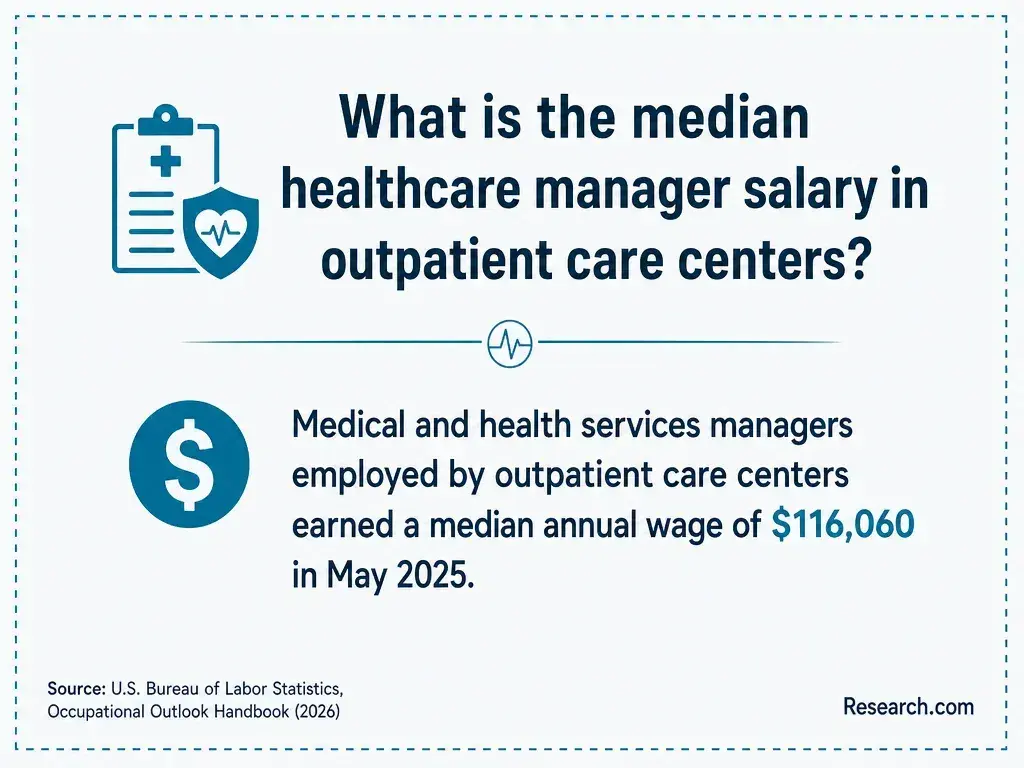
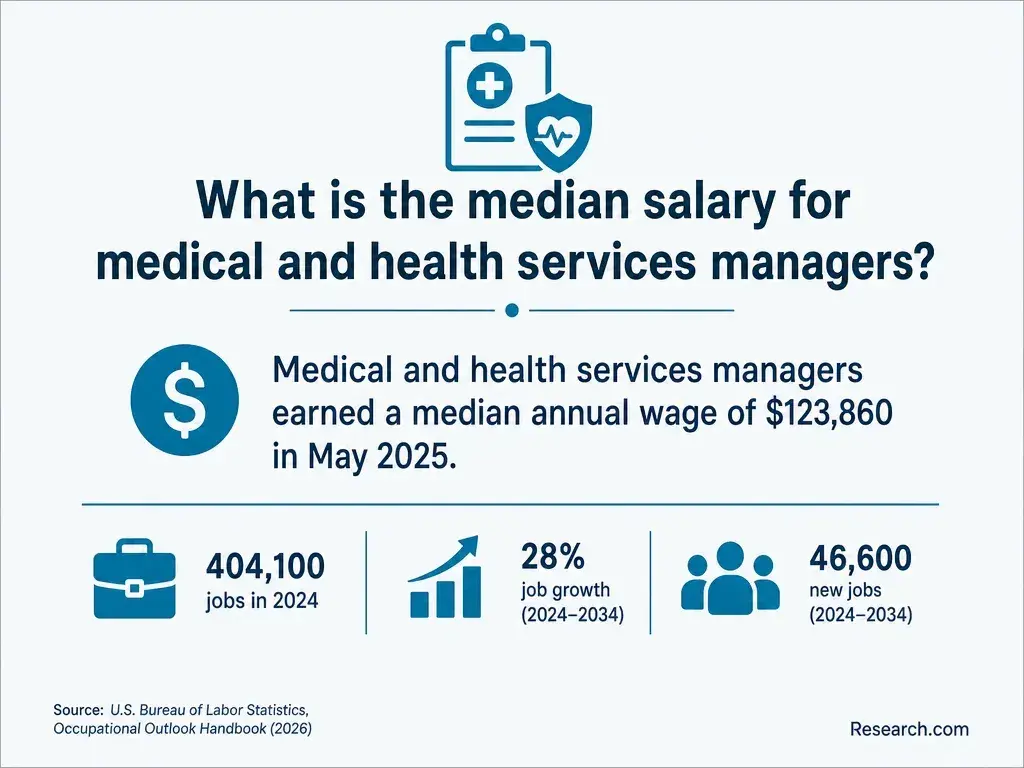
- The May 2025 median wage for all US management occupations was $126,520, according to the Bureau of Labor Statistics; it is not a salary estimate for patient-index auditors or new graduates.
What is a synthetic patient index duplicate-record audit?
A patient index - often called a master patient index or enterprise master patient index - is a system for associating a person with their records across encounters or systems. A synthetic index contains invented patient-like records. A duplicate-record audit tests whether two or more entries represent the same fictional person, while guarding against the opposite error: linking records that represent different people.
For learning purposes, the best synthetic dataset has a known answer key identifying which records belong together. Without one, an auditor can review plausible matches but cannot reliably measure how many true duplicates were missed. A defensible exercise follows this sequence:
- Document how the synthetic records and answer key were created, including intended duplicates, look-alike patients, missing fields, and typographical errors.
- Standardize fields consistently - for example, name punctuation and date formats - while retaining the original values for review.
- Generate candidate pairs using a stated matching approach, then compare names, birth dates, addresses, identifiers, and other available fields without treating any single field as infallible.
- Review flagged pairs against the answer key and count true matches, mistaken matches, and missed matches; record ambiguous cases separately.
- Summarize error patterns, limitations, and proposed workflow changes without claiming that performance on synthetic data will transfer unchanged to a live system.
Keep the distinction between data stewardship and organizational management in view. A comparison of healthcare administration versus health information management degrees can help you identify which field is closer to the work you want to do.
Why are duplicate patient records a healthcare administration concern?
Separate records for one patient can scatter information across charts, complicating scheduling, billing, care coordination, and reporting. Incorrectly combining two patients can be more dangerous: information from one person may appear in another's record. Administrators therefore have a stake in the rules, staffing, training, and oversight that govern patient identity - even when health information staff or technical teams perform the matching work.
An audit should distinguish record creation problems from record resolution problems. If registration workflows repeatedly create new identities, clearing a backlog alone will not fix the source. If reviewers lack clear escalation rules, more aggressive matching may replace duplicates with mistaken links. Leaders considering system-wide data governance or research can explore affordable healthcare administration doctoral pathways online, but a doctorate is not necessary to conduct a duplicate-record audit.
What skills are needed to audit duplicate records in healthcare data?
The essential skill is evaluating identity evidence under uncertainty. Auditors need data-cleaning and spreadsheet or querying skills, an understanding of deterministic rules versus similarity-based matching, and the ability to explain why a pair was flagged. They also need to recognize false positives - different people treated as one - and false negatives - duplicates left separate. Because either error matters, an audit should report both rather than celebrate the number of records it identifies.
Real-world work adds privacy, access control, documentation, and knowledge of registration and electronic health record workflows. A synthetic project can demonstrate analytical reasoning, but it cannot by itself establish competence to authorize a live record merge. If you need an initial credential quickly, planning an accelerated online health administration degree may be useful; check whether the actual curriculum includes health information systems and applied data work rather than assuming a faster degree covers them.
No single degree is required for every data-quality role. The better choice depends on whether you want to review records, analyze matching performance, manage an identity program, or lead broader healthcare operations. This comparison shows the typical emphasis of each path - not a promise about every program's curriculum.
| Education path | Closest fit | Likely gap to check |
| Health information management bachelor's degree | Records, data quality, information governance, and operational identity workflows | Depth of analytics and database practice |
| Healthcare administration bachelor's degree | Healthcare operations and early supervisory preparation | Hands-on patient matching and record review |
| Master of health administration | Program oversight, quality improvement, and organizational decision-making | Technical identity-matching practice |
| MBA with healthcare coursework | Finance, operations, and cross-functional management | Specialized health information training |
A career changer with database or analytics experience may need healthcare workflow training more than another general management degree. An experienced healthcare supervisor seeking responsibility for data-governance budgets may benefit from graduate management study. Compare online MHA options for healthcare administration study against those distinct goals, not just the degree title.
Course titles vary, so examine syllabi and assignments. Health information systems, health informatics, database management, data quality, healthcare analytics, privacy, and quality improvement are particularly relevant. Strong applied work asks students to define matching rules, investigate exceptions, measure errors against a known answer key, and explain the operational consequences of a mistaken link.
An MBA may teach analytics, operations, and governance at a management level without teaching how to review patient identities in an EHR. If your goal is to lead a healthcare data-quality team, affordable online MBA programs in healthcare management may merit comparison. Verify the specific courses and projects: one relevant elective is not the same as a formal specialization or hands-on identity-management training.
Yes, if the program provides substantive information-systems coursework and opportunities to practice with appropriately governed data. An online format can accommodate employed students, but it does not guarantee self-paced classes, access to clinical systems, or an identity-management placement. Ask how students complete applied projects, whether live meetings or campus visits are required, and what career support online students actually receive.
For a learner entering at the undergraduate level, online bachelor's choices with rolling healthcare administration starts may offer more entry points. A convenient start date should remain secondary to course content, transfer-credit policy, and opportunities to demonstrate data-quality skills.
First, verify that the institution holds recognized institutional accreditation and that its status applies to the school offering the online degree. Then check any program-specific accreditation that matters to your intended field and credential. Do not treat institutional accreditation, healthcare-management program accreditation, business-school accreditation, and health information management program accreditation as interchangeable.
Accreditation is especially important if you plan to pursue a certification with education requirements or later transfer academic credit; eligibility rules and transfer decisions belong to the receiving organization. When reviewing an online health administration bachelor's program comparison, confirm each shortlisted program's current status directly with the accreditor and school before enrolling.
Requirements vary by school and degree. Bachelor's applicants should check prior-credit and transfer policies; master's applicants should check degree, work-experience, prerequisite, and application requirements. An accelerated label describes a program's schedule, not proof that it is affordable or feasible alongside employment. Published tuition may also exclude mandatory fees, software, books, or required travel.
To compare offers fairly, calculate tuition from the school's stated credit or term price and required workload, then add published fees and likely out-of-pocket expenses. Ask how part-time enrollment affects the total and whether employer assistance applies before borrowing. Online healthcare management degrees with lower tuition can be a starting point, but your relevant figure is the full cost of completing the particular curriculum you need.
Health information credentials offered by the American Health Information Management Association, including RHIT and RHIA, may be relevant to roles involving records and information governance. Eligibility depends on the specific credential and current education requirements; neither credential automatically qualifies someone to resolve identities in a particular employer's system. Vendor training and employer instruction can also matter because matching tools and merge-approval policies differ.
Choose a credential against actual job postings, not its broad healthcare label. If postings emphasize technical review and data quality, a focused course, supervised project, or qualifying health information pathway may be more direct than a management master's. If you are comparing a short graduate route with certification, review 12-month healthcare administration graduate programs for their actual data-governance content before taking on the greater cost and workload.
What jobs, salaries, and outlook are available in healthcare data auditing?
Relevant job titles can include patient identity analyst, master patient index specialist, health information specialist, data-quality analyst, and health information manager. Duties differ: an analyst may investigate candidate matches and document exceptions, while a manager may set policy, monitor error patterns, and coordinate corrective work across registration, clinical, and IT teams. Search the duties as well as the title, because employers use these labels differently.
The US Bureau of Labor Statistics reports a May 2025 median annual wage of $126,520 for management occupations overall and projects that group to grow faster than the average for all occupations from 2025 to 2035. That broad figure includes many jobs unrelated to patient identity; it should not be used as a salary expectation for an entry-level auditor. For a realistic decision, compare local postings by responsibilities, required experience, and pay, then weigh any additional degree cost against the roles you could plausibly pursue. If a master's is part of that plan, compare tuition for healthcare administration master's programs rather than assuming the credential itself will produce a raise.
Other Things You Should Know About Healthcare Administration
Usually, if you have permission to share the dataset and can explain how it was generated. Include your method, error categories, and limitations; do not describe synthetic results as clinical-system performance.
No. Confirm that the records are genuinely synthetic, contain no copied patient information, and comply with the dataset provider's sharing terms before publishing them.
Follow the organization's designated approval and escalation policy. A student project or an analyst's matching score is not, by itself, authorization to alter live records.
Bring a concise example showing how you investigated ambiguous records, documented your reasoning, and accounted for both missed duplicates and mistaken matches.
- Overcoming Challenges of Merging Multiple Patient... - PMC https://pmc.ncbi.nlm.nih.gov/articles/PMC7883361/
- A Synthetic Health Data Generation Engine to Accelerate Patient-Centered Outcomes Research | ASPE https://aspe.hhs.gov/synthetic-health-data-generation-engine-accelerate-patient-centered-outcomes-research
- Summary of the HIPAA Security Rule | hhs.gov https://www.hhs.gov/hipaa/for-professionals/security/laws-regulations/index.html
- Synthetic Data Is Enabling Better Healthcare Tools | Particle Health https://www.particlehealth.com/blog/synthetic-data-healthcare-tools
- Downloads | Synthea - MITRE https://synthea.mitre.org/downloads
- Synthea Synthetic Data Overview - FHIR® for Research https://mitre.github.io/fhir-for-research/modules/synthea-overview
- Deterministic vs Probabilistic Matching: When to Use Each Matching Type - Data Ladder https://dataladder.com/deterministic-vs-probabilistic-matching/