
2027 A Teaching Clinic Scheduling Map: An Undergraduate Healthcare Administration Case Study

Co-Founder and Chief Data Scientist
A teaching clinic cannot schedule appointments around room availability alone. Students or trainees need appropriate supervision, patients need timely care, and staff must work within operating and privacy rules. For prospective healthcare administration students, mapping those constraints is a practical way to see what the degree teaches.
This article walks through an illustrative scheduling case, then connects it to coursework, program formats, costs, and realistic career options. Use it to judge whether a bachelor's program offers the applied training you want - or whether another education path fits better.
Key Things You Should Know
- A teaching clinic scheduling map shows how patient demand, rooms, staff, trainees, and qualified supervisors fit together, a workable appointment slot must satisfy all relevant constraints.
- A strong undergraduate project compares scheduling options and measures access, utilization, and supervision risks rather than simply filling an appointment grid.
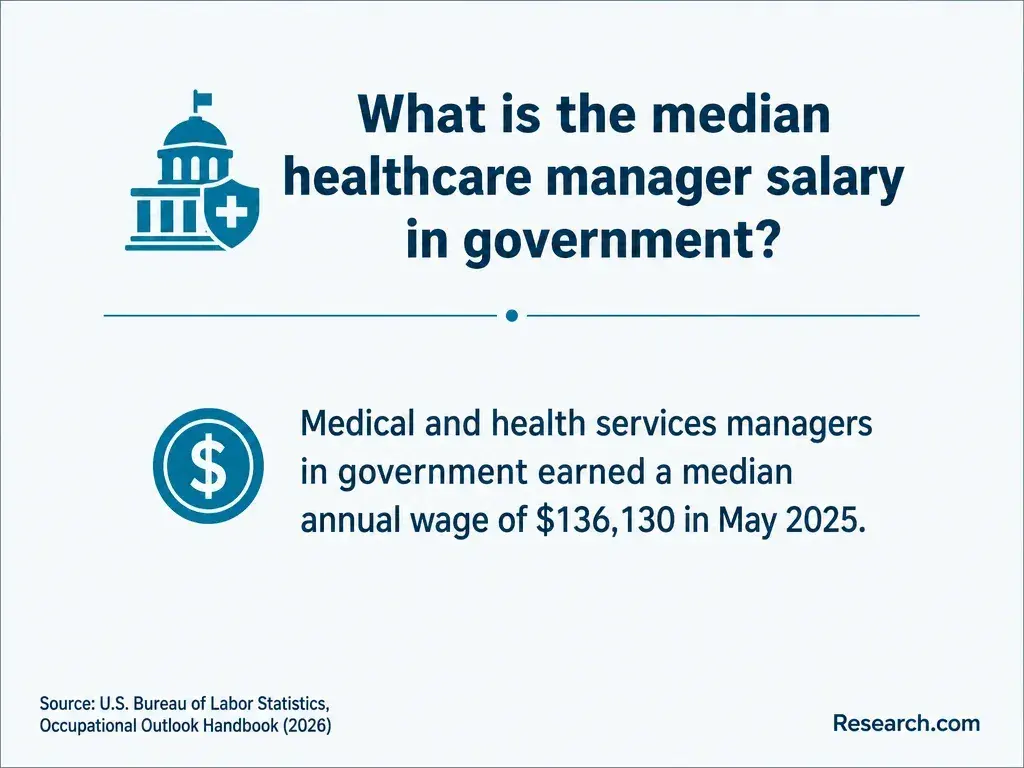
- The U.S. Bureau of Labor Statistics reports a $126,520 median annual wage for management occupations in May 2025, but that broad figure is not an entry-level salary or an expected outcome of a healthcare administration bachelor's degree.
What Is a Teaching Clinic Scheduling Map in Healthcare Administration?
A teaching clinic scheduling map is a visual or spreadsheet-based model of when patients, trainees, supervising clinicians, support staff, and usable rooms can meet. In a teaching setting, an open room does not necessarily create an available appointment: the visit may also require a particular supervisor, enough time for teaching and documentation, and an appropriate patient-trainee match.
The map is an operations tool, not a clinical treatment plan. An administrator might use it to spot an afternoon when rooms sit empty because supervisors are unavailable, or a morning when demand exceeds check-in capacity. Information systems supply and protect the underlying records; healthcare administration focuses on the staffing, access, and resource decisions made from them. Readers weighing those academic directions can explore comparing management and information-focused healthcare degrees.
How Does an Undergraduate Healthcare Administration Program Prepare Students for Clinic Scheduling?
A bachelor's program can prepare students by combining healthcare operations, basic quantitative analysis, organizational behavior, finance, and health policy. Students learn to translate a service problem - such as long waits despite unused rooms - into testable constraints and trade-offs. A scheduling project then gives them practice presenting a recommendation to people with different priorities, including patients, clinicians, and clinic managers.
Preparation varies by school. A course labeled "healthcare operations" may use cases without giving students access to a clinic, while a practicum may offer supervised work with real processes. Ask whether students build a schedule, evaluate its consequences, and receive feedback from healthcare practitioners. Transfer students should also check whether applied courses and practicums must be completed at the degree-granting institution; building a transfer pathway to a healthcare administration degree requires more than matching general-education credits.
What Does a Teaching Clinic Scheduling Map Case Study Include?
Consider an illustrative undergraduate case, a teaching clinic has demand for routine and longer visits, shared examination rooms, trainees with class commitments, supervisors with limited availability, and a front desk that cannot absorb every patient arrival at once. The student's assignment is to propose a weekly schedule. This is an example of a possible classroom exercise, not a description of a particular clinic or university.
The comparison below shows why maximizing booked appointments is not the same as producing a usable schedule. Each option must be checked against patient access and the clinic's supervision rules.
| Scheduling option | Potential benefit | Constraint or risk to evaluate |
| Cluster trainee visits in the morning | Concentrates teaching when supervisors are present | May overwhelm check-in staff or reduce morning access for other patients |
| Spread trainee visits across the day | Offers patients more appointment choices | May require supervisor coverage that the clinic cannot provide |
| Reserve flexible slots | Creates capacity for urgent needs or overruns | May leave usable capacity unfilled if demand is predictable |
A defensible case study moves from the initial map to a recommendation. Students should make the following reasoning visible so a reviewer can challenge their assumptions.
- Define visit types, patient demand, room availability, staff coverage, trainee availability, and supervision requirements.
- Mark nonnegotiable constraints before placing appointments; distinguish them from preferences such as a favored clinic session.
- Build alternative schedules and test what changes when a supervisor is absent, a visit runs long, or demand shifts.
- Compare patient waiting, unused capacity, staff workload, and the feasibility of supervision; explain the trade-off behind the chosen map.
This exercise teaches operational judgment at an undergraduate level. A healthcare-focused MBA scheduling and completion options comparison serves a different decision: whether an experienced professional needs broader graduate management training, not how to make this case study clinically authoritative.
Healthcare operations addresses patient flow, capacity, and process bottlenecks. Statistics or business analytics helps students interpret appointment demand, cancellations, and waiting-time measures without treating a single busy day as the norm. Health information systems explains how scheduling data are captured and where data quality or access restrictions limit analysis.
Organizational behavior adds the human side, a mathematically efficient schedule can fail if it ignores staff handoffs or supervisor workload. Healthcare finance helps students examine staffing and room-use costs, while ethics and health law frame privacy, equitable access, and compliance. Look for assignments that connect these subjects, rather than assuming a course title proves scheduling practice is included. Students seeking deeper study after a bachelor's can compare online Master of Health Administration programs, which generally target more advanced administrative preparation.
The central skill is constraint-based decision-making, identifying which conditions a schedule must meet and which outcomes can be improved through compromise. Students also practice spreadsheet modeling, explaining assumptions, reading operational data, and communicating recommendations to clinical and nonclinical colleagues.
A good project teaches professional restraint. Students should not present a schedule as safe or compliant merely because the spreadsheet balances. A clinic must validate supervision, staffing, documentation, and other applicable rules before adopting it. Likewise, a classroom simulation can demonstrate analytical ability without establishing clinical experience. Students interested in eventually researching or leading system-wide change can examine healthcare leadership doctoral study with accelerated timelines, but doctoral study is not needed to learn the fundamentals of clinic scheduling.
Neither format is automatically better. An online course can support detailed scheduling simulations, shared spreadsheets, and feedback from working healthcare professionals. A campus program may make it easier to arrange local observations or in-person team exercises. In either format, access to a real clinic depends on the specific school's partnerships and placement policies - not the delivery label.
Compare the actual assignment and practicum requirements. Ask whether students analyze realistic de-identified data, collaborate on competing schedule proposals, and receive feedback from someone familiar with clinical operations. Also confirm live class times, group-meeting expectations, and whether placements are available near home. Those questions matter more than assuming "online" means entirely self-paced. If graduate study is a later goal, faster online master's programs in healthcare management offer a separate comparison; their shorter timelines do not establish the quality of an undergraduate practicum.
Requirements depend on whether the applicant enters as a first-year student, transfers from another college, or applies to an upper-division major. Schools commonly request prior transcripts and evidence that applicants meet their general undergraduate admission rules. A separate healthcare administration application, prerequisite courses, or a minimum grade standard may apply at some institutions; none should be assumed universal.
Before applying, ask admissions and the department which prior courses count toward the major, whether a practicum has additional eligibility rules, and when required courses are offered. A student planning to pursue an accelerated graduate degree should check that program's admission rules separately. For example, choosing a 12-month health administration master's pathway is a later decision and does not change the bachelor's program's published entry requirements.
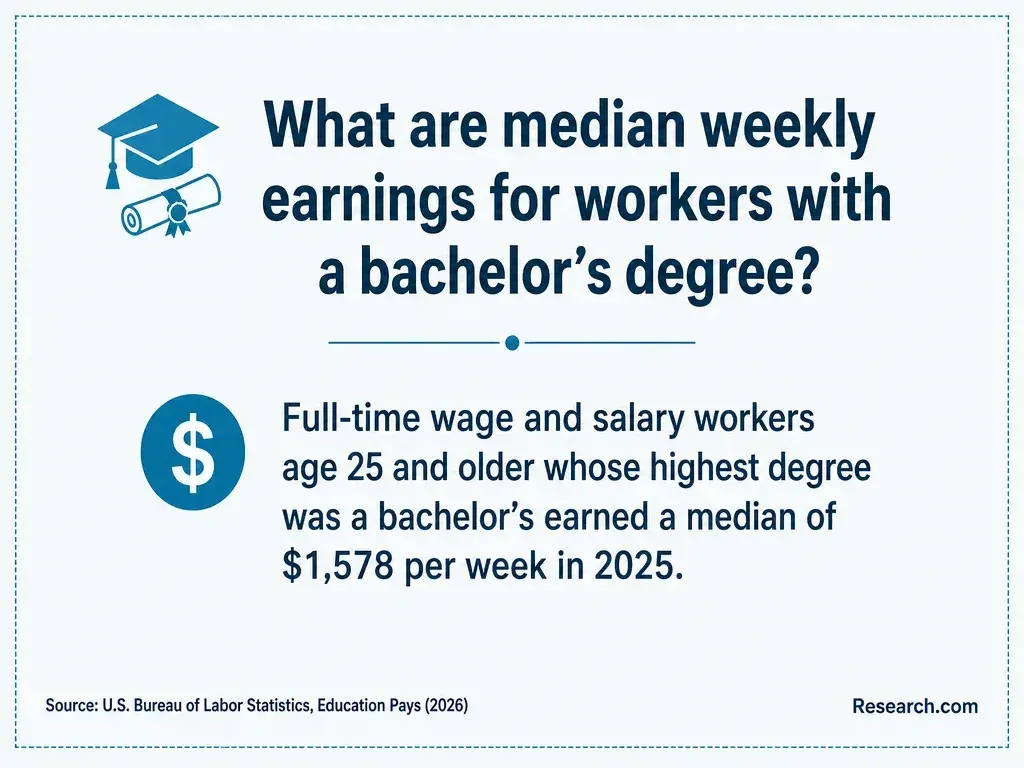
A full-time bachelor's degree commonly follows a four-academic-year plan, but transfer credit, part-time enrollment, course sequencing, and practicum availability can change the completion date. An accelerated label is not proof that every student can finish quickly: ask for a course-by-course plan based on credits the school has actually accepted. Faster bachelor's pathways in healthcare administration are most useful when their schedules and transfer policies fit the applicant's record.
There is no reliable single price for a healthcare administration bachelor's degree. Compare each school's published tuition basis - per credit, term, or academic year - alongside mandatory fees, books or software, practicum travel, and the cost of any credits that do not transfer. Request an individualized aid estimate and distinguish grants from loans. A lower advertised tuition rate may not mean a lower total cost if the program requires additional terms or travel.
Graduates may seek roles in patient access, scheduling, practice coordination, operations support, or administrative analysis. The next step depends heavily on prior experience: someone who already supervises a front desk may use the degree to compete for broader operational responsibilities, while a new graduate may first need hands-on experience with clinic systems and patient-service workflows.
The U.S. Bureau of Labor Statistics reports that management occupations had a $126,520 median annual wage in May 2025 and projects about 1.1 million openings per year, on average, from 2025 to 2035 across that broad occupational group. These figures describe management occupations overall - not clinic schedulers, healthcare administration graduates, or starting salaries. They are more useful as context for a possible long-term management path than as a return-on-investment estimate for this degree.
For scheduling-oriented jobs, employers may value experience with patient access, electronic scheduling tools, and cross-team communication alongside the degree. Senior administration typically requires a record of managing people, budgets, or services; neither an undergraduate case study nor an advanced credential replaces that experience. Before budgeting for later executive education, compare likely responsibilities with the full healthcare administration doctorate fees and completion costs. A doctorate is not a standard entry requirement for clinic operations roles.
Which Accreditation and Certifications Matter in Healthcare Administration?
First, verify that the university has recognized institutional accreditation, this matters for degree recognition, credit transfer, and eligibility for federal student aid under applicable rules. Then check whether the specific healthcare administration program holds any additional accreditation it claims. Institutional accreditation and program-level accreditation answer different questions, and an accredited university does not automatically have separately accredited healthcare administration programs.
No single certification is required for all clinic scheduling or healthcare administration jobs. A targeted credential may help after a student has identified an employer's preferred systems or a specific professional role, but it should not substitute for checking job postings and gaining relevant experience. Advanced-degree accreditation, requirements, and time commitments are separate decisions: an online healthcare administration doctorate duration guide is relevant to a later doctoral goal, not to choosing an entry-level scheduling credential.
Other Things You Should Know About Healthcare Administration
No. A classroom case can use fictional or appropriately de-identified information. Students should follow institutional privacy rules rather than copying identifiable patient details into an assignment.
It should distinguish scheduled visits from completed visits and test whether the proposed schedule still works when attendance changes. Automatically overbooking can create unsafe congestion and requires clinic-specific approval.
Approval depends on the organization. Clinic leadership and the people responsible for staffing and clinical supervision must validate changes before they are used with patients.
Yes. A spreadsheet or process map can teach capacity and supervision reasoning. Experience with a specific platform is a separate job skill that may require workplace training.
- FERPA | Protecting Student Privacy - Department of Education https://studentprivacy.ed.gov/ferpa
- Reducing Appointment No-Shows: Going from Theory... - PMC https://pmc.ncbi.nlm.nih.gov/articles/PMC3962267/
- Ways to Approach the Quality Improvement Process | Agency for Healthcare Research and Quality https://www.ahrq.gov/cahps/quality-improvement/improvement-guide/4-approach-qi-process/index.html
- Informed Consent FAQs | hhs.gov https://www.hhs.gov/ohrp/regulations-and-policy/guidance/faq/informed-consent/index.html
- Informed Consent - StatPearls - NCBI Bookshelf - NIH https://www.ncbi.nlm.nih.gov/books/NBK430827/
- Innovation and Best Practices in Health Care Scheduling | NAM https://nam.edu/perspectives/innovation-and-best-practices-in-health-care-scheduling/
- Clinical Supervision of Medical Students Policy | Vagelos College of Physicians and Surgeons https://www.vagelos.columbia.edu/education/student-resources/honor-code-and-policies/vp-s-student-policies/clinical-supervision-medical-students-policy
- Clinical Teaching | wisc.edu https://www.medicine.wisc.edu/intranet/education/clinical-teaching
- Policy on Clinical Supervision of Medical Students | McGovern Medical School https://med.uth.edu/oep/policy-on-clinical-supervision-of-medical-students/
- Preceptor & Capacity Definitions | Client Portal https://help.ohio.edu/TDClient/30/Portal/KB/PrintArticle


