2027 DHA Project Committees: Questions About Faculty Practice Experience

Co-Founder and Chief Data Scientist
A Doctor of Healthcare Administration (DHA) project can depend heavily on the people who guide it. A faculty member may be an excellent researcher yet have limited experience navigating a hospital budget, payer relationship, or quality-improvement initiative. For healthcare professionals considering a DHA, that distinction matters before enrollment - not after a project stalls. This guide explains what project committees do, how to assess faculty practice and research qualifications, and which program, cost, and career questions should shape your decision.
Key Things You Should Know
- Ask who can chair your DHA project, when a committee is assigned, and whether its members have relevant healthcare leadership and applied-research experience.
- Verify practice experience through recent roles, projects, and direct conversations; a faculty biography or executive title alone cannot establish mentoring fit.
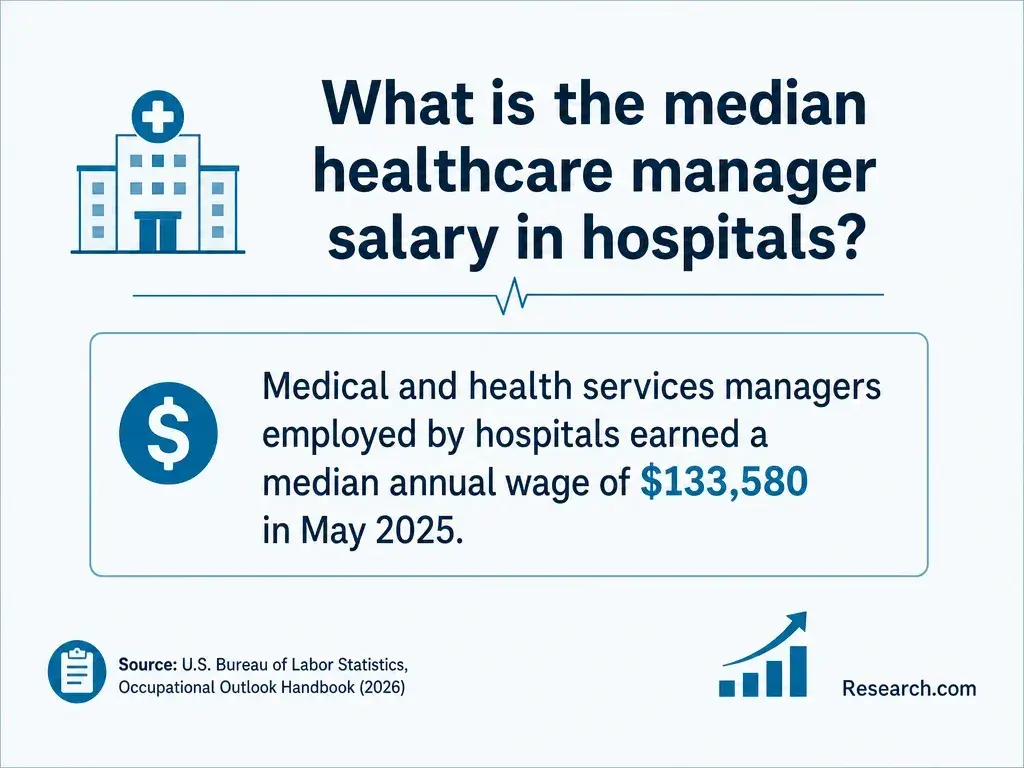
- The U.S. Bureau of Labor Statistics reports a $126,520 median annual wage for management occupations in May 2025, but that broad figure is not a DHA graduate salary or a return-on-investment estimate.
What is a DHA project committee, and why does faculty practice experience matter?
A DHA project committee is the group of faculty - and, where program rules permit, outside specialists - that guides and evaluates a student's culminating applied project. Its structure varies: one school may assign a chair and reviewers, while another uses a primary advisor with additional methodological or subject-matter oversight. Ask for the actual committee policy rather than assuming every doctorate works like a traditional dissertation.
Practice experience helps a committee test whether a proposed solution could work inside a healthcare organization. A faculty member who has managed operations may spot barriers involving staffing, reimbursement, governance, or access to usable data. That perspective complements, rather than replaces, research expertise. An experienced executive who cannot guide study design may be no better fit than a strong methodologist unfamiliar with healthcare operations.
A DHA is most relevant when you want to investigate and improve a management problem, not simply learn the fundamentals of the field. If you are entering healthcare administration, consider health administration graduate programs and work experience requirements before committing to a doctorate.
How can you verify faculty healthcare administration experience before enrolling?
Look beyond a list of credentials. A useful faculty profile identifies the organization, responsibilities, dates, and outcomes associated with a healthcare role. Distinguish employment in healthcare from responsibility for decisions: consulting for a hospital, leading its revenue-cycle team, and publishing research about it are different kinds of experience.
Use the following questions with a program director and, if possible, a prospective chair. The answers should reveal who would actually support your project - not just who appears on the faculty page.
- Who is eligible to chair DHA projects, and which faculty members are currently accepting students?
- Which committee members have led work relevant to my proposed setting, such as hospital operations, public health systems, or payer administration?
- What applied projects have they supervised recently, and may I read public project abstracts or speak with a current student?
- When are committee members assigned, how often do they provide feedback, and what happens if an advisor becomes unavailable?
Check whether the people named are regular program faculty or occasional guest instructors. When you review online healthcare management doctorate programs, compare access to qualified project supervisors as carefully as course titles. No published biography can guarantee that a particular professor will be available when you reach the project stage.
What accreditation should you look for in a DHA program?
Start with institutional accreditation: confirm that the university is accredited by an agency recognized by the U.S. Department of Education or the Council for Higher Education Accreditation, and check its current status with the accreditor. This is different from accreditation of a particular healthcare management program.
Specialized accreditation also requires careful reading. The Commission on Accreditation of Healthcare Management Education (CAHME) accredits eligible graduate healthcare management programs, but accreditation of a university's MHA does not establish that its DHA is CAHME-accredited. Check the exact degree and delivery format listed by any programmatic accreditor. Our guide to evaluating online MHA programs through CAHME accreditation is useful for understanding that distinction, not for verifying a DHA.
Accreditation is a threshold check, not evidence that a committee will suit your topic. Request the DHA handbook, faculty roster, project requirements, and any published information on project completion and student support.
There is no single qualification rule that applies to every DHA committee. Schools set their own requirements for faculty appointments, chair eligibility, outside members, and the academic credentials needed to supervise doctoral work. Confirm those rules in writing.
The strongest committee for an applied healthcare project usually combines three capabilities. This comparison helps identify a gap that one impressive résumé might conceal.
| Capability | What it contributes | What to verify |
| Healthcare practice | Tests whether the problem and proposed changes fit real organizational constraints | Relevant leadership responsibilities and recency of practice |
| Research methods | Guides the question, evidence, analysis, and defensible conclusions | Experience supervising the methods you may use |
| Doctoral supervision | Provides timely feedback and navigates project milestones | Chair eligibility, advising capacity, and completed projects |
One person need not supply every capability, provided the committee collectively does and the program allows members to contribute meaningfully. If you primarily want practitioner instruction without an extended research project, an accelerated graduate healthcare management program comparison may point toward a more direct option.
Practice-informed advisors can help narrow an ambitious topic into a problem an organization can investigate: for example, assessing a patient-access workflow at one site rather than claiming to solve access across a health system. They may also recognize when staff capacity, organizational approvals, or data ownership makes a proposed method impractical.
For a quality-improvement project, a committee might examine baseline measures, stakeholder interviews, and whether a change can be evaluated without attributing every outcome to the intervention. Faculty research expertise remains essential for selecting defensible measures, acknowledging bias, and interpreting limited evidence. Neither an executive's experience nor a sophisticated analysis fixes a project built around data the student cannot obtain.
Match faculty expertise to the function you intend to study. Work on electronic records and data governance may call for different supervision than a project on service-line strategy; how healthcare administration differs from an HIM degree helps clarify that boundary. Before choosing a topic, ask what data access and organizational permissions former students actually secured.
A DHA generally connects healthcare leadership with applied inquiry. Depending on the school, coursework may address organizational strategy, finance, policy, ethics, quality improvement, change management, and research design. The culminating project asks students to define a practice problem, examine evidence, and communicate a reasoned response. Review the course sequence: similarly named programs can differ substantially in methodological depth and project expectations.
The DHA is not clinical training or a license to practice a regulated health profession. It also differs from an MBA's broad business-management core and from a research doctorate principally oriented toward producing generalizable scholarship. If your goal is to strengthen management skills quickly rather than conduct a doctoral project, health administration graduate programs designed around one academic year offer a useful point of comparison; check their actual schedules and entry requirements before assuming they fit your circumstances.
Requirements vary by institution. DHA applicants commonly need a completed bachelor's degree and may need a master's degree, relevant professional experience, a résumé, recommendations, and a statement describing their leadership goals or proposed area of inquiry. Some programs specify academic thresholds or an interview; others do not. Do not assume a particular test policy, years-of-experience minimum, or qualifying master's field without checking the current admissions page.
Experience matters for more than admission. Someone who can identify an organizational problem and negotiate access to decision-makers is better positioned to develop an applied project. If your education stops at an associate degree, associate-to-bachelor's credit planning in healthcare administration is a more immediate step than comparing doctoral committees. Applicants from other fields should ask whether their experience and academic preparation meet a particular DHA's requirements rather than assume they are ineligible.
Completion time depends on required credits, enrollment pace, course availability, and - often most unpredictably - how long the applied project takes. Published minimum timelines may assume uninterrupted enrollment and prompt access to an organization, data, and committee feedback. Ask schools for both their stated minimum and recent completion-time information, if available.
To compare costs, request a written estimate that separates tuition from mandatory fees, project or continuation charges, materials, travel for required visits, and any extra terms needed to finish. Ask whether tuition is charged per credit or term and what you would owe if the project extends beyond coursework. Employer assistance may reduce your cost, but its eligibility and repayment conditions matter.
A less expensive master's degree may be sufficient if you do not need doctoral-level applied research or the credential for your intended role. Use an affordable healthcare administration master's program comparison as an alternative-cost benchmark, not as a substitute for calculating the DHA's full price.
A DHA may help an established healthcare professional pursue broader responsibility in operations, quality, strategy, consulting, or academic administration. The plausible next role depends more on prior leadership, organizational results, and employer requirements than on the doctorate alone. It does not confer clinical licensure or guarantee an executive appointment.
For salary context, the U.S. Bureau of Labor Statistics reports a $126,520 median annual wage for management occupations in May 2025. That figure covers many industries and management jobs; it is not a healthcare-administrator-specific wage, a DHA graduate outcome, or the increase you should expect after graduating. Compare your current compensation with actual openings in your location and target function. You can explore higher-paying healthcare administration careers to identify roles, then check their experience and credential requirements.
Before taking on doctoral costs, ask whether the advancement you want requires a DHA, merely values it, or chiefly rewards a record of leading teams and measurable improvements. If the degree is optional, employer funding and a project tied to your current responsibilities can materially change its value.
How should you compare online and campus-based DHA programs?
Delivery format affects how you work with a committee, not just where you attend class. Online study may reduce routine travel, but scheduled meetings, group work, residencies, and local project-site obligations can still constrain a working professional. Campus study may make in-person collaboration easier but impose commuting or relocation costs. Neither format guarantees closer faculty supervision.
Ask each school for a sample course calendar, residency dates, project milestones, expected advisor response times, and its policy for changing chairs or pausing enrollment. Also confirm whether you must find your own project site. A comparison of budget-friendly online health administration degrees can help frame the broader online options, but verify that any degree you consider is actually a DHA with the committee support you need.
Choose the program whose eligible, available faculty can support your likely topic and methods within a schedule and total cost you can sustain. If a school cannot explain how you will obtain a qualified committee, its convenient format is not enough.
Other Things You Should Know About Healthcare Administration
Possibly, but employer authorization and university rules control what you may access, analyze, and publish. Discuss data ownership, de-identification, and approval procedures before building a proposal around restricted records.
Not necessarily. The university determines whether a proposed activity requires review or a formal determination under its policies. Do not decide on your own that a quality-improvement label exempts a project.
The program's replacement policy governs the transition. Before enrolling, ask who assigns a new chair, whether previous approvals remain valid, and how the school limits disruption to the student's timeline.
Potentially. Publication depends on the work's quality, permissions, confidentiality restrictions, and a journal's requirements. Ask the university and project-site organization what dissemination they permit before promising to publish results.
- Ethics Committees: Structure, Roles, and Issues - PMC https://pmc.ncbi.nlm.nih.gov/articles/PMC10293659/
- Doctor of Health Administration | MUSC College of Health Professions https://chp.musc.edu/programs/doctor-health-administration
- Program: Doctor of Health Administration, DHA - NCU Catalog https://catalog.ncu.edu/preview_program.php
- Doctor of Health Administration (DHA) | rutgers.edu https://bloustein.rutgers.edu/graduate/dha/
- Doctor of Healthcare Administration Programs: DHA Degree Guide | healthcaremanagement.org https://www.healthcaremanagement.org/degree/dha/
- Healthcare Management Experience Requirement | American College of Health Executives https://www.ache.org/FACHE-Credential/FACHE-Requirements/Healthcare-Management-Experience
- The Value of the Doctorate in Health Administration and Leadershi...: Ingenta Connect https://www.ingentaconnect.com/content/aupha/jhae/2007/00000024/00000003/art00006