2027 Drafting a Board Discussion Guide on Operational Risk

Co-Founder and Chief Data Scientist
A healthcare board can receive a long risk report and still leave without knowing which threats need a decision. A useful operational risk discussion guide turns reports on patient safety, staffing, technology, and service continuity into focused questions about exposure, controls, and accountability.
This article is for board members and healthcare administrators preparing those conversations. It provides a draft agenda, examples of measures worth examining, and guidance on the education and experience needed to support the work - so the board can spend less time reviewing activity and more time testing whether the organization is prepared.
Key Things You Should Know
- A board guide should ask what could disrupt safe care, whether controls are working, who owns unresolved exposure, and what decision the board must make.
- Pair outcome measures with early warnings: incident totals alone can miss staffing strain, overdue corrective actions, or a weakening backup process. Risk-management careers draw on healthcare experience as well as education.
- The $126,520 median annual wage for all US management occupations in May 2025 is broad context, not a salary estimate for healthcare risk managers.
What is operational risk in healthcare administration?
Operational risk is the possibility that failures in people, processes, systems, facilities, or external services will disrupt an organization's ability to deliver safe, reliable care. A scheduling breakdown, unavailable clinical system, medication-handling error, or failed vendor service can create patient harm and financial or regulatory consequences at the same time.
It overlaps with - but is not identical to - clinical risk, cybersecurity risk, and financial risk. The board's concern is how these exposures interact across the organization, whether management's safeguards work, and whether the remaining risk is acceptable. Administrators pursuing this work should distinguish organization-wide leadership from records-focused roles when considering administration versus health records management education.
How can healthcare boards create an effective operational risk discussion guide?
Build the guide around decisions rather than a comprehensive inventory of incidents. Management should provide a concise pre-read identifying the exposure, affected services, control owner, trend, and decision requested; the meeting can then examine what the report does not settle.
The following draft sequence gives the chair a repeatable discussion without turning directors into day-to-day managers:
- Define the exposure: Which service or patient group could be affected, and what event would make the risk materially worse?
- Test the evidence: What do incident reports, near misses, audits, frontline feedback, and simulations tell us? Where might reporting be incomplete?
- Challenge the controls: Which safeguards were tested, when did a test fail, and what backup remains if a key system or vendor is unavailable?
- Examine capacity: Are staffing, funding, and executive ownership sufficient to complete corrective actions on schedule?
- Set the decision and follow-up: What must the board approve, escalate, or request at its next review, and who will report progress?
The chair can close by confirming the decision, owner, deadline, and evidence expected at follow-up. Administrators aiming to lead similar system-level conversations may also consider planning an accelerated healthcare leadership doctoral pathway; advanced study is optional, not a prerequisite for drafting an effective guide.
What operational risks should healthcare boards monitor most closely?
Priority depends on the organization's services, patients, geography, and recent failures. A hospital with a single critical IT vendor may face a different concentration of risk from a multisite outpatient group. Boards should give particular attention to exposures that can cause patient harm, interrupt essential services, or overwhelm recovery capacity.
Common candidates include patient safety and infection prevention; workforce availability and competency; cyber incidents and downtime procedures; medication and supply availability; facility and emergency preparedness; and third-party service failures. These risks are connected: an IT outage can slow medication administration, while staffing shortages can make manual backup procedures less reliable.
A useful challenge is to ask which risks could fail together and whether a recent exercise tested that combined scenario. For leaders whose goal is advanced study of complex healthcare systems rather than an immediate operational role, universities offering online healthcare management doctorates provide a different educational route from an MHA or MBA. The degree does not replace local testing of safeguards.
A board dashboard should show a small set of decision-relevant measures, their direction of travel, an agreed escalation threshold, and the accountable executive. The table illustrates how to combine evidence of harm with signals that controls may be weakening; each measure needs a local definition before boards compare periods or sites.
| Dashboard area | Example measure | Interpretation limit |
| Patient safety | Serious safety events and near-miss reporting trend | A rise in reports may reflect better reporting rather than more harm. |
| Workforce capacity | Critical vacancies or unfilled shifts | Organization-wide totals can conceal a vulnerable unit. |
| Technology resilience | Results of downtime and restoration tests | A successful technical recovery may not prove clinical workflows are safe. |
| Corrective action | High-priority actions overdue or failing retest | Closing an action does not establish that its control works. |
Ask management to explain missing data and conflicting signals, not merely red or green status. If the board wants stronger evaluation methods, comparing PhD and professional doctorate completion routes can help distinguish research-oriented training from practice-oriented leadership development; neither is required to use a well-defined dashboard.
Administrators combine incident and near-miss reports with audits, complaints, frontline observations, vendor reviews, and emergency exercises. They then describe each risk as a plausible event with a cause and consequence - not simply a label such as "staffing" - and identify existing safeguards and an accountable owner.
Assessment should consider potential patient harm, service disruption, likelihood, how quickly the event could escalate, and confidence that controls will work. A rare but severe event can warrant priority even when historical incident counts are low. An incident log records what happened; a risk register also tracks what could happen, the controls in place, and what remains unresolved.
New administrators can build this judgment through supervised improvement projects and exposure to clinical operations. Those entering without sector experience can compare MHA entry options for first-time healthcare professionals, while recognizing that admission eligibility and readiness to lead an enterprise risk assessment are different questions.
Look for courses in healthcare quality and patient safety, operations and process improvement, health law and compliance, health information governance, organizational leadership, and managerial finance. These subjects help a future risk leader interpret safety evidence, assign responsibility across departments, and weigh the cost of a safeguard against the consequences of service failure.
An MHA generally centers healthcare organizations; an MBA typically supplies a broader management core and may offer healthcare electives or a formal concentration. Neither should be mistaken for clinical training or hands-on cybersecurity preparation. Compare syllabi and applied projects rather than relying on a concentration name. Students weighing a compressed schedule can review 12-month healthcare administration graduate programs, but should check whether the pace leaves room for meaningful field experience.
There is no single degree that qualifies someone to own every healthcare operational risk. Employers may value a bachelor's degree and relevant experience for an entry-level quality or compliance role, while broader management positions may call for substantial healthcare experience and sometimes an MHA, MPH, or MBA. Clinically focused positions may require a professional license; an administration degree does not grant one.
Graduate admissions rules vary by school. Applicants should check bachelor's-degree eligibility, prerequisite or foundation coursework, professional-experience expectations, recommendations, and any test policy directly with each program. A nonbusiness or nonclinical degree is not automatically disqualifying; the more important question is which knowledge gaps and practical opportunities the program addresses. When comparing timelines, choosing a faster healthcare management master's program should include a check on placement, project access, and total workload - not speed alone.
Online delivery can make continued employment easier, but it does not guarantee flexible scheduling. Live classes, group projects, fieldwork, or campus visits may still constrain a student's week. Campus programs may offer more routine in-person contact with faculty and local employers, though access to projects and recruiting varies by institution and program.
Compare the actual schedule, opportunities to work with healthcare organizations, career support available to online students, and total cost: tuition, mandatory fees, materials, travel, and financing. An employer-supported part-time option may be more practical than a faster program that requires stepping away from work. Readers comparing budget-friendly online health administration degrees should confirm what each published price includes before treating programs as equally affordable.
First verify that the institution holds recognized institutional accreditation. Programmatic accreditation answers a narrower question: CAHME reviews eligible graduate healthcare management programs, while business-school accreditation applies to business programs rather than automatically validating a healthcare risk curriculum. Readers considering an MHA can use CAHME accreditation in online MHA program selection as one quality check alongside curriculum, cost, and experiential access.
Professional certifications can demonstrate focused knowledge after a person meets the certifier's current eligibility and examination rules. For example, healthcare risk professionals may investigate the CPHRM credential, while quality or information-security roles may call for different preparation. Check the issuing organization's requirements and local job postings before paying for a credential; certification is not a substitute for clinical licensure or relevant experience.
What careers, salaries, and job outlook are available in healthcare risk management?
A plausible progression is from quality improvement, patient safety, compliance, health information, or operational analysis into a risk manager or director role. The move depends on demonstrated investigation, cross-functional coordination, control testing, and communication with executives - not a degree alone. A clinician may bring patient-care insight; a nonclinical administrator may need closer exposure to care delivery before leading clinical-risk discussions.
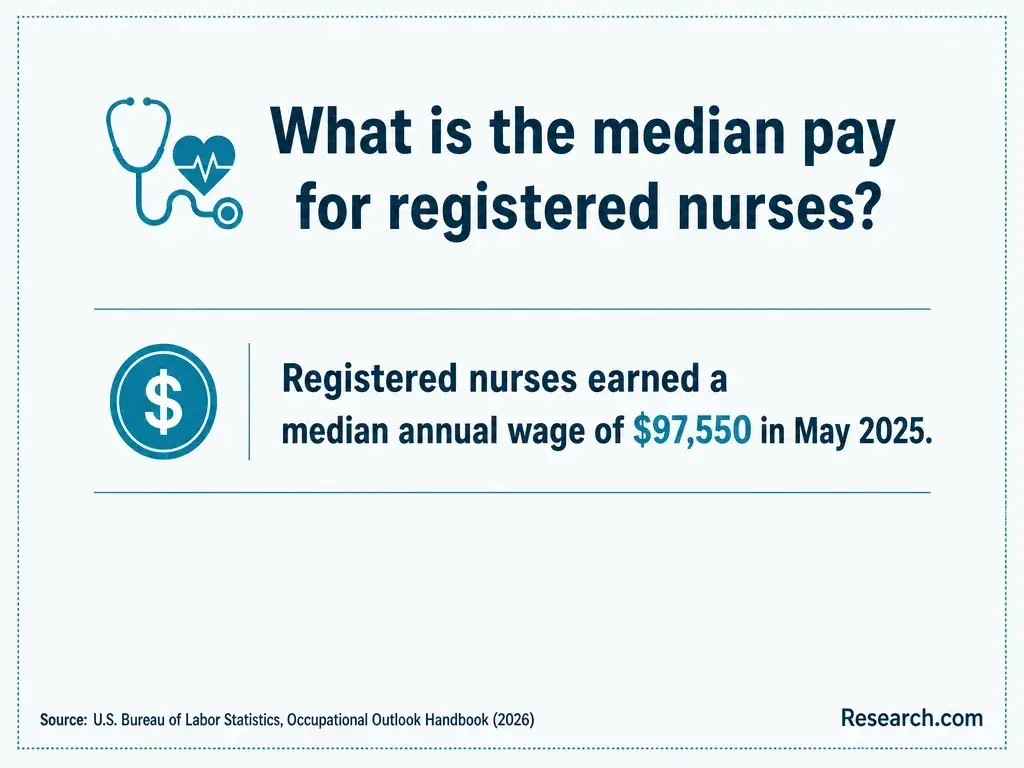
For salary context, the US Bureau of Labor Statistics reports a $126,520 median annual wage for all management occupations in May 2025 and projects about 1.1 million openings per year across those occupations from 2025 to 2035. These figures cover many industries and jobs; they are neither a healthcare risk-manager salary nor a forecast of openings in that specialty. Compare the responsibilities and qualifications in local postings, then explore roles to explore after healthcare administration study to assess whether a targeted course, credential, or graduate degree addresses the gap.
Other Things You Should Know About Healthcare Administration
Use it in regular risk oversight and revisit its priorities after a major incident, service change, or failed exercise. The appropriate cadence depends on the organization's exposure and committee structure.
Usually, directors need patterns, consequences, and control failures rather than unnecessary identifying details. Seek appropriate privacy and legal guidance when a particular case requires closer review.
A sensitive investigation or concern about management oversight may warrant one. Follow the organization's governance policies and legal advice; an executive session should not replace documented follow-up.
Ask whether the measures miss an emerging problem or whether reporting practices changed. Request corroborating evidence before concluding that the risk has declined.
- Technology and Cyber Risk Management | osfi-bsif.gc.ca https://www.osfi-bsif.gc.ca/en/guidance/guidance-library/technology-cyber-risk-management
- Risk Management and the Board of Directors | The Harvard Law School Forum on Corporate Governance https://corpgov.law.harvard.edu/2025/09/25/risk-management-and-the-board-of-directors-10/
- Disaster Recovery & Business Continuity Planning | Centri Consulting https://centriconsulting.com/news/insights/be-prepared-why-a-disaster-recovery-and-business-continuity-plan-is-crucial-for-your-organization/
- What is a Risk Appetite Framework? [Complete Guide] | Metricstream https://www.metricstream.com/learn/what-is-risk-appetite-framework.html
- Business Continuity Plan (BCP): Purpose, Importance, SOC 2 | Linford & Company LLP https://linfordco.com/blog/business-continuity-plan-bcp-importance-soc-2/
- Risk appetite and tolerance | theirm.org https://www.theirm.org/what-we-say/thought-leadership/risk-appetite-and-tolerance/
- Three Tips for Presenting Risk to the Board | Riskonnect https://riskonnect.com/integrated-risk-management/three-tips-presenting-risk-board/