2027 Mapping Public Payer Responsibilities in a Student Case

Co-Founder and Chief Data Scientist
A student interested in Medicare or Medicaid administration needs to know more than which degree has "healthcare" in its name. Public payer work crosses federal and state agencies, health plans, contractors, and providers - and each has different authority.
This guide shows how to map those responsibilities in a realistic case, then use that map to evaluate coursework, online programs, costs, and career options. It is especially useful if you are moving from claims, clinical, business, or public-sector work into program management.
Key Things You Should Know
- Start a public payer case by identifying who sets the rule, who administers the benefit, who performs the task, and who is accountable when something goes wrong.
- An MHA or healthcare-focused MBA can support management goals, but claims, policy, data, or compliance experience may matter more than the degree title for a first public payer role.
- The Bureau of Labor Statistics reports a May 2025 median wage of $126,520 across management occupations; that broad figure is not a salary estimate for new Medicare or Medicaid administrators.
What is healthcare administration and how does it support public payer responsibilities?
Healthcare administration is the management of healthcare organizations, programs, people, budgets, information, and compliance. In a public payer case, the essential skill is distinguishing policy authority from day-to-day operations. Medicare is a federal program administered by the Centers for Medicare & Medicaid Services (CMS). Medicaid operates under federal requirements but is administered by states, with arrangements that can involve managed care organizations and other contractors.
Consider a student case: a beneficiary reports that a covered service was denied. The table maps questions an administrator would investigate; it does not assume that every denial follows the same process.
| Responsibility to map | Question for the student case | Why it matters |
| Program and benefit rules | Is this a Medicare or state Medicaid benefit, and which rule applies? | The governing program determines the relevant coverage and appeal framework. |
| Operational decision | Did an agency, health plan, or contractor process the request? | The organization performing a task is not necessarily the one that set the rule. |
| Notice and review | Who must explain the decision, and what review route is available? | Administrators must preserve beneficiaries' procedural rights. |
| Oversight | Who monitors performance, accuracy, privacy, and contract compliance? | Delegating work does not eliminate oversight responsibilities. |
A student seeking an entry point can use an online health administration bachelor's program comparison to look for policy, operations, and data coursework - not merely a broad leadership label. The case also reveals whether the student prefers direct program operations, oversight, or provider-side reimbursement work.
What education is required for careers managing Medicare and Medicaid programs?
There is no single degree required for every Medicare or Medicaid administration job. Requirements depend on the employer, position classification, and duties. A bachelor's degree can be a route into analyst, claims, operations, or compliance work; management positions often call for substantial relevant experience, and some employers prefer a graduate degree.
Start with your existing work. A claims specialist may already understand denials but need budgeting and policy analysis. A clinician may understand care delivery but need reimbursement and contracting knowledge. Someone entering from general business may need exposure to healthcare terminology, program rules, and protected health information. Applicants considering graduate study without direct industry experience can examine applying to an MHA without a healthcare background, while checking each school's actual experience policy.
For government roles, read the specific job announcement rather than assuming a graduate degree replaces required specialized experience. For contractor or health plan roles, inspect the job description for the program, jurisdiction, and operational knowledge expected.
Which healthcare administration degrees prepare students for public payer roles?
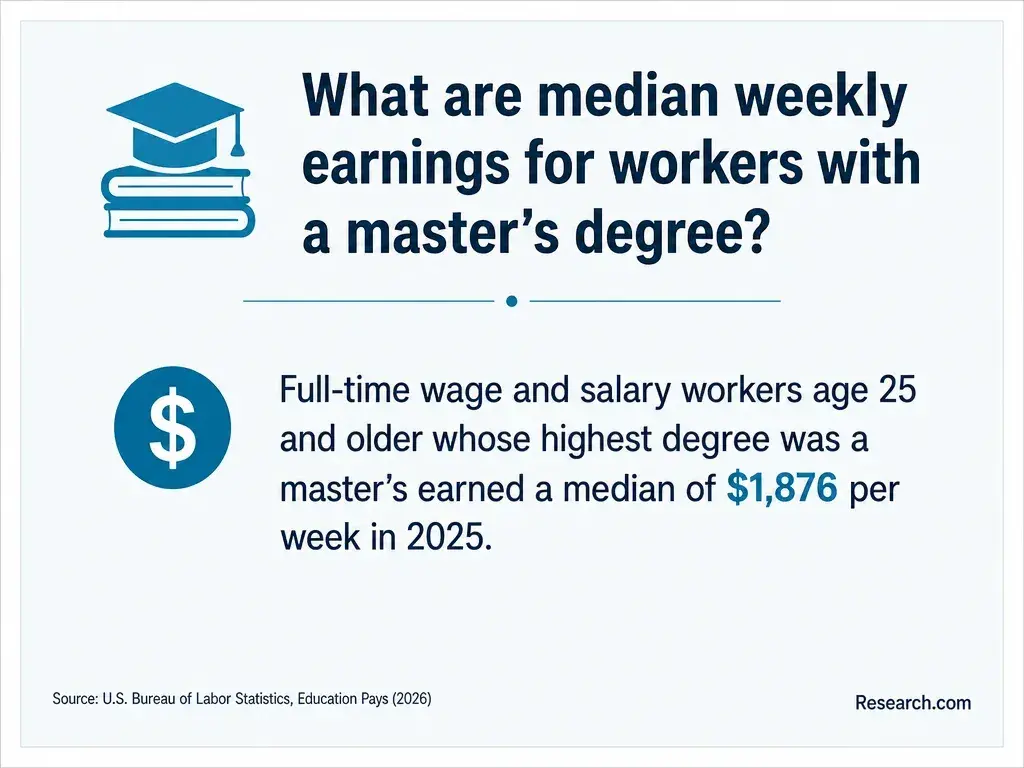
The best degree depends on the responsibility you want to hold. A bachelor's in healthcare administration can build an entry-level foundation. A master of health administration (MHA) generally concentrates on managing healthcare organizations and systems. An MBA provides a broader management core; a healthcare concentration, if officially offered, may add relevant electives but does not automatically provide deep training in Medicare or Medicaid policy. An MPH with a policy focus may better suit someone pursuing population-level analysis or government policy work.
Before choosing, compare the actual course catalog and applied opportunities with your target job descriptions. An online MHA program selection guide can help frame that comparison, but verify each program's current curriculum and placement support directly. A specialized master's may be more efficient than an MBA if your goal is payer policy or reimbursement rather than broad business leadership; neither degree substitutes for hands-on program experience.
Course titles vary, so inspect syllabi and assignments. For the denial case, useful preparation includes healthcare finance and reimbursement, US health policy, Medicare and Medicaid program design, managed care, healthcare law and ethics, quality improvement, and data analysis. A strong applied assignment might require students to trace a coverage rule through an operational decision, explain the applicable review process, and propose an oversight measure.
Choose technical depth according to the job. Healthcare administration coursework usually teaches managers to interpret payment and performance information; it may not teach the coding or data-system skills needed for a specialized analyst position. If the target role centers on health records, coding, or information governance, compare evaluating CAHIIM-accredited health information management schools with a general administration curriculum. Ask for a sample syllabus rather than treating a course called "healthcare finance" as proof of public payer coverage.
Online delivery can work well for employed students when the program offers substantive instruction, feedback, and applied work. It does not, by itself, establish equivalent access to internships, employer recruiting, or relationships with local agencies. For a student studying public payer responsibilities, the more useful test is whether they can practice mapping authority, analyzing a policy decision, and presenting findings to others.
Compare required live sessions, group work, field placements, and any campus visits against your schedule. Ask whether online students can complete payer-related projects and use the same career services as campus students. Accelerated online healthcare management master's options may reduce calendar time, but a faster schedule can leave less room for an internship or a substantial policy project. Choose speed only if the learning and experience you need still fit.
First, verify that the institution holds recognized institutional accreditation and that it applies to the school awarding the degree. Then check whether a relevant program has specialized accreditation, where applicable: CAHME accredits eligible healthcare management programs, AACSB accredits business schools, and CAHIIM accredits eligible health information and related programs. These are different reviews; none turns every course into public payer training.
Confirm accreditation status in the accreditor's current directory, including the precise program and delivery option when listed. If you are considering study beyond a master's, compare advanced healthcare management degree pathways online separately rather than assuming a doctoral option shares a master's program's specialized accreditation. For most operational payer jobs, a doctorate is not an entry requirement.
Bachelor's programs generally ask for prior academic records; graduate programs commonly require an earned bachelor's degree and application materials such as transcripts, a résumé, and a statement of purpose. Prerequisites, professional experience, recommendations, test policies, and minimum grades vary by school. A nonbusiness or nonhealthcare bachelor's degree does not automatically rule out an MHA or MBA.
Before applying, ask admissions whether prior coursework is needed, whether your work experience meets any stated expectation, and whether a field placement is required. If timing matters, a healthcare administration program start-date comparison can narrow possibilities; confirm the next actual start date and application deadline with each school. Admission to a program should not be confused with eligibility for a particular government job.
Time to completion depends on the credential, accepted transfer credits, course load, and scheduling. A bachelor's may take less time for a student with substantial transferable credit; a master's may offer part-time or accelerated routes. Neither label tells you how much time a required practicum, capstone, or group project will demand.
For an accurate cost comparison, request each school's current tuition basis - per credit, course, or term - along with required credits, mandatory fees, materials, and any travel or placement expenses. Calculate the cost under the pace you can sustain, then account for employer assistance and any borrowing costs. Do not treat tuition alone as the full cost of attendance. Healthcare administration degree completion through accelerated study is worth considering when credits transfer cleanly; it may be less attractive if acceleration limits work hours or practical experience.
Possible employers include government agencies, Medicare or Medicaid contractors, managed care organizations, consulting firms, and providers that manage public payer contracts. Job titles vary, but responsibilities may involve claims operations, appeals coordination, quality oversight, program integrity, contracting, policy analysis, or management. A sensible transition often builds from a role in which you already know the workflow toward one with broader budget, staff, or oversight responsibility.
For salary context, the Bureau of Labor Statistics reports a $126,520 median annual wage in May 2025 for management occupations as a group. This is not a Medicare or Medicaid job-specific figure, and it includes experienced managers across many industries. Compare actual postings for your location, employer type, and experience level instead of using a broad median to estimate a degree's payoff. A doctorate may fit a later research or executive objective, but reviewing doctoral tuition in healthcare administration should come after confirming that your target roles value that credential.
What certifications and licenses apply to healthcare administration careers?
Most general healthcare administration roles do not have a universal professional license. A particular job may instead favor demonstrated expertise in compliance, health information, coding, project management, or a clinical profession. Clinical licensure remains a separate requirement when the position includes regulated clinical duties; an MBA or MHA does not confer it.
Check job postings before paying for a credential: distinguish "required" from "preferred," identify the issuing organization, and confirm eligibility and renewal obligations. A certification can validate a specific skill, while a degree provides broader education. Likewise, online healthcare administration doctoral formats compared describes further academic study, not a license to administer Medicare or Medicaid. Choose additional credentials for a defined responsibility, not for their titles alone.
Other Things You Should Know About Healthcare Administration
Not without appropriate authorization and safeguards. Use public, de-identified, or instructor-provided hypothetical material unless the institution and data holder explicitly approve another arrangement.
Authority depends on the program, organization, and assigned role. An administrator may manage the process, but must follow the applicable decision and appeal rules rather than independently promising a reversal.
Requirements vary by employer and position. Review each posting's citizenship and work-authorization conditions; do not assume a contractor job and a federal government job use identical rules.
Treat coursework as a foundation, not a permanent rulebook. For work decisions, check current CMS guidance, the relevant state's Medicaid materials, and your employer's approved procedures.
- Medicare Secondary Payer | cms.gov https://www.cms.gov/medicare/coordination-benefits-recovery/overview/secondary-payer
- Prompt Pay FAQ - Texas Department of Insurance https://www.tdi.texas.gov/hprovider/ppsb418faq.html
- Student Assignment in Elementary and Secondary Schools & Title VI | U.S. Department of Education http://www.ed.gov/laws-and-policy/civil-rights-laws/civil-rights-act-of-1964/student-assignment-in-elementary-and-secondary-schools-title-vi
- 42 CFR Part 447 -- Payments for Services | ecfr.gov https://www.ecfr.gov/current/title-42/chapter-IV/subchapter-C/part-447
- Mandatory and optional benefits | MACPAC https://www.macpac.gov/subtopic/mandatory-and-optional-benefits/
- 10 Things to Know About Medicaid | KFF https://www.kff.org/medicaid/10-things-to-know-about-medicaid/