
2027 A Care Transition Document Handoff: A Healthcare Administration Student Portfolio Project

Co-Founder and Chief Data Scientist
A care transition can fail when the next team receives an incomplete medication list, an unclear follow-up plan, or no named contact for an unresolved issue. For healthcare administration students, designing a document handoff around those risks is a practical way to show how they would improve a process - not provide clinical care.
This guide explains what the project should contain, how to build and evaluate it, and how to use it when comparing healthcare administration programs or discussing career goals. It also identifies where clinical approval, privacy safeguards, and additional experience remain essential.
Key Things You Should Know
- A strong portfolio artifact includes a sample transition document, a handoff workflow, defined responsibilities, and a way to check whether the receiving team got usable information.
- Use a fictional case or institution-approved data; a student-designed template does not replace a clinician-approved discharge document or an organization's policy.
- The Bureau of Labor Statistics reports a $126,520 median annual wage for all management occupations in May 2025 - not a starting salary for healthcare administration graduates or a return from this project.
What Is a Care Transition Document Handoff in Healthcare Administration?
A care transition is a move between settings or teams, such as a hospital discharge to home care or a transfer to a rehabilitation facility. A document handoff is the controlled process of preparing, sending, receiving, and confirming the information the next team needs. For an administrator, the project focuses on workflow, accountability, information quality, privacy, and coordination - not on making diagnoses or prescribing treatment.
The portfolio deliverable is more than a form. It shows who supplies clinically verified information, when the document is sent, how the receiver identifies missing items, and how an unresolved issue is escalated. Students interested in the records and data-governance side of this work can also compare program options for accredited HIM study; health information management and healthcare administration overlap, but they are not the same field.
How Does This Portfolio Project Prepare Students for Healthcare Administration Careers?
The project turns a patient-safety concern into an operational problem a prospective administrator can analyze: where information originates, which team owns each step, and what happens when a handoff is delayed. It is especially useful for students moving from an adjacent role - such as scheduling, patient access, or clinical support - because they can connect existing experience to process improvement without claiming clinical authority they do not have.
In an interview, a student can explain the initial workflow, the failure point they identified, the revised process, and how they would test it with staff. That is stronger evidence of administrative judgment than displaying a polished template alone. For context on possible job paths - not a promise of placement - review healthcare administration roles and salary considerations. Employers may still expect relevant workplace experience, especially for supervisory positions.
What Should a Care Transition Document Handoff Include?
The sample document should make the receiving team's immediate tasks and unanswered questions visible. Its clinical fields must be selected and validated with qualified clinicians for the intended setting; the student's contribution is to design a reliable process around them. A practical portfolio checklist includes:
- Transition context: fictional patient identifier, sending and receiving settings, reason for transition, and date and time.
- Clinically reviewed information: relevant condition summary, medication reconciliation status, allergies, pending results, and care instructions, as applicable to the case.
- Next actions: follow-up appointments, services or equipment to arrange, deadlines, and the person or team responsible for each action.
- Handoff controls: sender and receiver roles, secure transmission method, receipt confirmation, missing-information escalation, and version or update status.
- Evaluation: a brief measure of completeness or timely acknowledgment, plus an explanation of what staff would do when the measure reveals a problem.
Keep the portfolio copy separate from a live medical record. At the undergraduate level, this project can demonstrate foundational process thinking; readers comparing undergraduate healthcare administration options at accredited universities should check whether coursework includes applied assignments and access to appropriate faculty feedback.
Healthcare operations courses help students map the transfer from sender to receiver. Quality-improvement courses support testing whether the workflow catches omissions. Health information systems courses address documentation and interoperability, while healthcare law and ethics courses frame privacy, access, and organizational responsibility. A course in organizational behavior can help students anticipate why a handoff policy may fail when roles or incentives are unclear.
Course titles and project requirements vary. A student without healthcare employment may benefit from case-based assignments and supervised feedback rather than assuming a general management course will supply clinical context. When comparing health administration master's options without prior healthcare employment, ask how the program helps students obtain realistic cases and collaborate with healthcare professionals. An MBA may strengthen budgeting and change-management skills, but an MHA may provide more sustained study of healthcare delivery; neither confers clinical licensure.
Start with a narrow scenario, such as a fictional hospital-to-home-care transition. The following sequence produces an artifact that can be assessed rather than merely displayed:
- Define the sending team, receiving team, transition point, and one specific failure risk.
- Map the current handoff, including information sources, decision owners, transmission, and receipt.
- Draft the sample document and workflow using fictional information or data expressly approved for the assignment.
- Ask a qualified reviewer to check clinical fields and a faculty member or operational mentor to challenge the workflow.
- Test the design with a simulated missing item or delayed acknowledgment; revise the escalation path and document what changed.
- Submit the template, workflow map, test findings, limitations, and a short reflection on privacy and implementation.
An accelerated degree can compress the time available for feedback and revision. If this project is central to your goals, examine capstone scheduling - not just program length - when using an accelerated graduate healthcare management program comparison.
A well-documented handoff project demonstrates process mapping, stakeholder communication, risk identification, information governance, and the ability to turn feedback into a revised procedure. Its most persuasive feature is traceability: a reviewer can see why each field exists, who is responsible for it, and how the design responds to a plausible failure.
The project also reveals a student's limits. It cannot establish that a redesigned process improves patient outcomes without implementation and appropriate evaluation, and it does not prove competence to approve clinical instructions. Professionals considering online doctoral leadership study for healthcare professionals can use the artifact to identify a deeper organizational question, but a portfolio exercise is not a substitute for formal research or workplace validation.
Requirements vary by institution, degree, and student background. A program may require a supervised internship, administrative residency, capstone, applied project, or another form of experiential learning; a portfolio may instead be something the student assembles from coursework. Do not assume that a program advertising "hands-on learning" requires this particular project.
Before enrolling, ask whether you must find your own placement, whether current employment can meet an experiential requirement, who supervises the work, and whether you may share a sanitized deliverable with employers. These questions matter especially to working students whose schedules or access to healthcare facilities limit placement options. When exploring graduate program options for an online MHA, compare the actual experiential requirements in each program's current handbook.
Either format can support a strong handoff project. The meaningful differences are access to reviewers, required field experiences, collaboration schedules, and total cost - not whether the student attends lectures in a classroom. The comparison below identifies what to verify rather than assuming that all programs in a format operate alike.
| Decision factor | Online program | Campus program |
| Project collaboration | May use remote meetings and shared documents; live sessions may still be required. | May offer in-person meetings; team work can still extend beyond class hours. |
| Clinical or operational feedback | May depend on arranged local contacts or remote mentors. | May have nearby institutional partners; access is not guaranteed. |
| Practical experience | Placement location and supervision policies require confirmation. | Placement location, availability, and travel still require confirmation. |
| Cost exposure | Tuition and fees may be joined by software or placement costs. | Tuition and fees may be joined by commuting or relocation costs. |
If affordability is decisive, compare total required credits, mandatory fees, materials, and any travel or placement expense - not tuition alone. Online healthcare management degrees with lower tuition are a starting point for that comparison, not proof that a particular program has the lowest total cost for you.
First, confirm that the institution holds recognized institutional accreditation. Then check whether the specific degree has relevant programmatic accreditation and whether that distinction matters to your intended employer or next degree. CAHME accredits eligible graduate healthcare management programs; it does not accredit every healthcare administration degree or certify an individual student's portfolio.
Students considering a graduate management degree can examine healthcare administration master's choices with CAHME accreditation, then verify the current status of the exact program and delivery option with the accreditor and school. An MBA's business-school accreditation, where applicable, is a separate question. Accreditation helps assess a program, but it does not guarantee internship access, employment, or approval of a student-designed handoff.
What Careers, Salaries, and Certifications Follow Healthcare Administration Training?
Relevant paths include care-coordination operations, quality improvement, health information operations, and eventually department or service-line management. An entry-level applicant may use the project to compete for analyst or coordinator work; someone who already manages a team may use it to demonstrate a specific improvement skill. Senior roles generally call for demonstrated responsibility, not just a degree or portfolio.
The Bureau of Labor Statistics reports that management occupations overall had a median annual wage of $126,520 in May 2025 and projects their employment to grow faster than the average for all occupations from 2025 to 2035. That wage covers management occupations broadly: it is not a healthcare administration graduate salary, an entry-level estimate, or evidence that a handoff project raises pay. Compare openings and compensation for the particular role, location, and experience level you seek.
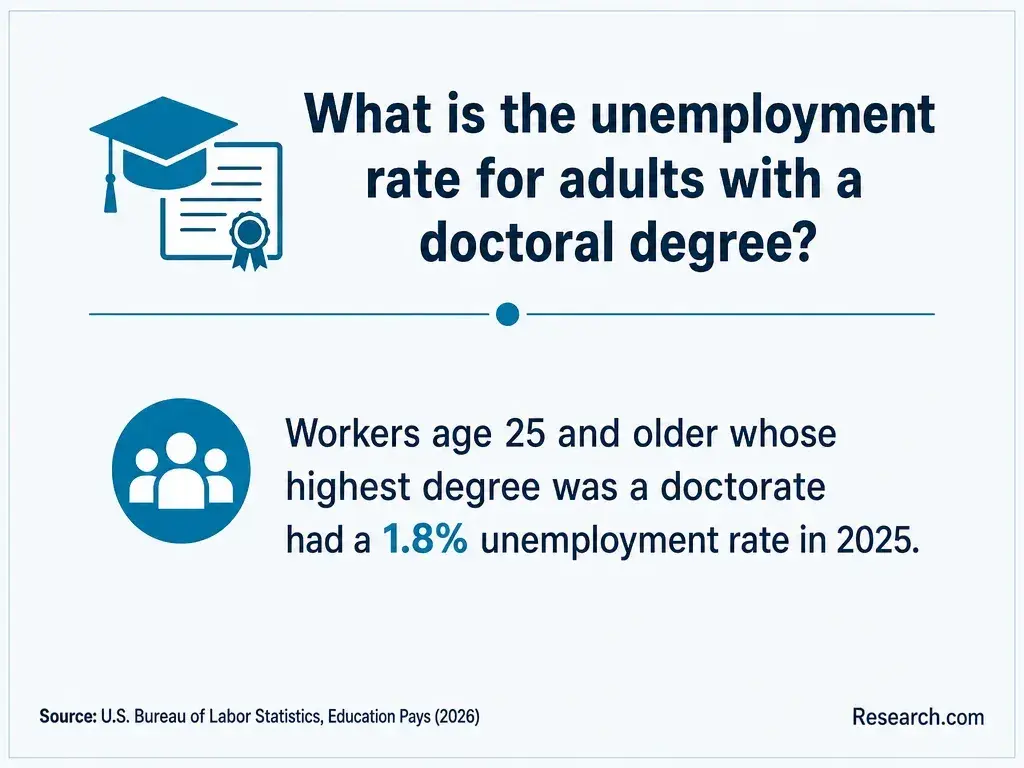
Professional certifications may help once you meet an issuing organization's eligibility rules, but no general healthcare administration certification authorizes clinical practice. A specialized HIM credential, for example, should be evaluated against HIM education and exam requirements rather than assumed to follow from an MHA or MBA. If a doctorate is a later goal, weigh its additional time and cost against the role you actually want; financial planning for a healthcare administration doctoral degree is a separate decision from funding this portfolio project.
Other Things You Should Know About Healthcare Administration
Check your course and organization's rules first. Do not enter identifiable patient information into an unapproved tool, and have qualified people review any clinical content rather than treating generated text as authoritative.
No. A technical exchange may move data between systems, but a complete handoff also requires clear responsibilities, usable information, and a way to address missing or unacknowledged items.
Show a sanitized excerpt and explain the problem, your design choices, reviewer feedback, and what remains untested. Describe your own contribution precisely if it was a group project.
Ownership and permission depend on school agreements and the host organization's policies. Get approval before sharing any workplace-derived document, even if you have removed patient names.
- CMS' Discharge Planning Rule Supports Interoperability and Patient Preferences https://www.cms.gov/newsroom/fact-sheets/cms-discharge-planning-rule-supports-interoperability-and-patient-preferences
- Transitional Care: Moving patients from one care setting to another - PMC https://pmc.ncbi.nlm.nih.gov/articles/PMC2768550/
- Tool: Handoff | Agency for Healthcare Research and Quality https://www.ahrq.gov/teamstepps-program/curriculum/communication/tools/handoff.html
- Summary of the HIPAA Privacy Rule | hhs.gov https://www.hhs.gov/hipaa/for-professionals/privacy/laws-regulations/index.html
- Your Health Information Security - ONC https://healthit.gov/privacy-security/your-health-information-security/
- Transitions of Care | who.int https://iris.who.int/server/api/core/bitstreams/0b80b1aa-50ed-4f6b-8d98-87c5d055534e/content
- eCFR:: 42 CFR 482.43 -- Condition of participation: Discharge planning. https://www.ecfr.gov/current/title-42/chapter-IV/subchapter-G/part-482/subpart-C/section-482.43
- Safe handoff practices and improvement of communication in different paediatric settings - ScienceDirect https://www.sciencedirect.com/science/article/pii/S2341287923001904
- 42 CFR § 482.43 - Condition of participation | LII / Legal Information Institute https://www.law.cornell.edu/cfr/text/42/482.43


