2027 DHA Admissions Without a Director-Level Job Title

Co-Founder and Chief Data Scientist
A director-level title is not the only way to demonstrate readiness for a Doctor of Healthcare Administration (DHA). If you have led clinical teams, improved operations, managed projects, or influenced budgets, some programs may consider that experience even if your title is coordinator, manager, or clinician. Admissions standards vary, however, and a doctorate is not always the best next step. This guide explains how to assess your eligibility, present your experience, compare DHA programs with shorter alternatives, and decide whether the degree fits the role you want.
Key Things You Should Know
- A director title is not a universal DHA admission requirement. Programs may assess the scope of your healthcare work and leadership responsibilities, but each school sets its own degree and experience rules.
- Document decisions and results, not just job titles. Team leadership, process improvement, budgets, and cross-functional projects can strengthen an application when supported by specific examples.
- A DHA does not confer executive status or a predictable salary. The U.S. Bureau of Labor Statistics reports a $126,520 median annual wage for management occupations in May 2025; that broad figure is not a DHA graduate salary.
What Is a DHA Degree, and Can You Apply Without a Director-Level Job Title?
A DHA is a practice-oriented doctorate focused on leading healthcare organizations and addressing administrative problems. It differs from clinical degrees that prepare people to provide care. It also differs from an MBA's broad business-management curriculum: DHA study generally places management questions in healthcare settings, such as service delivery, quality, policy, and organizational change.
Yes, you may be able to apply without a director-level title. The deciding issue is the individual program's published eligibility policy. Some programs expect substantial healthcare leadership experience or a relevant master's degree; others consider applicants whose responsibilities show leadership potential without executive seniority. A supervisor overseeing a care team may present a stronger case than a director whose duties are narrowly defined.
If you are earlier in your education, first establish which credentials your target program requires. Someone completing an undergraduate degree can review university healthcare administration bachelor's offerings before deciding whether a master's degree or doctorate is the appropriate later step.
What Are the Admission Requirements for DHA Programs Without Executive Experience?
There is no universal DHA admissions checklist. Schools may require a completed master's degree, relevant professional experience, a résumé, recommendations, a statement of purpose, transcripts, and evidence that you can undertake doctoral-level applied work. Some request an interview or a proposed area of inquiry. Minimum experience, GPA, testing, and prerequisite rules must be checked against the specific program rather than inferred from the DHA label.
Read experience requirements literally. "Healthcare experience," "management experience," and "executive experience" are different standards. Ask admissions whether clinical supervision, quality-improvement work, project ownership, or leadership outside a formal reporting line meets its requirement. Obtain the answer before paying an application fee.
If your background is primarily outside healthcare, a DHA may be a difficult first transition. Comparing MHA applications without a prior healthcare job can help you evaluate a master's-level entry route instead of assuming a practice doctorate will provide the missing industry experience.
How Can Healthcare Professionals Qualify for DHA Admission Without Director Experience?
Translate your work into evidence of administrative responsibility. Admissions reviewers need to understand what you influenced, how independently you worked, and whether your examples prepare you for applied doctoral study. A nurse manager, practice administrator, analyst, or program coordinator may each have relevant evidence, even though their titles differ.
Before drafting your application, assemble examples you can explain and substantiate:
- Leadership: Describe teams you supervised, trained, convened, or guided through a change.
- Operational judgment: Explain a staffing, access, workflow, quality, or resource decision and your role in it.
- Results and reflection: Identify an outcome you can verify, the limits of your contribution, and what you would do differently.
- Doctoral purpose: Connect a persistent healthcare problem to the applied research you hope to conduct.
Choose recommenders who observed those responsibilities, not merely people with impressive titles. If you have healthcare experience but have not completed the undergraduate credential a graduate pathway requires, healthcare administration degree completion through accelerated study may be a more immediate goal than a DHA application.
Yes. Check that the university holds recognized institutional accreditation, then examine any programmatic claims separately. Institutional accreditation concerns the university; specialized accreditation concerns a particular program or field. Neither substitutes for checking whether the DHA's curriculum, faculty, and admissions policy fit your goals.
Do not assume that accreditation associated with an MHA, MBA, or health information management program automatically covers a DHA at the same university. For example, CAHIIM accreditation applies to eligible health informatics and health information management programs, not to every healthcare-administration doctorate. If your goal is a health records profession rather than organizational administration, evaluating CAHIIM-accredited health information management schools addresses a different credential decision.
Confirm the university's current accreditation status through the accreditor's directory and ask whether your intended DHA program has any separately claimed accreditation. Also ask prospective employers whether they specify an accredited institution, a particular degree, or relevant leadership experience.
The sensible route depends on the education you already have and the work you want to do next. The table distinguishes pathways; it does not imply that every DHA accepts every preceding credential.
| Starting point | Potential next step | Main decision |
| Associate degree or unfinished bachelor's degree | Complete an eligible bachelor's degree | Check transfer-credit and graduate-admission rules before planning a doctorate. |
| Bachelor's degree and limited healthcare leadership experience | Build relevant work experience; consider an MHA or related master's | Determine whether the target role needs applied management preparation before doctoral study. |
| Relevant master's degree and substantial healthcare responsibilities | Compare DHA admission policies and applied projects | Assess whether the doctorate advances a specific professional objective. |
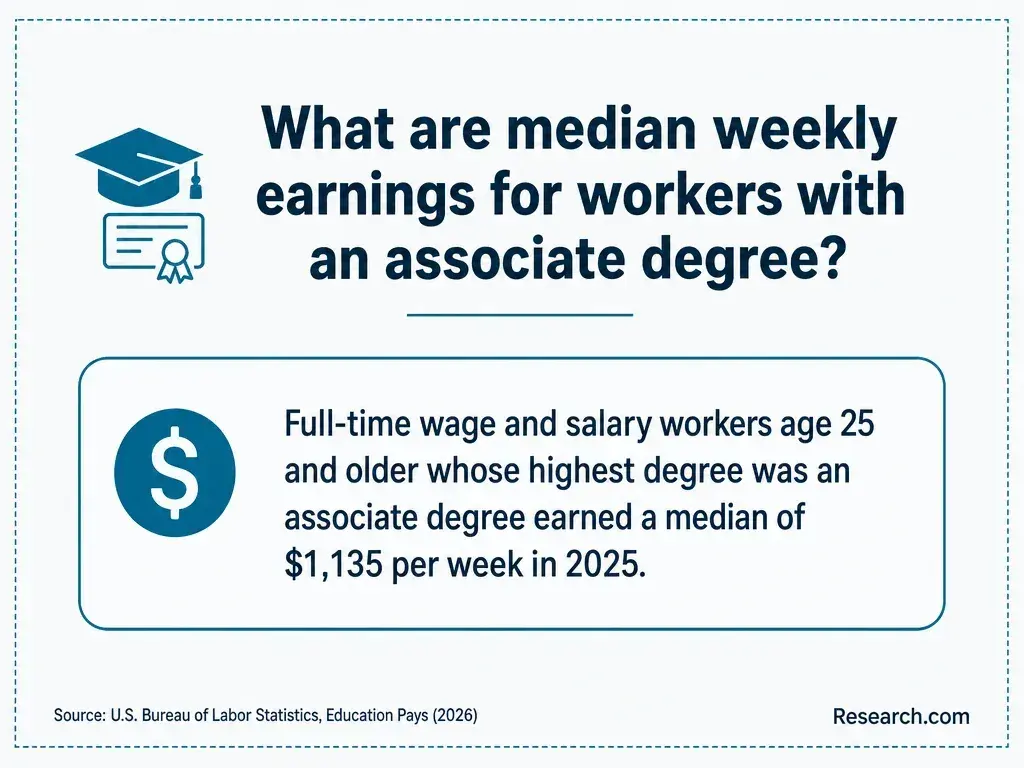
For an applicant starting with an associate degree, understanding healthcare administration articulation and transfer options can prevent lost credits on the way to graduate eligibility. For applicants who already hold a master's degree, additional training in budgeting, quality improvement, analytics, or supervision may address a skill gap more directly than another degree.
Online delivery can let you remain employed while studying, but it does not make a program fully self-paced. Live classes, group projects, residencies, and deadlines may constrain your schedule. More importantly, a program designed around executive-level workplace projects may be hard to use if you cannot access an organization, decision-makers, or suitable data.
Ask how students who are not directors complete applied assignments: Can they use a project from their current role, collaborate with an employer, or work with a community organization? Clarify any permissions needed to use operational data and whether a proposed project can be completed without authority over an entire department.
When comparing accelerated healthcare leadership study beyond the master's level, examine the actual course sequence and project requirements. A shorter advertised timeline is useful only if the required pace, transfer policy, and access to a viable project fit your circumstances.
DHA curricula commonly address healthcare strategy, organizational leadership, finance, policy, ethics, quality improvement, and the use of evidence to solve operational problems. The precise courses and final project vary by school. Review required courses - not just program descriptions - to see whether you will study the issues relevant to your intended role.
For an applicant without director experience, the most valuable work may be learning to make a defensible case for change: define a service problem, evaluate evidence, consider financial and patient impacts, secure stakeholder support, and assess results. Coursework can develop that judgment, but it does not replace the authority or experience gained by managing people and resources at work.
Check the distinction between administrative leadership and technical records work. A comparison of health records career preparation versus healthcare administration study can clarify whether you need broad organizational training or a more specialized information-management curriculum.
Completion time and total cost vary substantially by program, enrollment pace, transfer policy, and the time needed for the final applied project. Do not compare schools using an advertised minimum duration unless you can meet its course load and project milestones while working. Ask for both the standard schedule and the maximum time allowed to finish.
Request a written cost estimate covering required credits, tuition, mandatory fees, materials, any residency travel, and charges that continue while you complete a project. If a school quotes a per-credit rate, calculate tuition using its required credits, then add the other costs; tuition alone is not the full expense. Employer assistance may reduce your cost, but check eligibility, annual limits, grade conditions, and repayment obligations before relying on it.
Compare the doctorate's cost with the qualification your target job actually calls for. Tuition comparisons for MHA and related master's programs provide a starting point if you still need foundational healthcare-management training. A less expensive master's, targeted course, or larger workplace assignment may offer a better next step than paying for a doctorate prematurely.
A DHA can support advancement in healthcare operations, quality improvement, service-line management, consulting, policy-related administration, or organizational leadership. Your realistic next role depends heavily on your existing work. A practice manager might pursue broader operational responsibility; a clinician who has led improvement projects might seek a formal administrative position. Neither should expect the degree alone to confer a director or executive role.
The U.S. Bureau of Labor Statistics reports that management occupations had a median annual wage of $126,520 in May 2025 and projects faster-than-average employment growth for the group from 2025 to 2035. Those figures cover many management occupations across industries. They do not describe entry-level healthcare administrators, DHA graduates, or the salary you would receive after graduation.
Use career options in healthcare administration and management to identify roles worth investigating, then read actual postings in your location. Note their required years of experience, supervisory scope, clinical qualifications, and preferred degrees. That comparison is more useful for judging a DHA's potential value than a broad management salary figure.
Do DHA Graduates Need Licensure or Professional Certification to Advance?
A DHA is an academic degree, not a license to practice medicine, nursing, or another regulated clinical profession. Many general healthcare-administration jobs do not require a DHA-specific professional license. Some roles, however, have separate state or employer requirements; nursing-home administrator positions are an important example. Clinical leadership jobs may also require an active license in the relevant profession.
Professional certifications can demonstrate focused expertise, but their eligibility rules and value vary by credential and employer. Before enrolling, separate the qualifications for your target job into required licenses, required experience, preferred degrees, and optional certifications. If the immediate barrier is management education rather than doctoral-level expertise, healthcare administration master's programs with one-year schedules may be worth comparing with a DHA - provided their pace and admissions rules fit your circumstances.
Other Things You Should Know About Healthcare Administration
Possibly. Colleges set their own hiring standards, and research-intensive faculty positions may prefer research doctorates and a publication record. Check postings for the type of teaching role you want.
Many practice-oriented programs permit workplace-based projects, subject to faculty approval and employer permission. Ask about data access, privacy review, and what happens if you change jobs.
That depends on the school's leave and reentry policies. Confirm how a pause affects tuition, project supervision, course availability, and the deadline for completing the degree.
Diploma and transcript wording is set by the institution. Ask the registrar for its policy rather than assuming online and campus credentials are labeled the same way.
- School-Determined Requirements | 2024-2025 Federal Student Aid Handbook https://fsapartners.ed.gov/knowledge-center/fsa-handbook/2024-2025/vol1/ch1-school-determined-requirements
- Decision-maker roles in healthcare quality improvement projects | nih.gov https://pmc.ncbi.nlm.nih.gov/articles/PMC10773379/
- General Schedule Qualification Policies | U.S. Office of Personnel Management https://www.opm.gov/policy-data-oversight/classification-qualifications/general-schedule-qualification-policies/
- How to Describe Your Work Experience | Goodwin College of Professional Studies https://drexel.edu/scdc/professional-resources/application-materials/resumes/experience-description
- Writing an Effective Job Description | Human Resources | Wright State University https://www.wright.edu/human-resources/writing-an-effective-job-description
- Doctor of Healthcare Administration (DHA) | MCPHS-Online https://www.mcphs.edu/academics/programs/healthcare-administration-dha
- PA Admission Requirements - PA Patient Care Experience https://www.med.wisc.edu/education/physician-assistant-pa-program/admission-requirements/patient-care-experience/
- What is a DHA degree? Compare DHA vs. PhD vs. DBA | Capella University https://www.capella.edu/blog/health-sciences/the-difference-between-a-phd-in-health-administration-and-a-doctor-of-health-administration/
- Get Started on your Application | ucsf.edu https://healthleadership.ucsf.edu/get-started-your-application
- Doctor of Health Administration (DHA) | National University https://www.nu.edu/degrees/healthcare-leadership/programs/doctor-of-health-administration-dha/