2027 Community Health Needs Assessments: The Undergraduate Administrator's Role

Co-Founder and Chief Data Scientist
A community health needs assessment can shape where a hospital invests its time and resources, but completing one takes more than collecting health statistics. Early-career healthcare administrators may coordinate partners, organize evidence, and help turn findings into an actionable plan.
This guide explains that work and helps prospective students judge whether an undergraduate healthcare administration degree offers the right preparation. It also covers program formats, costs, credentials, and realistic career paths - so you can choose education based on the job you want, rather than the degree's name alone.
Key Things You Should Know
- Tax-exempt hospitals generally must complete a community health needs assessment at least once every three years; an early-career administrator may support the process, but organizational leaders remain responsible for compliance and decisions.
- A relevant bachelor's degree can prepare students for CHNA coordination through public health, data, finance, and community-engagement coursework. It does not, by itself, confer clinical authority or qualify someone to lead every assessment.
- There is no universal CHNA license. Compare programs by applied assessment experience, internship access, total cost, and accreditation - not by an assumed salary payoff from an MBA.
What Is a Community Health Needs Assessment?
A community health needs assessment, or CHNA, is a structured process for identifying significant health needs in a defined community. Hospitals use information such as public health indicators and input from residents and community representatives to understand needs, assess available resources, and set priorities.
The resulting report informs a separate implementation strategy describing how the hospital plans to address selected needs.
Under federal tax rules, hospital facilities seeking tax-exempt status generally must conduct a CHNA at least once every three years, obtain required community input, make the assessment widely available, and adopt an implementation strategy.
The rules establish organizational obligations; they do not prescribe a single job title or make an undergraduate employee personally responsible for compliance.
A CHNA is not simply a patient-record analysis or a marketing survey. It asks whose needs may be missed by existing services and whether the proposed response fits the community. Students weighing a data-centered career against an operations-centered one may benefit from choosing between healthcare administration and health information management.
What Does an Undergraduate Administrator Do During a CHNA?
An undergraduate-trained administrator typically supports a CHNA rather than directing it independently. The scope depends on the employer, the person's experience, and whether public health specialists, researchers, or outside consultants lead the assessment.
The work follows the assessment from evidence gathering to implementation. At each stage, the administrator's contribution is usually coordination, documentation, or analysis under appropriate supervision:
- Define and organize the work: Help document the service area, project schedule, partner contacts, and decisions about whose input must be sought.
- Gather evidence: Compile existing health indicators and service inventories; arrange interviews, listening sessions, or surveys without treating convenience samples as representative of everyone.
- Support prioritization: Prepare clear summaries of needs and community feedback so decision-makers can weigh severity, inequities, available resources, and feasibility.
- Document and follow through: Check reports for clear methods and acknowledged limitations, coordinate publication, and help track actions in the implementation strategy.
This role rewards careful project management and respectful community engagement. A polished report is less useful if it overlooks people facing access barriers or fails to connect priorities to resources. For a broader view of positions beyond assessment support, explore potential career destinations for healthcare administration students; job titles and seniority vary considerably.
What Education Prepares Students for CHNA Careers?
A bachelor's degree in healthcare administration can provide a useful foundation, particularly when it includes population health, research methods, and fieldwork. Public health, health policy, and related degrees can also lead to CHNA-support roles. Employers may value a candidate's community-facing or analytical experience as much as the degree label.
The right level of education depends on the work you want to own. An undergraduate degree may fit coordination and entry-level analysis; an MHA, MPH, or other specialized graduate degree may be more useful for leading complex assessments, evaluating interventions, or managing population-health programs.
An MBA offers broader finance and organizational leadership training, but its healthcare electives should not be mistaken for advanced public health methods.
Doctoral study is generally a different commitment aimed at more advanced research or leadership goals, not a default requirement for CHNA work. If that is your long-term aim, compare healthcare administration doctoral program costs separately from the cost of entering the field.
Before paying for graduate study, seek an internship or job project involving community input, health data, or implementation tracking. It can reveal whether your next gap is technical analysis, public health practice, or management experience.
Course titles differ by school, so inspect syllabi and assignments rather than assuming a "community health" elective teaches assessment design. The following comparison shows what relevant coursework can contribute and what an undergraduate course may leave for supervised practice:
| Course area | CHNA-relevant learning | What to check |
| Public or population health | Health indicators, disparities, and social conditions affecting access | Whether students examine a defined local community |
| Research methods and statistics | Survey design, data interpretation, and limitations of evidence | Whether assignments address sampling and missing data |
| Health policy and ethics | Hospital obligations, privacy, and responsible community engagement | Whether assessment and implementation are distinguished |
| Finance and program evaluation | Resource decisions and ways to assess a response to identified needs | Whether students connect priorities to feasible actions |
A practicum that involves a community organization or health system can bring these subjects together, although its availability depends on the program. When comparing healthcare administration bachelor's degree choices at U.S. institutions, ask to see a recent course sequence and confirm whether applied work is required, optional, or unavailable.
There is no universal U.S. license to coordinate or contribute to a CHNA. A healthcare administration degree also does not authorize clinical practice. Licensure becomes relevant if the position includes a separately regulated profession, such as nursing, or a role with state-specific requirements.
Certifications in project management, analytics, or healthcare quality may help an experienced applicant demonstrate particular skills, but they are not a substitute for understanding community engagement and assessment methods.
Check the actual job description before paying for one: an employer may prefer hands-on work with data and partners over an unrelated credential.
If you already work in healthcare and need deeper management preparation, a graduate degree may be more appropriate than another certificate. Even then, planning for a one-year master's in health administration should begin with its curriculum and workload, not an assumption that faster completion meets a CHNA role's methodological needs.
Delivery format matters most when it affects practice and access to community partners. An online course can teach data interpretation effectively, while a campus program may make local field placements easier to arrange. Neither format guarantees a CHNA-related internship.
Use the comparison below to identify questions worth asking each school:
| Feature | Online program | Campus program |
| Scheduling | May reduce commuting; live meetings and group work can still be required | Usually requires travel to scheduled classes |
| Applied experience | May require students to secure an approved local placement | May offer nearby partner placements, subject to availability |
| Community network | Depends on remote projects, instructors, and local placement options | May offer more in-person contact with regional employers |
Ask who finds the placement, whether it can be completed near your home, and how the school supports students who cannot obtain one immediately. The same scrutiny applies later to graduate study: online MBA planning for an accelerated healthcare management pathway should account for live sessions, group work, and any required travel - not just the advertised completion time.
Requirements depend on the school and degree level. Bachelor's applicants should expect a school to review prior education and its general admissions criteria; transfer applicants also need a course-by-course credit evaluation.
Graduate programs commonly review an earned bachelor's degree and may request a résumé, statement, recommendations, or prerequisite preparation. Do not assume a particular GPA, test score, or work-history threshold applies without checking the program's current policy.
For a transfer student, the decisive question is not merely how many credits a school accepts. It is how many count toward the major and whether course sequencing delays graduation. Students building a transfer pathway to a healthcare administration degree should request a written degree audit before enrolling.
Applicants interested in CHNA work can also ask whether a public health course requires statistics first, whether placements require background checks, and whether prior healthcare employment can satisfy an experiential requirement. Those answers clarify both admission and the time needed to finish.
A bachelor's program is commonly designed around four academic years of full-time study, but transfer credits, part-time enrollment, prerequisites, and placement scheduling can change an individual timeline.
Graduate programs vary more widely by credits and pace. An advertised accelerated option may be a poor fit if it leaves no time for relevant work experience.
Do not compare schools using tuition per credit alone. Calculate the credits you still need at the rate you will actually pay, then add mandatory fees, materials, and any travel or placement expenses. Ask how long quoted tuition rates remain in effect and whether a course you need is offered each term.
To establish a shortlist, affordable bachelor's pathways in healthcare administration can be a starting point, but the least expensive advertised option may not be the least expensive path to graduation after a transfer evaluation.
If eligible, compare grants, employer assistance, and borrowing against the net cost. Taking longer while working in a relevant role may improve career preparation, even when it changes the total cost.
CHNA work appears across hospital community-benefit teams, public health organizations, nonprofit partnerships, and health-system planning departments. Job titles are not standardized. The table distinguishes plausible early roles from positions that generally call for more independent judgment and experience:
| Career stage | Possible roles | Typical contribution |
| Early career | Community health coordinator, program assistant, research or outreach assistant | Organizes information, partner contact, meetings, and reporting support |
| With relevant experience | Community benefit specialist, program evaluator, population health analyst | Manages defined assessment or evaluation workstreams |
| Management | Community health or population health manager | Oversees people, budgets, partnerships, and implementation decisions |
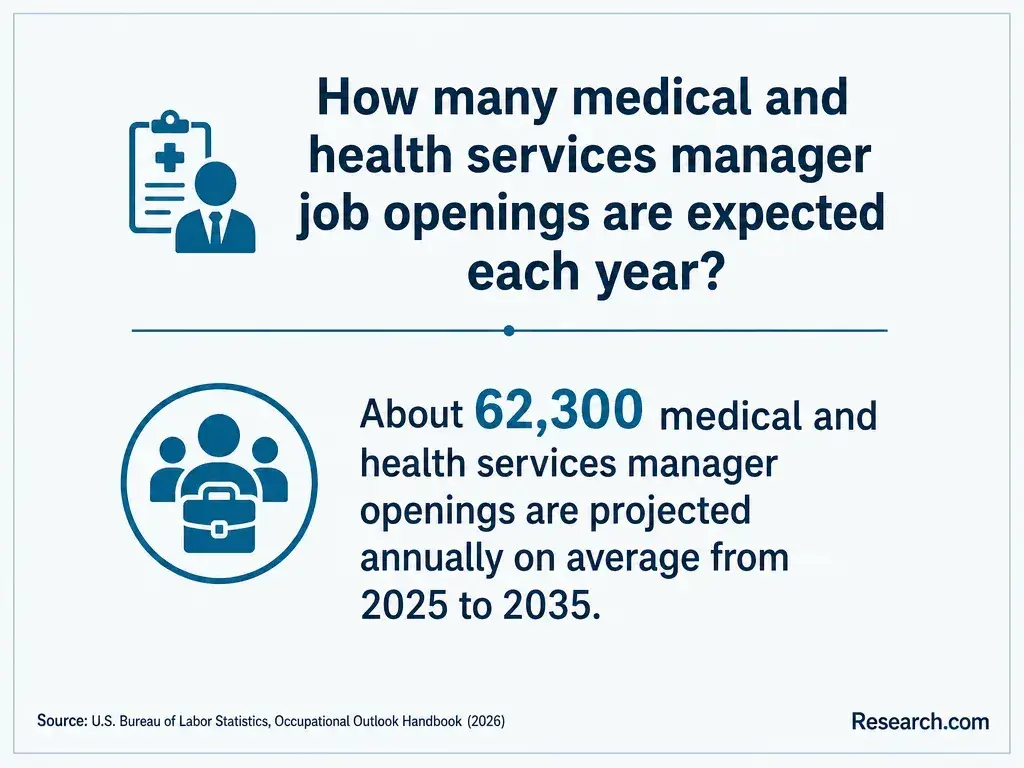
The U.S. Bureau of Labor Statistics reports a May 2025 median annual wage of $126,520 across management occupations. That broad figure is not an entry-level CHNA salary or a forecast for healthcare administration graduates; it includes managers in many industries and career stages.
For a realistic comparison, collect local postings for the specific role you seek and note their experience requirements and stated pay ranges.
Advancement usually depends on demonstrated results, not a degree alone. If you are considering a graduate credential to move into management, compare its price with the responsibilities it could help you attain; lower-tuition online MBAs in healthcare management may merit consideration for leadership goals, while an MPH or MHA may better address a specific public health or administration gap.
How Can Students Choose an Accredited Healthcare Administration Program?
Start by verifying that the institution holds recognized institutional accreditation, then check the status of the specific program and any specialized accreditation it claims.
Institutional accreditation and programmatic accreditation answer different questions; neither proves that a curriculum contains substantial CHNA training. Verify current status directly with the accreditor and school rather than relying on an old directory entry.
Next, compare the courses and applied experience against the work you want to do. Request a sample degree plan, ask who supervises placements, and find out whether students have completed projects involving community input, population data, or program evaluation. Ask career services what support is available to online and campus students separately.
If graduate study is part of your plan, apply the same checks when you compare affordable health administration graduate schools. The strongest choice is the program whose verified curriculum, placement arrangements, schedule, and net cost fit your target role - not necessarily the one with the broadest healthcare branding.
Other Things You Should Know About Healthcare Administration
Hospitals may collaborate on an assessment, subject to applicable requirements. Each hospital facility still needs to ensure its own obligations are met, including an appropriate implementation strategy.
No. It should explain its methods and identify significant needs within its defined community. Clear limitations help readers understand what the available evidence may have missed.
Federal CHNA rules call for input representing broad community interests, including people with public health expertise. Effective outreach also considers residents whose experiences may not appear in routine hospital data.
A useful assessment gives decision-makers understandable priorities and evidence they can connect to an implementation strategy. Tracking actions afterward helps the organization see where its response needs adjustment.
- The impacts of collaboration between local health care... - PMC https://pmc.ncbi.nlm.nih.gov/articles/PMC8054696/
- Data Sharing and Collection Principles and Standards | cdc.gov https://www.cdc.gov/program-collaboration-service-integration/php/data-security/principles.html
- Community health needs assessment for charitable hospital organizations - Section 501(r)(3) | Internal Revenue Service https://www.irs.gov/charities-non-profits/community-health-needs-assessment-for-charitable-hospital-organizations-section-501r3
- Community Health Needs Assessment | und.edu https://ruralhealth.und.edu/projects/community-health-needs-assessment
- Legal Requirements for Section 501(c)(3) Hospitals | Congressional Research Service https://www.everycrsreport.com/reports/R48027.html
- How 10 States Keep the "Community" in Hospitals' Community Health Needs Assessments - NASHP https://nashp.org/how-10-states-keep-the-community-in-hospitals-community-health-needs-assessments/
- An Introduction to Community Health Needs Assessment (CHNA) - Community Commons https://www.communitycommons.org/collections/An-Introduction-to-Community-Health-Needs-Assessment-CHNA