2027 Accreditation Readiness vs Everyday Quality Management

Co-Founder and Chief Data Scientist
A healthcare organization can be ready for an accreditation survey yet still struggle to improve care between surveys. For prospective healthcare administration students, that distinction matters: a program should teach both how organizations demonstrate compliance and how managers identify, measure, and address ongoing problems.
This guide explains the difference, the accreditation standards that apply to degree programs, and the education and experience behind healthcare quality careers. Use it to judge whether a healthcare administration degree, a healthcare-focused MBA, or more targeted training fits your goals.
Key Things You Should Know
- Accreditation readiness prepares an organization to demonstrate that it meets external standards; everyday quality management uses routine evidence to improve performance, including between surveys.
- Accreditation of a healthcare facility is different from accreditation of a university or degree program. Verify each separately before relying on a school's claims.
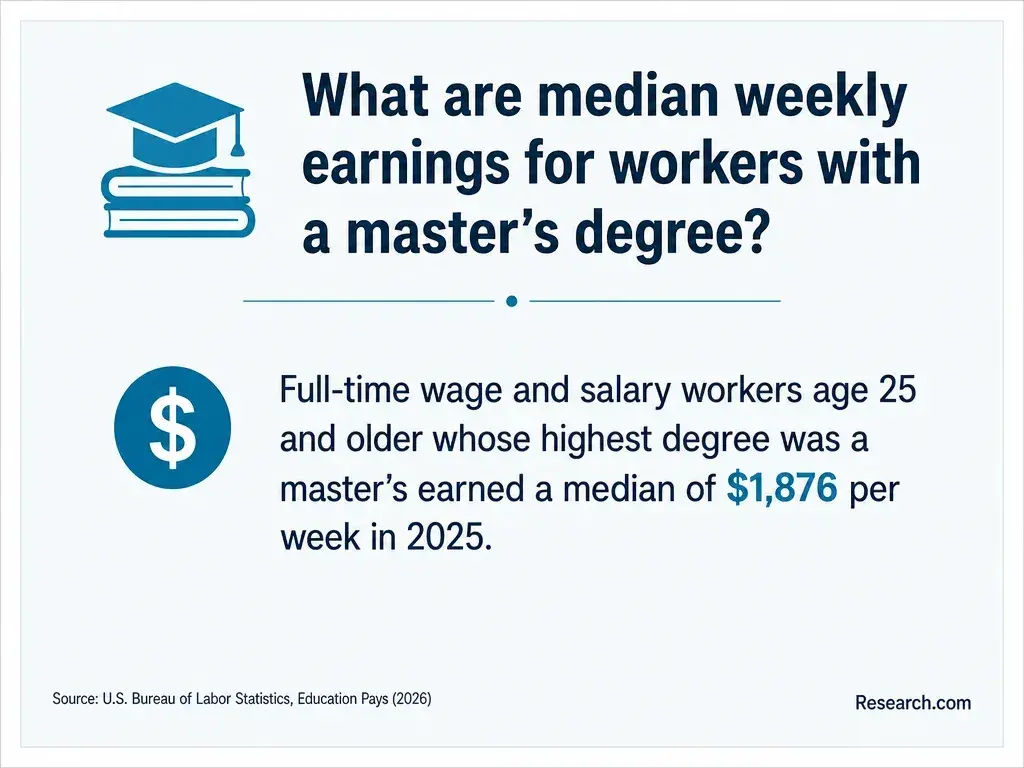
- The U.S. median annual wage for management occupations was $126,520 in May 2025, according to the Bureau of Labor Statistics; that broad figure is not a starting salary or a forecast for healthcare quality graduates.
What is the difference between accreditation readiness and everyday quality management?
Accreditation readiness means being able to show an external reviewer that an organization meets applicable standards. Everyday quality management means continually monitoring performance, investigating problems, testing improvements, and checking whether changes last. A sound quality system supports survey readiness, but passing a survey is not proof that every process consistently produces good outcomes.
The distinction is clearest when the two activities are compared by purpose and evidence. Healthcare administrators may work on both, but the work should not stop when a survey ends.
| Dimension | Accreditation readiness | Everyday quality management |
| Primary question | Can we demonstrate that we meet the relevant standards? | Where is performance falling short, and is our response working? |
| Typical evidence | Policies, required records, staff interviews, and observations | Performance trends, incident reviews, process measures, and improvement results |
| Time horizon | Preparation for, and response to, an external assessment | Continuous work across ordinary operations |
A manager deciding how to reduce appointment delays, for example, needs more than a compliant scheduling policy. They need reliable measures, input from staff and patients, and follow-up after a change. Students choosing between administrative and data-centered work can also benefit from comparing management and information-focused healthcare degrees.
Why does accreditation matter for healthcare administration programs?
Accreditation provides independent review of educational quality, but the accreditor and the scope of its review matter. Institutional accreditation applies to the university. Specialized accreditation, when available, applies to an eligible program or school. Neither should be confused with accreditation of a hospital or other healthcare facility.
For graduate healthcare management education, the Commission on Accreditation of Healthcare Management Education (CAHME) is a specialized accreditor worth checking. Its accreditation can provide evidence that a particular program has been reviewed against healthcare management education standards. It does not certify every healthcare-related degree at the university, guarantee employment, or replace scrutiny of the curriculum and student outcomes. Readers considering a graduate degree can start with CAHME-accredited education for aspiring healthcare administrators, then confirm each program's current status and delivery format directly.
How do healthcare administration programs prepare students for quality management?
Relevant programs connect management decisions to care delivery. Students may study operations, budgeting, healthcare law and ethics, data interpretation, patient safety, organizational behavior, and change management. The strongest preparation asks them to apply those subjects to a measurable problem - not simply memorize accreditation terminology.
Program type changes the emphasis. An MHA commonly centers healthcare organizations and their operating environment; a healthcare-focused MBA pairs a broad business core with whatever healthcare coursework the school actually offers. A certificate or employer training may be more direct for someone who already manages teams and needs a specific improvement method. Among Master of Health Administration distance learning options, compare the required courses and applied work rather than assuming that similar degree names mean similar quality-management preparation.
There is no single accreditation label that covers every U.S. healthcare administration degree. First, check the university's institutional accreditation and the accreditor's recognized status. Next, check whether the specific program has specialized accreditation, if that distinction matters to your goal. CAHME is relevant to eligible graduate healthcare management programs; business-school accreditation may be relevant to an MBA, but it is not the same credential as CAHME accreditation.
Ask the school for the exact accredited program name and whether its online pathway is included in that scope. A hospital's accreditation, a school's institutional accreditation, and a degree program's specialized accreditation answer different questions. For undergraduate study, selecting a U.S. university for online healthcare administration begins with verifying the institution, then examining the curriculum and transfer-credit rules.
Quality improvement turns a defined problem into a testable change. Students may learn to define a measure, establish a baseline, map a process, investigate variation, test an intervention, and monitor for unintended effects. They should also learn why a better-looking number does not necessarily mean patients received better care: incomplete records, changing patient populations, and measures that miss the real problem can distort results.
Look for assignments that require students to explain what they would measure, why, and how they would know a change worked. A project using de-identified data or a realistic simulation can develop that reasoning when access to clinical data is limited. If speed matters, compare accelerated online healthcare administration degree programs on the time available for projects and feedback, not just their advertised completion periods.
An online degree is not exempt from the standards that apply to its accredited institution or accredited program. What differs is how a school delivers instruction and verifies that students can apply it. Online students should be able to identify the required courses, assessment methods, faculty access, and opportunities to practice working with healthcare problems.
Do not treat "online" as a promise of fully asynchronous study. Live classes, team projects, practica, and campus visits can affect whether a working student can complete the program. Flexible enrollment dates do not settle those questions either: when considering online bachelor's choices with rolling healthcare administration starts, confirm course availability and sequencing before committing.
Requirements depend on the job. An entry-level quality analyst may need a relevant bachelor's degree and strong data, documentation, and communication skills. A quality manager usually needs evidence of leading projects and working across clinical and administrative teams. Some patient-safety or clinical quality positions also call for a clinical license or substantial clinical experience; a healthcare administration degree does not provide either.
Career changers should start with their existing experience. A nurse may bring clinical context but need budget and analytics skills. An operations professional may understand process improvement but need to learn healthcare terminology, privacy obligations, and care workflows. Doctoral study is generally a separate decision, more relevant to certain research, teaching, or advanced leadership goals than to entry into quality improvement. If those are your goals, examine healthcare administration and management doctoral program options against actual job requirements.
The Certified Professional in Healthcare Quality (CPHQ) credential is directly relevant to healthcare quality work. The Certified Professional in Patient Safety (CPPS) focuses on patient safety, while Lean or Six Sigma training may help with process improvement. These credentials have different issuing organizations, examination rules, and renewal requirements; check the current handbook before paying for preparation.
A certification can demonstrate focused knowledge, but it does not substitute for experience implementing improvements or for a clinical license when a position requires one. Compare the credential with the work you want to do: a quality analyst may benefit more from a documented measurement project, while an experienced manager may use certification to formalize existing expertise. A doctorate serves a different purpose and is not a routine prerequisite for these certifications. Even affordable healthcare administration doctoral pathways online warrant a separate cost-and-career assessment.
Possible paths include quality analyst, patient-safety coordinator, healthcare operations manager, and - after relevant experience - quality director. Titles are not standardized: one employer's quality manager may lead a team and budget, while another's may primarily coordinate reporting. Review the duties and qualifications rather than relying on the title alone. For a broader view, compare healthcare administration jobs and career paths with your current experience.
The Bureau of Labor Statistics reports a $126,520 median annual wage for U.S. management occupations in May 2025. That figure describes a broad occupational group - not healthcare quality positions specifically, new graduates, or the return on an MHA or MBA. It is most useful as a reminder to compare salaries for the precise occupation, location, and experience level you are targeting before estimating a degree's financial value.
How can you choose a reputable healthcare administration program?
Start with the job you want, then work backward to the skills and credentials employers request. A strong program match offers relevant coursework, credible assessment, a feasible schedule, and a cost you can justify. Accreditation is an important check, not a substitute for that comparison.
Use these questions when speaking with admissions staff and faculty; request written answers for details that could affect enrollment or cost.
- What is the university's institutional accreditation, and does the specific degree hold any specialized accreditation being advertised?
- Which required courses teach measurement, patient safety, operations, and applied quality improvement?
- Are live sessions, practica, group projects, or campus visits required, and when are required courses offered?
- What is the total expected cost, including mandatory fees, materials, and any required travel?
- What career support is available to online students, and what evidence supports any published outcomes?
If you already have healthcare experience and primarily need business leadership skills, an MBA may be worth comparing with an MHA. Check whether healthcare content is a formal concentration, a set of electives, or only a single course. For employed applicants, online healthcare management MBA program duration is useful to compare alongside workload and total cost - not as a stand-alone measure of quality.
Other Things You Should Know About Healthcare Administration
Only when the organization and school authorize the use and all applicable privacy requirements are met. De-identified, simulated, or publicly available data may be more practical for coursework.
Not exactly. Quality assurance checks whether performance meets a defined requirement. Quality improvement investigates how to make performance better and sustain the change. Organizations often use both.
Responsibility is shared. Leaders set priorities and resources; quality staff coordinate measurement and improvement; clinical and operational teams carry out changes in daily work.
Ask for the accreditor's name, the exact program covered, and its current status. Confirm those details through the accreditor and the institution before enrolling or paying a deposit.
- The impact of accreditation on continuous quality... - PMC - NIH https://pmc.ncbi.nlm.nih.gov/articles/PMC11126904/
- AACSB Global Standards for Business Education https://www.aacsb.edu/educators/global-standards
- ISO 9001 explained https://www.iso.org/insights/iso-9001-explained
- What is Accreditation? | jointcommission.org https://www.jointcommission.org/en-us/accreditation/what-is-accreditation
- Standards & Measures | phaboard.org https://phaboard.org/accreditation-recognition/standards-measures/
- Standards for Accreditation | New England Commission Higher Education https://www.neche.org/standards-for-accreditation/
- Quality Management: Definition, Principles, Components, QMS, and Software | SimplerQMS https://simplerqms.com/quality-management/