2027 An Incident Follow-Up Action Log: A Healthcare Administration Student Portfolio Project

Co-Founder and Chief Data Scientist
An incident report documents what happened; an action log shows whether anyone followed through. For healthcare administration students, that distinction makes the log a useful portfolio project: it demonstrates how to assign responsibility, track corrective actions, and verify results without claiming clinical authority.
This guide explains what to include, how to build a safe fictional example, and which education pathways support the work. It also helps you decide whether the project strengthens your current degree, or whether further study would serve a specific career goal.
Key Things You Should Know
- A strong portfolio log connects each documented action to an owner, due date, evidence of completion, and a check that the change worked; a closed task is not necessarily a resolved risk.
- Use a fictional or properly authorized, de-identified scenario. An incident report may contain sensitive information that does not belong in a public student portfolio.
- Choose education for the role you want, not just for this project: an MHA offers healthcare-specific management study, while an MBA adds a broader business core. The $126,520 median wage for management occupations in May 2025 is not a typical starting salary for either degree.
What Is an Incident Follow-Up Action Log in Healthcare Administration?
An incident follow-up action log is a working record of the administrative steps taken after a reported healthcare event. An incident report captures the event; the log tracks assigned follow-up, deadlines, progress, supporting evidence, and whether a corrective measure was effective.
It can support quality improvement and coordination, but it does not replace an organization's incident-reporting system, investigation, clinical judgment, or required notifications.
For a student project, the most useful scenario is specific but fictional: for example, repeated delays in routing a nonurgent equipment-service request. The log could track a revised routing procedure, staff communication, and a later check of whether requests reach the right team.
Students choosing a program partly for applied work can use an accelerated healthcare administration program comparison as a starting point, then ask each school whether its courses allow a project of this kind.
How Does This Portfolio Project Demonstrate Healthcare Administration Skills?
The finished log shows more than spreadsheet proficiency. It tests whether a student can translate an identified problem into manageable work, distinguish the person doing a task from the person approving it, communicate across departments, and decide what evidence would show improvement.
A brief portfolio note should explain the scenario, the reasoning behind the actions, and what remained uncertain.
The strongest distinction is between implementation and effectiveness. A new procedure may be approved and distributed, yet still fail to change practice. Showing a planned effectiveness check demonstrates management judgment without pretending that a student's fictional intervention produced real patient outcomes.
For students considering advanced leadership education, accelerated doctoral education for healthcare leadership roles is a separate decision: a polished portfolio artifact alone is not a reason to pursue a doctorate.
What Should a Healthcare Administration Incident Action Log Include?
A usable log lets a reviewer trace a concern from identification to an evidence-based disposition. Keep a short scenario description outside the tracking entries, then use consistent fields for every action. The table separates what belongs in the record from why it matters:
| Log field | Purpose |
| Case identifier and issue summary | Connects related actions without putting names or sensitive details in the portfolio. |
| Action and intended result | States what will change and what the action is meant to address. |
| Owner and approving stakeholder | Clarifies responsibility without treating approval as completion. |
| Due date, status, and update date | Makes delays and progress visible. |
| Completion evidence | Records what supports a claim that the task was done. |
| Effectiveness check and disposition | Separates finishing the task from deciding whether the concern has been addressed. |
Build the portfolio version in a sequence that makes its limitations visible:
- Write a fictional event summary and identify the administrative process at issue; do not invent clinical findings.
- Record distinct corrective actions, assigning one accountable owner and a realistic due date to each.
- Define what would count as completion evidence and what later observation would test effectiveness.
- Mark unresolved items honestly, then add a short reflection on escalation, communication, and remaining risk.
Use fictional information whenever possible. If a course permits work based on an actual organization, obtain the required authorization and follow its privacy, security, and publication rules; removing a patient's name alone may not make a record safe to share.
A student comparing healthcare administration master's options with a one-year format should also check whether the schedule leaves room for feedback and revision, not merely submission of a first draft.
Several pathways can support the same artifact, but they prepare students for different next steps. The comparison below focuses on educational fit rather than assuming that a higher degree produces a better log:
| Pathway | Likely contribution to the project | Consider it when |
| Bachelor's in healthcare administration or a related field | Introduces healthcare operations, documentation, and basic quality concepts. | You are building entry-level administrative skills or an initial portfolio. |
| Master of Health Administration (MHA) or similar specialized master's | Places improvement work within healthcare organizations, policy, and management. | You want deeper healthcare-specific preparation for administrative advancement. |
| MBA with relevant healthcare coursework | Applies a broad business core - such as operations, finance, and leadership - to a healthcare case. | You need general management education as well as healthcare context. |
| Focused course, certificate, or employer training | Develops a narrower documentation or improvement skill. | You need to improve this work without committing to another degree. |
An MBA healthcare elective is not automatically a formal healthcare concentration, and neither an MBA nor an MHA grants clinical authority. Compare actual course requirements and applied-project access before enrolling.
Students seeking a healthcare-focused master's can begin by comparing accredited online MHA pathways, while confirming each program's current status and curriculum directly.
Course titles vary, but healthcare quality improvement, patient safety, risk management, healthcare operations, and health information governance are the closest matches.
Quality and safety courses may examine how organizations identify system problems; operations courses address ownership and process changes; governance courses help students understand why incident information needs controlled handling.
Look beyond a course title for assignments that require action tracking, stakeholder communication, and evaluation of whether a change worked.
An MBA operations course may teach the management method without covering healthcare reporting practices in depth. If speed matters, planning an accelerated master's in healthcare management should include checking when relevant courses run and whether the project can be completed within the available terms.
The core deliverable can be built in either format: a controlled spreadsheet or document, a short explanatory memo, and a presentation of the decisions behind the entries.
Online students can use a fictional case and instructor feedback; campus students may have opportunities to discuss a case in person. Neither format inherently provides access to real incident records, and access should never be assumed.
Before selecting a course or program, ask how group work is scheduled, whether feedback is available before final submission, and whether a field placement is required to complete applied assignments. Online delivery may still include live meetings or fixed group deadlines.
For students weighing a broader business degree, accelerated graduate business study for healthcare management should be judged by those scheduling details as well as by its curriculum.
Requirements depend on the credential and institution. Bachelor's programs evaluate undergraduate entry qualifications; master's programs generally require a prior bachelor's degree and may request transcripts, a résumé, recommendations, or a statement of purpose.
Some programs consider professional experience or specify foundation work. An unrelated bachelor's degree does not automatically rule out graduate healthcare administration study, but it may make introductory finance, statistics, or healthcare-systems preparation useful.
Do not treat a portfolio log as a substitute for published admission requirements. Ask the program which materials are mandatory, whether prior work is expected, and whether an applied project can form part of the curriculum.
Doctoral applicants should make a separate comparison of research or practice expectations and doctoral degree formats and time requirements in healthcare administration; those requirements should not be inferred from master's admissions.
Check institutional accreditation first, then determine whether the particular healthcare administration program holds relevant specialized accreditation.
CAHME accredits qualifying graduate healthcare management programs; its status applies to the program identified in its directory, not automatically to every degree or delivery format offered by a university. Business-school accreditation and healthcare management program accreditation answer different questions.
A course completion certificate or professional certification is also different from program accreditation. Neither certifies that a student's sample log complies with a particular employer's procedures.
Even when considering universities offering online healthcare management doctorates, verify institutional recognition, the exact program's accreditation claims, and any credential requirements of your target employer rather than relying on a university-wide label.
The log is most useful as evidence of skills for healthcare operations, quality-improvement support, patient-safety coordination, risk-management support, or administrative project work.
Its value depends on the applicant's experience: an early-career student might use it to explain basic process tracking, while an experienced healthcare employee can connect it to real responsibilities without disclosing protected information.
More senior roles usually call for demonstrated responsibility, organizational knowledge, and sometimes additional qualifications. A portfolio project does not authorize someone to investigate clinical care or independently manage a regulated function.
Before pursuing a doctorate for leadership advancement, compare the role's actual hiring requirements and your experience with the cost of lower-cost doctoral study in healthcare administration; a targeted course or a chance to lead an improvement project at work may be the more direct next step.
What Are Healthcare Administration Salaries and Job Outlooks?
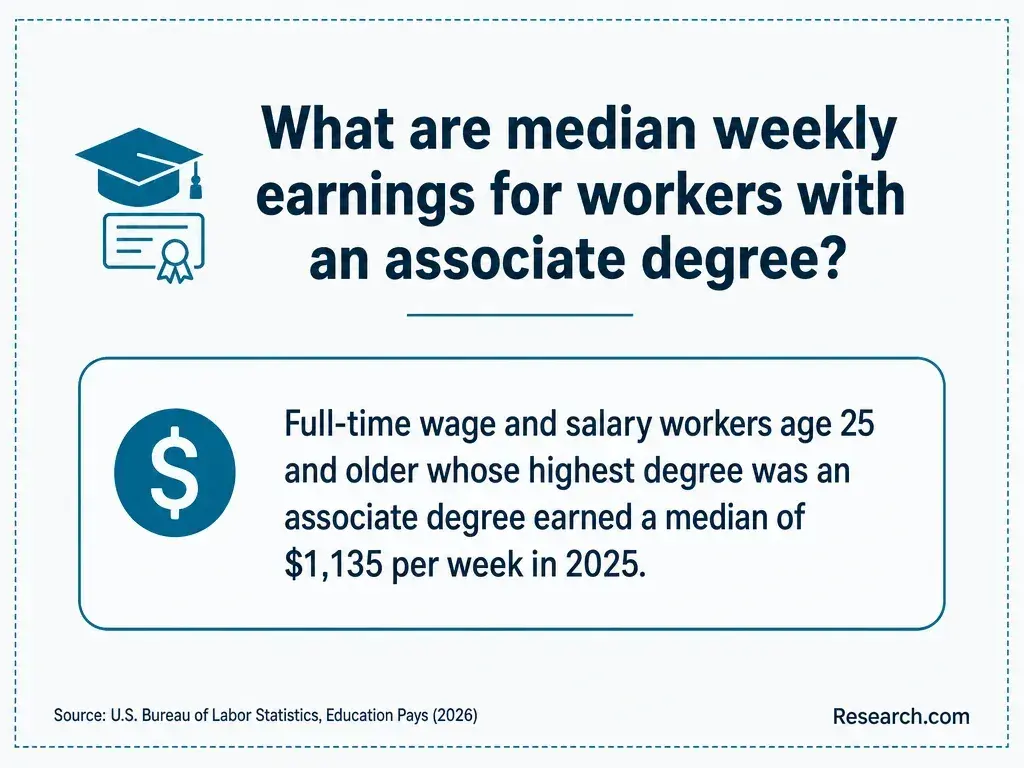
The U.S. Bureau of Labor Statistics reports a $126,520 median annual wage for management occupations in May 2025. That figure covers a broad group of managers, not entry-level healthcare administrators, holders of a particular degree, or people who complete this project.
BLS projects management employment to grow faster than the average for all occupations from 2025 to 2035, but opportunities and pay will differ by occupation, location, employer, and experience.
Use a specific target job and local postings when judging whether additional education is worth its cost. If an MHA is under consideration, compare tuition for healthcare administration master's programs alongside fees, time away from work, and any employer assistance. A broad management median cannot establish the financial return on an individual program.
Other Things You Should Know About Healthcare Administration
Usually not. A fictional scenario summary is safer and often clearer. If you have access to a real report, follow your organization's authorization and sharing rules rather than copying it into a portfolio.
Yes, if the artifact clearly identifies the entire case as simulated. Do not present simulated completion evidence or results as an actual organizational outcome.
Keep the original deadline visible, document the updated status and reason, and show who should be notified. Quietly changing the date obscures the follow-up history.
Share a concise, readable sample when relevant to the position, with a note explaining your role and that the scenario is fictional or approved for release. Follow an employer's application instructions if it does not request work samples.
- Adverse Events, Near Misses, and Errors | PSNet https://psnet.ahrq.gov/primer/adverse-events-near-misses-and-errors
- Using Incident Reporting Systems to Improve Patient Safety and Quality of Care - PMC https://pmc.ncbi.nlm.nih.gov/articles/PMC11554398/
- Patient safety | who.int https://www.who.int/news-room/fact-sheets/detail/patient-safety
- System-Focused Event Investigation and Analysis Guide | Agency for Healthcare Research and Quality https://www.ahrq.gov/patient-safety/settings/hospital/candor/modules/guide4.html
- Designing a Simulation Scenario - StatPearls - NCBI Bookshelf https://www.ncbi.nlm.nih.gov/books/NBK547670/
- The role of hospital managers in quality and patient safety | bmj.com https://bmjopen.bmj.com/content/4/9/e005055
- The Essential Role of Incident Reports in Medical Practices | The Cooperative of American Physicians https://www.capphysicians.com/articles/beyond-documentation-essential-role-incident-reports-medical-practices
- What Info Should Be Documented in an Incident Log? Essential Fields and Examples | AccountableHQ https://www.accountablehq.com/post/what-info-should-be-documented-in-an-incident-log-essential-fields-and-examples
- HIPAA Audit Log Requirements and Retention Guide | Kiteworks https://www.kiteworks.com/hipaa-compliance/hipaa-audit-log-requirements/