2027 From Hospitality Event Coordinator to Healthcare Administration

Co-Founder and Chief Data Scientist
Hospitality event coordination can prepare you to manage schedules, vendors, budgets, and demanding service situations. Healthcare administration uses some of those same skills, but adds responsibilities shaped by patient safety, privacy, regulation, and clinical workflows.
If you are considering the switch, this guide explains which roles are realistic first steps, where your experience transfers, and whether a healthcare administration degree, an MHA, or an MBA is worth pursuing. It also shows how to compare programs and costs before committing to another credential.
Key Things You Should Know
- Your strongest entry points are often patient experience, administrative operations, scheduling, or healthcare events, not immediate leadership of clinical services.
- A second degree is not always necessary. Match the credential to the roles you want, then check whether employers require healthcare experience, a bachelor's degree, or graduate study.
- The $126,520 median annual wage reported for all U.S. management occupations in May 2025 is not an entry-level healthcare administration salary or a predicted return on an MHA or MBA.
What does a healthcare administration career involve for former event coordinators?
Healthcare administrators coordinate the people, budgets, processes, and services that keep organizations running. Depending on the employer, that can mean managing appointment access, improving patient experience, supervising administrative staff, tracking spending, or coordinating work across clinical and nonclinical teams.
Unlike hospitality, a service failure may affect access to care or patient safety; administrators must know when to defer to licensed clinicians.
For an event coordinator, an adjacent move might be into a hospital's patient-experience team, a medical group's scheduling operation, or a health system's community outreach and events office.
These roles can help you learn healthcare terminology and workflows before pursuing broader operational responsibility. Compare the duties, not just the titles, when exploring healthcare administration career opportunities by role.
How can hospitality event coordination skills transfer to healthcare administration?
Your experience is most valuable when you can show a healthcare employer how it improved a process or resolved a service problem. Vendor coordination can translate to working with suppliers and internal departments; event budgets demonstrate resource planning; and handling last-minute changes shows operational judgment. Patient communication, however, must follow privacy rules and the boundaries of your role.
Build your résumé around outcomes you can document, such as managing schedules across teams, controlling an event budget, or improving a guest-service process. Then identify the gap behind each target job: healthcare terminology, electronic health record workflows, reimbursement basics, or supervision in a clinical setting.
If that gap calls for graduate study, explore MHA study pathways for students from other industries rather than assuming prior healthcare employment is universally required.
What degree do you need to move into healthcare administration?
There is no single degree required for every healthcare administration job. Entry-level administrative positions may accept varied educational backgrounds, while management openings often call for a bachelor's degree and relevant experience.
An MHA or MBA can help with more advanced management goals, but neither replaces experience with healthcare operations.
The appropriate path depends on the education you already have and the job requirements you find. This comparison separates the purpose of each option from what it cannot do on its own:
| Path | Best fit for | Important limitation |
| Targeted courses or employer training | Degree holders seeking an adjacent administrative role | May not satisfy a posted degree requirement |
| Bachelor's in healthcare administration | Applicants who need an undergraduate credential and healthcare-focused coursework | Does not confer clinical licensure or management experience |
| Master of health administration (MHA) | Professionals seeking deeper preparation in health systems and administration | May be more specialized than needed for broader business goals |
| MBA, with or without a healthcare concentration | Professionals seeking broad finance, strategy, and operations training | Healthcare depth varies by program; an elective is not necessarily a concentration |
If you already have a bachelor's degree, test the job market before enrolling in another one. If you are finishing an associate degree, review healthcare administration degree completion after community college and obtain a school-specific evaluation of how your credits would transfer.
Healthcare administration bachelor's and master's degrees are available in online and campus-based formats, and some schools offer hybrid study. Availability and delivery requirements vary by institution; a program described as online may still require live sessions, a practicum, or campus visits.
Campus study may make local employer connections easier, while online delivery may allow you to keep working, but neither format guarantees an internship or flexible scheduling.
When comparing universities offering an online MHA, confirm each program's current delivery format directly with the school. Ask whether classes are asynchronous, when group meetings occur, whether an internship is required, and how career services support students changing industries.
Give particular weight to access to healthcare projects or employers if your hospitality résumé does not yet show healthcare experience.
Healthcare administration coursework commonly covers health systems, finance, operations, quality improvement, health policy, ethics, and organizational leadership.
Programs differ in how deeply they address reimbursement, data analysis, and the regulatory environment. A course title alone may not reveal whether you will practice applying those concepts to healthcare decisions.
An MBA usually starts with a broad management core, such as accounting, finance, strategy, and operations. A healthcare concentration may add sector-specific courses; an MHA generally puts healthcare organizations closer to the center of the curriculum.
If you are weighing economical online MBA options in healthcare management, inspect the actual required courses and applied projects before treating the concentration label as evidence of depth.
For a career switch, a project involving a healthcare organization may be more useful than another general management elective.
Requirements depend on the school and degree level. Bachelor's programs may evaluate prior college work and transfer credits. Graduate programs commonly request an accredited bachelor's degree, transcripts, a résumé, and a statement of purpose; recommendations, interviews, prerequisites, and test policies vary.
A hospitality background or nonbusiness bachelor's degree does not automatically rule out graduate admission.
Before applying, compare published requirements with your transcript and the experience expected for any practicum. Ask admissions staff whether introductory accounting or statistics preparation is recommended, how applicants without healthcare experience are assessed, and whether professional projects can involve a local employer.
If a bachelor's is your next step, start by choosing an accredited university for healthcare administration study, then confirm the specific program's admission and transfer policies.
Time to completion depends on the credential, accepted transfer credits, course load, and whether required classes run every term. A bachelor's may take less time for a student with substantial transferable credit; a part-time master's generally takes longer than the same program at a full-time pace.
Ask for a course sequence based on your intended enrollment pattern rather than relying on an advertised fastest completion time.
For cost, calculate required credits multiplied by the applicable tuition rate, then add mandatory fees, materials, and any practicum or travel expenses. Check whether employer tuition assistance applies and whether taking fewer courses changes your fees or aid eligibility.
A healthcare administration graduate program affordability guide can help you build a shortlist, but request a current, individualized cost estimate from each school. Compare that estimate with the cost of targeted coursework and a job search before deciding that a master's is necessary.
Potential roles include patient-experience coordinator, practice administrator, administrative operations specialist, quality-improvement coordinator, and, with sufficient relevant experience, medical or health services manager.
Employers set different requirements for similarly named jobs. A degree may strengthen an application, but supervising a department or directing clinical operations usually calls for a record of relevant responsibility.
A practical progression is to seek an adjacent role, learn how the organization measures access, service, and quality, and then pursue projects that involve budgets or cross-functional improvement.
A doctorate is generally not the first credential to consider for that transition. It is more relevant if your long-term goal requires advanced research, teaching, or executive study; even then, compare the role's actual requirements with the time involved in planning the duration of a healthcare administration doctorate.
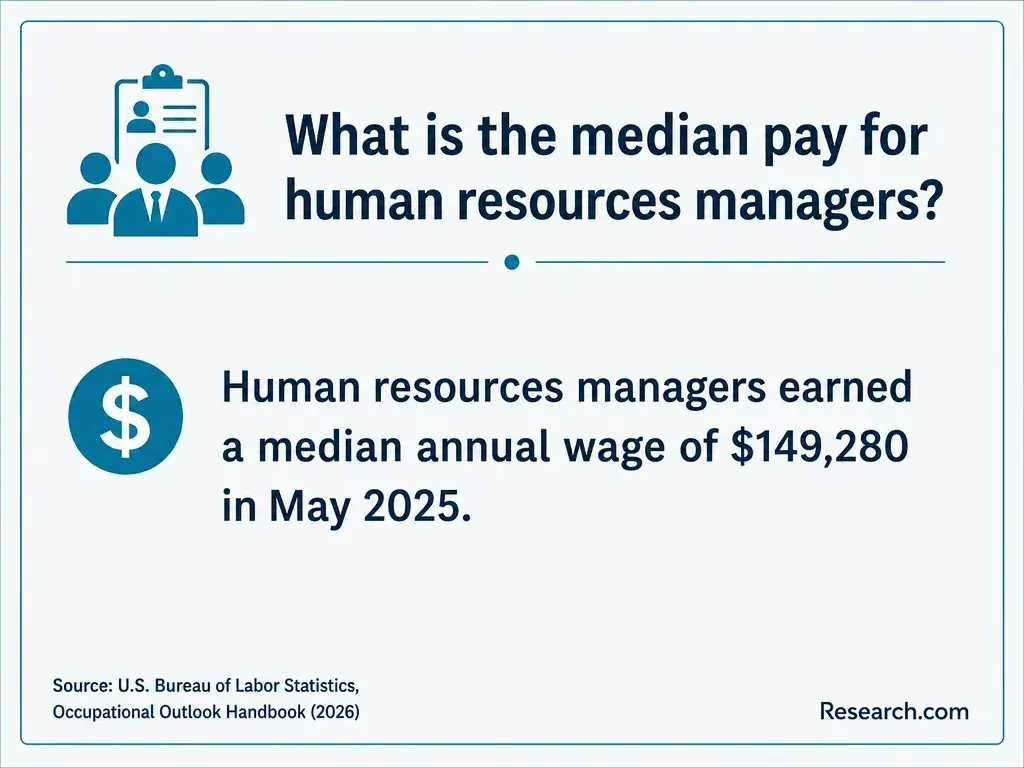
Pay depends on the occupation, employer, location, and scope of responsibility. The U.S. Bureau of Labor Statistics reports a $126,520 median annual wage for management occupations overall in May 2025.
That figure covers managers across industries: it is not the median for healthcare administrators specifically, for former event coordinators entering healthcare, or for MHA or MBA graduates.
For a useful personal comparison, examine salary ranges on local postings for jobs you could qualify for now and for the next role you could reasonably reach. Weigh any likely increase against tuition, borrowing costs, and time spent studying.
Do not pursue online doctorate programs in healthcare management on the assumption that another degree alone will raise your pay; first identify roles that value that credential and the experience they also require.
What certifications and accreditations matter in healthcare administration?
Start with institutional accreditation: confirm that the university holds recognized accreditation before evaluating a program. For graduate healthcare management education, the Commission on Accreditation of Healthcare Management Education (CAHME) provides programmatic accreditation for qualifying programs.
Do not assume that an accredited university means its MHA is CAHME-accredited, or that business-school accreditation serves the same purpose.
Professional certifications can demonstrate focused knowledge, but eligibility may require relevant work experience and varies by credential. For someone new to healthcare, gaining operational experience and completing employer-supported training may be more useful than paying immediately for a certification.
If programmatic accreditation matters to your target employers, verify the current status and delivery format when selecting an online CAHME-accredited graduate program.
Other Things You Should Know About Healthcare Administration
It can help you learn the setting and meet healthcare staff, but volunteer duties vary and may not count as professional healthcare experience. Choose an opportunity that exposes you to the type of organization you hope to join.
Not for most nonclinical administration roles. A job that includes licensed clinical duties is different, so read the posting carefully and do not assume an administration degree qualifies you to provide care.
Some administrative duties can be done remotely, but roles involving on-site teams, patients, or facility operations may require a regular physical presence. Confirm the arrangement for each position.
Use a specific example of coordinating people or solving an operational problem, then explain what you have done to learn healthcare workflows. Be clear about the skills you bring and the experience you still need to build.
- Summary of the HIPAA Security Rule | hhs.gov https://www.hhs.gov/hipaa/for-professionals/security/laws-regulations/index.html
- Resumes with Impact: Creating Strong Bullet Points | Columbia Career Education https://www.careereducation.columbia.edu/resources/resumes-impact-creating-strong-bullet-points
- 5 Tips for Changing Careers | Harvard Extension School https://extension.harvard.edu/blog/5-tips-for-changing-careers/
- Healthcare Administration Work Settings | M.H.A. Boston College https://onlinemha.bc.edu/work-settings-healthcare-administrators/
- How to Get into Healthcare Administration: A Starter Guide | American Military University https://www.amu.apus.edu/area-of-study/health-sciences/resources/how-to-get-into-healthcare-administration/
- What's the Difference Between Healthcare Administration and Healthcare Management? | Pima Medical Institute https://pmi.edu/blog/healthcare-administration-vs-healthcare-management-careers-whats-the-difference/
- Healthcare Management vs. Healthcare Administration | New England College https://www.nec.edu/news/healthcare-management-vs-healthcare-administration-whats-the-difference
- Entry-Level Healthcare Administration Jobs | Campus.edu https://campus.edu/blog/healthcare/entry-level-healthcare-administration-jobs
- 10 Essential Skills Employers Look for on a Healthcare Resume | Cambridge College of Healthcare & Technology https://www.cambridgehealth.edu/blog/10-essential-skills-employers-look-for-on-a-healthcare-resume/
- Writing Impactful Resume Bullets - Office of Career Strategy | Yale University https://ocs.yale.edu/resources/writing-impactful-resume-bullets/