
2027 From Laboratory Assistant to Healthcare Administration

Co-Founder and Chief Data Scientist
Laboratory assistants understand how delays, documentation errors, and staffing pressures affect patient care. Moving into healthcare administration means applying that experience to operations, budgets, and teams rather than performing routine lab work. This guide is for US laboratory assistants considering that transition. It explains which entry points are realistic, when a bachelor's degree, MHA, or MBA may help, and how to judge program costs against career goals - so you can choose a next step without assuming another degree is always necessary.
Key Things You Should Know
- The most direct move is often into laboratory operations, quality coordination, or scheduling; broader management roles usually require experience beyond bench-side work.
- A relevant bachelor's degree may open administrative roles, while an MHA or healthcare-focused MBA is more useful when a specific target job calls for graduate-level management skills.
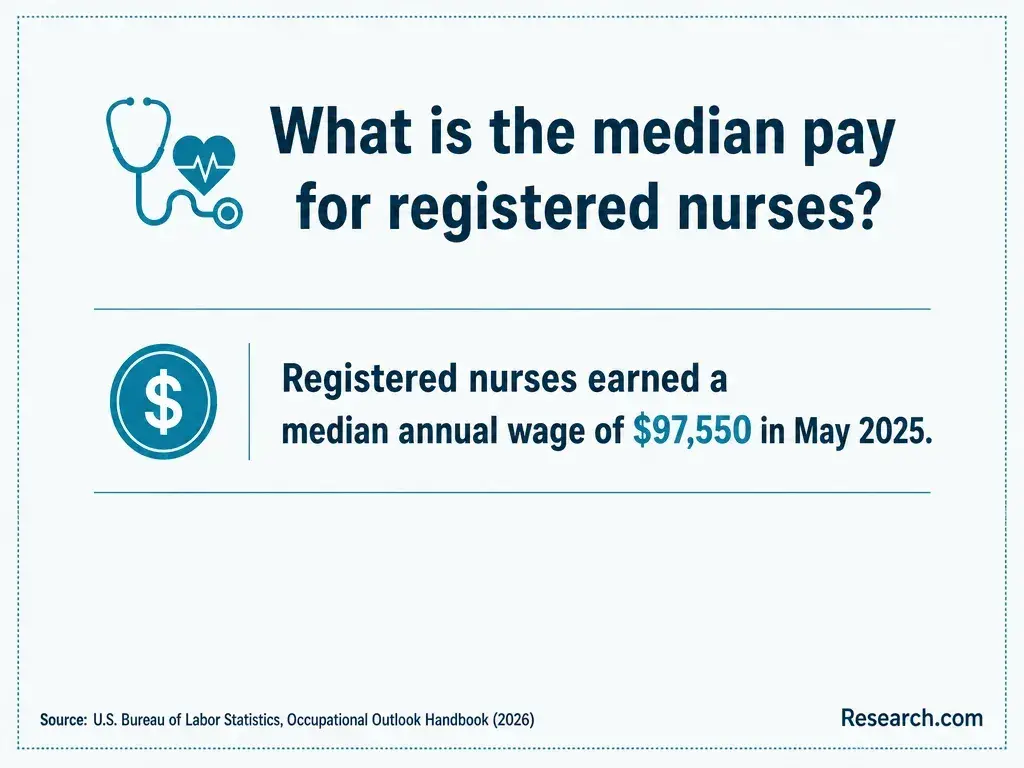
- The US median annual wage for all management occupations was $126,520 in May 2025, according to the Bureau of Labor Statistics; it is not a starting salary for healthcare administrators or laboratory assistants changing careers.
What does a laboratory assistant do before transitioning to healthcare administration?
A laboratory assistant typically helps prepare specimens, enter or verify information, maintain supplies, and support laboratory workflows under the supervision appropriate to the setting. Duties vary by employer and should not be confused with the testing and interpretation responsibilities of a clinical laboratory scientist or medical laboratory technician.
That work provides firsthand knowledge of specimen handoffs, turnaround pressures, documentation, and communication between clinical teams. An administrator uses a wider lens: allocating resources, monitoring performance, coordinating staff, and improving services across a department or organization. Laboratory experience is an advantage for lab operations, but it does not by itself establish budgeting or supervisory experience.
If the part of lab work you most enjoy involves records, systems, and data standards, compare healthcare leadership education compared with health information management before choosing a degree. Health information management is a distinct path focused more directly on health data and its governance.
How can laboratory assistants transition into healthcare administration careers?
Start with an adjacent responsibility rather than assuming a degree will lead directly to a manager title. In a laboratory, that might mean helping coordinate inventory, train new staff within your scope, track turnaround times, or participate in a documented process-improvement project. These experiences give employers evidence that you can organize work and communicate across roles.
A practical transition has several stages. The sequence helps you test your interest in administration before committing to tuition.
- Choose a target role, such as laboratory operations coordinator or quality coordinator, and review local job postings for its actual degree and experience requirements.
- Ask your supervisor about a defined operational project with a measurable result, such as improving an inventory process or reducing incomplete handoffs.
- Build skills in spreadsheets, basic budgeting, workflow mapping, and professional communication; document your contribution without disclosing patient information.
- Apply for adjacent administrative roles and speak with the people who hold them before deciding whether a degree is the missing credential.
Moving from the lab into hospital-wide administration is a larger change than moving into lab operations. An internship, administrative fellowship, or substantial cross-department project may help bridge that gap. For readers considering graduate study despite limited administrative experience, MHA degree options for applicants changing sectors can help frame questions about experiential learning and admissions fit.
What degree do you need for healthcare administration jobs?
There is no single degree required for every healthcare administration job. Employers set requirements by role, and experience matters alongside education. A laboratory assistant without a bachelor's degree may find that completing one is the most useful step; someone who already has a degree may be better served by gaining operational responsibility before pursuing graduate school.
The comparison below separates common educational paths by the problem each is best positioned to solve. It does not replace the requirements in a specific job posting.
| Path | Potential fit | Main limitation |
| Bachelor's in healthcare administration or a related field | Building a foundation for coordinator and other entry-level administrative positions | Does not substitute for supervisory experience |
| Master of Health Administration (MHA) | Focused study of healthcare organizations, policy, finance, and operations | May be more education than an adjacent role requires |
| MBA with relevant healthcare coursework | Broad management training for someone considering healthcare and other industries | Healthcare-specific depth varies; one elective is not a formal concentration |
| Targeted courses or employer training | Closing a specific skills gap while pursuing internal opportunities | May not satisfy a posted degree requirement |
If you need a bachelor's degree, compare transfer-credit policies and required upper-division courses alongside affordable bachelor's pathways in healthcare administration. A low advertised tuition rate is less useful if few of your prior credits apply.
Choose the format that lets you complete the required work and gain relevant experience - not simply the one marketed as flexible. Online study may allow a laboratory assistant to keep working, but live classes, group projects, fieldwork, and fixed deadlines can still conflict with rotating shifts. Campus study may make local employer connections and scheduled discussion easier, but commuting and class times can limit participation.
Ask each program when classes meet, whether attendance is required, where internships or projects can be completed, and whether part-time enrollment is permitted. Also ask how career services work for online students. When you compare online bachelor's degrees in healthcare administration, examine those operational details as closely as the course list.
For either format, verify that the institution has recognized institutional accreditation and that the degree meets your target employers' expectations. Institutional recognition and specialized programmatic accreditation answer different questions; one should not be mistaken for the other.
Healthcare administration programs commonly cover healthcare organizations, management, finance, policy, law or ethics, and quality improvement. A bachelor's program generally builds an introductory foundation; graduate work typically asks students to analyze organizational decisions and lead more complex projects. Actual requirements differ by school.
For a laboratory assistant, operations and quality coursework can connect directly to specimen workflows, staffing, and service delays. Accounting and finance may address a less familiar skill: explaining resource requests in terms of budgets rather than clinical need alone. An MBA usually adds a broad business core in areas such as accounting, strategy, and organizational behavior; check whether its healthcare content consists of required courses, a formal concentration, or only optional electives.
Some programs labeled health information management focus more heavily on records, information systems, and data governance. If that is your goal, examine online CAHIIM-accredited health information management programs rather than assuming a general administration curriculum provides the same preparation.
Requirements depend on degree level and institution. Bachelor's applicants should expect a review of prior education and, if transferring, a separate evaluation of which credits satisfy degree requirements. Master's programs generally require a completed bachelor's degree and may request transcripts, a résumé, recommendations, and a statement of purpose. Work-experience expectations, entrance tests, and prerequisite or foundation courses vary; a laboratory background or nonbusiness major is not automatically disqualifying.
Before applying, ask admissions staff to distinguish minimum eligibility from the profile of a competitive applicant. If considering an MHA, check the program's accreditation status and whether its internship or administrative residency expectations fit your schedule. A CAHME-accredited MHA program comparison can help identify programs to investigate, but confirm current accreditation and admissions terms directly with each school.
Completion time depends on the credential, transfer credits, required courses, and whether you enroll full time or part time. A bachelor's degree may take considerably less time for someone whose prior credits transfer than for someone starting college. Master's schedules range from accelerated options to part-time plans designed around employment; the shortest advertised timeline may not be practical during demanding lab shifts.
Compare the total cost to finish, not just tuition per credit. Include mandatory fees, books or software, travel for any required visits, and the cost of reducing work hours for fieldwork. Then subtract only funding you can reasonably expect, such as confirmed employer tuition assistance. Borrowing also adds financing costs.
For graduate study, finding an affordable healthcare administration graduate program is a useful starting point, but request a written estimate based on your expected course load and completion schedule. If your target role does not require a master's degree, compare that estimate with the cost of a shorter course and additional work experience.
Realistic first moves depend on your education and responsibility at work. Laboratory operations coordinator, scheduling coordinator, quality coordinator, and administrative assistant roles can build on lab knowledge. With demonstrated project, budget, and people-management experience, a professional may compete for department operations or practice-management positions. Senior hospital leadership is a longer-term progression, not an automatic outcome of graduation.
Job titles can obscure substantial differences in authority. Before applying, check whether a role manages people or budgets, requires clinical credentials, or is primarily administrative support. A short graduate pathway may be appealing for career progression; compare healthcare administration master's programs with one-year schedules only after confirming that their projects, fieldwork, and workload support the experience your target jobs require.
"Healthcare administrator" covers different jobs, so a single salary figure can mislead. The US Bureau of Labor Statistics reports a $126,520 median annual wage for all management occupations in May 2025. That figure includes managers outside healthcare and people with substantial experience; it should not be treated as the expected pay for a new laboratory-to-administration hire.
For a more useful estimate, compare local postings for the exact titles you could qualify for now and after gaining experience. Consider the employer type, location, supervisory scope, and any required credentials. The Bureau of Labor Statistics projects management occupations overall to grow faster than the average for all occupations from 2025 to 2035, but that broad outlook does not predict openings in a particular laboratory or hospital.
Higher-paid leadership roles can make additional education look attractive, yet a doctorate is rarely a shortcut to them. If you are evaluating one for a defined leadership or academic goal, review low-tuition healthcare administration doctorate options against the jobs you actually want and the experience those employers require.
Do healthcare administrators need licenses or professional certifications?
Most healthcare administration roles do not have a universal professional license. Requirements can change with the setting and duties: certain regulated facility-leadership positions, including nursing home administrator roles, have state-specific licensing rules. A clinical laboratory credential also does not automatically qualify someone for an administrative role - or replace a license required for a regulated position.
Optional certifications can demonstrate knowledge in areas such as healthcare management, quality, or project work, but employers may value relevant results and supervisory experience more for a given opening. Check the exact job posting and applicable state board before paying for a credential. Likewise, an advanced degree is not a licensure requirement for general administration; if considering healthcare leadership doctorate acceleration and workload, evaluate it as an educational investment, not as permission to practice a regulated profession.
Other Things You Should Know About Healthcare Administration
No. The titles generally refer to different training and responsibilities. Check your state's rules and your employer's job descriptions rather than assuming experience in one role qualifies you for the other.
Some planning, reporting, and coordination tasks may be performed remotely, but positions involving facilities, staff supervision, or on-site operations may require regular presence. Confirm the arrangement for each job.
Not for every role. Billing knowledge may matter in revenue-cycle jobs, while laboratory operations positions may place more weight on workflow, quality, and staff coordination.
Review internal postings for eligibility rules, ask HR about tuition assistance and job-shadowing, and speak with managers about the experience they expect for coordinator and supervisory openings.
- Standards and Evaluation of Healthcare Quality, Safety... - NCBI https://www.ncbi.nlm.nih.gov/books/NBK576432/
- Knowledge and Skills Needed for Future Health Administrators | nih.gov https://pmc.ncbi.nlm.nih.gov/articles/PMC11188648/
- Summary of the HIPAA Security Rule | hhs.gov https://www.hhs.gov/hipaa/for-professionals/security/laws-regulations/index.html
- 10 Essential Health Care Administration Skills (and How to Develop Them) - App State https://onlineprograms.appstate.edu/blog/health-care-administration-skills/
- Healthcare Administration Certifications That Matter - Campus https://campus.edu/blog/healthcare/healthcare-administration-certifications
- How to Become a Healthcare Administrator | SIUE MBA https://online.siue.edu/degrees/business/mba/healthcare-administration/how-to-become-a-hospital-administrator/
- Healthcare Administration Careers and Salaries | UW Online Collaboratives https://uwex.wisconsin.edu/stories-news/healthcare-administration-careers-and-salaries/
- Skills You'll Develop in a Healthcare Administration Program | Lindenwood University https://www.lindenwood.edu/blog/skills-youll-develop-in-a-healthcare-administration-program/
- Healthcare Administrative Assistant | mnwest.edu https://www.mnwest.edu/academics/all-programs/healthcare-administrative-assistant.php
- Navigating Healthcare Regulations as an Administrator | Nebraska Methodist College https://blog.methodistcollege.edu/hc-regulations-as-an-administrator


