2027 Surprise Billing Protections: A Reading Guide for BS Students

Co-Founder and Chief Data Scientist
A patient can choose an in-network hospital and still receive a bill from an out-of-network clinician. For healthcare administration students, understanding how federal surprise billing protections address that situation is both a patient-service skill and a lesson in how complex healthcare operations work. This guide explains the No Surprises Act, where its protections apply, and what administrators must do to implement them. It also helps prospective BS students evaluate programs, costs, and career paths without assuming that a degree alone qualifies them to manage billing compliance.
Key Things You Should Know
- Since 2022, the No Surprises Act has generally limited out-of-network patient charges for covered emergency care, certain services at in-network facilities, and covered air ambulance services.
- Compliance requires coordinated work across registration, provider contracting, billing, and patient support; a BS student should learn to identify coverage exceptions, not just memorize the law's name.
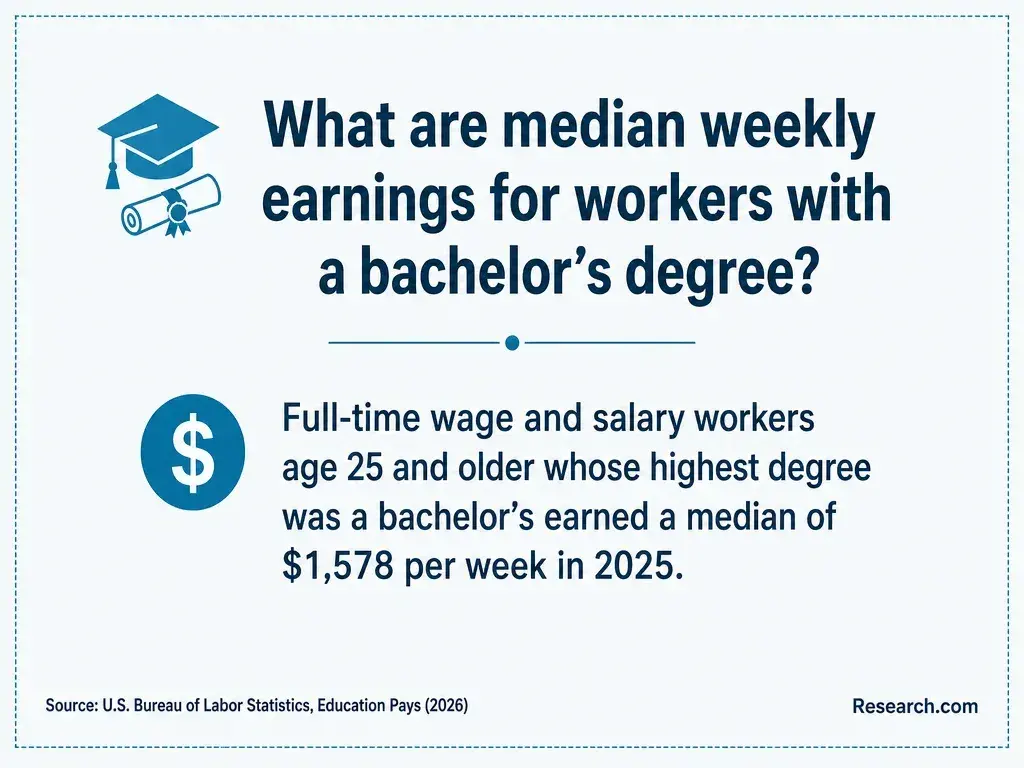
- For career planning, compare programs by institutional accreditation, applied billing and insurance coursework, total cost, and access to relevant experience. The $126,520 May 2025 median for all management occupations is not an expected starting salary for BS graduates.
What is the No Surprises Act and how does it protect patients from unexpected medical bills?
The No Surprises Act is a federal law whose principal surprise billing protections took effect in 2022. A surprise bill typically arises when a patient cannot reasonably choose an in-network provider - for example, during an emergency or when an out-of-network clinician treats them at an in-network facility. For covered services, the law generally limits the patient's cost-sharing to an in-network amount and prohibits the provider from billing the patient for the remaining out-of-network balance.
The law does not make care free. The patient may still owe applicable in-network deductibles, copayments, or coinsurance. Insurers and providers generally resolve disputes over the remaining payment without shifting that dispute to the patient. Separate provisions give uninsured or self-pay patients a right to a good faith estimate for scheduled care and a process to dispute substantially higher bills.
For a BS student, the important distinction is between patient protection and payment resolution: the amount a provider ultimately receives is not automatically the amount the patient owes. That distinction matters across the job pathways for healthcare administration graduates, particularly in revenue cycle, patient financial services, and operations.
Which healthcare services and insurance plans are covered by surprise billing protections?
Federal protections generally apply to people with employer-sponsored or individual health coverage, including many self-funded employer plans. They cover most emergency services from out-of-network providers or facilities, covered out-of-network air ambulance services, and certain nonemergency services furnished by out-of-network providers at in-network hospitals, hospital outpatient departments, or ambulatory surgical centers. State laws may provide additional protections, so the applicable rule can depend on the plan and service.
Coverage has boundaries. Ground ambulance bills generally fall outside the federal surprise billing protections, although state rules may apply. A service at an out-of-network facility is not automatically protected merely because it was scheduled. In limited nonemergency circumstances, a provider may request notice and consent to waive federal protections; important exceptions include services such as anesthesiology, radiology, and pathology, for which that waiver generally is not available. Patients should not assume every document labeled "consent" validly waives their rights.
Students interested in the data, coding, and records that support coverage decisions can compare healthcare administration coursework with a health information management program accreditation comparison. The two fields overlap, but a healthcare administration degree is not automatically a health information management credential.
How do healthcare administrators apply surprise billing rules in daily operations?
Administrators turn legal requirements into repeatable workflows. A registration team may verify coverage and facility status; scheduling staff may identify when an estimate or notice is required; billing staff must apply the correct patient cost-sharing and prevent prohibited balance bills. Contracting, compliance, and patient-service teams then handle provider-network questions, complaints, corrections, and insurer payment disputes.
A useful way to study a case is to follow one encounter from appointment through final statement. At each handoff, ask who confirms the insurance plan, the service location, and each provider's network status - and who catches an error before the patient receives a bill. A clinician's network status alone cannot answer every question; the service, facility, plan, and applicable exception matter too.
Frontline process design differs from executive oversight. A student does not need an advanced leadership degree to learn these workflows; someone later evaluating online accelerated doctoral routes for healthcare leaders should first consider whether their goal is organization-wide leadership rather than hands-on billing compliance.
Students should be able to explain the patient's protection, classify a service accurately, and recognize when a case needs specialist review. Useful preparation combines health insurance and reimbursement, revenue cycle operations, healthcare law and ethics, data quality, and clear patient communication. A case study that requires students to correct a bill and explain the correction to a patient is more relevant than a course that only asks them to recite statutory terms.
An MBA is a different, later decision. It develops broader management capabilities rather than serving as a substitute for learning billing rules; students considering that route can examine online healthcare management MBA program duration after identifying the roles and experience they would need first.
Do not confuse accreditation of a college with accreditation of a particular healthcare administration degree, or assume that accreditation associated with health information management applies to healthcare administration. Beyond the label, inspect required courses, faculty qualifications, internship access, and published student support. A practical starting point is to compare institutionally accredited colleges with online healthcare administration degrees, then confirm each program's current status directly with the college and accreditor.
An online BS can teach the same academic concepts as a campus degree, but effectiveness depends on course design, feedback, and access to practical experience - not the delivery label. Online study may fit someone working in a clinic or billing office who can apply coursework immediately. A campus program may make it easier to attend local employer events or arrange face-to-face projects. Neither format guarantees an internship or a job.
Before enrolling, confirm whether classes are asynchronous, whether live sessions have fixed times, how group work is scheduled, and whether an internship can be completed near home. Ask career services whether online students receive the same advising and employer access as campus students. Students who already hold a bachelor's degree should also compare the time and cost of a second BS with accelerated online healthcare management master's options; the right choice depends on prerequisites and the amount of healthcare experience they already have.
Requirements vary by school and by whether you apply as a first-year or transfer student. Colleges commonly review prior academic records and an application; some request an essay or other materials. A program may also have separate entry requirements for upper-division courses or an internship. Do not assume a healthcare job, clinical license, or particular certification is universally required for admission.
Transfer applicants should request a written evaluation showing which credits fulfill general education, major, and elective requirements. An accepted credit that counts only as an elective may save less time than expected. Students arriving with an associate degree can use healthcare administration articulation and transfer options to frame questions about agreements, course equivalencies, and credits still required at the receiving college.
A bachelor's degree commonly follows a four-year full-time plan, but completion time depends on transfer credit, course availability, enrollment pace, and internship requirements. An accelerated calendar does not necessarily reduce the number of required credits. Part-time study can make employment more manageable while extending the period over which tuition and other expenses are paid.
Compare the total cost to finish, not just an advertised tuition rate. Request a degree audit and account for tuition on remaining credits, mandatory fees, books and software, internship expenses, and any travel requirements. Then subtract only grants, employer assistance, or other funding for which you are actually eligible. If you are planning beyond the BS, finding an affordable healthcare administration graduate program may help with long-term budgeting, but it should not distract from the immediate cost of completing the bachelor's degree.
A BS can support applications for roles such as patient access coordinator, revenue cycle analyst, provider relations specialist, compliance assistant, or operations coordinator. The work may involve explaining bills, reviewing claim errors, monitoring processes, or improving scheduling and patient-service systems. Job titles vary by employer, and supervisory positions commonly require relevant experience beyond the degree.
Certifications can demonstrate focused knowledge, but eligibility and value depend on the credential and employer. Before paying for one, check its official experience requirements, exam content, renewal obligations, and whether local job postings actually request it. For surprise billing work, documented experience with claims, insurance rules, and patient communication may be more immediately useful than collecting unrelated credentials.
A graduate degree can make sense later for someone seeking broader management responsibility. Considering a one-year healthcare administration graduate program is different from preparing for an entry-level compliance or billing role: compare the curriculum and required experience with the job you want before committing.
What salary and job outlook can healthcare administration graduates expect?
Pay depends on the occupation, employer, location, and experience. The U.S. Bureau of Labor Statistics reports a $126,520 median annual wage for all management occupations in May 2025. That broad category includes many established managers outside healthcare; it is not a typical salary for a new healthcare administration BS graduate or a surprise billing specialist.
BLS projects about 1.1 million openings per year, on average, across all management occupations from 2025 to 2035, including openings created when workers leave occupations permanently. That indicates broad management demand, not a count of healthcare administration vacancies. For a realistic personal estimate, compare current local postings for the specific entry-level role you could obtain, then examine the experience required for the next step.
The same caution applies to graduate-school decisions. Before selecting one of the less expensive healthcare-focused MBA degrees online, weigh its full cost against plausible advancement in your own workplace - not a broad management median that may reflect years of experience you have not yet gained.
Other Things You Should Know About Healthcare Administration
Ask the insurer and provider for an itemized explanation, confirm the service and network details, and state that you want the bill reviewed under the No Surprises Act. Keep copies of the bill, explanation of benefits, and correspondence. If the issue remains unresolved, the federal No Surprises Help Desk or the relevant state agency may be able to explain complaint options.
No. It is an advance estimate for eligible uninsured or self-pay patients, not a promise that every service will cost exactly that amount. Patients may have a dispute option if the final bill is substantially higher than the estimate.
No. For a protected service, the patient can still owe applicable in-network cost-sharing. The protection generally prevents an additional prohibited out-of-network balance bill.
Students and staff can explain established procedures and direct patients to appropriate resources, but should refer disputed legal interpretations to trained compliance staff or qualified legal counsel.
- Air Ambulance Service | transportation.gov https://www.transportation.gov/individuals/aviation-consumer-protection/air-ambulance-service
- About Independent Dispute Resolution | cms.gov https://www.cms.gov/initiatives/no-surprise-billing/overview/engaging-idr/about-independent-dispute-resolution
- Explanation of Rights to Good Faith Estimate for Cost of Items and Services | Children's Hospital of Philadelphia https://www.chop.edu/centers-programs/billing-and-insurance/explanation-rights-good-faith-estimate-cost-items-and-services
- No Surprises Act Implementation: What to Expect in 2022 | KFF https://www.kff.org/affordable-care-act/no-surprises-act-implementation-what-to-expect-in-2022/
- Implementation of the No Surprises Act | American Medical Association https://www.ama-assn.org/health-care-advocacy/access-care/implementation-no-surprises-act