2027 Healthcare Administration BS Programs: Questions to Ask About Artificial Intelligence Policies

Co-Founder and Chief Data Scientist
A healthcare administration BS program may encourage students to use artificial intelligence for research while prohibiting the same tool in a hospital internship. That difference matters when assignments involve patient information, staffing decisions, or financial data.
This guide is for prospective U.S. students comparing online and campus-based bachelor's programs. It explains which AI policies to request, what responsible instruction looks like, and how to judge whether a program prepares you to use AI without compromising privacy, accuracy, or academic integrity.
Key Things You Should Know
- Ask for three sets of rules before enrolling: the university's AI policy, course-level instructions, and internship or placement requirements. Permission in one setting does not carry over to another.
- A useful policy identifies approved tools and data, permitted assignment uses, disclosure requirements, verification duties, and consequences for misuse - not merely a ban on cheating.
- No universal undergraduate healthcare administration accreditation rule requires a dedicated AI course. Judge AI readiness through required coursework, assessed projects, and supervised practice.
What are artificial intelligence policies in healthcare administration BS programs?
AI policies are the rules governing whether, when, and how students may use tools that generate text, summarize records, analyze data, or support decisions. In a healthcare administration bachelor of science (BS) program, they may appear in a university academic-integrity code, individual syllabi, technology guidance, and internship agreements. The most specific applicable rule may change with the assignment or placement.
These policies matter because administrators work with information about patients, employees, budgets, and operations. An AI-generated staffing proposal can be plausible but wrong; uploading a real patient record to an unapproved service can create a separate privacy problem. Administration also differs from health information management (HIM), which generally places more emphasis on managing health data and records. Compare healthcare administration versus HIM curriculum and career options if data governance, rather than organizational management, is your primary interest.
How do healthcare administration programs teach responsible artificial intelligence use?
Strong instruction treats AI as a tool to examine, not an authority to trust. Students might critique an AI-generated scheduling recommendation, check its assumptions against a supplied dataset, identify who could be disadvantaged, and explain whether a manager should act on it. That exercise teaches judgment alongside operations and communication skills.
Ask whether every student encounters this work in required courses, rather than only in an optional elective. A program can provide sound preparation without a course titled "AI" if students practice evaluating tools in healthcare finance, quality improvement, information systems, and ethics. A bachelor's program builds a foundation; healthcare management master's completion planning is a separate consideration for students who later need more advanced management study.
What should an AI policy cover in online healthcare administration programs?
An online student may use personal devices and study outside a supervised classroom, making written boundaries especially important. Compare the policy documents against the following essentials; a missing answer is a question for the program, not proof that a practice is permitted.
| Policy area | What clear guidance specifies | Why it matters |
| Tools and data | Approved services and whether real patient, employee, or employer information may be entered | Prevents students from treating a publicly available tool as approved for sensitive work |
| Coursework | Allowed uses by assignment, required disclosure, and how sources and outputs must be checked | Lets students distinguish legitimate assistance from submitted work they must produce themselves |
| Placements | Who authorizes tools and which site-specific rules apply | Recognizes that an internship host may impose stricter limits than the university |
| Accountability | How suspected misuse is reviewed and how students can seek clarification | Makes expectations understandable before a dispute occurs |
Online delivery alone does not establish whether a school supplies approved software or technical support. Ask what access is included before comparing tuition with later online healthcare MBA tuition and program options; graduate study and its software costs should not be assumed to be part of the BS.
Academic-integrity rules should distinguish assistance from substitution. An instructor might allow AI to suggest search terms or critique a draft but prohibit generated analysis in a graded case study. Disclosure does not automatically make a prohibited use acceptable. Students remain responsible for factual claims, authentic citations, and any work represented as their own.
Request an annotated assignment example showing what a student may submit, how AI use should be acknowledged, and whether drafts or prompts must be retained. Also ask how the school handles disputed allegations: an AI-detection score alone should not replace review of the assignment, instructions, and student's work. Clear undergraduate expectations are worth establishing now; they may differ from policies encountered in lower-tuition master's pathways in health administration later.
Look for instruction that connects rules to actual administrative decisions: protecting patient information, limiting access to sensitive records, documenting vendor use, monitoring unequal impacts, and determining who is accountable when an AI-supported recommendation causes harm. Students should learn to recognize a legal or compliance issue and escalate it, not assume a BS qualifies them to give legal advice.
HIPAA requirements depend on the organization, information, and activity involved; they are not a blanket rule covering every student assignment. A useful course explains when a covered entity or business associate's requirements may apply and why removing names from a dataset is not, by itself, permission to upload it. Students interested in later research or executive roles can separately investigate healthcare leadership doctoral study with accelerated timelines, but should first verify that their BS teaches these foundations.
There is no single answer across schools - or even across courses at one school. A professor may permit brainstorming but require an independently written final report; another may assign an AI-generated draft specifically so students can correct it. Research use also requires care: generated citations can be nonexistent or inaccurate, so students should locate and read the underlying sources.
Before using a tool, check the assignment instructions and ask whether your intended use, input data, and disclosure method are allowed. If the instructions are silent, get clarification rather than assuming permission. Rules may change in graduate programs, including those considered by students planning a fast-track healthcare management MBA; an MBA's management focus does not override a course or employer's data restrictions.
Ask whether students test outputs against reliable source material and consider whose circumstances a tool overlooks. For example, a proposed clinic schedule should be checked against actual capacity and staffing constraints; a patient-outreach proposal should be examined for language access and whether its assumptions disadvantage particular groups. A polished answer is not evidence that either proposal works.
Good assignments require students to document the question asked, the data used, the tool's limitations, their independent checks, and a decision about whether its output is usable. Ask whether instructors assess that reasoning rather than simply rewarding a persuasive presentation. Evaluating tools at an advanced research level is a different educational goal; healthcare management doctoral study and program requirements should not be mistaken for what a BS must teach.
Do not assume accreditation guarantees a dedicated AI class. Accreditation can address institutional quality or discipline-specific educational standards, but there is no universal requirement that every undergraduate healthcare administration program offer AI coursework. Check which organization accredits the institution, whether the specific program claims separate accreditation, and what that accreditation actually covers.
Then examine the required course catalog and recent syllabi for assessed work on healthcare technology, privacy, analytics, and ethical decisions. An AI elective is less useful to every student than relevant work embedded in required courses. Keep degree levels distinct: the accreditation and curriculum questions for health administration master's degrees offered online are not automatically the requirements of a bachelor's program.
A placement site may prohibit tools that a professor permits for classroom exercises. Its policies may also restrict copying information into personal accounts, recording meetings, or using generated summaries. Students need site approval before using AI with workplace material - even if the eventual capstone removes names or reports only aggregate findings.
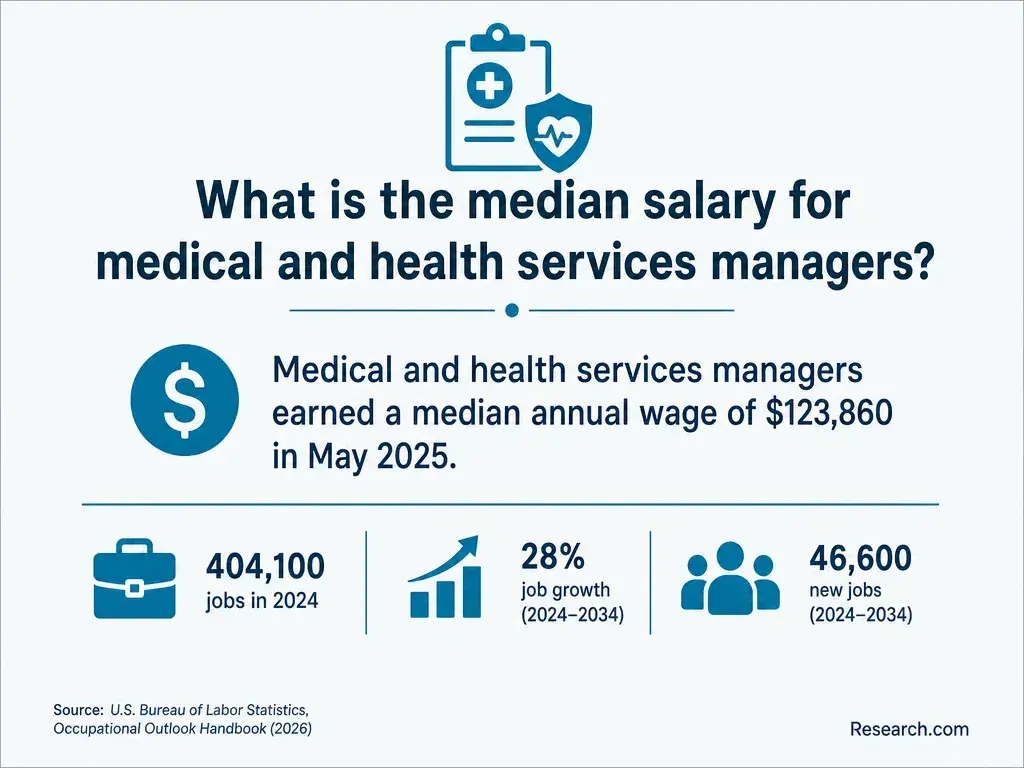
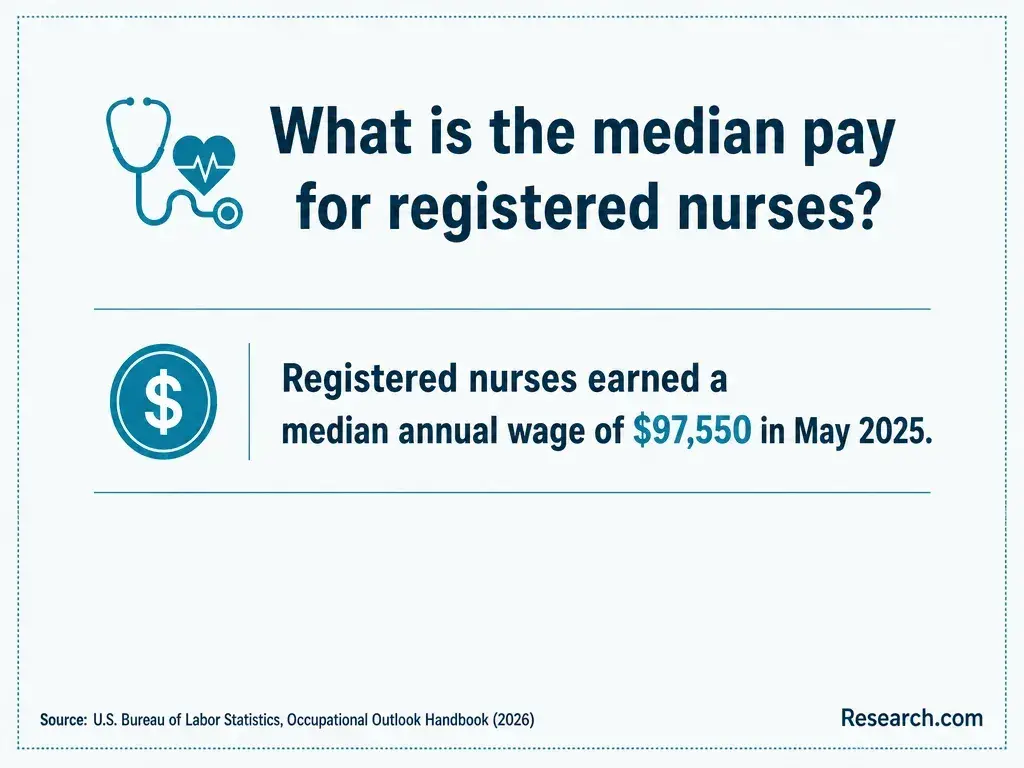
Ask whether the program arranges approved, realistic data for capstones when employer information cannot be shared, and whether supervisors assess students' own recommendations. This preparation can support entry-level coordination and analyst work, but the BS alone does not confer managerial experience or a promotion. For career planning, understanding salary differences across healthcare administration jobs is more useful than treating a broad management salary figure as an expected starting wage.
What questions should you ask schools before choosing an AI-ready program?
Request current documents from each school and put the answers side by side. These questions distinguish a stated commitment to responsible AI from rules and learning experiences you can actually use.
- Can I review the university AI policy, sample required-course syllabi, and the rules used for internships or capstones?
- Which AI uses are permitted in required courses, and how must students disclose and verify them?
- What tools are approved, who pays for access, and what information must never be entered?
- Where do students practice checking accuracy, bias, privacy, and the limits of an AI-supported decision?
- How are online students supported when an instructor's directions or a placement site's rules are unclear?
Prioritize schools that provide specific, consistent answers and examples of assessed student work. If cost is close between programs, useful required instruction and access to approved tools may matter more than an optional AI elective. Plan for the BS you are choosing now; comparing healthcare administration doctoral program costs is relevant only if that later path fits your career goals and qualifications.
Other Things You Should Know About Healthcare Administration
Usually, administrative study centers on organizations and decision-making rather than software development. Check individual degree requirements if you want technical analytics training.
Many schools review transfer credit, but accepted courses and remaining requirements vary. Request a written evaluation before committing to a program.
It depends on accepted transfer credits, enrollment pace, and course availability. Ask for a completion plan based on your own transcript rather than a general advertised timeline.
No. Healthcare administration education focuses on organizational work; clinical roles have separate education and, where applicable, licensure requirements.
- Summary of the HIPAA Security Rule | hhs.gov https://www.hhs.gov/hipaa/for-professionals/security/laws-regulations/index.html
- AI Chatbots and Challenges of HIPAA Compliance for... - PMC https://pmc.ncbi.nlm.nih.gov/articles/PMC10937180/
- Course Policies on Generative AI Use | Teaching and Learning Hub https://tlhub.stanford.edu/docs/course-policies-on-generative-ai-use/
- The Chicago School Library: Artificial Intelligence (AI) Tools and Resources: Citing & Disclosing Use of AI Tools https://library.thechicagoschool.edu/artificialintelligence/citing
- Artificial Intelligence Use Policy | NEOMED https://www.neomed.edu/policies/artificial-intelligence-use-policy/
- Staff - HIPAA / FERPA Privacy Issues | International Programs Office https://nmu.edu/ai-literacy-initiative/staff-hipaa-ferpa-privacy-issues
- Tools for Students: Academic Honesty & Citing | monroecc.edu https://libguides.monroecc.edu/c.php
- More AI Tools and Resources Approved and Available for Campus | Arkansas News | University of Arkansas https://news.uark.edu/articles/80623/more-ai-tools-and-resources-approved-and-available-for-campus
- Artificial Intelligence Policies: Guidelines and Considerations | Duke Center for Teaching and Learning https://ctl.duke.edu/ai-and-teaching-at-duke-2/artificial-intelligence-policies-in-syllabi-guidelines-and-considerations/
- Acceptable Use of Generative AI Tools | UT Austin Information Security Office https://security.utexas.edu/ai-tools