2027 An Insurance Verification Call Log: A Healthcare Administration Student Portfolio Project

Co-Founder and Chief Data Scientist
An insurance verification call log can show how a healthcare administration student handles a routine task with financial and patient-service consequences. But a portfolio version needs more than a spreadsheet: it must document sound questions, clear follow-up, and responsible handling of patient information. This guide explains how to build a realistic simulated project, what employers may learn from it, and whether a degree or shorter training path fits your goals. It is designed for students and career changers who want evidence of practical skills without claiming experience they have not earned.
Key Things You Should Know
- A strong portfolio submission combines a fictional verification log, a documented unresolved issue, and a short explanation of the workflow decisions.
- Use invented patients, policies, and insurer responses. A real call log from an internship or job should not become a public portfolio item merely because names were removed.
- For entry-level verification work, supervised training and accuracy usually matter more than an MBA; consider graduate education when your goal is broader healthcare management.
What is an insurance verification call log in healthcare administration?
An insurance verification call log records an attempt to confirm a patient's coverage and relevant benefits with a health plan. Staff may use a payer portal first and contact a representative when information is missing or unclear. The log preserves what was checked, what the payer said, what remains uncertain, and who must act next.
Verification supports scheduling, patient estimates, and claim preparation, but it does not promise payment. Coverage can depend on the service, network, authorization, medical-necessity rules, and the claim ultimately submitted. The task sits at the intersection of patient access and revenue-cycle work; students comparing that operational focus with records and data stewardship may benefit from health information management versus administration program fit.
How does an insurance verification call log become a student portfolio project?
A portfolio project turns a routine record into evidence of judgment. Create a fictional appointment and policy scenario, record a simulated payer conversation or portal result, then show how you would handle an answer that is incomplete or inconsistent. Label the work simulated coursework so an employer does not mistake it for an actual patient interaction.
A compact submission can contain the log, a brief escalation note, and a reflection explaining why you sought clarification rather than treating an uncertain benefit as confirmed. If you are returning to school, distinguish the value of this artifact from academic credit: using prior college credits toward healthcare administration depends on a school's transfer evaluation, not on whether a portfolio looks professional.
What skills does an insurance verification project demonstrate to employers?
A well-explained log can demonstrate accurate documentation, professional communication, attention to privacy, and the ability to recognize when a question needs escalation. It also shows whether you understand the difference between an insurer's reported benefit and a guarantee that a claim will be paid.
The most revealing part may be the follow-up: an applicant who flags conflicting deductible information and records the next owner of the issue shows more operational judgment than one who simply fills every cell. These are useful foundational skills, not proof of supervisory experience. Students considering a much later move into executive or academic leadership can consult an online healthcare administration doctorate duration guide, but doctoral study is not preparation required for verification work.
Record enough information for a colleague to understand the inquiry and continue it, without collecting details the task does not require. A student template should identify the fictional case, service being checked, contact method, date, questions asked, reported answer, reference information if supplied, unresolved points, and assigned follow-up.
The example below shows a fully invented record. Its purpose is to make the finished artifact concrete, not to represent a real insurer's benefits.
| Case and service | Contact and inquiry | Reported response | Status and next step |
| Fictional Case A; outpatient consultation | Simulated payer call; asked about active coverage, network status, and referral rules | Representative reports active coverage; referral requirement could not be confirmed | Open; route referral question to the scheduling supervisor before discussing an estimate |
If a representative provides a call reference number, note it in a protected workplace system; a public student example should use an invented placeholder. At graduate level, the same record could become part of a broader workflow analysis. When comparing programs, examine one-year master's curricula in healthcare administration for actual coursework on revenue cycles or process improvement rather than assuming every program teaches verification in depth.
Courses in healthcare revenue cycles, medical terminology, health insurance, health information systems, and healthcare law can each contribute something different. Revenue-cycle study explains where verification affects registration and billing; terminology helps students ask about the intended service; information-systems and privacy coursework addresses documentation and access controls.
Course titles alone do not establish hands-on preparation. Ask whether students practice with fictional eligibility scenarios, receive feedback on documentation, and learn when to refer a coverage question to a supervisor or specialist. Applicants entering from another field can also compare health administration master's options without prior healthcare employment; admission without experience does not mean a graduate program is the quickest route to an entry-level verification role.
There is no universal U.S. degree or professional certification required solely to perform insurance verification. Employers set their own hiring standards and provide workflow, software, privacy, and payer-specific training. Some prefer experience in patient access, medical offices, or billing; a relevant certificate or associate degree may help an applicant build that foundation.
Choose education according to the job you want next. If your immediate goal is a verification or registration position, compare local job postings with the cost and time of a short course or entry-level training. If you seek broader administrative responsibility, a degree may be more relevant; lower-tuition master's pathways in health administration are worth examining only when their curriculum and career purpose justify graduate study.
Either format can support the same project. An online student can use a spreadsheet or a school-approved training system and role-play a payer conversation with a classmate. On campus, an instructor may observe the exchange and give immediate feedback. Neither format requires contacting a real insurer about an invented patient.
Use a simple sequence that produces evidence an employer can review:
- Write a fictional appointment, coverage scenario, and a short set of verification questions.
- Role-play the inquiry or use a clearly labeled simulated portal response, then complete the log.
- Add one ambiguous response, document who would resolve it, and revise the record after feedback.
- Export a privacy-safe sample and a brief reflection describing what remains unconfirmed.
Students balancing work with study should check deadlines and required live meetings before choosing an online course. Those considering graduate business education can compare shorter graduate business pathways in healthcare management, while recognizing that an MBA develops management breadth rather than serving as a prerequisite for this project.
The safest public portfolio uses information invented from the start: fictional names or case labels, policy details, dates, conversations, and reference numbers. Do not copy a workplace log into a personal file or assume that deleting a name makes it safe to publish. Dates, unusual services, identifiers, and combinations of details may still make a real person identifiable.
If coursework involves actual patient information, follow the school's and placement site's rules for access, storage, sharing, and disposal. HIPAA obligations depend on the organization and circumstances; a student should not independently decide that a real record is adequately de-identified for public use. The same distinction matters in advanced applied projects, including those considered by students exploring accelerated doctoral education for healthcare leadership roles: educational value does not override patient privacy.
The closest matches are insurance verification specialist, patient access representative, registration specialist, and medical billing support roles. Their duties vary: one employer may emphasize pre-appointment benefits checks, while another combines registration, estimates, and follow-up. A simulated log gives interviewers a work sample, not evidence that you have handled live accounts.
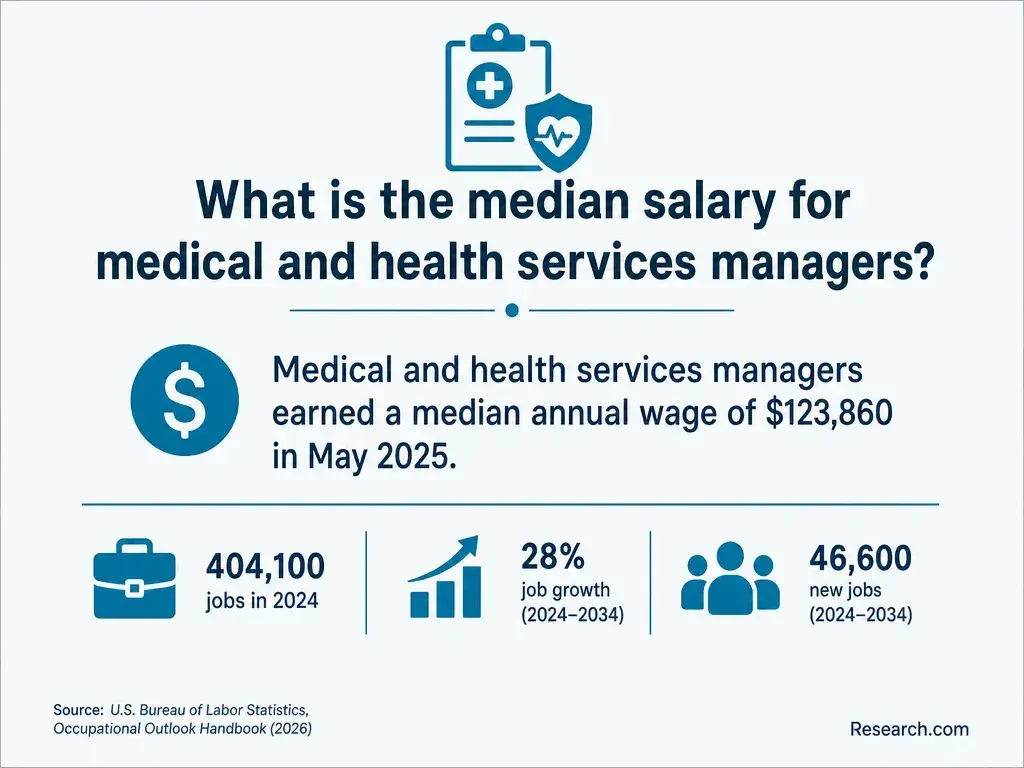
For a later management path, experience coordinating staff, improving workflows, and handling budgets matters beyond this entry-level artifact. The U.S. Bureau of Labor Statistics reports a $126,520 median annual wage for management occupations in May 2025; that broad figure is not a salary estimate for verification staff or a predicted outcome of this project. Use healthcare administration roles and pay context to compare longer-term directions, then check the duties and qualifications in postings where you plan to work.
How do you choose an accredited healthcare administration program?
Start with your target role, then compare programs that teach the skills it requires. Check the institution's accreditation through the accreditor or the U.S. Department of Education's recognized-accreditor information, and ask whether any programmatic accreditation matters for your intended credential or employer. Institutional accreditation, specialized program accreditation, and a course's practical relevance are separate questions.
Before enrolling, request the course sequence, sample assignments, total tuition and mandatory fees, transfer-credit policy, and details of any required placement or campus visit. Ask whether students receive feedback on realistic documentation projects. An MBA is more appropriate when you need broad management study than when you only need to learn verification; if that is your goal, include budgeting for an MBA in healthcare management in your comparison rather than judging programs by tuition alone.
Other Things You Should Know About Healthcare Administration
No. Eligibility checks whether coverage is reported as active and may identify benefits. Prior authorization is a separate review that a plan may require before a particular service; neither is a payment guarantee.
No. Payment depends on the plan's terms and the submitted claim, among other factors. Document what was confirmed and avoid presenting a verification response as a final claim decision.
Record the discrepancy and the source of each answer, then follow the practice's escalation procedure. Do not silently replace one account with the other or give the patient an unsupported estimate.
List it as a course or independent project, not employment. Describe the scenario, documentation, and follow-up you produced, and label it simulated.
- Your Rights Under HIPAA | hhs.gov https://www.hhs.gov/hipaa/for-individuals/guidance-materials-for-consumers/index.html
- Evaluating the utility and challenges associated with... - PMC https://pmc.ncbi.nlm.nih.gov/articles/PMC11345386/
- Insurance Eligibility Verification Questions: Avoid Denials | Outsource Strategies International https://www.outsourcestrategies.com/blog/top-10-most-important-insurance-eligibility-verification-questions-prevent-denials/
- Understanding out-of-pocket limits | uhc.com https://www.uhc.com/understanding-health-insurance/understanding-health-insurance-costs/types-of-health-insurance-costs/out-of-pocket-limits
- Eligibility vs. Benefits Verification: What's the Difference? | Veribrance https://veribrance.com/blog/insurance-eligibility-verification-vs-benefits-verification
- Long-Awaited No Surprises Act Rule Finalized | healthaffairs.org https://www.healthaffairs.org/content/forefront/long-awaited-no-surprises-act-rule-finalized-1786106891322
- 10 Best Practices For Verifying Insurance Eligibility In 2026 | OneMed Billing https://www.onemedbilling.com/blog-details/best-practices-for-verifying-insurance-eligibility