2027 Healthcare Revenue Integrity Manager: A Cross-Functional Career Path

Co-Founder and Chief Data Scientist
A healthcare revenue integrity manager sits where clinical documentation, coding, billing, compliance, and finance meet. That makes the role appealing to experienced healthcare professionals - but difficult to enter through a degree alone.
This guide explains what the work involves, which backgrounds translate well, and when an online MBA, healthcare administration degree, or targeted credential is the better investment. It also separates occupation-wide labor data from pay and hiring prospects for this specific job, so you can plan a realistic next step.
Key Things You Should Know
- Revenue integrity managers coordinate accurate, compliant charging and reimbursement across clinical, coding, billing, compliance, and finance teams; employers generally value relevant operational experience alongside education.
- An MBA can strengthen budgeting and change-management skills, but it does not replace payer-policy, coding, or clinical documentation knowledge.
- The U.S. Bureau of Labor Statistics reports a $126,520 median annual wage for all management occupations in May 2025 - not a salary benchmark for revenue integrity managers specifically.
What does a healthcare revenue integrity manager do?
Revenue integrity is the work of making sure care is documented, translated into charges, and billed accurately under applicable payer contracts and rules. A manager may oversee charge capture, charge-description-master maintenance, coding-related workflows, claim edits, and the investigation of payment discrepancies. The aim is neither to maximize every bill nor simply to reduce denials: it is to bill for services appropriately and resolve errors without compromising compliance.
The job is cross-functional because a missing charge may originate in a clinical workflow, while a rejected claim may reflect documentation, coding, registration, or a payer rule. Managers use audit findings and performance measures to identify causes, agree on fixes with department leaders, train staff, and check whether the fixes hold. Revenue integrity is one path within the broader field of healthcare management careers and compensation factors, but its day-to-day work is more specialized than general hospital administration.
What education is required to become a healthcare revenue integrity manager?
There is no single degree or universal license for this job. Employers set their own requirements, and many seek a bachelor's degree plus substantial experience in healthcare revenue cycle, coding, health information management, finance, or compliance. Some prefer graduate education for positions with larger teams, budgets, or systemwide responsibilities.
A healthcare administration bachelor's can provide a foundation in healthcare operations and reimbursement; online undergraduate healthcare administration program options may suit someone building that foundation while employed. A nurse, coder, or accountant with a different degree may already bring valuable expertise. For that person, the priority may be closing a specific knowledge gap rather than earning another undergraduate degree. Neither clinical licensure nor an MBA is a universal prerequisite, though particular positions may call for clinical or coding expertise.
Which degree programs prepare students for revenue integrity management?
The best degree depends on what you already know. A master of health administration (MHA) or healthcare management degree generally emphasizes health-system operations, policy, finance, and leadership. An MBA develops broader management capabilities; a healthcare-focused concentration may add relevant electives, but its name alone does not establish how deeply it covers reimbursement. A health information management or health informatics degree may better serve someone who needs stronger grounding in clinical data, documentation, and information systems.
For an experienced coding or revenue cycle specialist moving into people management, an MBA or MHA can address a genuine leadership gap. For a general business manager entering healthcare, a broad MBA may leave the larger gap - reimbursement operations - untouched. Compare required courses and applied projects before choosing a credential. If cost is a constraint, review affordable graduate healthcare administration degrees alongside targeted coursework and employer training; the lowest advertised tuition is not necessarily the lowest total cost.
No standard degree curriculum carries the title "revenue integrity manager." Useful preparation combines healthcare reimbursement and operations with accounting, analytics, compliance, and leadership. In an MBA, finance, organizational behavior, operations, and business analytics usually provide the management framework; healthcare electives or projects must supply the industry application. An MHA may devote more of its required curriculum to healthcare systems, but applicants still need to inspect its coverage of billing and payment.
Look for opportunities to analyze a claim-denial pattern, assess a charge workflow, interpret payer-contract effects, or propose a documented process change. These tasks test whether a program connects classroom concepts to the decisions a manager makes. Course sequencing also matters if you need those skills soon: healthcare management master's completion planning should account for when relevant courses are offered, not just the earliest possible graduation date.
Yes, if the curriculum addresses your skills gap and the schedule lets you complete meaningful work. Online delivery can help an employed coder, nurse, analyst, or billing supervisor study without leaving a healthcare job. It does not, by itself, provide access to real claim data, cross-department projects, or promotion opportunities. Ask whether courses include applied reimbursement work, whether group meetings are scheduled live, and whether any campus visits are required.
Someone who still needs an undergraduate credential might compare a conventional schedule with choosing an accelerated health administration bachelor's. Faster study is useful only if the workload remains compatible with employment and leaves room to gain operational experience. For a professional who already holds a bachelor's degree, a short course or employer-sponsored project may be more direct than a second degree.
Requirements vary by school and degree. Bachelor's programs may consider prior college credits and transfer policies. Graduate programs generally require an undergraduate degree and may request transcripts, a résumé, recommendations, or a statement of purpose; professional-experience and test policies vary. A nonbusiness bachelor's degree does not automatically rule out an MBA or MHA, although accounting or quantitative preparation may help.
Program length depends on required credits, transfer credit, course availability, and how many courses you take at once. An accelerated timetable is not a promise that every working student can finish at that pace. When planning for a one-year master's in health administration, check whether its course sequence and weekly commitments fit your job.
Without a specific school, there is no responsible single price to quote. Compare the full cost of tuition, mandatory fees, materials, technology, and any travel - not just a per-credit rate. Ask your employer about education assistance and its service obligations, then weigh the remaining expense and study time against the skills and responsibilities the program could realistically help you acquire.
Start by verifying the institution's recognized accreditation. For graduate healthcare administration programs, CAHME accreditation is a separate, program-specific consideration; it is not the same as institutional accreditation or business-school accreditation. Compare CAHME-accredited graduate healthcare administration options if that distinction matters to you, and confirm the status of the particular program and delivery format with the accreditor.
Professional certifications can demonstrate focused knowledge, but they are not interchangeable with degrees or job experience. Depending on your responsibilities, an employer may value credentials associated with revenue cycle management, coding, health information management, or compliance. Before paying for an exam, check its current eligibility rules, subject coverage, renewal requirements, and whether target employers actually request it. A coding credential, for example, does not by itself establish readiness to lead a budget or manage a cross-functional team.
The most direct routes begin in work that exposes you to claims, documentation, payment rules, and the people who resolve errors. The table distinguishes what several backgrounds contribute from the gaps a future manager may still need to close.
| Starting background | Transferable experience | Likely development need |
| Revenue cycle or billing supervisor | Claim workflows, denials, staff coordination | Clinical documentation, coding, or broader financial analysis |
| Coding or health information specialist | Documentation standards, code assignment, audit work | Charge operations, payer contracts, and people management |
| Clinical department leader | Care workflows and clinician communication | Billing rules, charge capture, and reimbursement analysis |
| Healthcare finance or compliance analyst | Financial controls, data analysis, or regulatory review | Frontline revenue cycle processes and clinical workflows |
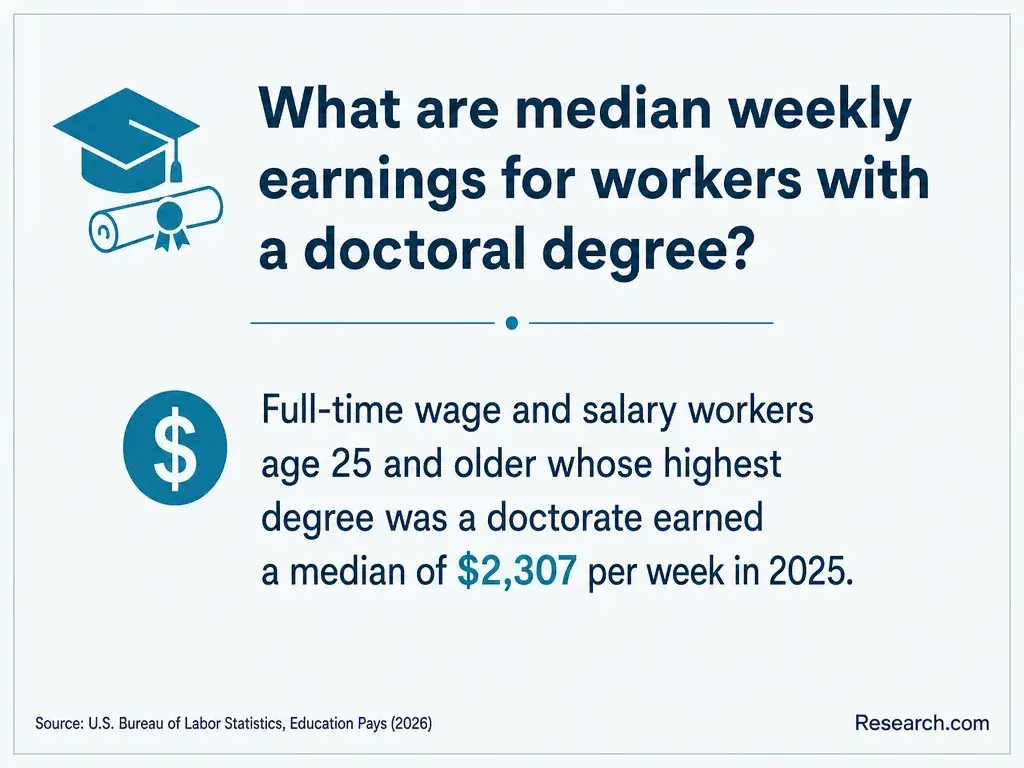
A practical next step is to join a cross-functional project, such as tracing recurring claim edits from documentation through payment, and document both your analysis and the operational change. That evidence may be more persuasive than a degree alone. Doctoral study serves different goals, such as advanced research or certain academic and executive paths; review doctoral education options in healthcare administration only if those longer-term goals warrant it.
There is no single, nationally reported U.S. Bureau of Labor Statistics wage specifically for healthcare revenue integrity managers. For context, the BLS reports a $126,520 median annual wage for management occupations in May 2025. That figure covers many kinds of managers across industries: it is not the median for this job, for healthcare managers alone, or for MBA graduates.
Actual offers can differ with location, employer size, scope of responsibility, and experience in coding, compliance, or revenue cycle leadership. For a useful comparison, examine current postings for comparable hospital or health-system roles in your market and note whether compensation includes bonuses. If considering graduate school, evaluate likely advancement against its full cost rather than assuming the broad management median will be your post-degree salary. Finding a healthcare administration degree within your budget is one part of that calculation.
What is the job outlook for healthcare revenue integrity managers?
The BLS does not publish a separate national projection for the revenue integrity manager title. It projects that management occupations overall will grow faster than the average for all occupations from 2025 to 2035, with about 1.1 million openings per year on average from growth and replacement needs. Those openings span management jobs throughout the economy and cannot be treated as vacancies in revenue integrity.
For this specialty, the more useful local signal is whether employers are recruiting for charge integrity, revenue cycle, coding compliance, and related leadership roles - and what experience those postings require. Search several job titles, compare their duties, and identify the recurring skills you can demonstrate now. Additional credentials should answer a defined gap, not an assumed hiring boom; even affordable online doctorates in healthcare administration are generally a separate decision from qualifying for this manager role.
Other Things You Should Know About Healthcare Administration
No. Revenue integrity focuses on accurate, compliant documentation, charging, and billing. Suspected fraud may require escalation to compliance or legal specialists under an organization's procedures.
Some duties can be performed remotely, but arrangements depend on the employer, access to protected information, and the need to work with clinical and operational teams.
They can compare the relevant error or claim-edit pattern before and after the change, review a sample for accuracy, and check for unintended compliance problems.
Learn the electronic health record, billing, reporting, and charge tools used by your target employers. Understanding how information moves between those systems matters more than familiarity with one brand alone.
- Revenue Cycle Management: The Art and the Science - PMC https://pmc.ncbi.nlm.nih.gov/articles/PMC11219169/
- Revenue Integrity Analyst - - 20456 - UCLA Health https://uclahealth.avature.net/careers/JobDetail/Revenue-Integrity-Analyst/20456
- Hospitals require an integrated team approach to ensuring revenue integrity | HFMA https://www.hfma.org/revenue-cycle/hospitals-require-an-integrated-team-approach-to-ensuring-revenue-integrity/
- What Is Revenue Integrity in Healthcare? | kodiaksolutions.io https://www.kodiaksolutions.io/insights/what_is_healthcare_revenue_integrity
- Manager, Revenue Integrity - Careers - Myworkdayjobs.com https://osu.wd1.myworkdayjobs.com/en-US/OSUCareers/job/Manager--Revenue-Integrity_R159896-1
- Revenue Cycle | The American Health Information Management Association (AHIMA) https://www.ahima.org/education-events/revenue-cycle/
- Revenue Integrity Manager | higheredjobs.com https://www.higheredjobs.com/region/details.cfm
- Revenue Integrity Analyst - Las Vegas https://www.governmentjobs.com/careers/umcsn/jobs/5458099/revenue-integrity-analyst
- Coding/HIM Teams: Key Contributions and Challenges in Revenue Cycle Management - MDaudit https://mdaudit.com/blog/him-and-coding-professionals-in-the-revenue-cycle/