2027 Choosing a Health Administration PhD When Your Preferred Advisor May Retire

Co-Founder and Chief Data Scientist
A health administration PhD can take years of close work with a dissertation advisor. If the faculty member you hope to study with may retire, their research fit is only part of your decision: you also need a credible path to finish if they leave.
This guide is for prospective US doctoral students weighing that risk. It explains how to examine supervision, funding, accreditation, online delivery, and career fit, and when another degree may be the better choice.
Key Things You Should Know
- Choose a program only if at least one other qualified faculty member could realistically supervise your research and the program can explain how an advisor change would work.
- Ask whether funding, research access, and dissertation progress would continue if your preferred advisor retires; a verbal assurance is less useful than documented program policy.
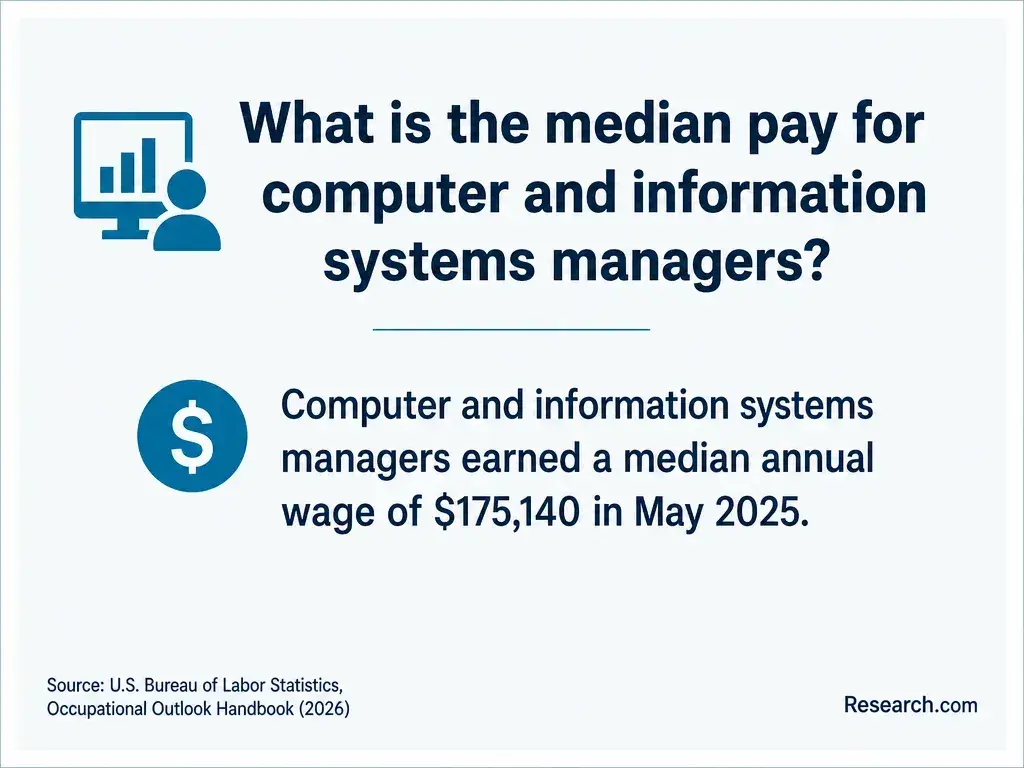
- The US median annual wage for management occupations was $126,520 in May 2025, according to the Bureau of Labor Statistics (BLS). That occupational figure is not a salary forecast for PhD graduates.
What is a health administration PhD, and what careers does it prepare you for?
A health administration PhD is a research doctorate focused on how healthcare organizations, systems, policies, and management practices work.
Programs vary in name and emphasis; a prospective student might find relevant doctoral research in health services research, health policy, public health, or management as well as health administration. The defining work is original research, usually culminating in a dissertation, not simply advanced training to run a hospital.
Graduates may pursue university teaching and research, health-system research, policy analysis, consulting, or research leadership. The right route depends on the questions you want to investigate and the methods you will learn.
If your main goal is operational leadership rather than producing research, an MHA or a healthcare-focused MBA may be more direct. For a management-focused comparison, review affordable online healthcare MBA choices; an MBA's broad business core is different from doctoral research training.
How do you choose a health administration PhD program when an advisor may retire?
Choose the research environment and continuity plan, not just the individual scholar. An excellent match who cannot supervise you through the dissertation may be a weaker choice than a program with several engaged faculty members, accessible data, and dependable funding.
Retirement itself is not disqualifying: some emeritus faculty remain active, but their eligibility to chair dissertations and their availability vary by institution.
Use these checks to compare offers before you commit:
- Identify at least two faculty members whose current research and methods fit your proposed topic; confirm whether either can chair a dissertation.
- Ask the graduate director who would take over if your preferred advisor retires, changes institutions, or stops supervising students.
- Check whether your funding belongs to the program or depends on the advisor's grant, and what happens if that grant ends.
- Speak with current doctoral students about meeting frequency, committee changes, research access, and time-to-degree experiences.
- Compare the written policies and answers across programs, then weigh advisor continuity alongside research fit, cost, and career placement.
If the succession plan is vague, treat that as a material program risk rather than assuming a committee will sort it out later. Financial comparisons matter too: compare healthcare administration doctoral program costs, while checking each program's current funding terms and dissertation-stage charges yourself.
What accreditation should a health administration PhD program have?
Start with the university's institutional accreditation and verify its current status through the accreditor or the US Department of Education's recognized-accreditation resources.
Then check the standing of the specific doctoral program, its faculty, and its graduates' research outcomes. Institutional accreditation establishes a baseline; it does not establish that a particular advisor or dissertation topic is well supported.
Do not assume that accreditation advertised for a school's MHA, MBA, or another healthcare program automatically applies to its PhD. The Commission on Accreditation of Healthcare Management Education (CAHME) is relevant to specific healthcare management programs it accredits, not a blanket label for every degree at the institution.
If you are also considering a professional master's, compare CAHME-accredited online healthcare administration study and verify the exact degree and delivery format on the accreditor's listing.
Discuss supervision directly, without asking a faculty member to predict a personal retirement date. Ask whether they are accepting new doctoral students, expect to supervise dissertations through completion, and have any planned changes to their role.
Then verify the program rules with the graduate director; an advisor's willingness to help does not necessarily confer permission to remain committee chair after retirement.
Request specific answers to the questions that would affect your progress:
- Who could become chair, and does that person have the expertise and capacity to guide my proposed methods and topic?
- Can a retired or emeritus professor remain on the committee, and in what role?
- Would an advisor change affect access to datasets, clinical partners, research funding, or authorship agreements?
- Who resolves a disagreement over a replacement chair, and where is that process documented?
A strong answer names an eligible backup and a workable process; it does not promise that nothing will change. If your goal is to lead healthcare organizations and the supervision risk outweighs the value of research training, online MHA degrees for healthcare management preparation offer a different path to consider.
Requirements vary by program. Applicants generally need a bachelor's degree and evidence that they can do graduate-level research; a relevant master's degree, healthcare experience, quantitative preparation, or published work may strengthen an application but should not be treated as universal requirements.
Schools may request transcripts, a statement of research interests, recommendations, a résumé or CV, a writing sample, and an interview. Check each program's current test and prerequisite policies rather than assuming a GRE requirement or waiver.
When an advisor's availability is uncertain, use your research statement to describe a question that fits more than one faculty member without pretending their interests are interchangeable.
Contact the program before applying to ask who is accepting students and how advisor matching works. If you have not yet completed a bachelor's degree, associate-to-bachelor's pathways in healthcare administration are an earlier step - not a substitute for doctoral admission preparation.
Expect advanced research methods, often quantitative and qualitative methods, alongside theory and subject-area study in healthcare organizations, policy, economics, quality, or population health. Requirements commonly lead toward comprehensive assessments, a dissertation proposal, and independent research.
Course names and the balance between methods and management differ substantially, so compare actual degree plans rather than relying on the title alone.
Coursework should help you judge the retirement risk. If only your preferred advisor teaches the method or provides the research setting your project requires, ask how you would continue without them.
If you need foundational healthcare management knowledge before doctoral research, MHA programs that consider applicants without healthcare experience may be worth examining first; confirm each program's admissions policy and whether its curriculum fits your goals.
A PhD usually takes several years because the dissertation depends on research approvals, data access, analysis, and committee review - not just finishing courses. An advisor transition can add time if the replacement requests a different proposal or methods.
Ask programs for their own recent completion patterns and policies on maximum enrollment time, leave, and dissertation continuation.
Compare the net cost through a realistic completion date: tuition and mandatory fees, any dissertation-continuation charges, insurance, travel or residency requirements, and foregone earnings, less funding you are actually offered.
Find out whether an assistantship covers only part of the program, requires work each term, or depends on one advisor's grant. Do not assume an advertised tuition figure represents the full cost of attendance.
If a research doctorate is not essential to your goal, budget-friendly graduate study in healthcare administration provides a shorter-degree comparison, though program costs still require individual verification.
Online delivery alone does not determine credibility. Evaluate institutional accreditation, faculty research activity, doctoral-level methods training, dissertation standards, student support, and graduate outcomes.
For a prospective PhD student, the crucial online-format question is whether they can build a functioning research relationship and access the data, mentorship, and collaborators their dissertation needs.
Ask about required live meetings, campus visits, research residencies, committee availability, and whether remote students receive comparable access to assistantships and research projects.
An online doctorate should not be assumed to work like accelerated healthcare management undergraduate programs: dissertation supervision is individual and may be difficult to compress into a fixed course schedule. A campus program is not automatically safer, either, if its advisor succession plan is weak.
A PhD can support research-intensive academic, policy, consulting, and health-system roles, but employers also evaluate publications, methods expertise, healthcare experience, and leadership record.
Faculty opportunities depend heavily on discipline, institution, and the academic hiring market. For operational management jobs, relevant experience may matter more than a research doctorate.
BLS reports that overall US employment in management occupations is projected to grow faster than the average for all occupations from 2025 to 2035. That broad outlook does not measure demand for health administration PhDs or predict an individual graduate's prospects.
Likewise, the management-occupation median wage cited earlier covers workers across many roles and education levels. Compare job postings for your target role with your prospective program's graduate placements, rather than using an occupational median as a projected return on tuition.
If you are earlier in your education and aiming for an entry-level healthcare administration role, cost-conscious choices for a healthcare administration degree may be more relevant than doctoral study.
Do health administration PhD graduates need licenses or professional certifications?
The PhD itself does not confer a general healthcare administrator license. Requirements depend on the job: certain regulated facility leadership positions have state-specific licensing rules, while clinical roles require their own professional credentials.
Employers may value certifications in areas such as quality, project management, or health information, but these are separate from doctoral admission and completion.
Check the requirements of the exact occupation and state before choosing a degree. For example, someone whose goal is a health information management credential should investigate the credential's eligibility rules and health information management degrees with CAHIIM accreditation; a health administration PhD should not be assumed to meet those requirements.
Other Things You Should Know About Healthcare Administration
Yes. Frame it as a planning question: ask about their capacity to supervise new students and the program's process if an advisor becomes unavailable. Seek the graduate director's answer as well.
Possibly, but a topic change may require new committee approval, research approvals, or data access. Review program rules before assuming you can preserve your original timeline.
Yes. A brief conversation can establish whether your interests overlap and whether that faculty member expects to supervise students. It is not a commitment from them or the program.
Ask for its existing advisor-change and committee policies, then compare the remaining uncertainty with other offers. If no eligible backup or clear process can be identified, consider a different program.
- The graduate school guide: How to prepare for the qualifying exam and assemble a thesis/graduate committee - PMC https://pmc.ncbi.nlm.nih.gov/articles/PMC11570878/
- Grant Transfer Guidance - Division of Research https://www.research.txst.edu/osp/pre-award-support/grant-transfer-guidance.html
- Procedures for Retired Faculty Applying for Grants or Contracts | Brandeis University https://www.brandeis.edu/ora/institutional-pre-award-office/policies/retired-faculty.html
- Current and Pending (Other) Support - Research Support https://research-support.yale.edu/sponsored-projects/office-of-sponsored-projects/proposals/current-and-pending-other-support
- Chapter 3 - Graduate Student Financial Support https://www.grad-college.iastate.edu/book/export/html/218
- Policies for Graduate Assistantships - UMD Academic Catalog https://academiccatalog.umd.edu/graduate/policies/policies-graduate-assistantships/
- 4. Benefits Generally Available to Emeritus Faculty | princeton.edu https://dof.princeton.edu/faculty-retirement-options/i-faculty-eligibility-and-general-policies/4-benefits-generally-available
- Doctoral Committee Responsibilities - Chattanooga https://www.utc.edu/health-education-and-professional-studies/applied-leadership-and-learning/doctoral-program-guide/dissertation-process/committeeresponsibilities
- PhD - Frequently Asked Questions (FAQ) - USC Viterbi https://viterbigradadmission.usc.edu/doctoral/phd-faq/