2027 MHA vs Master's in Gerontology for Long-Term Services Leadership

Co-Founder and Chief Data Scientist
Leading a nursing home, assisted living organization, or community-based aging program requires both sound operations and an understanding of older adults' needs. An MHA emphasizes healthcare organizations; a master's in gerontology emphasizes aging. Neither degree, by itself, qualifies someone for every leadership role.
This comparison is for professionals choosing graduate education for long-term services and supports (LTSS). It explains where each degree is strongest, what employers and licensing boards may require, and how to compare programs before committing your time and money.
Key Things You Should Know
- Choose an MHA when your target job centers on budgets, staffing, compliance, and healthcare operations. Choose gerontology when it centers on aging programs, policy, or services for older adults.
- For nursing home administrator roles, check your state's licensing rules before choosing either degree. A graduate diploma alone is not a license.
- The May 2025 median wage for all U.S. management occupations was $126,520, according to the Bureau of Labor Statistics (BLS); it is not an expected salary for graduates of either program.
What is the difference between an MHA and a master's in gerontology for long-term services leadership?
A Master of Health Administration (MHA) trains students to manage healthcare organizations. A master's in gerontology studies aging and the systems, policies, and services that affect older adults.
Both can support LTSS careers, but they approach the work from different directions: organizational management versus aging-specific expertise.
The comparison below shows how that distinction affects program choice. Individual curricula vary, so use it as a guide to the courses and practical experiences you should verify.
| Decision factor | MHA | Master's in gerontology |
| Primary focus | Healthcare finance, operations, leadership, and quality | Aging, older-adult services, policy, and program development |
| Strongest LTSS fit | Facility or health-system management with substantial operational responsibility | Aging-services programs, advocacy, policy, or community-based service coordination |
| Potential gap to address | Depth in aging and person-centered LTSS | Depth in budgets, reimbursement, staffing, and facility operations |
An MHA is also distinct from health information management (HIM), which focuses more directly on health data and information systems. If that function interests you, compare healthcare administration coursework with HIM coursework before choosing a degree.
Which degree better prepares you for leadership in long-term care?
For an operations-heavy role, the MHA is usually the more direct choice. Running a facility or regional service line calls for budgeting, workforce management, quality improvement, and regulatory judgment.
For leadership in an area agency on aging, caregiver-support initiative, or older-adult advocacy organization, gerontology may offer more relevant subject knowledge. Neither answer overrides the courses, fieldwork, and employer expectations for the particular job you want.
Your existing experience changes the calculation. A nurse or aging-services manager who already understands older adults may gain more from an MHA's management training. A finance or operations professional entering LTSS may need gerontology coursework and supervised exposure to older-adult services. Ask prospective employers which gap matters more for the positions you are targeting.
An MBA is another option for someone seeking broad business leadership rather than a healthcare-specific graduate degree. Compare its actual healthcare curriculum, not just its concentration label, and the total cost of cost-conscious MBA pathways for healthcare professionals. An MBA with a healthcare elective is not necessarily a substitute for substantial LTSS preparation.
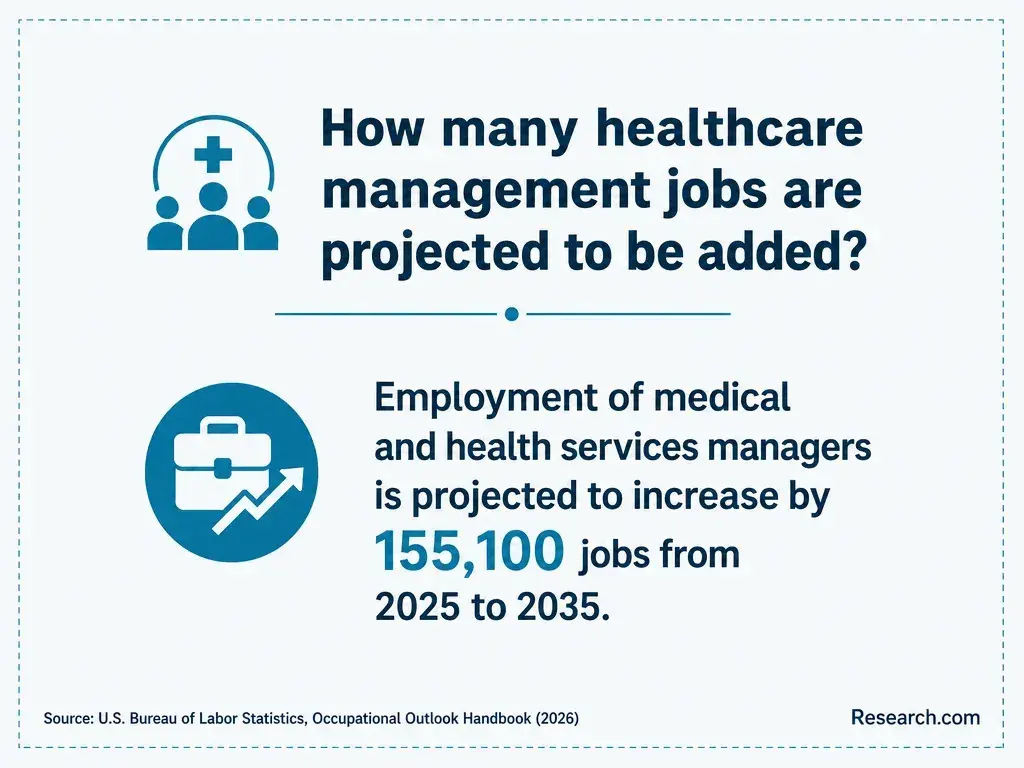
What careers can you pursue with an MHA or gerontology master's degree?
MHA graduates may pursue healthcare operations, quality improvement, service-line management, or facility administration, depending on their experience and any licensing requirements.
Gerontology graduates may work in aging-services program management, policy, advocacy, community partnerships, or senior-living operations. Both paths can lead to LTSS leadership, but employers commonly weigh relevant experience alongside the degree.
A realistic next step depends on your starting point. Someone already supervising staff in senior living may be positioned for broader operational responsibility after graduate study. A newcomer is more likely to need direct service, project, or supervisory experience first. Neither degree automatically qualifies a graduate to practice nursing, social work, or another regulated profession.
If your preferred work is managing health records rather than services or facilities, investigate health information management degrees with CAHIIM accreditation. That is a different professional pathway, not simply another name for an MHA.
MHA programs commonly cover healthcare finance, organizational leadership, operations, law, and quality improvement. Gerontology programs commonly examine aging across the life course, older-adult health and social needs, aging policy, and program design. These are typical emphases, not a standard curriculum guaranteed at every school.
For an LTSS management goal, look beyond course titles. An MHA student should seek substantial work on older-adult care, reimbursement, resident experience, and residential or home-based services.
A gerontology student should look for budgeting, personnel management, compliance, and applied organizational projects. Ask whether a practicum can be completed with an LTSS employer and who supervises it.
If you are still completing undergraduate preparation, establish a route to a bachelor's degree before comparing graduate curricula. Questions about transferring into a health administration program belong at that earlier stage; transfer credit toward a bachelor's does not establish eligibility for a particular master's program.
Online options exist in both fields, but "online" does not establish how flexible a program is. Check whether classes are asynchronous, whether live meetings have fixed times, and whether practica, campus visits, or local placement agreements are required. These details matter particularly if you work shifts or cannot leave your current location.
Ask an admissions adviser how placements are arranged where you live and whether your employer can serve as a site. Also verify that the institution can enroll students in your state. If you do not yet hold a bachelor's degree, online healthcare administration bachelor's programs with rolling starts may help you plan the earlier stage; a rolling start does not shorten the requirements for a later master's.
Both generally expect an eligible bachelor's degree and an application documenting academic and professional preparation. Schools set their own policies for transcripts, recommendations, statements, resumes, tests, prerequisites, and experience.
A nonbusiness major is not automatically disqualifying; what matters is whether you can meet a program's requirements and handle its quantitative or research coursework.
If you are changing careers, explain how your current skills connect to the LTSS role you want. Compare each program's stated experience policy rather than assuming healthcare employment is mandatory.
Some MHA programs consider applicants without healthcare experience. Admission, however, is separate from whether an employer will hire a new graduate into a leadership job.
Completion time depends on required credits, enrollment pace, course sequencing, and fieldwork. Full-time study can take less time than part-time study, but an accelerated calendar may be difficult to combine with full-time work. Compare each school's published curriculum and maximum completion window rather than treating the degree name as a reliable timeline.
There is no defensible single price for either degree: tuition and fees vary by school and program. Request a written estimate covering all required credits, mandatory fees, materials, practicum-related expenses, and any travel.
Then account for employer assistance and the income or work hours you might give up. Listings of economical master's degree routes in healthcare administration can help build a shortlist, but confirm current charges directly with each institution.
First, verify the institution's current accreditation through its accreditor and the U.S. Department of Education's recognized-accreditor information. Then check program-level accreditation where it matters.
The Commission on Accreditation of Healthcare Management Education (CAHME) accredits eligible healthcare management programs, including some MHA programs. Do not assume every MHA is CAHME-accredited or that a gerontology degree must carry the same programmatic accreditation.
Ask whether a prospective employer or state licensing board specifies an accredited institution, a particular program, or particular coursework. Speed does not answer those questions. When reviewing healthcare administration degrees on an accelerated timetable, check recognition and required practical work as carefully as you would for a longer program.
Nursing home administrators must be licensed by the state in which they work; degree, experience, training, and examination requirements vary. Other LTSS management roles may have different rules or no administrator-license requirement.
Before enrolling, obtain your state board's current requirements and ask whether each program's coursework and supervised experience can satisfy them.
A professional certification can demonstrate relevant knowledge but does not replace a required state license. Nor is a doctorate generally a prerequisite for LTSS management.
If your longer-term goal is research or academic leadership, consider healthcare administration doctorate completion timelines as a separate decision, not as a step assumed necessary for facility administration.
What are the salary and job outlook differences between these degree paths?
There is no sound salary comparison based on the degree names alone. Pay depends on the occupation, employer, location, responsibility, and prior experience.
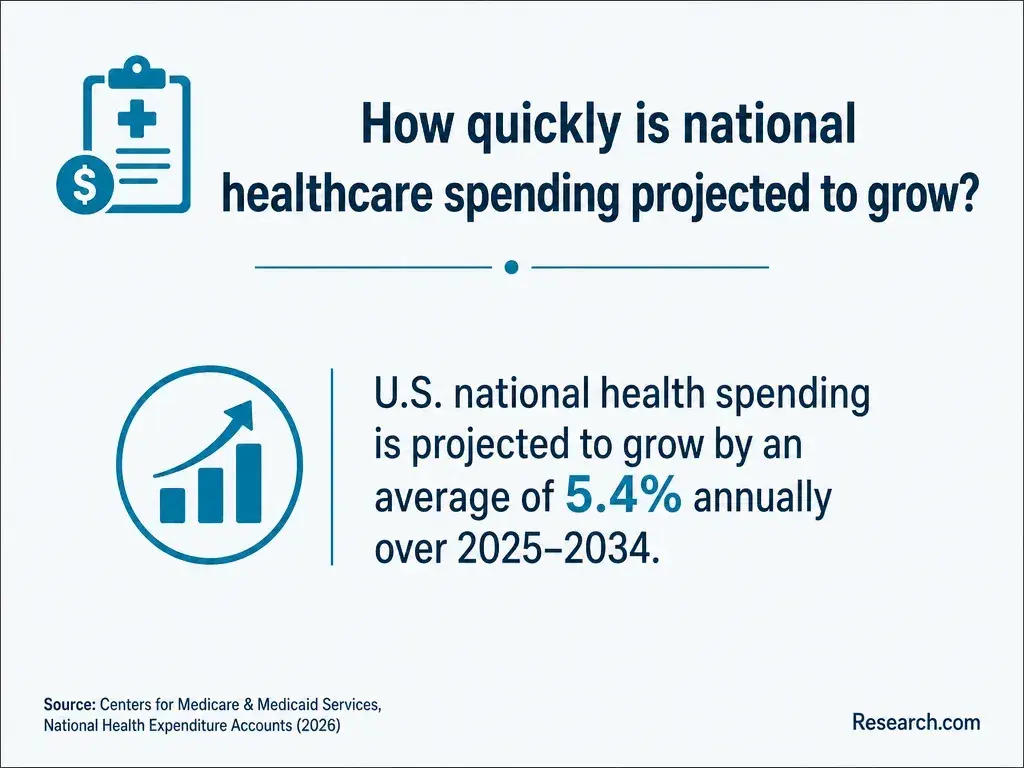
For context, BLS reports a $126,520 median annual wage for U.S. management occupations in May 2025 and projects overall management employment to grow faster than the average for all occupations from 2025 to 2035. That broad category is not an LTSS salary survey and does not measure what MHA or gerontology graduates earn.
For a useful personal comparison, identify the job titles you could realistically obtain now and after graduation, then compare local postings, stated experience requirements, and compensation with each program's total cost.
A faster healthcare management master's program may reduce time away from work, but only if its curriculum and placement requirements prepare you for the role. Neither a shorter timeline nor a higher occupational median establishes a return on your investment.
Other Things You Should Know About Healthcare Administration Programs
Possibly. Ask the program whether your workplace qualifies, whether the project must be outside your usual duties, and who may supervise and evaluate it.
Not by itself. Clinical counseling is regulated separately; check the license and degree requirements for the profession and state you have in mind.
It may be if your target role requires both operational authority and substantial aging expertise. Compare the additional coursework and cost with relevant electives or supervised work experience first.
Online delivery alone does not determine eligibility. Confirm that the institution and program participate in federal student aid and that you meet the applicable student eligibility requirements.
- Virginia Board of Long-Term Care Administrators - Licensure https://www.dhp.virginia.gov/Boards/LTCA/ApplicantResources/FrequentlyAskedQuestions/NursingHomeAdministrators/Licensure/
- Quality in Managed Long-Term Services and Supports Programs | ASPE https://aspe.hhs.gov/reports/quality-managed-long-term-services-supports-programs-1
- Qualifications - Nursing Home Administrator Licensure Program https://www.health.ny.gov/professionals/nursing_home_administrator/licensure_program/qualifications.htm
- Long-Term Services and Supports (LTSS) Quality Measures | medicaid.gov https://www.medicaid.gov/medicaid/home-community-based-services/home-community-based-services-quality/long-term-services-supports-quality-measures
- Assisted Living Administration Concentration - Gerontology | Virginia Commonwealth University https://gerontology.chp.vcu.edu/programs/mastersprogram/assisted-living-administration-concentration/
- What Can You Do With a Degree in Gerontology? | franu.edu https://franu.edu/academics/gero/news/what-can-you-do-with-a-degree-in-gerontology.html
- How to Become a Nursing Home Administrator | George Washington University https://healthcaremba.gwu.edu/blog/how-to-become-a-nursing-home-administrator
- Careers in Aging: A Guide for Graduate Students | apa.org https://www.apa.org/pi/aging/resources/careers/graduate
- What is an MHA Degree and Who Should Pursue One? | Cornell Brooks Public Policy https://publicpolicy.cornell.edu/masters-blog/what-is-an-mha-degree-and-who-should-pursue-one/
- What Can You Do With a Master's in Gerontology? Career Paths in Aging and Geriatrics | UF Medical Sciences Online https://distance.physiology.med.ufl.edu/about/articles/aging/what-can-you-do-with-a-masters-in-gerontology-career-paths-in-aging-and-geriatrics/