2027 From Emergency Medical Technician to Healthcare Administration

Co-Founder and Chief Data Scientist
EMTs already understand how staffing, dispatch, documentation, and handoffs affect patient care. Moving into healthcare administration means learning to manage those systems rather than working only within them.
This guide is for EMTs considering their first office-based role, a degree, or a longer-term management career. It explains which experience transfers, where additional education helps, and how to compare programs without assuming that an MBA - or any degree - automatically leads to a management job.
Key Things You Should Know
- EMTs can often pursue EMS coordination, scheduling, or operations-support roles before earning a graduate degree; broader management roles usually require relevant administrative experience.
- A bachelor's degree may be the most useful next step for an EMT without one. An MHA offers healthcare-specific management study, while an MBA provides a broader business foundation.
- The U.S. Bureau of Labor Statistics reports a May 2025 median wage of $126,520 across all management occupations - not an entry-level healthcare administration salary or a projected return on a degree.
How Can EMTs Transition Into Healthcare Administration Careers?
Healthcare administration involves organizing the people, budgets, information, and processes that support care delivery. For an EMT, the closest starting point is often an EMS agency, hospital emergency department, ambulance provider, or health system that already values field experience. Familiarity with shift coverage, response workflows, incident reports, and interdepartmental handoffs can be useful in operations roles.
The gap is usually not healthcare knowledge; it is evidence of administrative responsibility. An EMT can seek assignments involving scheduling, onboarding, quality-improvement data, equipment purchasing, or protocol implementation, then document the results on a résumé. A scheduling assignment, for example, demonstrates more management-relevant experience when it includes resolving coverage problems and tracking overtime than when it consists only of entering shifts.
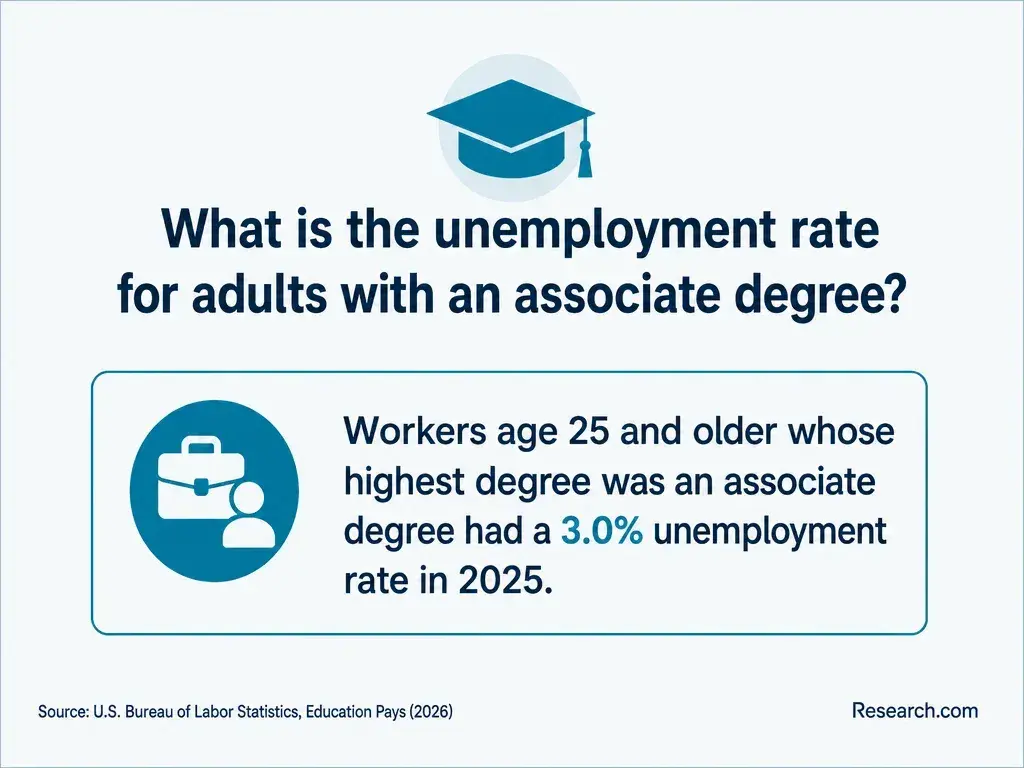
For EMTs whose highest credential is an associate degree, moving from an associate degree to a healthcare administration bachelor's may provide a route toward jobs that screen for a four-year degree. Confirm how many existing credits will transfer before committing.
What Healthcare Administration Degrees Can EMTs Pursue?
The right degree depends on the EMT's current education and intended job, not simply on which credential sounds most advanced. These options differ in breadth, specialization, and typical career stage.
| Path | Best fit for an EMT | Important limitation |
| Associate or bachelor's in healthcare administration | Building a foundation in healthcare operations, finance, and supervision; a bachelor's may satisfy more employer degree screens. | A degree does not replace experience managing projects or people. |
| Master of Health Administration (MHA) | Developing healthcare-specific leadership, policy, finance, and organizational skills after a bachelor's degree. | Program requirements and access to internships or applied projects vary. |
| MBA, with or without a healthcare management concentration | Gaining broad business skills that may also transfer outside healthcare. | A healthcare elective is not necessarily a formal concentration, and the MBA may offer less healthcare-specific depth than an MHA. |
An EMT targeting health-system operations should compare actual coursework and experiential requirements, not degree labels alone. Graduate program options for an online MHA can be a useful comparison point for someone who already has a bachelor's degree. If the immediate goal is a coordinator role, relevant work assignments or targeted courses may be more direct than graduate school.
Do EMTs Need a Degree or License for Healthcare Administration?
There is no single U.S. healthcare administrator license covering ordinary hospital, clinic, or EMS operations jobs. An active EMT certification does not authorize someone to manage an organization, but it can establish valuable frontline familiarity. Employers set education and experience requirements by role: a coordinator opening may accept substantial field experience, while a department manager opening may request a bachelor's degree and prior supervisory work.
Some positions have separate legal requirements. Nursing leadership requires the appropriate nursing credentials; licensed nursing home administrator roles are governed by state-specific rules. An MHA or MBA does not substitute for those licenses. EMTs comparing graduate admissions policies should also distinguish a school's healthcare-experience requirement from an employer's hiring requirement. Resources on comparing MHA experience requirements for non-healthcare applicants can help frame that question, although an EMT should still ask each school how it evaluates field experience.
Online study may make it easier to keep working EMT shifts, but "online" does not necessarily mean self-paced. Live classes, group meetings, exams, internships, and occasional campus visits can conflict with rotating or overnight schedules. Campus programs can make in-person collaboration easier, though commuting and fixed class times may be harder to manage.
Before choosing either format, ask for a sample course schedule and the rules for required fieldwork. An EMT working variable shifts should check whether live attendance is mandatory, when group projects meet, and whether a project can be completed at an existing employer. Someone seeking a faster bachelor's path can compare accelerated bachelor's study in health services administration, but should verify transfer-credit acceptance and course sequencing; an accelerated calendar is only useful if its workload is sustainable.
Healthcare administration programs commonly address healthcare finance, organizational leadership, operations, quality improvement, health policy, information systems, and ethics. A bachelor's program may begin with general education and introductory business courses; an MHA typically studies healthcare organizations in greater depth. An MBA normally centers on accounting, finance, strategy, operations, and leadership, with healthcare courses added through a verified concentration or electives.
For an EMT, course titles matter less than what students do with them. A budgeting assignment could build on experience with ambulance staffing or equipment needs; a quality project could examine handoff delays. Neither is clinical training. Compare syllabi and capstone requirements to see whether a program develops the analytical and financial skills missing from your field experience. If a compressed business curriculum appeals to you, examine the course sequence in shorter graduate business pathways in healthcare management rather than assuming speed means fewer commitments.
Requirements vary by school and degree level. Bachelor's applicants generally need evidence of secondary education or prior college study; transfer applicants must have their transcripts evaluated. Graduate applicants generally need a bachelor's degree and may be asked for a résumé, recommendations, or a statement of purpose. Schools differ on GPA thresholds, standardized tests, prerequisites, and professional-experience expectations, so none should be assumed universal.
An EMT can strengthen an application by explaining a specific administrative goal and showing initiative beyond routine patient care, such as training colleagues or improving a workflow. Applicants without business coursework should ask whether accounting or statistics preparation is required or merely recommended. For healthcare administration master's options with a one-year format, check both admission prerequisites and the pace of required courses before treating the shorter calendar as a better fit.
A bachelor's degree commonly takes about four years of full-time study from the start, but accepted transfer credits can shorten that path. Master's timelines depend on credit requirements, course availability, and enrollment intensity. Working EMTs may reasonably choose a slower pace to preserve income and avoid overloading weeks that include long shifts.
There is no reliable single price for these degrees: tuition may be charged by credit or term, and mandatory fees, books, technology, fieldwork, and travel can change the total. Request a written estimate based on your transfer evaluation and planned course load. Then subtract confirmed grants or employer assistance, and account for any wages you would forgo. EMTs considering an MBA can use budget-friendly MBA study with a healthcare management focus to begin a comparison, but should verify each school's current tuition and fees directly.
The most plausible first moves are adjacent to an EMT's experience: EMS operations coordinator, staffing or scheduling coordinator, emergency-services program assistant, quality-improvement assistant, or patient-flow support specialist. These roles can involve coordinating staff, tracking performance, preparing reports, and working across clinical and administrative teams. Titles and degree requirements differ among employers.
With demonstrated responsibility for budgets, projects, or teams, an EMT may become a stronger candidate for operations manager, practice manager, or service-line management roles. Senior hospital leadership is a longer-term progression, not a typical first job after graduation. When screening postings, separate "degree required" from "management experience required." Evaluating accredited universities for a health administration degree can help with the education side of that decision; actual job descriptions show what experience must accompany it.
Pay depends heavily on the specific occupation, employer, location, and level of responsibility. The U.S. Bureau of Labor Statistics reports a median annual wage of $126,520 for management occupations overall in May 2025. That figure covers many industries and established managers; it is not a salary estimate for a newly hired healthcare coordinator, an EMT who earns an MHA, or healthcare administrators as a single group.
For a useful personal comparison, collect local postings for the jobs you could plausibly pursue next and note their pay ranges and experience requirements. Then compare those opportunities with your current compensation, including overtime and benefits. Guides to healthcare management careers and compensation factors can provide context, but high-paying senior roles should not be used to justify tuition without a realistic path to them.
How Do You Choose an Accredited Healthcare Administration Program?
First verify the institution's recognized accreditation and its eligibility for the financial aid you intend to use. Then evaluate the specific program: required courses, transfer-credit decisions, scheduling, applied projects, career support, and full cost. Institutional accreditation and specialized program accreditation answer different questions; neither guarantees employment.
For graduate healthcare management study, check whether a program holds accreditation from the Commission on Accreditation of Healthcare Management Education (CAHME) if that distinction matters to your goals or a prospective employer. Compare CAHME-accredited education for aspiring healthcare administrators while independently confirming a program's current status and whether the accredited offering is the one you would attend. The best choice is the program whose verified requirements fit both your EMT schedule and the next role you are qualified to pursue.
Other Things You Should Know About Healthcare Administration
Usually, if you continue meeting your state's renewal requirements. Check with your state EMS office; an administrative job by itself may not satisfy continuing-education or practice requirements.
Some administrative tasks can be done remotely, but many operations roles require on-site coordination. Check the duties and location requirements in each posting rather than assuming an office-based job is remote.
Yes, particularly if it involved training, scheduling, fundraising, records, or coordinating an event. Describe your responsibilities and results accurately; volunteer experience is not automatically equivalent to paid management experience.
Connect a problem you observed in emergency care to the administrative work you want to do. Give a concrete example of helping improve a process, and explain which skills you still need to develop.
- Ambulance clinicians' perspectives on interprofessional... - PMC https://pmc.ncbi.nlm.nih.gov/articles/PMC12124084/
- The Value of Community Paramedicine | cdc.gov https://www.cdc.gov/ems-community-paramedicine/php/data-research/community-paramedicine/index.html
- Become a Healthcare Administrator: Your Guide | American College of Education https://ace.edu/blog/how-to-become-a-healthcare-administrator/
- 5 High-Paying Master's in Health Care Administration Jobs to Consider - Cornell Brooks Public Policy https://publicpolicy.cornell.edu/masters-blog/5-high-paying-masters-in-health-care-administration-jobs-to-consider/
- Recruitment and Retention Challenges in EMS | usf.edu https://digitalcommons.usf.edu/cgi/viewcontent.cgi
- Health Administrator Career | explorehealthcareers.org https://explorehealthcareers.org/careers/public-health/health-administrator/
- How to Become a Healthcare Administrator and Job Duties | Public Health Degrees https://www.publichealthdegrees.org/careers/healthcare-administrator/
- How to move from EMS to healthcare administration | EMS1 https://www.ems1.com/emt-ems-paramedic-jobs-and-careers/beyond-the-rig-the-path-from-ems-to-healthcare-administration