2027 How to Become a Compliance Coordinator With a Healthcare Administration BS

Co-Founder and Chief Data Scientist
A healthcare administration bachelor's degree can prepare you for compliance work, but the degree alone may not get you a coordinator job. Employers also need people who can interpret requirements, document problems, and help staff correct them. If you are choosing a program or planning your first move into healthcare compliance, this guide explains the work, the most useful coursework and experience, and when a certification or further degree is worth considering. It also shows how to assess costs and job prospects without mistaking broad healthcare management figures for a coordinator's likely pay.
Key Things You Should Know
- A healthcare administration BS is a relevant route into compliance coordination, especially when paired with experience in healthcare operations, records, billing, quality, or privacy.
- Healthcare compliance coordinators generally do not need an occupation-specific license; certification can help later, but eligibility rules and employer preferences vary.
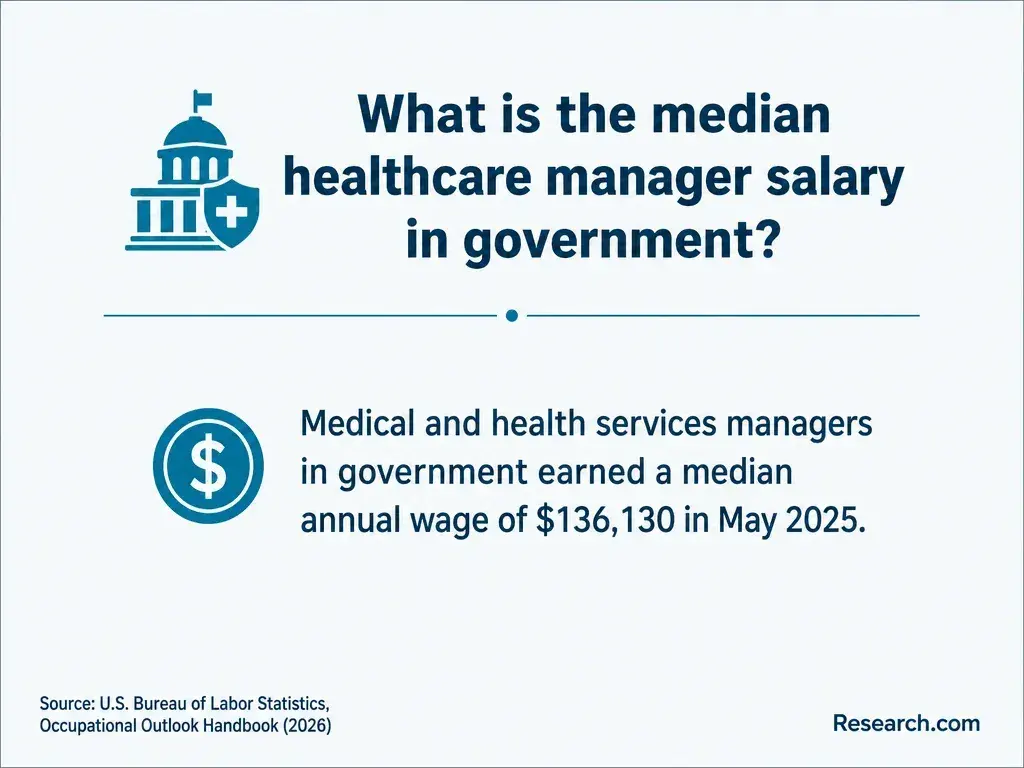
- The Bureau of Labor Statistics reports a May 2025 median wage of $126,520 for management occupations overall - not for compliance coordinators. Do not use it as a starting-salary estimate.
What does a healthcare compliance coordinator do?
A healthcare compliance coordinator helps an organization follow applicable laws, payer rules, accreditation standards, and internal policies. The role is usually operational: coordinators track requirements, organize evidence of compliance, support training, and follow up when a review finds a gap. A compliance officer or director typically has broader authority over the program and its priorities.
The work depends on the employer. A hospital coordinator might help prepare for an audit and track corrective actions; a medical-group coordinator might focus on billing documentation or privacy incidents. Useful skills include careful recordkeeping, clear writing, discretion, and the ability to explain a requirement to colleagues without treating every issue as a legal question. For a broader view of where these roles fit, see planning a career in healthcare administration.
When reading job postings, note which rules the coordinator will actually handle. "Compliance" can refer to very different work in patient privacy, reimbursement, research, workplace safety, or clinical quality.
What degree do you need to become a healthcare compliance coordinator?
There is no single nationally required degree for the job. A healthcare administration BS is relevant because it combines healthcare operations and business processes. Employers may also consider applicants with degrees in health information management, public health, business, or related fields, depending on the position.
For an entry-level applicant, the stronger question is whether the degree provides a route to relevant experience. An internship, healthcare office job, or project involving audits, records, billing, quality improvement, or policy documentation can help you demonstrate the work behind the credential. If you already hold a bachelor's degree and are changing sectors, compare the time and expense of another undergraduate degree with employer training or MHA degree options for applicants changing sectors. An MHA can develop administrative knowledge, but it does not replace hands-on familiarity with a particular compliance function.
An MBA is not normally necessary to enter a coordinator role. Broad management study may become more useful if your longer-term goal is to manage a department, budget, or organization-wide compliance program.
How does a healthcare administration bachelor's degree prepare you for compliance?
The degree can teach you how healthcare organizations make decisions, handle information, finance services, and measure performance. That context matters because a coordinator must recognize where a requirement intersects with everyday work - not merely memorize a rule.
For example, a student who studies revenue cycle processes may better understand why documentation errors create billing risk. Courses in organizational behavior can help with staff training and follow-up after an audit. A project that maps a patient-information workflow can demonstrate how the student identifies a risk, documents it, and proposes a workable correction.
Check whether a program emphasizes general administration or the information systems and data practices most relevant to your target role. Choosing between healthcare administration and health information management is particularly important if you want to specialize in medical records, coding, or health information governance rather than broader operations.
Curricula differ by school, but healthcare administration programs commonly include healthcare systems, management, finance or accounting, law and ethics, information systems, quality improvement, and human resources. Some add internships or capstone projects. Course titles alone do not show how deeply compliance is taught.
Look at syllabi or course descriptions for work you could later discuss in an interview: assessing a policy, interpreting an audit finding, mapping a process, or presenting a corrective-action plan. If your intended work centers on health records and information systems, compare CAHIIM-accredited HIM degree programs online as a distinct academic option. CAHIIM accreditation relates to health informatics and information management programs; do not assume it applies to every healthcare administration degree.
Yes - you can complete a healthcare administration BS online and pursue compliance work afterward. Online delivery does not change the need for practical experience, and it does not mean every course is self-paced. Before enrolling, ask whether classes have live meetings, set deadlines, group projects, proctored exams, or an in-person internship.
If you are already employed in healthcare, an online program may let you connect assignments to your workplace, subject to employer permission and patient-privacy rules. If you are new to the field, investigate how the school helps online students find internships or suitable projects near home. Use healthcare administration undergraduate degrees at U.S. universities to identify programs, then confirm each school's current format, accreditation, and experiential requirements directly.
Requirements depend on whether you apply as a first-year student, a transfer student, or a degree-completion applicant. Schools commonly request prior transcripts; they may also set minimum academic standards or require specific general-education courses. A degree-completion program may require transferable college credit before you can enter its upper-level coursework.
Ask for a written transfer-credit evaluation before committing. Confirm which credits satisfy degree requirements, not just how many the school accepts, and check whether prior coursework must be recent. Transfer rules are program-specific at every level: even transfer policies in accelerated healthcare leadership doctoral programs differ from undergraduate policies and cannot predict how a BS program will evaluate your credits.
A bachelor's degree commonly takes about four years of full-time study from the start of college. Transfer credit, part-time enrollment, required course sequences, and internship availability can change that timeline. Ask each school for a completion plan based on your accepted credits, rather than relying on an advertised fastest-possible schedule.
Published tuition is not the full price. Compare programs using the same cost components:
- Tuition for the credits you still need, plus mandatory program and university fees.
- Books, software, technology requirements, and any internship-related expenses.
- Potential costs from repeating a course, extending enrollment, or borrowing to pay.
Then subtract grants and employer assistance for which you are actually eligible. Affordable online healthcare administration degrees can help you build a shortlist, but request a personalized cost estimate before deciding. A lower advertised tuition rate may not produce the lowest total cost if fewer of your credits transfer.
Healthcare compliance coordination generally does not require an occupation-specific state license. Some employers prefer a professional compliance certification, especially for roles involving investigations or program oversight, but a credential is not a universal hiring requirement. Certification organizations set their own eligibility, examination, and renewal rules; check those rules before paying for preparation.
For a new entrant, relevant work experience may be the better first investment. Ask employers which credential, if any, they recognize for the compliance area you want to enter. A graduate degree serves a different purpose from certification: it may support broader leadership development but does not itself certify your ability to perform a specific compliance function. If you later consider graduate study, weigh speed and workload in healthcare management master's programs against the experience you could gain while working.
A graduate may qualify to compete for roles such as compliance assistant, compliance coordinator, quality improvement coordinator, patient access supervisor, practice administrator, or healthcare operations specialist. Job titles are not standardized: one employer's "coordinator" position may be entry-level, while another's requires substantial audit or regulatory experience.
A practical path is to gain experience where compliance problems arise, then move toward a defined specialty. For instance, billing operations can lead toward reimbursement compliance, while records work can lead toward privacy or information-governance duties. An internship or early-career role should be judged by the tasks and supervision it offers, not its title alone.
Senior compliance leadership usually requires a record of managing programs and people; a bachelor's degree does not confer that responsibility automatically. Before paying for an advanced credential - including the options discussed in cost-conscious doctoral education for healthcare administrators - identify a target job that calls for it. A doctorate is not a typical prerequisite for compliance coordination.
How much do healthcare compliance coordinators earn, and what is the job outlook?
There is no reliable national wage figure here for the exact title "healthcare compliance coordinator." Pay can vary with location, employer, specialty, and experience, so a posted range for comparable local jobs is more useful when evaluating an offer. Do not substitute a compliance officer's pay or a healthcare manager's pay for a coordinator estimate.
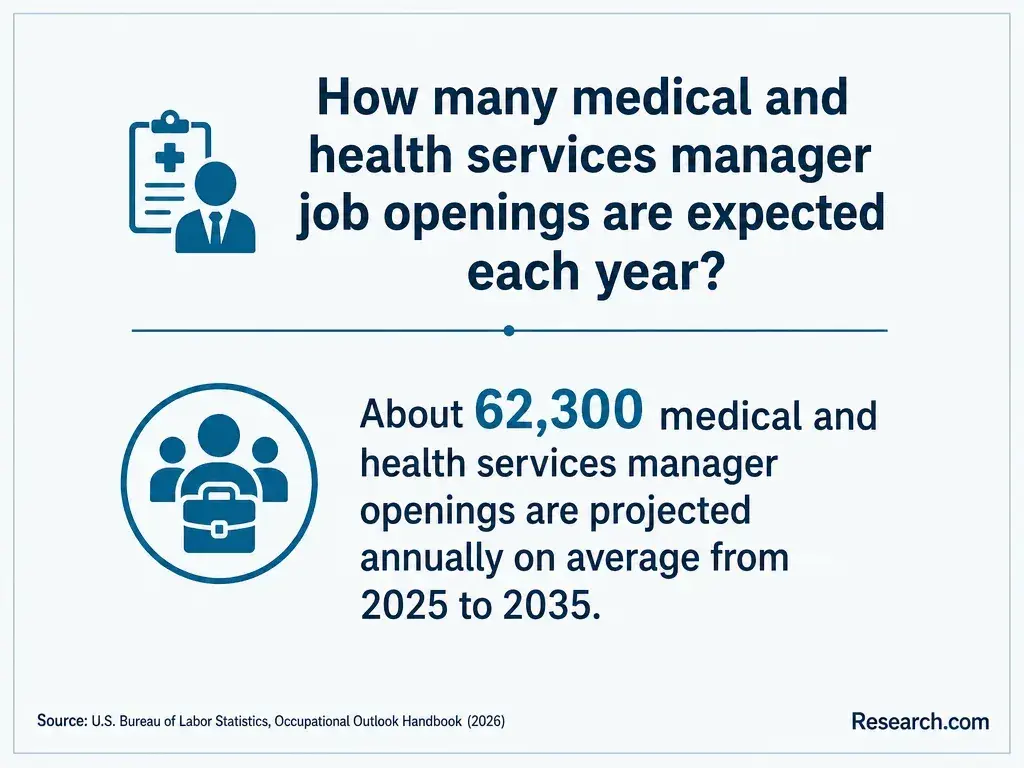
For context only, the Bureau of Labor Statistics reports that management occupations overall had a median annual wage of $126,520 in May 2025. That group covers many occupations and career levels; the figure does not describe healthcare compliance coordinators or predict what a new BS graduate will earn. BLS projects management employment overall to grow faster than the average for all occupations from 2025 to 2035, but that broad projection likewise cannot establish demand for this specific title.
Assess prospects by checking local postings for the compliance specialty you want, noting recurring experience and software requirements, and asking potential internship supervisors where their teams hire. If advancement later makes a master's degree relevant, healthcare administration master's programs with one-year schedules are one option to investigate - but a shorter program is valuable only if its cost, workload, and curriculum fit your goal.
Other Things You Should Know About Healthcare Administration
Describe specific work you performed, such as maintaining audit records, updating procedures, tracking training, or resolving documentation errors. State your contribution accurately and protect confidential information in applications and interviews.
Start with the area closest to your coursework or work experience. Compare local job postings to see which tasks recur, then choose projects and training that address those requirements.
Yes. Explain the problem, the requirement you investigated, the evidence you used, and how you would measure whether your proposed correction worked. Present it clearly as a class project, not professional experience.
Ask who will supervise you, what records or processes you may work with, whether you can contribute to an audit or improvement project, and how the organization handles confidentiality training.
- Career Paths in Healthcare Compliance | Seattle U School of Law https://onlinelaw.seattleu.edu/blog/career-paths-in-healthcare-compliance/
- How Can You Land a Career in Health Care Compliance? | USC Online https://online.usc.edu/news/health-care-compliance-jobs-how-to-land-career/
- What Careers Can You Get With a Healthcare Administration Degree? Here are 12 Roles to Explore. https://www.cambridgehealth.edu/blog/what-careers-can-you-get-with-a-healthcare-administration-degree-here-are-12-roles-to-explore/
- What Does a Health Care Compliance Officer Do? | Pitt Law MSL Online Program https://online.law.pitt.edu/blog/what-does-a-health-care-compliance-officer-do
- What Is Healthcare Compliance? | AAPC https://www.aapc.com/resources/what-is-healthcare-compliance
- HIPAA Compliance Officer: What They Do and Why It Matters | healthcarecompliancepros.com https://www.healthcarecompliancepros.com/hipaa-compliance-officer-what-they-do-and-why-it-matters
- 5 Essential Healthcare Compliance Laws and Regulations | NAVEX https://www.navex.com/en-us/blog/article/5-essential-healthcare-compliance-laws-regulations/
- Healthcare Compliance Officer: Roles and Responsibilities | Atlas Systems Pvt. Ltd https://www.atlassystems.com/blog/healthcare-compliance-officer
- EXPERT INSIGHTS: 5 ESSENTIAL HEALTHCARE COMPLIANCE LAWS AND REGULATIONS | Secondary Sources | National | Westlaw Today https://today.westlaw.com/Document/I53d66cf38cd111f08987fcba5ea4d3ca/View/FullText.html
- A Guide To Your Career In Healthcare Compliance | medtrainer.com https://medtrainer.com/blog/a-guide-to-your-career-in-healthcare-compliance/