2027 Home Health Operations Director: What Leadership Experience Matters

Co-Founder and Chief Data Scientist
Moving into home health operations leadership takes more than supervising a team or earning a management degree. A director must coordinate care delivered across patients' homes while managing staffing, quality, finances, and regulatory obligations. For clinicians and healthcare managers considering this step, the key decision is which experience to build - and whether further education will close a meaningful gap. This guide explains what employers may look for, how to evaluate degree options, and what salary and career data can and cannot tell you.
Key Things You Should Know
- The strongest preparation combines people leadership with measurable responsibility for home-based care operations, such as scheduling capacity, quality, budgets, and compliance.
- An MBA or healthcare administration degree can strengthen business skills, but it does not replace clinical oversight arrangements, agency-specific experience, or qualifications required for a designated administrator.
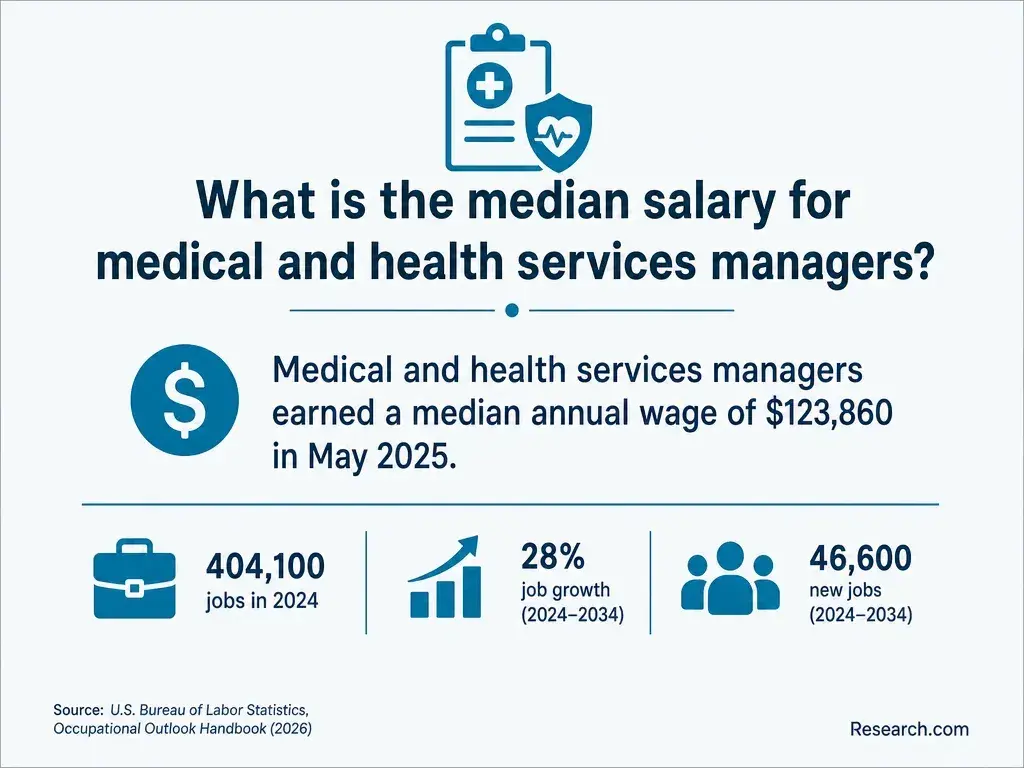
- The Bureau of Labor Statistics reports a May 2025 median wage of $126,520 for management occupations overall - not a home health operations director salary.
What does a home health operations director do?
A home health operations director manages the systems that allow an agency or group of branches to deliver reliable care in patients' homes. The scope depends on the employer: a Medicare-certified home health agency has different services and oversight needs from a private-duty personal care provider. Some directors manage one location; others oversee several branches and their local leaders.
Typical responsibilities include forecasting staffing needs, improving referral-to-admission workflows, monitoring visit completion and documentation, managing operating budgets, and responding to quality or compliance problems.
Directors work with clinical leaders, who retain responsibilities that require professional clinical judgment. The operational challenge is that travel time, changing patient needs, and workforce availability can disrupt a schedule that looked workable on paper.
Job titles vary, so compare responsibilities across healthcare administration careers rather than assuming every "director" vacancy has the same authority. Read the reporting structure and ask whether the role owns a budget, supervises branch managers, or primarily coordinates day-to-day staffing.
What leadership experience is required for home health operations directors?
There is no single experience threshold for every director job. Employers are likely to value evidence that a candidate has led people and improved results in a regulated care setting. Experience as a home health branch manager, clinical manager, regional manager, or administrator may be especially relevant because it exposes a leader to the connection between field staffing, patient service, documentation, and financial performance.
The most persuasive examples show scope, decisions, and outcomes: whom you supervised, which processes you owned, how you handled an unexpected capacity or quality problem, and what changed.
A nurse who has coached field clinicians may have strong clinical credibility but still need budget and multi-team management experience. A hospital operations manager may bring financial and staffing skills but need to learn home-based workflows and agency regulations.
Before committing to another degree, identify the gap a hiring manager would see in your résumé. If it is a discrete management skill rather than a credential requirement, employer-led projects or shorter graduate pathways in healthcare management may be more direct than a full MBA. Neither option substitutes for taking responsibility for real operational decisions.
What education is needed to become a home health operations director?
Requirements depend on the job description and on whether the director will also serve as the agency's legally designated administrator. Employers may seek a bachelor's degree in nursing, healthcare administration, business, or a related field, alongside relevant management experience. Some prefer graduate education for larger or more complex operations, but a graduate degree is not a universal requirement for the director title.
For someone without a bachelor's degree, healthcare administration bachelor's study at accredited U.S. colleges can provide a foundation in finance, personnel management, and healthcare systems. A licensed clinician should first check whether an employer values their existing degree and experience more than a second bachelor's. In either case, compare the vacancy's stated requirements with the separate qualifications for any administrator role it includes.
The director title alone does not establish a universal professional license. Requirements depend on the services provided, state law, the employer's organizational structure, and whether the person is also the designated administrator or performs licensed clinical work. Medicare-certified home health agencies must meet federal conditions of participation, including qualifications for their administrator; applicable state rules may add requirements.
An RN license is relevant when a position includes nursing duties or the employer specifies a clinical leader, but an operations director should not assume a management degree authorizes clinical practice.
Likewise, a voluntary management certification may demonstrate development without replacing a required license or administrator qualification. Check the state agency rules and ask the employer to identify the legal roles attached to the vacancy.
Academic accreditation is a different question from personal licensure. For example, CAHME accreditation in online MHA program selection can help evaluate a health administration program, but graduating from such a program does not itself confer a clinical license or guarantee eligibility to serve as an agency administrator.
The best degree depends on what you already know and which responsibility you want next. A bachelor's in healthcare administration can establish a broad management foundation. A master of health administration (MHA) emphasizes managing healthcare organizations and their operating environment.
An MBA supplies a broader business core; a healthcare concentration, when officially offered, may add relevant electives without making the degree a clinical qualification.
The comparison below focuses on the gap each route is most likely to address - not on a promised job outcome.
| Education route | Potential fit | Important limitation |
| Healthcare administration bachelor's | Professionals building an initial management foundation | Does not replace supervisory experience |
| MHA | Experienced healthcare workers seeking deeper health-system management study | Program content may not specifically cover home health |
| MBA, with relevant healthcare study if available | Managers who need stronger finance, strategy, or cross-functional business skills | A healthcare elective is not necessarily a formal concentration |
| Targeted courses or employer training | Leaders with a specific skill gap and an immediate chance to apply it | May provide less breadth than a degree |
Associate-degree holders can use healthcare administration transfer planning for associate graduates to assess the bachelor's route. Whatever the starting point, ask prospective programs how students apply coursework to staffing, quality, and financial decisions in care delivery.
Relevant programs may cover managerial accounting, budgeting, healthcare law and ethics, workforce management, quality improvement, data analysis, and organizational leadership. An MBA generally teaches these as business management subjects, while an MHA may devote more attention to healthcare delivery and policy. Neither curriculum should be mistaken for training in licensed clinical practice.
For home health leadership, look beyond course titles. A useful assignment might require students to analyze visit capacity across a service area, evaluate a quality measure, or explain a staffing decision under budget constraints. Ask whether projects can use de-identified workplace problems and whether faculty or practitioners understand care delivered outside hospitals.
Doctoral study serves a different purpose, often involving advanced research or executive-level inquiry rather than filling an immediate branch-operations skill gap. Leaders considering that stage can examine healthcare administration and management doctoral program options, but should not treat a doctorate as the default next step toward a director position.
Online delivery can be effective for a working home health manager if the program offers rigorous instruction, useful feedback, and opportunities to apply learning. Delivery mode alone does not establish quality - or convenience.
Live classes, group projects, examinations, and required campus visits can make two online programs feel very different to someone managing unpredictable staffing issues.
Compare the actual curriculum, institutional accreditation, faculty access, assessment methods, and student support. If practical experience matters to your career change, ask whether online students can complete an applied project with a healthcare employer and whether they receive the career services they expect.
A campus program may suit someone seeking regular in-person interaction; an online program may fit someone who must remain employed and cannot relocate.
Accelerated marketing deserves particular scrutiny. When reviewing online healthcare management MBA program duration, confirm the course sequence, live-session schedule, and whether the pace leaves room for full-time operational responsibility.
Completion time and cost depend on the degree level, credits required, transfer credit, enrollment pace, and institution. A bachelor's commonly follows a four-year full-time academic plan, though transfer credits and part-time study change an individual's timeline. Graduate programs vary substantially; a shorter published completion time may assume continuous or intensive enrollment.
No single tuition figure describes healthcare administration degrees. Before comparing offers, request each school's current tuition basis - per credit, course, term, or program - along with mandatory fees, required materials, and any travel costs.
Then compare the total cost to finish, not just an advertised tuition rate. Employer assistance may reduce personal expense, but check eligibility and repayment conditions before relying on it.
For an accelerated route, review 12-month health administration graduate degree options against the time you can actually protect for study. A slower program may be the better financial choice if it allows you to keep working and apply lessons on the job.
There is no single reliable national salary figure that captures every job titled "home health operations director." Compensation varies with location, branch count, budget authority, service mix, and whether the position also carries administrator or clinical responsibilities. An offer should be evaluated against comparable local vacancies with similar scope.
For context, the U.S. Bureau of Labor Statistics reports a $126,520 median annual wage for management occupations in May 2025. That is a broad occupational-group figure, not a director-specific estimate, an MBA-graduate salary, or a likely offer from a home health agency. It is most useful as a reminder to verify the occupation and population behind any salary claim.
If you are considering graduate school primarily for a raise, compare realistic advancement opportunities with the full price of study and any employer funding. Reviewing lower-tuition master's pathways in health administration can help frame that comparison, but a cheaper degree is valuable only if its curriculum addresses the gap holding you back.
What job outlook and career paths exist in home health operations?
A plausible path runs from clinical, scheduling, quality, or branch-level work into team management, then agency or regional operations leadership. An experienced director may pursue responsibility for multiple regions, organizational strategy, or a broader healthcare executive role. Progression depends on demonstrated results and the size and structure of the employer; a degree alone does not move someone through those stages.
The Bureau of Labor Statistics projects about 1.1 million management-occupation openings annually on average from 2025 to 2035, reflecting growth and replacement needs across management jobs.
This broad figure does not forecast vacancies specifically for home health operations directors. Use local postings and conversations with employers to judge demand for the role and qualifications you want.
For established executives interested in advanced study, compare online doctoral completion pathways in healthcare administration against a defined goal, such as research or senior organizational leadership. For most aspiring directors, the more immediate next step is to seek ownership of a budget, staffing process, or quality initiative and document the results.
Other Things You Should Know About Healthcare Administration
Use aggregated, de-identified measures and describe your responsibility, actions, and outcome. Follow your employer's confidentiality policies; never include patient details or proprietary reports in an application.
Ask which decisions belong to branch leaders, what budget authority you hold, how much travel is expected, and who handles clinical and compliance escalation.
Potentially, but the service lines may have different staffing models, payment arrangements, and regulatory requirements. Confirm the position's scope and the qualified leaders assigned to each service.
Review on-call expectations, travel, performance incentives, benefits, and the resources available to meet your targets. A larger title may not be an advancement if accountability expands without adequate authority or support.
- 42 CFR Part 484 -- Home Health Services | ecfr.gov https://www.ecfr.gov/current/title-42/chapter-IV/subchapter-G/part-484
- Budgeting in Healthcare Systems and Organizations - PMC https://pmc.ncbi.nlm.nih.gov/articles/PMC10682572/
- GAC - Subject 111-8-31 HOME HEALTH AGENCIES https://rules.sos.ga.gov/gac/111-8-31
- Federal Register:: Medicare and Medicaid Program: Conditions of Participation for Home Health Agencies https://www.federalregister.gov/documents/2014/10/09/2014-23895/medicare-and-medicaid-program-conditions-of-participation-for-home-health-agencies
- Clinical Director Career Guide to Healthcare Success | American College of Education https://ace.edu/student-success/career-guides/clinical-director/
- Healthcare Finance 101: What Every Administrator Needs to Know | Nebraska Methodist College https://blog.methodistcollege.edu/healthcare-finance-101-what-administrator-needs-to-know
- 9 Top Skills for Effective Leadership in the Healthcare Industry | jhu.edu https://advanced.jhu.edu/about/on-the-advance/mastering-your-future/9-top-skills-for-effective-leadership-in-the-healthcare-industry/
- Healthcare Executive Jobs: How to Build a Leadership Career | USC Price https://priceschool.usc.edu/price-blog/healthcare-executive-jobs-how-to-build-a-leadership-career-in-healthcare/
- Healthcare Manager: Career Guide, Salary & Requirements | RegisteredNursing.org https://www.registerednursing.org/specialty/healthcare-manager/
- Director of Clinical Operations - Job Description | ETSU Health https://www.etsuhealth.org/resources/employment-job-descriptions/dir-clin-op.php